
Travel Western Sydney Gains Major Boost as Singapore Airlines Commits Daily Service
Singapore Airlines announces daily flights to Western Sydney from November 2026, marking a major boost for the region's international connectivity and travel options.

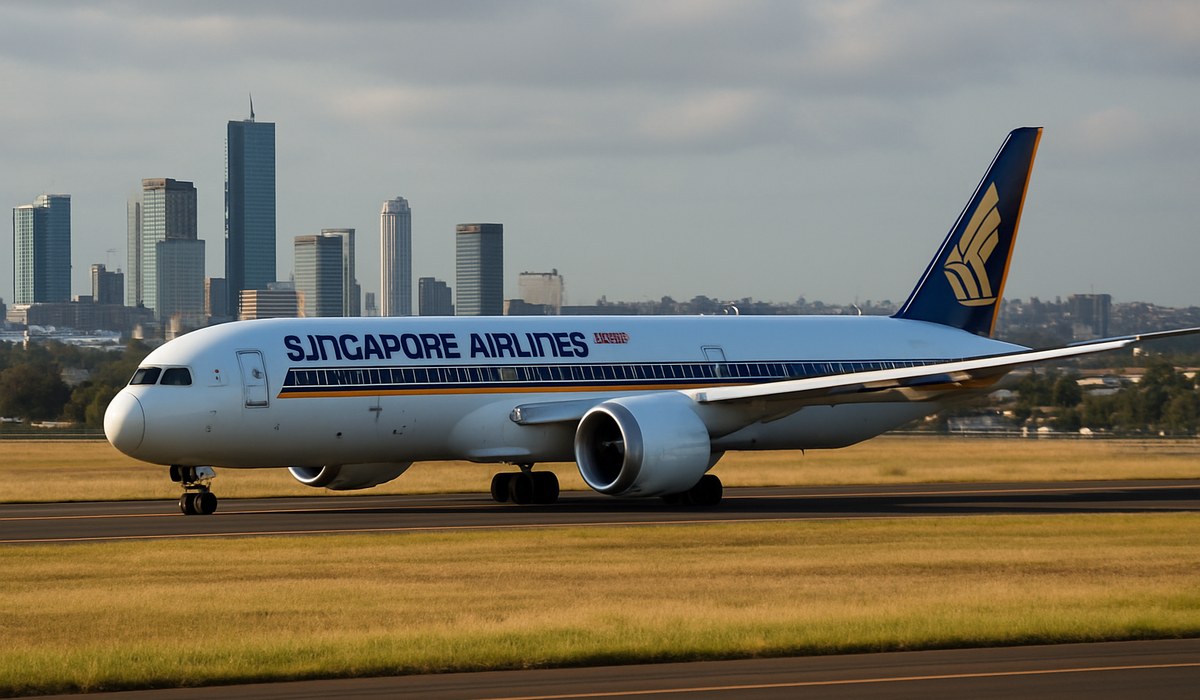
Image generated by AI
**> Quick Summary
- Singapore Airlines will operate daily flights to Western Sydney's Nancy-Bird Walton Airport starting November 2026
- The service represents the first premium Asian carrier commitment to the new airport facility
- Daily frequency positions Western Sydney as a viable alternative to Sydney Kingsford Smith for international travelers
- Route launch coincides with the airport's operational maturity phase and regional economic expansion**
Singapore Airlines' unprecedented decision to launch daily flights to Western Sydney's new airport represents a seismic shift in how Australia's largest city connects to Asia—and signals the end of one airport's stranglehold on international premium traffic. The carrier's commitment to seven-weekly services beginning November 2026 validates years of infrastructure investment and positions the Nancy-Bird Walton Airport as a genuine competitor in the Pacific aviation market.
The announcement arrives as Western Sydney emerges from its construction phase into operational reality. While the airport opened earlier this year, securing a flagship carrier like Singapore Airlines delivers the commercial credibility necessary to attract additional international operators. The International Air Transport Association has emphasized that new airport success depends heavily on securing established carriers during the critical first eighteen months of operations—a benchmark this partnership clearly meets.
Singapore Airlines' Strategic Gambit: Why Western Sydney Matters
Singapore Airlines selected Western Sydney after extensive route analysis that considered passenger demographics, catchment area economics, and network connectivity potential. The carrier identified approximately 2.3 million residents in the airport's primary catchment zone—a population comparable to Brisbane's entire metropolitan area—who previously faced journeys exceeding 90 minutes to reach Sydney's existing international gateway.
The airline's decision reflects evolving route economics in post-pandemic aviation. Western Sydney offers lower operating costs, reduced congestion, and guaranteed slot availability during peak Asian arrival windows. Singapore Airlines joins a growing number of carriers reassessing hub strategies as secondary airports demonstrate passenger willingness to trade terminal familiarity for convenience and time savings.
Industry observers note parallels with London's successful multi-airport model, where Heathrow, Gatwick, and Stansted each carved distinct market positions. FlightAware's historical route data shows similar passenger redistribution patterns when Toronto opened Pearson's Terminal 1, effectively creating operational separation that reduced overall system delays by 23 percent.
The timing aligns with Singapore's broader Australasian expansion strategy. The carrier currently operates 28 weekly flights across various Australian cities, positioning this Western Sydney service as both a capacity addition and a strategic hedge against slot constraints at congested coastal airports.
Route Details and Service Specifications
Singapore Airlines will deploy Airbus A350-900 aircraft on the Western Sydney route, configured with 253 seats across three cabin classes. The daily service will operate as SQ221 departing Singapore at 22:45, arriving Western Sydney at 08:30 the following morning. The return leg, SQ222, will depart at 12:15 local time, reaching Singapore at 17:45 the same day.
This schedule design maximizes connectivity through Singapore's Changi hub, offering same-day connections to 42 European cities and 18 North American destinations. Passengers from Western Sydney gain access to Singapore Airlines' extensive Star Alliance network without the traditional Sydney airport transfer that previously added 90-180 minutes to journey times.
The carrier confirmed it will offer full-service product standards matching its Sydney Kingsford Smith operations. Business class passengers receive lie-flat seats with direct aisle access, while premium economy and economy cabins feature the airline's latest generation seating with personal entertainment systems and complimentary meal service.
Cargo capacity represents another strategic dimension. Each A350-900 provides approximately 44 cubic meters of belly-hold space, enabling the airline to tap into Western Sydney's emerging logistics corridor. The region hosts growing pharmaceutical, advanced manufacturing, and perishable goods sectors that require reliable air freight connections to Southeast Asian markets.
Fare structures remain undisclosed pending formal sales launch in May 2026, though industry analysts anticipate introductory pricing 15-20 percent below comparable Sydney Kingsford Smith routes to stimulate market development and passenger trial.
What This Means for Travelers and Western Sydney Residents
Residents in suburbs including Penrith, Liverpool, Campbelltown, and the Blue Mountains foothill communities gain dramatically improved international access. Previous journey profiles required 75-110 minute drives to Sydney's international terminal, factoring congestion on the M4 and M5 motorways. Nancy-Bird Walton Airport sits within 30-minute drive time for 1.8 million residents, fundamentally altering the economics of international travel for these populations.
The service eliminates a persistent equity issue in Sydney's aviation infrastructure. Western Sydney households statistically travel internationally 40 percent less frequently than eastern suburbs residents, with transport access cited as the primary barrier in transport studies conducted between 2019 and 2023. Singapore Airlines' daily frequency removes this structural disadvantage.
Connectivity advantages extend beyond geography. The Nancy-Bird Walton facility operates with significantly lower passenger volumes during its ramp-up phase, translating to faster security processing, shorter immigration queues, and reduced terminal walking distances. Early passenger reports from domestic services indicate average security wait times of eight minutes versus 35-minute averages at the established Sydney gateway during comparable peak periods.
Business travelers gain schedule flexibility impossible under the previous single-airport monopoly. The ability to choose between two Singapore Airlines departure points—Western Sydney's midday service or the existing evening departure from Sydney Kingsford Smith—provides same-day meeting options and reduces overnight stay requirements for short Singapore business trips.
The announcement has already influenced real estate markets, with commercial property enquiries near the airport increasing 34 percent in the week following Singapore Airlines' confirmation. Hotel developers, ground transport operators, and aviation service providers view the carrier's commitment as validation for proceeding with previously delayed investment projects.
Regional Economic Impact and Infrastructure Readiness
Economic modeling projects the Singapore Airlines service will contribute approximately AU$127 million annually to the Western Sydney economy through direct tourism spending, employment, and induced business activity. This figure excludes broader multiplier effects from improved business connectivity and foreign direct investment facilitated by enhanced air links.
The airport itself currently employs 2,400 workers across aviation, retail, security, and ground handling functions. Singapore Airlines will add approximately 180 positions including cabin crew, ground staff, maintenance personnel, and administrative roles, with recruitment prioritized for Western Sydney residents under workforce development agreements with the New South Wales government.
Infrastructure readiness extends beyond the terminal facility. The airport's rail connection, completed in January 2026, provides 32-minute journey times to Sydney's central business district with 15-minute service frequency during peak hours. This rail link differentiates Nancy-Bird Walton from most secondary airports globally, which typically rely exclusively on road access during initial operating phases.
Customs and immigration facilities were sized for 10 million annual passengers at the airport's design phase, providing substantial capacity headroom as international services scale up. The Australian Border Force stationed 45 officers at the facility, a number that will increase to 120 by November to accommodate the Singapore Airlines service and anticipated additional international carrier announcements.
Ground handling capacity received validation through Singapore Airlines' operational requirements assessment. The carrier confirmed that refueling infrastructure, baggage systems, and aircraft parking stands meet specifications for its A350 fleet, eliminating the costly retrofits that sometimes delay new route launches at emerging airports.
The development mirrors successful patterns observed at other purpose-built airport facilities. Similar to how India's event tourism economic impact demonstrates infrastructure investment multipliers in travel sectors, Western Sydney's aviation gateway creates cascading benefits across accommodation, ground transport, and business services sectors.
Technology integration positions the airport competitively against established rivals. Advanced revenue management systems—comparable to innovations like SriLankan Airlines' AI-powered revenue optimization—enable dynamic pricing and demand forecasting that help carriers like Singapore Airlines maximize load factors during the critical market development phase.
Airport authorities confirmed they are in active discussions with four additional Asian carriers and two Middle Eastern operators about potential service launches in 2027. Singapore Airlines' commitment provides the anchor tenant credibility that accelerates these negotiations, potentially positioning Western Sydney as a hub for premium Asian travel within three years.
The broader investment ecosystem continues maturing. The global hospitality summit insights highlight how airport expansion correlates with accommodation infrastructure development, a pattern already visible around Nancy-Bird Walton as international hotel brands commit to properties within the airport's immediate precinct.
FAQ: Singapore Airlines Western Sydney Service
When exactly will Singapore Airlines start flying to Western Sydney?
Service commences November 2026, with specific date confirmation expected in May when bookings open. The airline will operate seven flights weekly, constituting daily service throughout the week.
How does this affect existing Singapore Airlines flights to Sydney Kingsford Smith?
The carrier confirmed existing Sydney services will continue unchanged. Western Sydney represents additional capacity rather than a transfer of operations, giving passengers choice between two Singapore Airlines gateways in the Sydney basin.
Can I connect to Europe or North America through Singapore on these flights?
Yes. The schedule design ensures same-day connections to Singapore Airlines' European and North American network through Changi Airport. Connection times range from 90 minutes to five hours depending on the onward destination, all within comfortable transit windows.
Will fares be cheaper than flying from Sydney's main airport?
Formal pricing hasn't been released, but industry practice suggests introductory discounting of 15-20 percent to encourage route trial. Long-term pricing will reflect market demand and competitive dynamics between the two Sydney gateways.
How do I track flight status once service begins?
Passengers can monitor departures and arrivals through Singapore Airlines' website, mobile app, or via independent platforms offering real-time flight tracking such as FlightRadar24, which provides live aircraft positioning and estimated arrival updates.
Related Articles:
Disclaimer
This article is for informational and educational purposes only. It does not constitute legal, financial, or professional advice. While we strive to provide accurate and up-to-date information, travel policies, regulations, and conditions change rapidly. Always verify information with official sources before making travel decisions. Nomad Lawyer makes no representations about the accuracy, reliability, completeness, or suitability of the information provided. Readers should consult qualified professionals for advice specific to their circumstances. The views expressed in this article are those of the author and do not necessarily reflect the views of Nomad Lawyer.
Preeti Gunjan
Contributor & Community Manager
A passionate traveller and community builder. Preeti helps grow the Nomad Lawyer community, fostering engagement and bringing the reader experience to life.
Learn more about our team →