
Seoul Mirrors Gyeongju and More as Ultimate Autumn Destinations of South Korea Come Alive for an Unforgettable Fall Escape
Seoul Mirrors Gyeongju and More as Ultimate Autumn Destinations of South Korea Come Alive for an Unforgettable Fall Escape

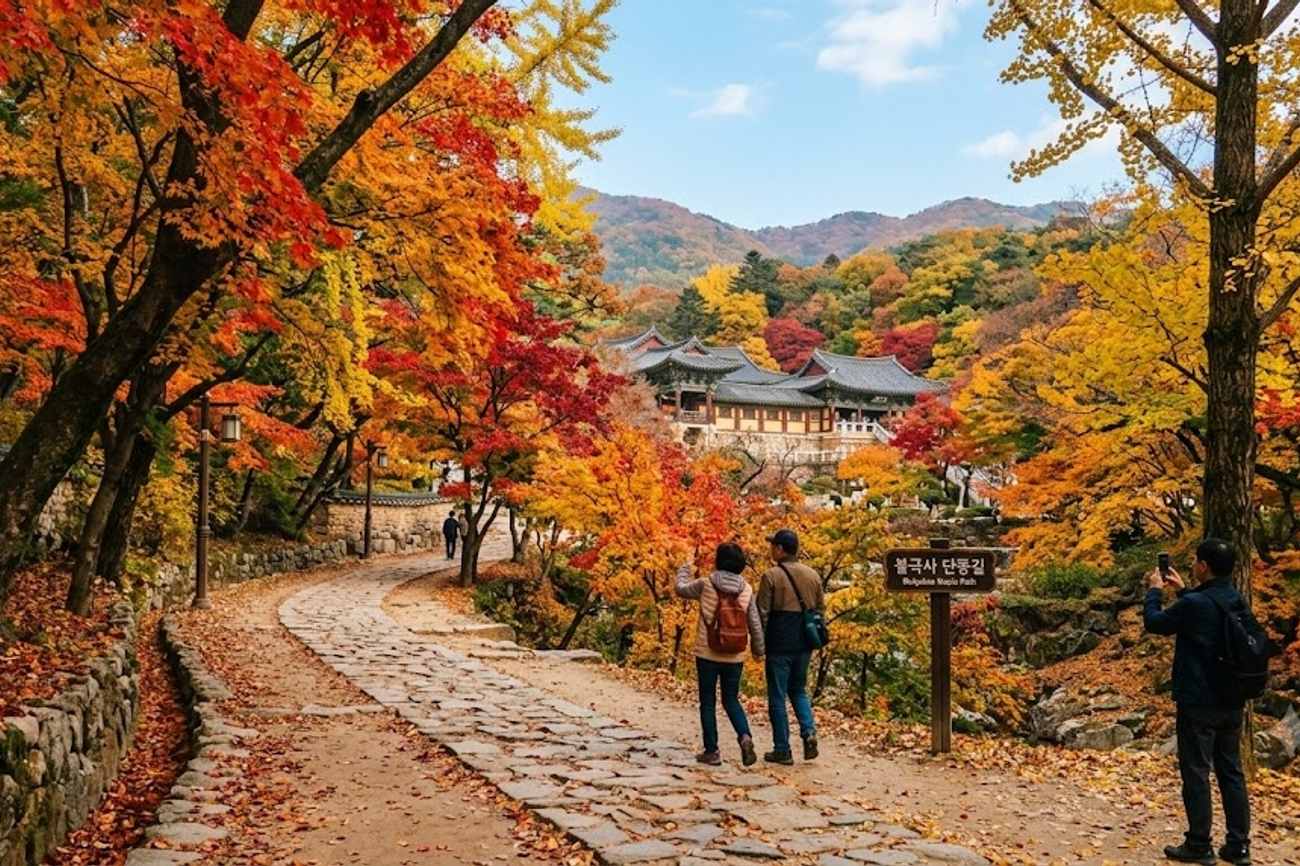
Image generated by AI
[Seoul, October 2025] — South Korea is launching a comprehensive autumn 2026 tourism offensive targeting global travelers, centering on six primary regional hubs to distribute visitor traffic beyond the capital. The initiative seeks to leverage the peak foliage window of October and early November to drive international arrivals into heritage sites, volcanic landscapes, and coastal cities.
The campaign, coordinated through official tourism channels, promotes a diversified itinerary including Seoul, Busan, Jeju, Gyeongju, Jeonju, and Gangneung. Each destination is positioned to offer a distinct thematic experience—ranging from the urban culture of Seoul to the ancient heritage of Gyeongju—while encouraging visitors to utilize regional transport and accommodation benefits to explore lesser-known foliage areas.
The 2026 Autumn Strategic Push
The South Korean tourism sector is shifting its focus toward "decentralized travel" for the 2026 season. While traditional hotspots like Seoraksan and Odaesan mountains remain the primary draws for autumn colors, the current strategy emphasizes "quiet experiences" in secondary cities to mitigate over-tourism in the capital.
The Korea Tourism Organization (KTO) is highlighting a transition toward nature-based and cultural road trips, specifically targeting the volcanic terrain of Jeju and the Hanok architecture of Jeonju. This shift is supported by updated visitor data showing a massive surge in international interest, particularly in island destinations.
Regional Impact and Destination Profiles
Travelers planning for 2026 are advised to allocate their time based on the following regional specializations:
| Destination | Primary Appeal | Key Landmarks | Recommended Stay |
|---|---|---|---|
| Seoul | Urban Culture | Gyeongbokgung, Namsan | 3–4 Nights |
| Busan | Coastal/Nightlife | Haeundae, Gamcheon | 2–3 Nights |
| Jeju | Volcanic Nature | Hallasan, Seongsan Ilchulbong | 3–4 Nights |
| Gyeongju | Ancient Heritage | Bulguksa, Daereungwon | 2 Nights |
| Jeonju | Traditional Arts | Hanok Village, Nambu Market | 1–2 Nights |
| Gangneung | Coffee & Coast | Anmok, Ojukheon | 2 Nights |
What This Means for Travelers
For the individual booking a trip, this strategic push translates into several practical changes in how South Korea is navigated:
1. Booking Windows: Because the foliage window is narrow (October to early November), accommodation in Gyeongju and Jeju is expected to reach capacity faster than in previous years. Travelers should secure lodging at least four to six months in advance.
2. Transport Logistics: The emphasis on "regional benefits" suggests an increase in integrated transport passes. Travelers should monitor the Korea Railroad Corporation (KORAIL) for autumn-specific rail passes that link Seoul to Busan and Gangneung.
3. Crowd Management: By promoting "lesser-known locations," the government is attempting to steer tourists away from the saturated paths of Gyeongbokgung Palace, which saw 6,886,650 admissions in 2025. Visitors should expect higher concentrations of people in Seoul and may find better value and shorter queues in Jeonju or Gangneung.
4. Entry Requirements: With foreign tourist numbers in Seoul hitting 18,936,562 in 2025, immigration checkpoints are under pressure. Travelers must ensure all digital entry permits are processed prior to arrival to avoid delays.
Analyzing the Visitor Surge
The scale of the autumn influx is evidenced by the volatile growth in foreign arrivals. Jeju Island provides the most stark example of this trend. In 2021, the island recorded a mere 48,278 foreign visitors. That number climbed to 86,444 in 2022, jumped to 709,350 in 2023, and exploded to 1,905,696 foreign visitors in 2024.
Total visitor counts for Jeju remained relatively stable, moving from 12,008,437 in 2021 to 13,767,350 in 2024, indicating that the growth is driven almost exclusively by international travelers replacing or supplementing domestic tourism.
In Gyeongju, the data shows a different trajectory. Using Korea Tourism Data Lab estimates, the city saw 39.51 million visits in 2021, rising to 45.08 million in 2022 and peaking at 47.54 million in 2023. As of November 2024, the city has already recorded 43.63 million visits, suggesting a sustained high-volume interest in heritage tourism.
Navigating the Seoul Hub
Despite the push for regional travel, Seoul remains the primary entry point. The city's infrastructure is designed to handle the massive volume of 18.9 million foreign tourists. For the 2026 season, the recommended "Autumn Circuit" focuses on the juxtaposition of the old and new.
The primary cultural corridor includes Gyeongbokgung and Bukchon, extending toward Changdeokgung and the Jongno district. To avoid the heaviest crowds, the tourism board suggests basing stays in Myeongdong, Hongdae, or Dongdaemun to optimize transit times to the palace gardens and Namsan's elevated viewpoints.
The suggested three-day urban itinerary for autumn 2026 is as follows:
- Day 1: Gyeongbokgung, Bukchon, and Insadong.
- Day 2: Changdeokgung, Ikseon-dong, Gwangjang Market, and Namsan.
- Day 3: Seongsu district, Han River parks, and primary shopping hubs.
FAQ: Korea Autumn Travel 2026
When is the best time to see autumn foliage in South Korea? The peak foliage window typically occurs from October through early November. Mountainous regions like Seoraksan and Odaesan usually see color changes first, followed by the urban centers and coastal regions.
Which destination is best for first-time international visitors? Seoul is the recommended starting point due to its extensive public transport, English-language signage, and high concentration of heritage sites like Gyeongbokgung Palace.
How do I travel between the six main autumn destinations? The most efficient method is the KTX high-speed rail for mainland cities (Seoul, Busan, Gyeongju, Jeonju, Gangneung) and domestic flights or ferries for Jeju Island.
Are visitor statistics for these cities comparable? No. Seoul often reports "foreign tourists," while Gyeongju uses "visitation estimates" (which include repeat visits), and Jeju reports "island-wide counts." Always check the measurement metric before comparing city popularity.
South Korea is betting on a decentralized autumn to turn a seasonal spike into a sustainable regional economy.
#Seoul2026 #JejuIsland #KTO #AutumnFoliage #VisitKorea #GyeongjuHeritage
Related Travel Guides
Disclaimer
This article is for informational and educational purposes only. It does not constitute legal, financial, or professional advice. While we strive to provide accurate and up-to-date information, travel policies, regulations, and conditions change rapidly. Always verify information with official sources before making travel decisions. Nomad Lawyer makes no representations about the accuracy, reliability, completeness, or suitability of the information provided. Readers should consult qualified professionals for advice specific to their circumstances. The views expressed in this article are those of the author and do not necessarily reflect the views of Nomad Lawyer.
Raushan Kumar
Founder & Lead Developer
Full-stack developer with 11+ years of experience and a passionate traveller. Raushan built Nomad Lawyer from the ground up with a vision to create the best travel and law experience on the web.
Learn more about our team →