
Scotland Overtourism Crisis 2026: Edinburgh and Isle of Skye Face Severe Infrastructure Strain
Scotland is battling a systemic overtourism crisis as annual visitor volumes reach 16.5 million, triggering new tourist taxes and short-term let regulations to protect residents in Edinburgh and the Highlands.

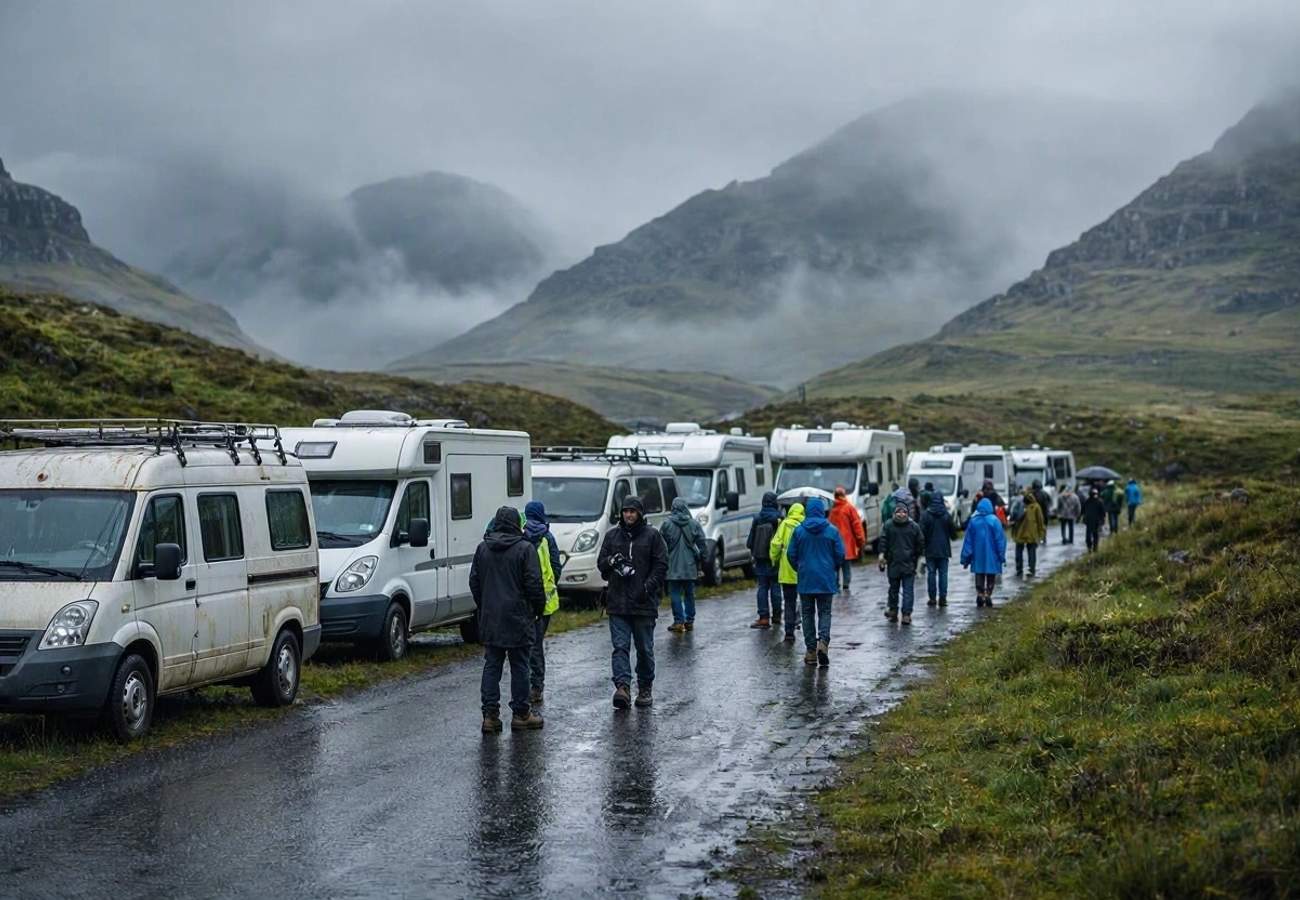
Image generated by AI
Scotland currently accommodates roughly three overnight visitors for every single permanent resident annually—a national ratio that masks extreme hyper-concentration in fragile urban and rural corridors. While the aggregate data suggests a manageable baseline, the reality on the ground in the Scottish capital and the Highlands reveals a system operating well beyond its structural capacity.
The Tourism Volume in Numbers
The post-pandemic recovery has pushed Scotland's tourism metrics to unprecedented levels. According to data from VisitScotland, the country now sees between 15 million and 16.5 million overnight visitors each year. The composition of this traffic is split between domestic and international markets, with Great Britain residents accounting for 10.5 million to 11 million overnight stays. International arrivals have surged past 3.8 million, with the highest volumes originating from the United States, Germany, France, and Australia.
The strain is most acute in Edinburgh, which welcomes over 5 million overnight guests annually. The volatility of this demand peaks in August during the Edinburgh Festival Fringe, where ticketed attendance exceeds 3.5 million. When this influx is layered over a permanent resident population of 515,000, the result is severe pedestrian gridlock and a distorted housing market.
In the rural north, the Scottish Highlands and Islands register between 2.8 million and 4 million annual visitors. Much of this traffic is concentrated along the North Coast 500, where remote villages with fewer than 1,000 residents face systemic failures in waste management and emergency service response due to campervan congestion on single-track roads.
Comparative Regional Strain: Urban vs. Rural
The crisis manifests differently depending on the geography. In urban centers, the conflict is primarily socioeconomic, centered on the conversion of residential housing into commercial short-term lets. In rural zones, the conflict is ecological and logistical, focusing on the physical degradation of the landscape and the failure of municipal sanitation.
The following table breaks down the disparity between national averages and regional hotspots:
| Metric | National Average (Scotland) | Edinburgh (Urban Peak) | Highlands/Islands (Rural) |
|---|---|---|---|
| Annual Overnight Visitors | 15M - 16.5M | 5M+ | 2.8M - 4M |
| Primary Pressure Point | General Infrastructure | Housing & Pedestrian Flow | Roads & Ecosystems |
| Key Driver | Global Brand Appeal | Festival Fringe (3.5M attendees) | North Coast 500 / Isle of Skye |
| Resident Impact | Moderate | High (Rental Inflation) | High (Service Disruption) |
What This Means for Travelers
For those planning a trip to Scotland in 2026 and 2027, the shift from "growth promotion" to "active destination governance" will result in tangible changes to booking and logistics.
- Increased Costs via Tourist Tax: Under the Visitor Levy Scotland Act, expect to see a mandatory tourist tax added to overnight stays in Edinburgh, Aberdeen, and Argyll. This is no longer a proposal but a legislative tool used to fund the repair of landmarks damaged by high footfall.
- Stricter Accommodation Availability: The Tourism Accommodation Registration Scheme is aggressively targeting short-term lets. Travelers should book registered hotels or licensed B&Bs well in advance, as the inventory of unregulated Airbnbs is shrinking to protect local housing stock.
- Rural Access Restrictions: If visiting the Isle of Skye or the North Coast 500, expect increased scrutiny of campervan permits and potential restrictions on wild camping. Waste management crises have made local authorities less tolerant of unmanaged outdoor tourism.
- Cruise Logistics: Day-visitors arriving via ports like Invergordon or Kirkwall may face new landing levies as municipalities attempt to offset the cost of providing sanitation and security for mega-ships carrying up to 4,000 passengers into towns of fewer than 4,000 residents.
The Economic Paradox and Forward Projection
The financial data presents a stark contradiction. The tourism sector contributes between £12 billion and £14 billion to Scotland's GDP and supports roughly 218,000 jobs—approximately 8% of the total workforce. However, as noted by The World Travel & Tourism Council (WTTC), the "Value vs. Volume" dilemma is now the primary policy driver. Low-yield day-trippers often cost the state more in public realm maintenance than they contribute in localized spending.
Moving forward, the trajectory is clear: Scotland is moving toward a "high-value, low-impact" model. We expect to see the introduction of dedicated cruise ship levies and potentially timed entry systems for the most congested sites on the Isle of Skye. The goal is to decouple economic growth from physical volume to prevent the total collapse of residential livability in the Old Town and the Highlands.
FAQ: Scotland Tourism Regulations 2026
Will hotel prices increase due to the new tourist tax? Yes. The Visitor Levy Scotland Act allows local councils to add a fee to overnight stays. While the exact amount varies by council, this will be a direct addition to your lodging bill to fund infrastructure.
Is it still possible to find short-term rentals in Edinburgh? Yes, but the options are decreasing. New registration schemes are limiting the number of residential properties that can be converted into holiday lets to combat the local housing crisis.
Which areas are most affected by campervan restrictions? The North Coast 500 and the Isle of Skye are the primary focus. Expect stricter enforcement regarding wild camping and vehicle size limits on single-track roads.
Are cruise ship passengers affected by these changes? Yes. There is a strong legislative push for landing levies on cruise passengers in ports like Invergordon and Kirkwall to cover the cost of municipal services.
The era of unchecked access to the Highlands is ending; sustainable governance is now the only way to save the Scottish soul.
Related Travel Guides
Disclaimer
This article is for informational and educational purposes only. It does not constitute legal, financial, or professional advice. While we strive to provide accurate and up-to-date information, travel policies, regulations, and conditions change rapidly. Always verify information with official sources before making travel decisions. Nomad Lawyer makes no representations about the accuracy, reliability, completeness, or suitability of the information provided. Readers should consult qualified professionals for advice specific to their circumstances. The views expressed in this article are those of the author and do not necessarily reflect the views of Nomad Lawyer.
Raushan Kumar
Founder & Lead Developer
Full-stack developer with 11+ years of experience and a passionate traveller. Raushan built Nomad Lawyer from the ground up with a vision to create the best travel and law experience on the web.
Learn more about our team →