Scotland Highlights Coorie Travel As Highland Escapes Blend Wild Adventures With Cosy Retreats

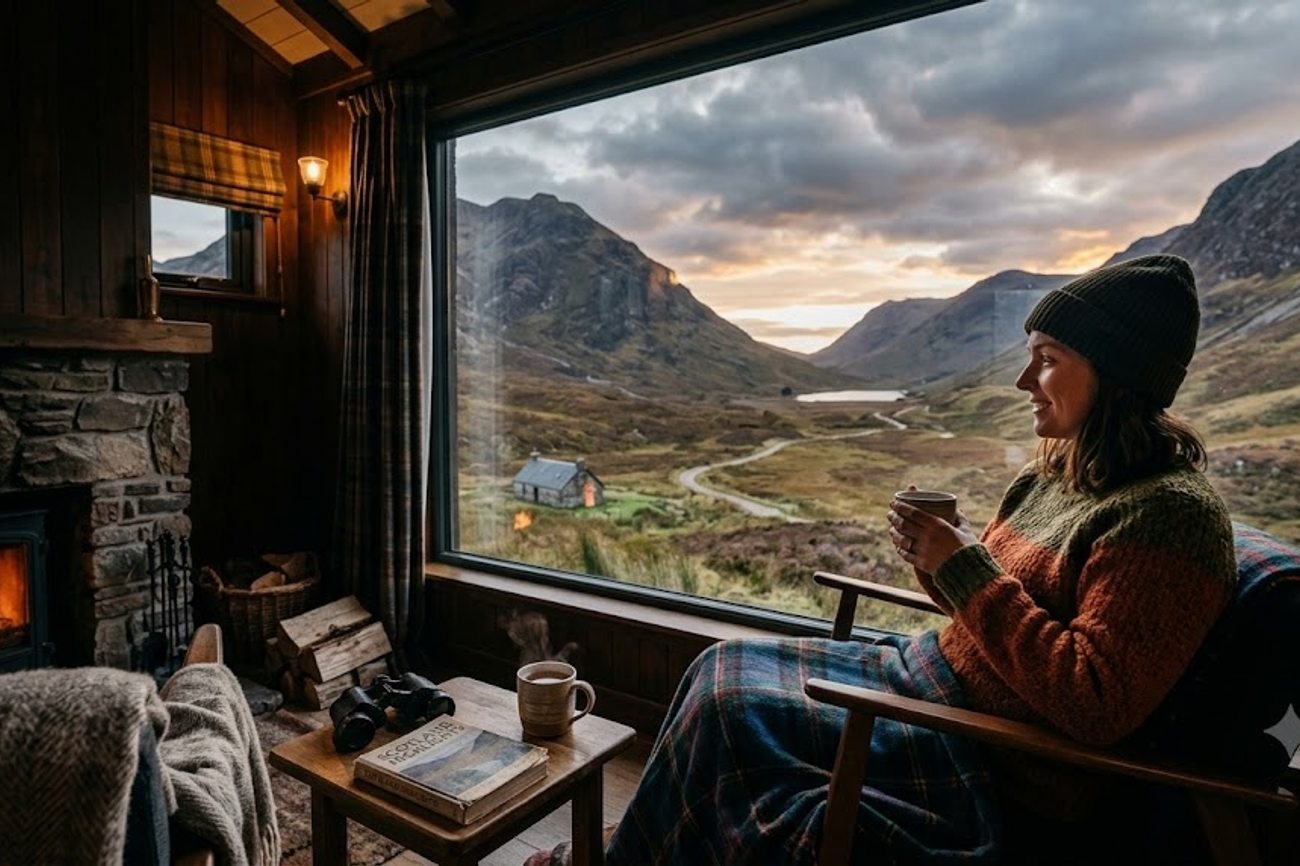
Image generated by AI
[Edinburgh, May 2024] — Scotland is aggressively promoting "coorie," a specialized travel philosophy that integrates rugged outdoor endurance with high-comfort recovery, as a primary draw for international visitors.
The initiative seeks to shift the narrative of Scottish tourism from passive sightseeing to an active cycle of "exposure and retreat." Unlike traditional luxury travel, the coorie framework requires travelers to engage directly with Scotland's volatile climate—through wild swimming, mountain trekking, and remote exploration—before transitioning into curated environments of warmth and hospitality. This strategic positioning targets the growing global demand for nature-based wellness and authentic cultural immersion.
The Mechanics of Coorie
The immediate catalyst for this trend is the evolution of "slow travel" and the global popularity of comfort-centric lifestyles. While often compared to the Danish concept of hygge, coorie is distinct because it mandates a prerequisite of outdoor exertion. It is not merely about being cozy; it is about the contrast between the harshness of the Highland elements and the sanctuary of a heated interior.
This experience is structured around the physical and psychological shift from the "wild" to the "warm." Whether it is the transition from a freezing dip in a loch to a roaring peat fire or a grueling ascent of a Munro followed by a traditional Highland meal, the tension between these two extremes is the core product being marketed to travelers.
Impacted Regions and Experience Hubs
The coorie experience is being deployed across a spectrum of accommodation tiers, from austere remote hostels to five-star estates. The following table outlines the primary hubs currently driving this travel style:
| Experience Type | Primary Locations | Core Appeal |
|---|---|---|
| Remote Seclusion | Loch Ossian, Corrour | Total isolation, communal fires, loch-side solitude |
| Luxury Retreats | Mar Hall (near Glasgow) | Historic estates, high-end leisure, proximity to urban hubs |
| Highland Trekking | Beinn Na Lap, Loch Ossian | Mountain landscapes, challenging terrain, scenic loops |
| Wild Swimming | Loch Ossian & Natural Lochs | Cold-water immersion, nature engagement |
| Sporting Heritage | St Andrews, Gleneagles, Mar Hall | World-class golf integrated with countryside relaxation |
| Cultural Gastronomy | Glencoe, Highland Inns | Traditional cuisine, local hospitality, historic pubs |
Practical Traveler Advisory and Strategic Insights
For the modern traveler, the adoption of coorie means a departure from the "checklist" style of tourism. It requires a shift in packing, planning, and expectations.
Gear Requirements Travelers can no longer rely on light leisure wear. Because coorie emphasizes the outdoor experience, visitors must invest in professional-grade waterproofs and thermal layers. The Scottish Environment Protection Agency (SEPA) and local weather services frequently warn of rapid atmospheric shifts; therefore, technical clothing is a prerequisite for safety and enjoyment.
Logistical Planning Accessing the most authentic coorie sites requires complex logistics. For example, reaching the Loch Ossian Hostel involves a train journey to the remote Corrour station—one of the most isolated in the UK—followed by a significant hike. Travelers must coordinate transport through ScotRail and verify seasonal opening dates for remote hostels, as many operate on limited schedules.
Budgetary Flexibility The coorie model is uniquely scalable. A budget traveler can experience the concept via the Hostelling Scotland network, utilizing communal drying rooms and shared fires at Glen Nevis or Glencoe. Conversely, high-net-worth individuals can access the same philosophy through "Coorie Rooms" at luxury properties like Mar Hall, which provide the same psychological retreat but with five-star amenities.
Navigating the Highland Terrain
The physical component of coorie focuses heavily on walking and water. The landscape offers a tiered difficulty level:
Low-Impact Exploration The loop around Loch Ossian is marketed as a scenic alternative for those who wish to experience the Highlands without the physical toll of a summit climb. These routes prioritize the visual and atmospheric elements of the landscape.
High-Impact Adventure For experienced hikers, Beinn Na Lap offers a more rigorous challenge. These routes are characterized by steep inclines and boggy terrain. Travelers are urged to possess advanced navigation skills and be aware that mobile signal is frequently non-existent in these zones.
The Long-Distance Circuit The West Highland Way, stretching from Milngavie to Fort William, serves as the definitive coorie corridor. It allows travelers to cycle through multiple "exposure and retreat" phases over several days, moving between wild moorlands and cozy village inns.
The Cold Water Element Wild swimming in Loch Ossian and other natural bodies of water is a cornerstone of the experience. However, this carries inherent risks. Travelers must account for extreme water temperatures and currents. The transition from the freezing loch to a warm environment is the "peak" coorie moment, but it requires careful physical management to avoid hypothermia.
Future Integration and Infrastructure
The promotion of coorie is expected to drive further investment in "edge-of-wilderness" infrastructure. There is a growing trend toward integrating luxury amenities into remote locations, bridging the gap between the austerity of a hostel and the opulence of a city hotel.
As more international tourists seek "transformative" rather than "consumptive" travel, Scotland is positioning its weather—previously seen as a deterrent—as a primary asset. By rebranding rain and wind as the necessary precursor to warmth, the tourism sector is effectively expanding the "peak season" and diversifying the types of visitors attracted to the Highlands.
FAQ: Coorie Travel 2024
What is the difference between coorie and hygge? While hygge focuses primarily on indoor coziness and contentment, coorie requires an outdoor element. You must first experience the ruggedness of the Scottish landscape and weather before you can earn the "coorie" feeling of returning to warmth.
How do I reach the most remote coorie locations like Loch Ossian? Access typically requires a combination of rail and foot. Travelers generally take a train to Corrour station—the most remote station in the UK—and then hike to the hostel. Always check ScotRail for current schedules.
Is coorie travel only for experienced hikers and adventurers? No. The concept is scalable. While some engage in mountain climbing or wild swimming, others experience coorie through luxury stays at estates like Mar Hall or gentle walks around Highland lochs.
What is the best time of year to experience coorie? While available year-round, the experience is most potent during autumn and winter. The sharper contrast between the cold, damp outdoors and the warmth of a Highland fire enhances the psychological impact of the experience.
Adventure is the price of admission for the ultimate Scottish comfort.
Tags: #LochOssian #VisitScotland #WestHighlandWay #MarHall #HighlandTourism2024 #ScotRail
Related Travel Guides
- New Zealand Unites With Philippines and Many More as Global Destinations Gain From Rising Chinese Travel Demand and New Holiday Routes
- Saudia Secures Global Top 15 Position After Strong Growth in 2026 Skytrax Rankings
- Spain Joins Romania and Other Countries as October 2026 Europe Travel Grows With Culture Food and New Hotels
This article is for informational purposes. Flight routes, passenger regulations, visa rules, and transit advisories are subject to change by airlines and aviation authorities. Readers are advised to verify schedules and travel documentation with relevant carriers and border agencies before departure.
Related Stories

European Mass Protests Disrupt Travel Across France, Italy, Belgium, and Turkey in 2026
Storm Bruna 2026: Iberia Faces 200mm Rainfall and 6m Swells Triggering Mass Travel Chaos