Saudi Arabia, UAE, Qatar, and Egypt Defy Tourism Crisis Claims: Official UN Tourism and Ministry Data Reveal Resilient Travel Growth in 2026

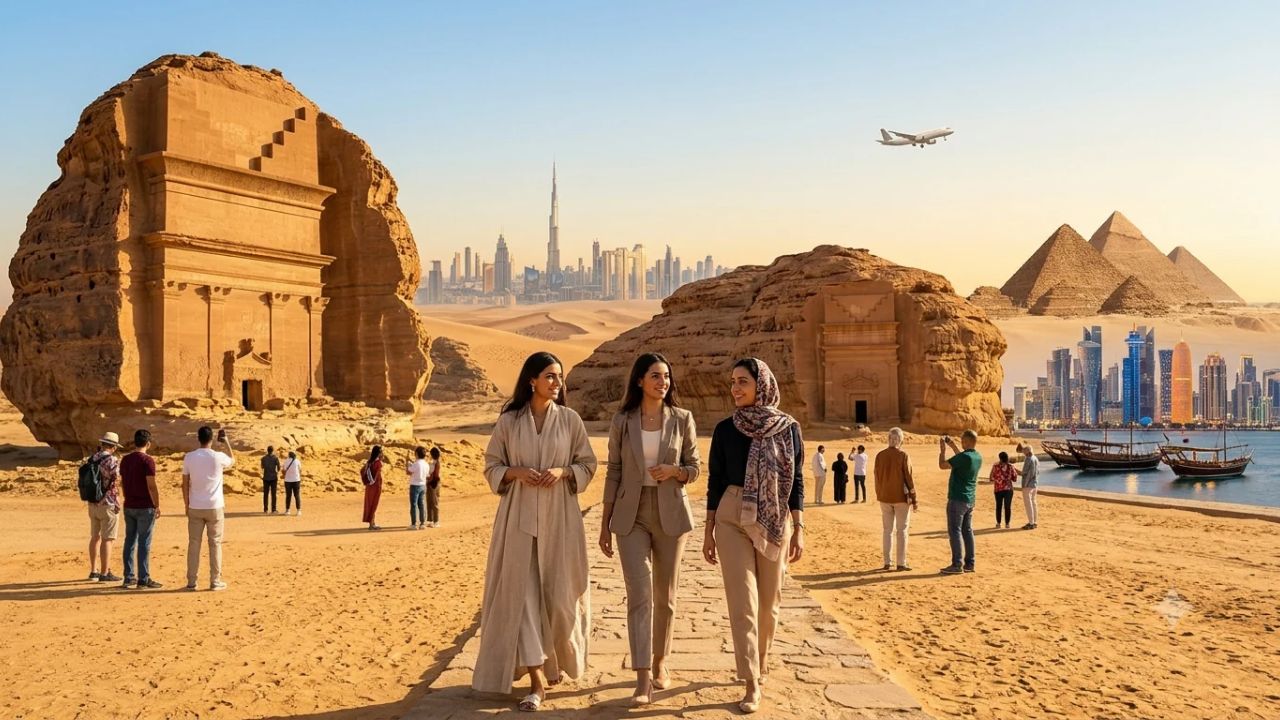
Official tourism data released by UN Tourism, national tourism ministries, and civil aviation regulators across the Middle East and North Africa has decisively countered media speculation predicting a catastrophic 40 percent collapse in regional arrivals. Driven by robust religious pilgrimages and Vision 2030 initiatives in Saudi Arabia, surging transit and summer stopovers in Dubai, record GCC border traffic in Qatar, and a 16 percent first-quarter tourism spike in Egypt, the regional tourism economy has demonstrated exceptional resilience amidst localized geopolitical pressures.
During early 2026, widespread media coverage suggested that escalating regional tensions would trigger an unprecedented plunge of up to 40 percent in tourist arrivals across the entire Middle East. However, comprehensive empirical records compiled by the United Nations World Tourism Organization (UN Tourism) and regional government agencies paint a completely different picture. While localized areas immediately adjacent to active conflict zones experienced contractions, major travel powerhouses across the Gulf Cooperation Council (GCC) and North Africa maintained steady growth, supported by diversified source markets, expanded aviation networks, and multi-billion-dollar state stimulus programs.
Rather than succumbing to blanket cancellations, international travelers demonstrated a clear understanding of regional geography. Sovereign destinations situated hundreds or thousands of kilometres from active military theaters—such as Riyadh, Jeddah, Dubai, Abu Dhabi, Doha, and Cairo—sustained millions of commercial flight arrivals and hotel bookings. The latest statistical releases confirm that the regional contraction recorded by UN Tourism was approximately 22 percent—heavily skewed by border-zone disruptions—while primary leisure and cultural gateways achieved volume parity or marked expansions over previous record-setting years.
========================================================================================
MIDDLE EAST TOURISM PERFORMANCE: MEDIA SPECULATION VS OFFICIAL EMPIRICAL DATA
========================================================================================
Metric / Dimension                   Media Speculation Headlines       Official Government & UN Data
----------------------------------------------------------------------------------------
Regional Arrival Contraction         Projected 40% blanket collapse    Actual drop 22% (UN Tourism H1),
                                     across all Middle East nations    heavily localized to conflict fringes.
----------------------------------------------------------------------------------------
Saudi Arabia Total Trips (H1 2026)   Predicted steep double-digit drop Recorded ~61 million total trips;
                                     in leisure and religious travel   matched previous record year.
----------------------------------------------------------------------------------------
Dubai Visitor Volumes (8 Months)     Forecasted sharp summer slump     Welcomed 6.97 million international
                                     due to airspace concerns          visitors; August reached 869,000.
----------------------------------------------------------------------------------------
Qatar International Arrivals         Anticipated post-tournament decay Recorded nearly 2.95 million visitors
                                     and GCC border stagnation         with strong air and land diversification.
----------------------------------------------------------------------------------------
Egypt Tourism Growth (Q1 2026)       Projected severe regional fallout Surged 16% year-on-year; 6.1 million
                                     affecting Red Sea and Nile trips  visitors across initial four months.
========================================================================================
Anatomy of the Narrative: Sensational Headlines vs Empirical Market Reality
The divergence between speculative headlines and statistical realities in early 2026 highlights the recurring challenge of regional conflation in global travel reporting. International news cycles frequently treat the Middle East as a monolithic territory, assuming that instability in specific northern or maritime corridors incapacitates tourism thousands of miles away in the southern Arabian Peninsula or North Africa.
UN Tourism’s World Tourism Barometer reveals that global international tourism experienced modest overall growth during the first half of 2026. While the broader Middle East region experienced an aggregate 22 percent year-on-year decrease during the January–June period, this contraction was disproportionately concentrated in destinations sharing immediate borders with conflict zones. UN Tourism Secretary-General Shaikha Al Nuwais highlighted that international consumer confidence rebounded rapidly once international air corridors stabilized, supported by proactive route realignments and rigorous civil aviation safety oversight.
========================================================================================
REGIONAL CONTRACTION BREAKDOWN (UN TOURISM H1 2026 ANALYSIS)
========================================================================================
Geographic Zone                      Observed Impact Level             Operational Dynamic
----------------------------------------------------------------------------------------
Immediate Conflict Peripheries       Severe contractions (>50%)        Border closures, commercial flight
(Levant / Northern Border Corridors)                                   suspensions, insurance surcharges.
----------------------------------------------------------------------------------------
Core Gulf Cooperation Council (GCC)  Stable to Positive (+0% to +5%)   Zero domestic disruption; strong intra-
(Saudi Arabia, UAE, Qatar, Oman)                                       GCC road and air travel volume.
----------------------------------------------------------------------------------------
North African Gateways               Strong Expansion (+10% to +16%)   Substantial displacement inflows
(Egypt, Morocco)                                                       diverted from Eastern Mediterranean.
========================================================================================
Key Finding: Blanket regional collapse narratives failed to account for sovereign market decoupling.
========================================================================================
International tour operators and corporate travel management networks adapted their itineraries rather than abandoning the region altogether. Travelers reassigned bookings from affected border regions toward highly secure, well-connected metropolitan and cultural hubs, resulting in stable aggregate expenditure across the wider Arab world.
Saudi Arabia: Vision 2030 Momentum and the 61-Million-Trip Milestone
The Kingdom of Saudi Arabia provided the most decisive counter-evidence to claims of a regional tourism crisis. Official mid-year performance metrics released by the Saudi Ministry of Tourism revealed that the kingdom recorded approximately 61 million total tourist trips during the first half of 2026, matching the record-setting baseline established in 2025.
========================================================================================
SAUDI ARABIA TOURISM PERFORMANCE METRICS (H1 2026)
========================================================================================
Tourism Performance Indicator        Recorded H1 2026 Volume           Year-on-Year Comparison
----------------------------------------------------------------------------------------
Total Tourist Trips (Combined)       61.0 Million Trips                Volume Parity (Matches 2025 High)
Domestic Tourist Trips               48.7 Million Trips                Sustained Domestic Travel Strength
Inbound International Arrivals       12.5 Million Visitors             Stable International Gateway Inflow
Combined Tourism Expenditure         Surpassed Projected Targets       +5.0% Growth in Total Visitor Spend
Inbound Visitor Spending             Record Foreign Exchange Yield     +5.2% Increase over H1 2025
Domestic Leisure Spending            Robust Internal Economic Activity +4.8% Increase over H1 2025
========================================================================================
Data Source: Saudi Arabia Ministry of Tourism Official Mid-Year Statistical Bulletin.
========================================================================================
Inbound international travelers accounted for 12.5 million trips, while domestic travel within the kingdom generated 48.7 million journeys. Total expenditure across both inbound and domestic tourism segments expanded by 5 percent year-on-year, demonstrating that visitors not only continued to travel in robust numbers but also spent more on premium lodging, culinary experiences, retail, and guided heritage excursions.
The Foundations of Saudi Tourism Stability
Several structural pillars explain Saudi Arabia’s remarkable insulation from regional disruptions:
- Religious Tourism Sovereignty: Pilgrimages to the holy cities of Makkah and Madinah represent an inelastic, spiritually driven travel segment. Streamlined visa issuance via the unified Nusuk digital platform, expanded high-speed rail capacity on the Haramain line, and extended Umrah visa validity periods ensured millions of Muslim pilgrims entered the country smoothly throughout the year.
- Vision 2030 Leisure Diversification: Massive public and private investments under Saudi Vision 2030 continued to bear fruit. The ongoing rollout of luxury destinations such as the Red Sea Project, Sindalah Island in NEOM, the historical oasis of AlUla, and the restored mud-brick district of Diriyah in Riyadh attracted high-spending cultural and adventure travelers from Europe, North America, and East Asia.
- Domestic Travel Capture: Rather than traveling overseas during periods of international aviation friction, Saudi citizens and residents increasingly opted for domestic staycations. Mountain resorts in Asir, coastal retreats in Jeddah, and cultural festivals in Riyadh absorbed billions of riyals that would historically have been spent abroad.
========================================================================================
SAUDI ARABIA PRIMARY TOURISM ANCHORS IN 2026
========================================================================================
Destination / Asset                  Primary Visitor Segment           Core Infrastructure Catalyst
----------------------------------------------------------------------------------------
Makkah & Madinah                     Religious Pilgrims (Hajj & Umrah) Haramain High-Speed Rail & Nusuk App
Riyadh Metropolitan District         Business, Entertainment, Tech     Riyadh Metro Opening & Boulevard World
AlUla Archaeological Valley          Luxury Heritage & Adventure       Direct Regional Flights & Boutique Lodges
Red Sea Destination                  Eco-Luxury & Marine Leisure       Red Sea International Airport (RSI)
Jeddah Historical Al-Balad           Coastal Culture & Arts            Red Sea Waterfront & UNESCO Restorations
========================================================================================
United Arab Emirates and Dubai: The High-Occupancy Leisure Powerhouse
The United Arab Emirates further refuted notions of a regional travel slump, with Dubai maintaining its status as one of the world's most sought-after urban destinations. Official statistics published by the Dubai Department of Economy and Tourism (DET) confirmed that the emirate welcomed nearly 6.97 million overnight international visitors during the first eight months of 2026.
========================================================================================
DUBAI TOURISM & HOSPITALITY INDICATORS (JANUARY–AUGUST 2026)
========================================================================================
Operational Indicator                Recorded Performance Metric       Analytical Significance
----------------------------------------------------------------------------------------
8-Month Cumulative Arrivals          6.97 Million Visitors             Consistent Inbound Demand Pace
August 2026 Overseas Arrivals        869,000 Visitors                  Highest Monthly Volume Since February
August Citywide Hotel Occupancy      66.0% Average Occupancy           Exceptional Performance for Mid-Summer
Average Daily Rate (ADR)             Maintained Premium Yield          Resilient Hospitality Pricing Power
Key Source Markets                   India, UK, GCC, Russia, China     Geographic Market Diversification
========================================================================================
Data Source: Dubai Department of Economy and Tourism (DET) Monthly Tourism Dashboard.
========================================================================================
Dubai’s performance during the peak summer period was particularly notable. While summer in the Arabian Gulf is traditionally characterized by lower leisure demand due to high ambient temperatures, August 2026 registered 869,000 overseas visitor arrivals. This marked the highest single-month arrival total recorded since February 2026, demonstrating that summer promotional campaigns, indoor entertainment attractions, and competitive hotel value propositions resonated strongly with global holidaymakers.
Citywide hotel occupancy across Dubai climbed to 66 percent in August, supported by strong demand across luxury beachfront resorts on Palm Jumeirah, business properties in Downtown Dubai, and upscale transit hotels surrounding Dubai International Airport (DXB).
Federal Stimulus and Institutional Backing
Behind the UAE’s operational resilience was decisive policy intervention by federal and local authorities. The UAE Ministry of Economy deployed a multi-billion-dirham economic stimulus package designed to safeguard hospitality, entertainment, and aviation infrastructure. This stimulus provided targeted liquidity support, reduced municipal and licensing fees for hospitality operators, and funded aggressive international marketing campaigns across high-growth markets in South Asia, Central Asia, and East Asia.
Simultaneously, UAE flag carriers Emirates and flydubai maintained near-complete operational schedules. By actively utilizing southern flight corridors and maintaining transparent real-time security coordination with international aviation regulators, the carriers preserved consumer trust and minimized route cancellations.
========================================================================================
UAE POLICY STIMULUS & AVIATION RISK MITIGATION ARCHITECTURE
========================================================================================
Policy Mechanism                     Implementing Agency               Targeted Impact
----------------------------------------------------------------------------------------
Multi-Billion-Dirham Stimulus        UAE Ministry of Economy           Liquidity guarantees and municipal fee
                                                                       waivers for tourism and aviation firms.
----------------------------------------------------------------------------------------
Airspace Dynamic Rerouting           General Civil Aviation Authority  Continuous southern corridor tracking
                                     (GCAA) & National Carriers        avoiding designated regional risks.
----------------------------------------------------------------------------------------
Global Summer Marketing Campaigns    Dubai Tourism & DCT Abu Dhabi     High-yield promotions in India, China,
                                                                       and Europe highlighting indoor leisure.
----------------------------------------------------------------------------------------
Visa Facilitation Schemes            Federal Authority for Identity &  Simplified 5-year multi-entry tourist
                                     Citizenship (ICP)                 visas for business and remote workers.
========================================================================================
Qatar and the GCC Corridor: Diversified Arrival Vectors and Land Border Influx
Qatar sustained robust tourism performance throughout 2026, building upon the vast infrastructure network developed for major international sporting fixtures. Data compiled by the Qatar News Agency (QNA) and Qatar Tourism revealed that the country welcomed nearly 2.95 million visitors during the first three quarters of the year.
========================================================================================
QATAR TOURISM PERFORMANCE & INFLOW VECTORS (2026)
========================================================================================
Indicator                            Recorded Metric                   Operational Context
----------------------------------------------------------------------------------------
Total Visitor Inflow                 Nearly 2.95 Million Visitors      Sustained Post-Tournament Vitality
Abu Samra Land Border Traffic        Over 35% of Total Inflow          Massive Road Traffic from KSA & Kuwait
Hamad International Airport (DOH)    Over 60% of Total Inflow          Long-Haul Transit & Stopover Growth
GCC Source Market Share              Dominant Regional Demographic     Exceptional Weekend Leisure Demand
Cultural & Sporting Calendar         Formula 1, Exhibitions, Festivals High-Profile Winter & Autumn Fixtures
========================================================================================
A distinguishing characteristic of Qatar’s resilience was the diversification of its arrival channels. While Hamad International Airport (DOH) continued to process millions of transit passengers—converting a record proportion into multi-day stopover visitors through attractive national carrier transit packages—the Abu Samra land border crossing with Saudi Arabia emerged as a massive arrival conduit.
The modernized Abu Samra border complex handled more than a third of Qatar’s total incoming visitors. GCC nationals and residents from Saudi Arabia, Kuwait, Bahrain, and the UAE regularly undertook road trips to Doha for weekend shopping trips, culinary dining, and cultural events. This domestic and regional driving traffic created an insulated travel market completely immune to international airspace diversions or global airline schedule realignments.
Doha’s active cultural calendar—encompassing the Formula 1 Qatar Airways Grand Prix, high-level economic summits in Msheireb Downtown, and international art retrospectives at the Museum of Islamic Art—ensured premium hotels maintained healthy occupancy rates across all four quarters of 2026.
Egypt: North Africa’s Archaeological Surge and Red Sea Resort Stability
In North Africa, Egypt provided another powerful counterweight to narratives of universal regional decline. Data released by the Egyptian Ministry of Tourism and Antiquities documented a remarkable 16 percent year-on-year surge in international tourist arrivals during the first quarter of 2026.
Across the initial four months of the year, cumulative foreign tourist arrivals reached 6.1 million visitors. This performance cemented Egypt’s status as one of the fastest-growing destination markets across the Mediterranean basin, completely dispelling early predictions that travelers would shun the country due to regional geopolitical friction.
========================================================================================
EGYPT TOURISM RECOVERY & EXPANSION (JANUARY–APRIL 2026)
========================================================================================
Performance Metric                   Recorded Statistical Result       Significance to National Economy
----------------------------------------------------------------------------------------
Q1 Inbound Growth Rate               +16.0% Year-on-Year               Strongest Q1 Performance on Record
4-Month Cumulative Arrivals          6.1 Million International Guests  On Track for Record Annual Inflow
Cultural Corridors (Cairo / Luxor)   Double-Digit Booking Increases    Grand Egyptian Museum Visitor Surge
Red Sea Coastal Resorts              Over 70% Average Occupancy        European Charter Market Resilience
Foreign Exchange Generation          Multi-Billion Dollar Inflow       Vital Anchor for Currency Stability
========================================================================================
Data Source: Egypt Ministry of Tourism and Antiquities Official Quarterly Reports.
========================================================================================
Dual-Engine Resilience: Cultural Heritage and Coastal Leisure
Egypt’s tourism expansion was driven by two complementary sectors:
- The Cultural Renaissance: The continued phased openings and public preview exhibitions at the Grand Egyptian Museum (GEM) in Giza captured global imagination. Cultural travelers flocked to Cairo, Giza, Luxor, and Aswan to explore pharaonic antiquities, Nile river cruises, and ancient temple complexes.
- Red Sea Sun and Sea Solitude: Coastal resort destinations such as Sharm El-Sheikh, Hurghada, and Marsa Alam retained immense popularity among European holidaymakers. Operating far to the west and south of regional tension centers, these beach enclaves offered affordable all-inclusive resort packages, world-class coral reef scuba diving, and dependable winter sunshine.
European tour operators from Germany, Italy, the United Kingdom, and Poland maintained scheduled charter flights into Red Sea airports, recognizing that these enclosed resort corridors remained safe, peaceful, and operationally insulated.
========================================================================================
EGYPT TOURISM CORRIDORS: OPERATIONAL REALITIES IN 2026
========================================================================================
Tourism Corridor                     Geographic Setting                Key Attractions & Demand Drivers
----------------------------------------------------------------------------------------
Greater Cairo & Giza Plateau         Inland Nile Delta                 Grand Egyptian Museum, Pyramids,
                                                                       National Museum of Egyptian Civilization
----------------------------------------------------------------------------------------
Upper Egypt Nile Valley              Southern Nile Corridor            Luxor Temple, Valley of the Kings,
(Luxor & Aswan)                                                        Karnak, Philae, Nile River Cruises
----------------------------------------------------------------------------------------
Red Sea Riviera                      Eastern Desert Coastline          All-inclusive resorts, marine diving,
(Hurghada & Marsa Alam)                                                windsurfing, European charter flights
----------------------------------------------------------------------------------------
South Sinai Enclaves                 Sinai Peninsula Coast             Protected diving reserves, Ras Mohammed,
(Sharm El-Sheikh & Dahab)                                              international conference hosting
========================================================================================
Aviation Resiliency and Airspace Normalization Across the Middle East
The sustained vitality of Middle Eastern tourism would have been impossible without the agility and technical sophistication of regional civil aviation authorities and hub carriers.
Following brief periods of regional tension in early 2026, international civil aviation regulators, including the International Civil Aviation Organization (ICAO) and the European Union Aviation Safety Agency (EASA), issued Conflict Zone Information Bulletins (CZIBs) advising airlines to avoid specific airspace corridors over active zones.
========================================================================================
REGIONAL AIR NAVIGATION & ROUTING STRATEGIES IN 2026
========================================================================================
Aviation Corridor                    Operational Adaptation            Air Safety Impact
----------------------------------------------------------------------------------------
Southern Arabian Gulf Route          Utilizing Saudi, Emirati, and     Guarantees zero proximity to risk
(East-West Transit)                  Omani airspace exclusively        zones; minor 10–20 min flight additions.
----------------------------------------------------------------------------------------
Red Sea Aviation Highway             Routing via Egyptian, Saudi,      Maintains clear north-south transit
(Europe to East Africa / Asia)       and Jordanian authorized airways  between Europe, Gulf, and Indian Ocean.
----------------------------------------------------------------------------------------
Real-Time Threat Monitoring          Joint coordination between civil  Instant dynamic flight level adjustments
                                     aviation authorities & ICAO       based on verified radar intelligence.
========================================================================================
Rather than halting intercontinental connectivity, major Gulf hub carriers—Emirates, Qatar Airways, Saudia, and Etihad Airways—quickly modified their flight planning systems. Flights connecting Europe with Asia and Australasia were systematically routed through southern corridors traversing Saudi Arabia, Egypt, and the southern Gulf. While these reroutings added between 10 and 25 minutes to certain flight times, they completely eliminated operational risk and provided international passengers with absolute peace of mind.
Passenger load factors on long-haul routes connecting London, Paris, Frankfurt, New York, and Singapore with Gulf hubs quickly rebounded to above 80 percent by mid-year. The swift return of consumer confidence proved that travelers trusted the operational integrity and advanced defense capabilities of Gulf airspace managers.
Cross-Destination Comparative Analysis: Drivers of Asymmetric Resilience
The divergent fortunes of Middle Eastern destinations throughout 2026 demonstrate that tourism resilience is not accidental. The nations that successfully maintained or expanded visitor numbers shared key strategic characteristics:
========================================================================================
MACRO-TOURISM STRATEGY COMPARISON: GCC & NORTH AFRICA (2026)
========================================================================================
Strategy Indicator         Saudi Arabia        United Arab Emirates Qatar               Egypt
----------------------------------------------------------------------------------------
Primary Growth Engine      Vision 2030 & Umrah Urban Stopovers & Hub Events & Sports Hub Cultural & Red Sea
Visitor Diversification    Domestic & Muslim   Europe, India, CIS   GCC, Europe, Asia   Europe & Domestic
Aviation Lifeline          Saudia & Riyadh Air Emirates & flydubai  Qatar Airways       EgyptAir & Charters
Digital Entry Access       Nusuk & eVisa       Multi-Entry Visas    Hayya Platform      5-Year Multi-Entry
Public Policy Response     Capital Investment  Financial Stimulus   Infrastructure Push Heritage Openings
H1 2026 Stability Status   61 Million Trips    6.97M Visitors (8M)  2.95M Visitors (9M) +16% Q1 Expansion
========================================================================================
- Aggressive Visa Liberalization: All four leading nations dismantled bureaucratic entry barriers. Saudi Arabia’s instant tourist eVisa program for holders of US, UK, and Schengen visas, Dubai’s multi-entry five-year permits, Qatar’s streamlined Hayya digital platform, and Egypt’s expanded visa-on-arrival frameworks eliminated friction at border checkpoints.
- Geographic Diversification of Inbound Markets: Recognizing potential softness in certain traditional Western source markets during geopolitical flare-ups, national tourism boards expanded marketing activities in high-growth non-Western markets. Surging visitor arrivals from India, China, the Commonwealth of Independent States (CIS), and Southeast Asia effectively compensated for any temporary hesitations among Western tour groups.
- World-Class Infrastructure and Domestic Security: In an uncertain global climate, travelers place an immense premium on personal safety and modern urban infrastructure. Cities like Dubai, Abu Dhabi, Doha, and Riyadh consistently rank among the safest urban centers globally on international safety and low-crime indices, providing visitors with an immediate sense of personal security upon arrival.
Strategic Advisory for Travel Planners and International Tour Operators
For global travel management companies, wholesale tour operators, and individual leisure travelers, the official data of 2026 delivers vital strategic lessons:
========================================================================================
PRACTICAL DESTINATION RISK & BOOKING GUIDELINES FOR MENA TRAVEL
========================================================================================
Planning Domain            Strategic Recommendation          Operational Best Practice
----------------------------------------------------------------------------------------
Geographic Specificity     Differentiate sovereign borders;  Do not treat the Middle East as a single
                           evaluate destination stability.   uniform risk zone; evaluate by nation.
----------------------------------------------------------------------------------------
Flight Routing VerificationConfirm carriers use southern     Select Gulf mega-carriers (Emirates,
                           monitored international airways.  Qatar Airways, Saudia) utilizing safe routes.
----------------------------------------------------------------------------------------
Travel Insurance Selection Secure comprehensive policies withSelect policies that provide explicit
                           clear medical & disruption cover. coverage for airline-initiated reroutings.
----------------------------------------------------------------------------------------
Seasonal Opportunity      Capitalize on competitive hotel   Target shoulder seasons in Dubai and
                           rates and value promotions.       Cairo for exceptional luxury resort rates.
----------------------------------------------------------------------------------------
Entry Formalities          Utilize official digital visa     Verify passport validity (6+ months) and
                           platforms prior to embarkation.   apply via Nusuk, Hayya, or official portals.
========================================================================================
International tour planners should decouple their risk assessment models from sensational regional headlines. By evaluating destinations on a granular, sovereign level, operators can confidently market and package high-margin cultural itineraries in Egypt, luxury shopping and stopover programs in the UAE, world-class sporting and business events in Qatar, and groundbreaking heritage tours across Saudi Arabia.
Long-Term Horizons: Capital Investment and Structural Tourism Transformation
The tourism resilience demonstrated across the Middle East in 2026 is a testament to the profound structural transformation underway across the Arab world. With hundreds of billions of dollars in dedicated capital expenditures committed through the end of the decade—ranging from King Salman International Airport in Riyadh and Al Maktoum International Airport expansion in Dubai to massive railway networks linking Gulf capitals—the region is cementing its position as the premier crossroads of global human transit.
Rather than succumbing to regional crises, destinations like Saudi Arabia, the UAE, Qatar, and Egypt have proven their capacity to navigate complex international environments. By coupling advanced infrastructure and agile aviation logistics with rich cultural heritage and bold national visions, the Middle East continues to write one of the most compelling growth stories in contemporary international tourism.
Related Travel Guides
- Doha and AlUla Redefine Middle East Winter Tourism: Formula 1, Desert Safaris, Hegra Hot Air Balloons, and Extreme Endurance in 2026–2027
- Botswana Expands Luxury Safari Tourism with Kanana Nyana: Exclusive Eight-Guest Eco-Camp Opens in the Okavango Delta
- UAE Travel Advisories Diverge as US Retains Level 3 Warning While Australia, UK, and Canada Assess Airspace Debris Risks
- Albania and Southern Europe Face Tourism Strains as Inflation Pressures and Anti-Overtourism Protests Reshape Travel Economics
This article is for informational purposes. Flight routes, passenger regulations, visa rules, and transit advisories are subject to change by airlines and aviation authorities. Readers are advised to verify schedules and travel documentation with relevant carriers and border agencies before departure.
Related Stories
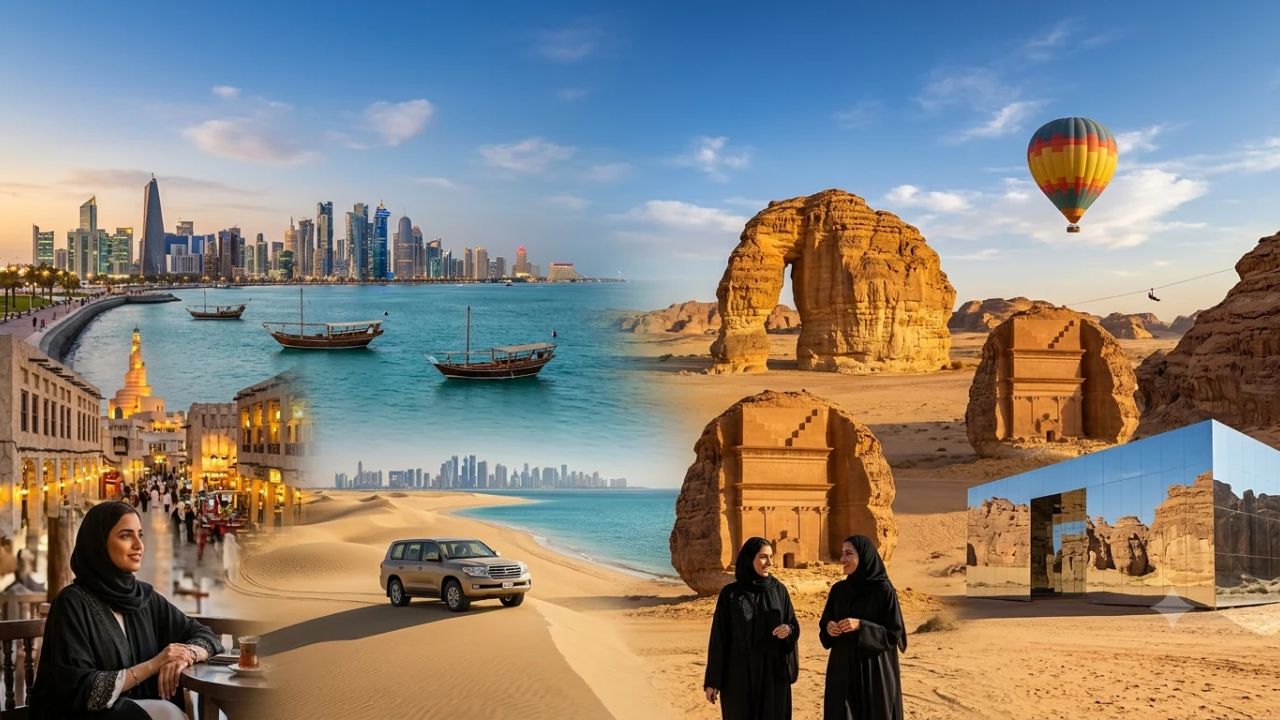
Doha and AlUla Redefine Middle East Winter Tourism: Formula 1, Desert Safaris, Hegra Hot Air Balloons, and Extreme Endurance in 2026–2027

China Drives Rural Tourism Revitalisation: How Shibadong and Simola Wa Village Transform Local Economies Through Cultural Heritage and Cooperatives