
Saudi Arabia Airspace Tensions Threaten Global Travel Chaos as US Geopolitics Risk Massive Airport Disruptions and Worldwide Flight Cancellations: Latest Airline News
As geopolitical tensions surge following Donald Trump's remarks at the G7, global aviation prepares for the severe travel chaos that could occur if Gulf airspace faces sudden military restrictions.

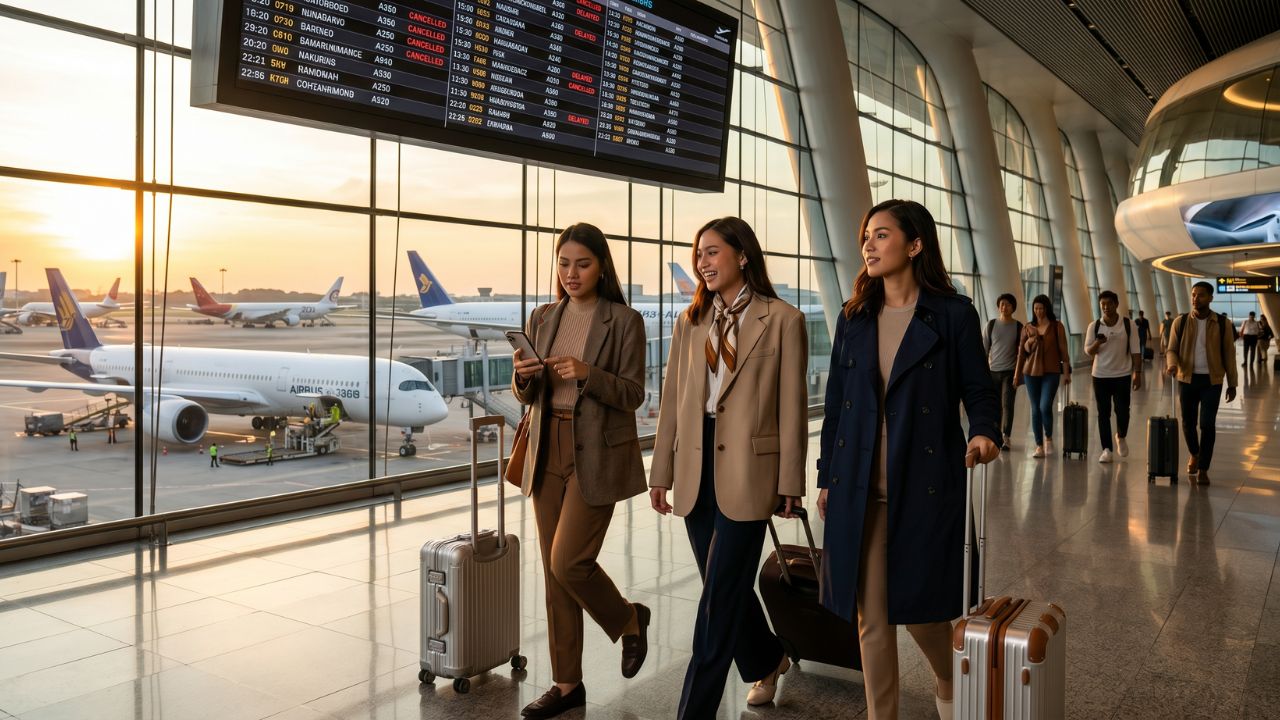
Image generated by AI
In a dramatic escalation of geopolitical rhetoric that fundamentally threatens to trigger unprecedented travel chaos and rolling flight cancellations across the world’s most critical transcontinental corridors, Saudi Arabia has forcefully entered the global aviation spotlight. Sparked on June 18, 2026, by aggressive remarks from US President Donald Trump during the G7 Summit in Evian, France, concerning military access to Saudi airports during confrontations with Iran, the international travel industry is now on high alert. While commercial operations currently remain intact, airlines recognize that any sudden military restriction of Gulf airspace instantly sparks catastrophic airport disruptions, stranding millions of passengers transiting between Europe, Asia, and Oceania. With Crown Prince Mohammed bin Salman driving massive Vision 2030 tourism investments, the threat of geopolitical airspace closures directly jeopardizes the Kingdom's emergence as an aviation powerhouse. As panicked corporate travel managers and international tourists desperately monitor the Middle East for signs of impending airspace lockdowns, this high-stakes standoff stands as the premier headline in today's breaking airline news and absolutely vital global aviation updates.
By introducing direct passenger coordination and dynamic scheduling backups, the regional aviation hubs target growing passenger demand across vital commerce sectors. The choice to coordinate flight departures in phases helps to manage gate capacity, supporting the country's broader regional transportation network.
Context: The Threat of Transcontinental Airspace Collapse
For the millions of global passengers who rely on the Middle Eastern aviation corridor to commute between continents, the sheer scale of operational bottlenecks that would occur if Saudi airspace is restricted is absolutely terrifying.
Historically, when military operations intersect with civil aviation in the Gulf, the result is instantaneous travel chaos. A sudden airspace closure forces airlines to execute massive flight cancellations or execute radical, fuel-heavy rerouting that triggers severe airport disruptions at secondary hubs. President Trump’s explicit reference to utilizing Saudi airport infrastructure during conflicts involving Iran has forced international carriers, insurance providers, and aircraft leasing companies into emergency contingency planning. Although no commercial flights have been cancelled yet, the mere perception of instability threatens to shatter booking confidence. Saudi Arabia connects Europe with South Asia, Southeast Asia, East Africa, and Australasia. If this strategic aviation bridge is compromised, airlines operating between London, Paris, Frankfurt, Delhi, Singapore, Johannesburg, and Sydney would face total logistical collapse. The Kingdom is rapidly attempting to insulate its 150 million annual tourist target from this geopolitical volatility, desperately proving that its mega-projects in Riyadh, the Red Sea coast, AlUla, Diriyah, and NEOM remain disruption-free safe zones.
To view live flight schedules, verify the active delay status of your specific itinerary, or to track active regional airspace restrictions, travelers must consult official aviation directories. For direct booking access on carriers executing advanced airspace contingency planning, travelers should actively monitor the official portals for major Gulf airlines. To explore live flight tracking and monitor the exact severity of the regional bottlenecks causing the flight cancellations this geopolitical tension may trigger, passengers can consult the official FlightAware tracking service.
Section-Wise Breakdown of the Geopolitical Threat
The G7 Catalyst in Evian, France
The trigger for this sudden travel anxiety was the Group of Seven (G7) summit held in Evian, France. During discussions concerning Iran, President Trump suggested that Saudi Arabia’s airport infrastructure could have been utilized by the United States for military operations. While strictly related to defense cooperation, this statement sent shockwaves through commercial aviation. Airlines fear that if military operations utilize civilian hubs, it will instantly force the suspension of commercial airspace, plunging the region into travel chaos.
Vision 2030: Protecting the Tourism Fortress
Saudi Arabia has invested billions into transforming itself into a global tourism and aviation powerhouse under Vision 2030. The Kingdom cannot afford the reputational damage of massive flight cancellations. With targets to welcome 150 million tourists annually by 2030, uninterrupted airport operations are essential. The Kingdom is aggressively fighting to maintain confidence among leisure, luxury, religious, and business travelers, ensuring its new international terminals remain completely insulated from defense posturing.
The Global Transcontinental Chokepoint
The Gulf region is not a localized market; it is the central artery of global aviation. Millions of connecting passengers transit through Saudi Arabia, Qatar, the UAE, Bahrain, and Oman annually. The International Air Transport Association (IATA) recognizes that any disruption here cascades globally. Airlines are currently conducting intense operational risk assessments—evaluating fuel management and insurance considerations—to ensure that if military tensions escalate, they can rapidly reroute aircraft to prevent severe airport disruptions.
Technical Roster: Saudi Aviation and Gulf Strategic Data
While no specific commercial flights were actively cancelled following these political remarks, the entire global aviation apparatus is preparing for potential airspace volatility. To ensure absolute factual accuracy regarding the exact parameters of this high-capacity region, the following matrices detail the verified strategic integration data:
Saudi Arabia Aviation and Tourism Snapshot
| Metric | Latest Target/Information |
|---|---|
| Vision programme | Vision 2030 |
| Tourism target | 150 million visitors annually by 2030 |
| Aviation objective | Become a leading global aviation hub |
| Major growth sectors | Leisure, religious, luxury, business and events tourism |
| Infrastructure focus | Airport expansion, airline growth, international connectivity |
Why Gulf Aviation Matters Globally
| Factor | Significance |
|---|---|
| Geographic location | Connects Europe, Asia and Africa |
| International transit role | Millions of connecting passengers annually |
| Airline operations | Major hub for long-haul networks |
| Tourism impact | Supports business, leisure and religious travel |
| Economic importance | Critical for global trade and aviation connectivity |
Tourism and Aviation Development
| Initiative | Strategic Objective |
|---|---|
| New international airport developments | Increase passenger handling capacity |
| Airline expansion | Improve direct global connectivity |
| Tourism megaprojects | Attract leisure and luxury travellers |
| Religious tourism enhancements | Improve pilgrimage experience |
| Business events sector | Position Saudi Arabia as a regional meetings and exhibitions hub |
Passenger Impact: Navigating Geopolitical Uncertainty
For the millions of international tourists and corporate road warriors who transit the Middle East, the sudden injection of military rhetoric completely shatters the psychological safety of long-haul travel.
The immediate passenger impact is a severe spike in booking hesitation. Previously, travelers booked flights through Gulf mega-hubs with absolute confidence. Today, aware that geopolitical tensions involving the US and Iran could suddenly restrict Saudi airspace, passengers fear catastrophic stranding. If a military closure occurs while a passenger is mid-transit, they will be subjected to severe airport disruptions, forced into hotels, and subjected to multi-day delays as airlines scramble to legally reroute flights around the conflict zone. While current operations remain entirely normal, the psychological toll is massive; passengers must now purchase expensive "cancel for any reason" insurance policies simply to protect themselves against the threat of sudden, government-mandated flight cancellations.
Industry Analysis: The Fragility of the Super-Hub
Aviation industry analysts view the immediate global reaction to the G7 remarks as definitive proof that the world's reliance on a few centralized Middle Eastern mega-hubs has created an incredibly fragile, high-risk transit network.
Analysts note that while Gulf airlines have built the most luxurious and efficient airports on earth, their geographical location makes them highly susceptible to geopolitical travel chaos. When political leaders openly discuss using civilian infrastructure for military posturing against Iran, aviation insurers immediately spike premiums. Industry experts warn that airlines cannot easily "route around" the Middle East without incurring massive fuel penalties. If Saudi Arabia or neighboring airspace is restricted, airlines will be forced to cancel less profitable routes entirely to conserve fuel for longer, inefficient flight paths. The current situation proves that the greatest threat to global aviation is not weather or economics, but the sudden, unpredictable closure of transcontinental airspace.
Actionable Advice for Surviving Geopolitical Airspace Risks
If you are navigating the highly volatile Middle Eastern transit corridor during periods of elevated diplomatic tension, execute this strategic planning checklist to fully bypass regional travel chaos:
- Monitor Official Government Advisories: Do not rely on social media rumors. Actively monitor your home country's official state department or foreign office advisories regarding travel to Saudi Arabia and the broader Gulf.
- Purchase Comprehensive Insurance: Standard travel insurance often excludes "acts of war" or military disruption. You must explicitly purchase policies that cover operational flight cancellations caused by sudden airspace closures or geopolitical events.
- Verify Airline Rerouting Policies: Before flying through a Gulf hub, understand your carrier's rerouting policy. Elite Gulf airlines possess the advanced operational control centers required to rapidly reroute flights, whereas budget carriers may simply cancel your itinerary if airspace is restricted.
- Build Connection Buffers: If enhanced security procedures are implemented at Saudi or regional airports due to diplomatic tension, terminal processing times will explode. Never book a tight connection; allow at least three hours to bypass localized airport disruptions during transit.
FAQ: Saudi Geopolitics & Aviation Travel Chaos
How could the US-Iran tensions cause travel chaos in Saudi Arabia?
If military operations require the sudden restriction of Gulf airspace or the utilization of Saudi airport infrastructure, airlines will be forced to execute massive flight cancellations, stranding millions of transcontinental passengers.
Are commercial flights to Saudi Arabia currently cancelled?
No. Despite the geopolitical rhetoric at the G7 Summit, there has been no official disruption to commercial aviation; Saudi airports remain fully open and flights are operating normally.
Why is Gulf airspace so critical to preventing global airport disruptions?
The Gulf connects Europe, Asia, Africa, and Oceania. Millions of passengers transit the region; if this airspace is restricted, airlines must execute highly inefficient rerouting, causing severe delays worldwide.
The Reality of Geopolitical Aviation Risk
The immediate global anxiety triggered by diplomatic remarks at the G7 proves definitively that geopolitical rhetoric is the ultimate catalyst for systemic physical travel chaos. While Saudi Arabia aggressively pursues its Vision 2030 tourism goals—building massive new airports to welcome 150 million visitors—the entire infrastructure remains highly sensitive to international military posturing. As airlines and corporate travel managers desperately draft emergency contingency plans to avoid rolling flight cancellations and severe airport disruptions, passengers must accept a critical new reality: avoiding brutal travel anxiety requires acknowledging that the world's most efficient aviation corridors are also its most politically volatile, demanding extreme preparation and comprehensive insurance before transiting the Gulf.
Key Takeaways
- Geopolitical Trigger: President Trump’s remarks at the G7 in Evian regarding US military access to Saudi airports amid Iran tensions have sparked global aviation anxiety.
- Vision 2030 at Risk: The Kingdom is fiercely protecting its tourism megaprojects (Red Sea, NEOM) and its target of 150 million annual visitors from the perception of regional instability.
- Massive Transcontinental Impact: Gulf airspace is the primary artery linking Europe, Asia, and Africa; any restriction would trigger catastrophic, worldwide flight cancellations.
- No Current Disruptions: Despite the political rhetoric, commercial aviation remains completely unaffected, with all Saudi airports operating normally.
- Passenger Survival: Travelers transiting the Middle East must purchase specialized travel insurance and monitor official government advisories to insulate themselves from sudden, military-driven airport disruptions.
Related Travel Guides
Massive Travel Chaos Paralyzes Chicago O'Hare with 1,425 Disruptions
Disclaimer
This article is for informational and educational purposes only. It does not constitute legal, financial, or professional advice. While we strive to provide accurate and up-to-date information, travel policies, regulations, and conditions change rapidly. Always verify information with official sources before making travel decisions. Nomad Lawyer makes no representations about the accuracy, reliability, completeness, or suitability of the information provided. Readers should consult qualified professionals for advice specific to their circumstances. The views expressed in this article are those of the author and do not necessarily reflect the views of Nomad Lawyer.
Kunal K Choudhary
Co-Founder & Contributor
A passionate traveller and tech enthusiast. Kunal contributes to the vision and growth of Nomad Lawyer, bringing fresh perspectives and driving the community forward.
Learn more about our team →