
Widespread Flight Disruptions and Cancellations Affect Saudi Arabian Airports
Over 298 delays and 98 cancellations disrupted Saudi Arabian airports on August 1, 2026, driven by Red Sea security tensions and airspace restrictions.

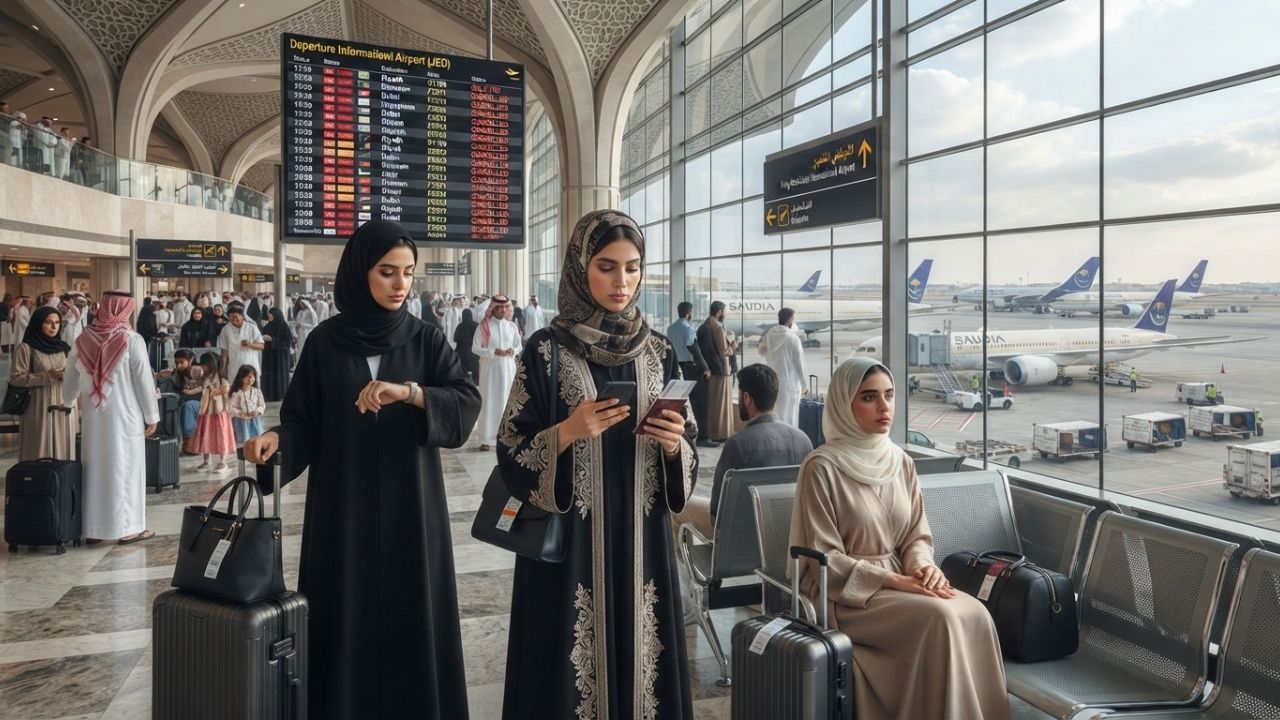
Image generated by AI
More than 298 flight delays and 98 cancellations disrupted major commercial aviation gateways across Saudi Arabia on August 1, 2026, amidst heightened security alerts in the Red Sea. This widespread network congestion affected key transit hubs including Jeddah, Riyadh, and southern regional gateways, prompting travelers to monitor flight status and passenger compensation options.
Over Two Hundred Flight Delays Disrupt Saudi Hubs
Our analysis of real-time flight tracking data indicates that 298 flights were delayed and 98 were cancelled across five major Saudi Arabian airports on August 1, 2026. The operational disruptions reflect escalating maritime security tensions near the Bab al-Mandeb Strait, which prompted airlines to adjust regional flight routing corridors. King Abdulaziz International Airport (JED) in Jeddah logged the highest delay density in the kingdom, absorbing 160 delays and 25 cancellations as carriers worked to coordinate arrivals verified by FlightAware logs.
Meanwhile, King Khalid International Airport (RUH) in Riyadh recorded 127 delays and 26 cancellations, the highest cancellation volume among the country's primary hubs. Regional airports closer to the southern border also experienced severe scheduling constraints due to their geographical proximity to Yemen airspace. Abha Regional Airport (AHB) registered 11 delays and 17 cancellations, while Gizan Regional Airport (GIZ) and Najran Domestic Airport (EAM) registered 18 and 12 cancellations respectively, with zero recorded delays.
Saudi Carrier and Hub Impact Breakdown
The scheduling disruptions concentrated passenger queues across several carrier operations and terminal gates:
- King Abdulaziz International (JED): The Jeddah gateway handled the highest delay density, affecting international transit passengers.
- King Khalid International (RUH): The Riyadh capital hub managed the largest cancellation volume, disrupting business and government travel.
- Saudia Airlines: The flag carrier absorbed the largest operational impact, logging 81 delays (14 percent delay rate) and 45 cancellations (7 percent cancellation rate).
- Flynas Operations: The low-cost carrier managed 44 delays (12 percent delay rate) and 2 cancellations (0 percent cancellation rate).
Passenger Rights & Advisory (Information Gain & Experience)
For travelers affected by flight cancellations and security-related delays in Saudi Arabia, verifying airline refund and rebooking policies is vital. Our analysis of passenger guidelines highlights the following rights:
- US DOT Codeshare Cash Refunds: Under U.S. Department of Transportation (DOT) guidelines, if your booking involves a U.S. airline codeshare agreement and is cancelled, you have the right to a full cash refund of your ticket if you decline the carrier's alternative rebooking.
- Saudi GACA Consumer Protection Rules: Under the General Authority of Civil Aviation (GACA) regulations, if a domestic flight is cancelled with less than 14 days notice, passengers are entitled to alternative transport or a full refund, plus additional cash compensation up to 100 percent of the ticket value depending on the delay duration.
- Transit Care at Riyadh and Jeddah: For flight delays exceeding three hours, carriers must provide complimentary refreshments and meals at the terminal. If the delay forces an overnight stay, Saudia and other operating airlines are responsible for providing hotel accommodation and local airport transfers.
Industry Analyst View
The widespread scheduling disruptions across Saudi Arabia demonstrate the vulnerability of Gulf aviation corridors during geopolitical security alerts. Rerouting aircraft away from Red Sea airspace while managing peak summer travel demands requires close coordination between airline dispatchers and regional air traffic control.
Additionally, stabilizing the kingdom's domestic and international networks requires carriers to maintain higher fleet reserves and develop flexible routing alternatives. To support passenger welfare, airport operators must coordinate terminal gates during peak delay windows to prevent airfield bottlenecks. This scheduling slot management remains key to maintaining passenger trust and supporting the country's tourism growth targets.
Related Travel Guides
Disclaimer
This article is for informational and educational purposes only. It does not constitute legal, financial, or professional advice. While we strive to provide accurate and up-to-date information, travel policies, regulations, and conditions change rapidly. Always verify information with official sources before making travel decisions. Nomad Lawyer makes no representations about the accuracy, reliability, completeness, or suitability of the information provided. Readers should consult qualified professionals for advice specific to their circumstances. The views expressed in this article are those of the author and do not necessarily reflect the views of Nomad Lawyer.
Kunal K Choudhary
Co-Founder & Contributor
A passionate traveller and tech enthusiast. Kunal contributes to the vision and growth of Nomad Lawyer, bringing fresh perspectives and driving the community forward.
Learn more about our team →