
Saudi Arabia and Dubai Airport Expansions Target Millions of New Tourists by 2030
Dubai and Saudi Arabia are aggressively expanding aviation infrastructure, with Al Maktoum and King Salman International airports scaling capacity to attract millions of additional tourists by 2030.

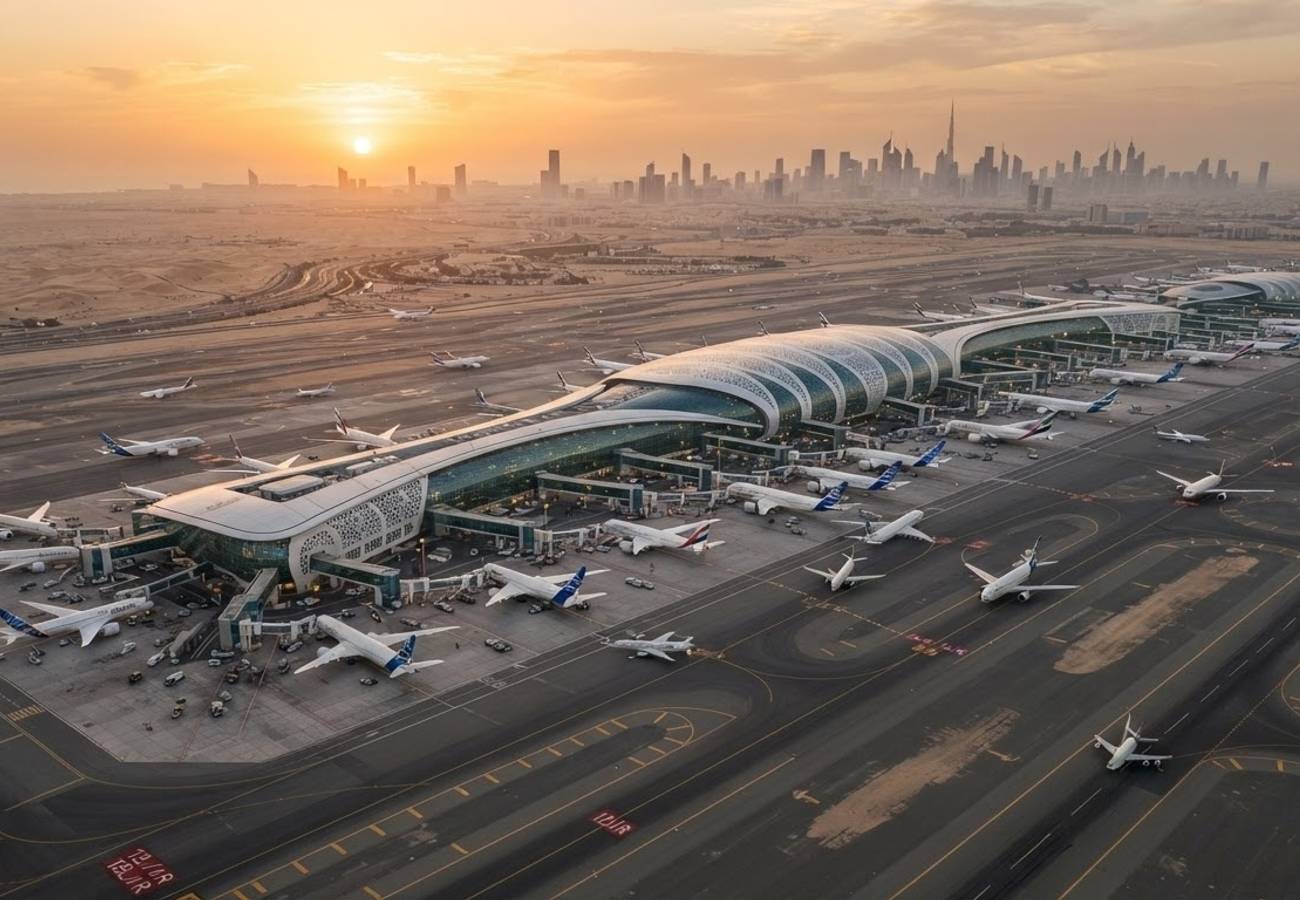
Image generated by AI
The Gulf region is reversing the traditional tourism growth model by building massive aviation capacity ahead of actual demand to force-multiply visitor numbers by 2030.
Strategic Aviation Scaling in the Gulf
Dubai, Riyadh, Doha, and Abu Dhabi have entered a phase of infrastructure development where airport capacity is being treated as an economic platform rather than a response to existing traffic. While conventional models see airport expansion follow a rise in visitor numbers, Gulf governments are using aviation as a primary instrument for demand creation.
Dubai International (DXB) set a benchmark in 2025, handling a record 95.2 million passengers and connecting with 291 destinations via 108 international carriers. However, the strategic focus has shifted toward Al Maktoum International, which involves a US$35 billion investment to eventually handle 260 million passengers and 12 million tonnes of cargo annually.
Gulf Gateway Capacity Analysis
| Gulf Gateway | 2025 Annual Traffic | Planned/Stated Capacity | Strategic Purpose |
|---|---|---|---|
| Dubai International | 95.2m | DWC ultimately 260m | Global hub & destination tourism |
| King Salman Intl (Riyadh) | Rising demand | 100m+ by 2030 | Tourism, business & logistics hub |
| Hamad International (Doha) | 54.3m | 70m+ | Transfer hub & destination tourism |
| Zayed International (Abu Dhabi) | 32.5m | Expanding network | Hub, tourism & trade |
Riyadh’s Aviation Infrastructure Shift
Saudi Arabia is implementing the most aggressive version of this "capacity-first" strategy. King Salman International Airport is planned across 57 square kilometres, featuring six runways and nine passenger terminals.
The project targets over 100 million passengers by 2030 and 185 million by 2050. This scale vastly exceeds current demand; Riyadh recorded 15.4 million tourists in 2024. The expansion is designed to support a broader ecosystem of business travel, transit traffic, and metropolitan growth, contributing approximately SAR27 billion annually to non-oil GDP and creating 103,000 jobs.
Physical expansion is already underway, with construction of a 4,200-metre third runway beginning in late 2025 to facilitate increased long-haul connectivity.
The Integration of Airlines and Policy
Infrastructure alone cannot drive tourism; it requires a corresponding increase in flight frequencies and routes. To solve this, Saudi Arabia is developing a parallel aviation ecosystem:
- Riyadh Air: Launched by the Public Investment Fund in 2023, the airline targets 100+ destinations by 2030. As of July 2026, firm orders for Boeing 787 Dreamliners have reached 67 aircraft.
- Network Expansion: In June 2026, Riyadh Air launched services to Cairo, Dubai, Jeddah, Madrid, and Manchester, with scheduled operations now active in London.
- Air Connectivity Programme: This policy directly links aviation planning to the national goal of attracting 150 million tourists by 2030.
Destination Impact: Hotels and Transit Models
The correlation between airport capacity and destination demand varies by city. Dubai demonstrates a "hotel feedback loop" where increased connectivity directly boosts accommodation metrics. In 2025, Dubai welcomed 19.59 million international overnight visitors, with hotel occupancy reaching 80.7 per cent. The Average Daily Rate (ADR) rose to AED579, up from AED538 in 2024.
Conversely, Doha utilizes a transit-heavy model. Hamad International handled 54.3 million passengers in 2025 (a 3 per cent increase), with 282,975 aircraft movements. While Qatar Airways connects over 170 destinations, the strategy is now shifting toward converting these transit passengers into destination tourists. In 2025, Qatar Tourism reported 5.1 million international visitors, with 61 per cent arriving by air.
Abu Dhabi is following a similar trajectory. Zayed International Airport handled 32.5 million passengers in 2025, a 12.8 per cent increase, supported by the addition of 39 routes and seven new airlines.
Passenger Rights & Advisory
For the traveler navigating this rapid expansion, the surge in capacity and new airline launches (such as Riyadh Air) presents both opportunities and risks.
Rebooking and Compensation Rights Our analysis of current aviation policies suggests that passengers flying into these expanding hubs should be aware of the following:
- EU261/2004 Applicability: For passengers flying from EU airports to the Gulf, EU261 protections apply regardless of the airline. If a new carrier's operational teething issues lead to delays over 3 hours, passengers may be entitled to compensation up to €600.
- Transit Rights in Doha/Dubai: For those utilizing the transit model, ensure your layover exceeds the minimum connection time (MCT) provided by the airport. In high-growth hubs, terminal transfers can be extensive.
- Saudi Aviation Regulations: As Saudi Arabia scales its "Air Connectivity Programme," passengers should verify the specific carriage terms of new entrants like Riyadh Air, as national policies on delays and cancellations may differ from European or US DOT standards.
The Gulf is no longer just building airports; it is building "aerotropolises." By decoupling capacity from current demand, these states are attempting to manufacture a market. The risk lies in the "empty terminal" syndrome, but the integration of hotel development and mega-projects suggests a calculated hedge. The success of this model depends entirely on the ability of Riyadh Air and Qatar Airways to maintain high load factors on newly created long-haul routes.
The Gulf is betting that if they build the gateway, the world will inevitably walk through it.
Related Travel Guides
Disclaimer
This article is for informational and educational purposes only. It does not constitute legal, financial, or professional advice. While we strive to provide accurate and up-to-date information, travel policies, regulations, and conditions change rapidly. Always verify information with official sources before making travel decisions. Nomad Lawyer makes no representations about the accuracy, reliability, completeness, or suitability of the information provided. Readers should consult qualified professionals for advice specific to their circumstances. The views expressed in this article are those of the author and do not necessarily reflect the views of Nomad Lawyer.
Raushan Kumar
Founder & Lead Developer
Full-stack developer with 11+ years of experience and a passionate traveller. Raushan built Nomad Lawyer from the ground up with a vision to create the best travel and law experience on the web.
Learn more about our team →