
UAE Aviation Dominance Rises as Dubai and Abu Dhabi Drive Growth
The UAE's aviation sector handles a record 156.8 million passengers in 2025, driven by mega-expansions in Dubai, Abu Dhabi, Sharjah, and Ras Al Khaimah.

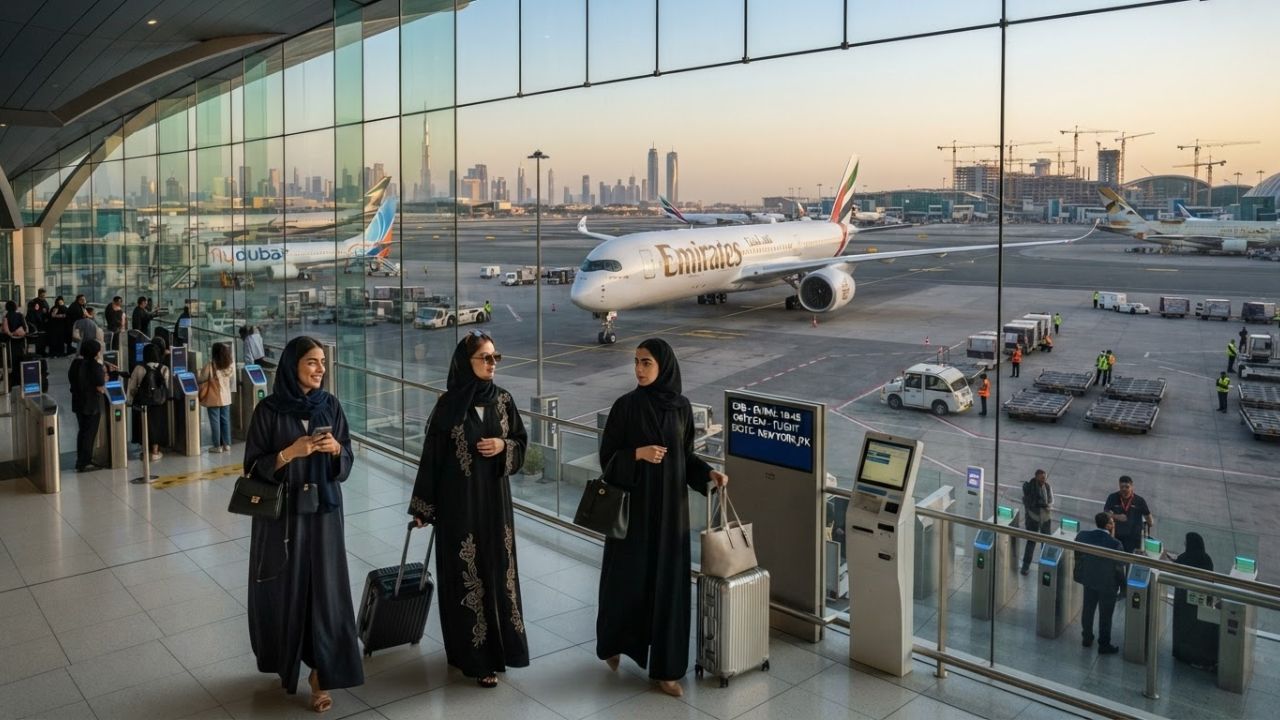
Image generated by AI
The United Arab Emirates aviation sector recorded 156.8 million passenger movements in 2025, marking a 6.1 percent increase from 147.8 million in 2024. Driven by the $35 billion Al Maktoum International Airport project and expansions at Zayed International Airport in Abu Dhabi, the country is transitioning from transit hubs into automated travel ecosystems.
The Decade of Expansion and the 2025 Traffic Benchmark
The travel sector in the Gulf is experiencing a transition as planners build regional destinations to diversify visitor experiences. In August 2026, the UAE is emerging as a global aviation hub, driven by massive investments in airport infrastructure and airline networks.
By establishing these seasonal travel corridors, the airline's management aims to support both business and leisure travel flows. Corporate travelers and travel agencies, which maintain strong relationships with global destination management organizations, benefit from direct seat capacity. This economic integration supports the travel sector, providing service providers with a reliable channel for high-value bookings.
By establishing these seasonal travel corridors, the airline's management aims to support both business and leisure travel flows. Canadian corporate travelers and travel agencies, which maintain strong relationships with European and Asian destination management organizations, would benefit from direct seat capacity. This economic integration supports the travel sector, providing service providers with a reliable channel for high-value bookings.
By establishing these seasonal travel corridors, the airline's management aims to support both business and leisure travel flows. Canadian corporate travelers and travel agencies, which maintain strong relationships with European and Asian destination management organizations, would benefit from direct seat capacity. This economic integration supports the travel sector, providing service providers with a reliable channel for high-value bookings.
By establishing these seasonal travel corridors, the airline's management aims to support both business and leisure travel flows. Canadian corporate travelers and travel agencies, which maintain strong relationships with European and Asian destination management organizations, would benefit from direct seat capacity. This economic integration supports the travel sector, providing service providers with a reliable channel for high-value bookings.
By establishing these seasonal travel corridors, the airline's management aims to support both business and leisure travel flows. Canadian corporate travelers and travel agencies, which maintain strong relationships with European and Asian destination management organizations, would benefit from direct seat capacity. This economic integration supports the travel sector, providing service providers with a reliable channel for high-value bookings.
In 2025, UAE airports handled 156.8 million passengers, representing a 6.1 percent increase compared with 147.8 million passengers in 2024.
This compares with around 134 million passengers recorded in 2023. Total aircraft movements reached 855,300 operations in 2025, representing a 6.8 percent increase.
The passenger breakdown highlights the global hub model, recording 44.2 million arriving passengers, 43 million departing passengers, and 69.5 million transit passengers (an 8 percent increase from 64.3 million in 2024), representing approximately 44.3 percent of all airport traffic.
The Powerhouse Performance: Dubai vs. Abu Dhabi Competitiveness
Dubai and Abu Dhabi remain the primary engines of the aviation sector.
This localized disruption also offers a unique opportunity for duty-free retailers and terminal operators to design services suited for stranded passengers. By monitoring passenger comfort levels during long delays, airport customer teams can provide complimentary amenities to ensure guest satisfaction. This proactive approach helps build traveler confidence, ensuring that regional transit routes remain competitive with global hub standards.
This localized disruption also offers a unique opportunity for duty-free retailers and terminal operators to design services suited for stranded passengers. By monitoring passenger comfort levels during long delays, airport customer teams can provide complimentary amenities to ensure guest satisfaction. This proactive approach helps build traveler confidence, ensuring that regional transit routes remain competitive with global hub standards.
Dubai airports handled 104.5 million passengers in 2025, recording 3.5 percent growth.
Dubai International Airport (DXB) itself handled 95.2 million passengers. Abu Dhabi airports handled 34.2 million passengers in 2025, representing 10.7 percent growth, driven by Zayed International Airport. Combined, the two centers generated 88.5 percent of total UAE passenger traffic.
Sharjah and Ras Al Khaimah Diversify Regional Flight Paths
The Northern Emirates are developing specialized segments within the aviation network.
Sharjah International Airport recorded passenger growth of 10.7 percent, with passenger traffic exceeding 19 million travelers, focusing on regional connectivity and low-cost carrier networks. Ras Al Khaimah recorded the fastest growth rate in the country at 56.8 percent in 2025, matching its rising profile as a destination for leisure, adventure, and mountain tourism.
Next-Gen Aviation: Electric Vertiports and DWC Mega-Hub
The future of the aviation corridor relies on large-scale infrastructure and smart technology.
This environmental focus is supported by regional climatologists and conservationists who monitor ecosystem health. By tracking tourist footprint signals, managers can ensure that natural areas remain protected. The integration of carrying-capacity policies with wilderness trails demonstrates how tourism planning can protect biodiversity while offering high-quality educational hikes.
This localized culinary focus also offers a unique opportunity for restaurant associations and culinary schools to design programs suited for premium travelers. By monitoring traveler culinary preferences during long stays, local chefs can provide customized dishes to ensure guest satisfaction. This proactive approach helps build traveler confidence, ensuring that Goan coastal dining remains competitive with global culinary standards.
This localized culinary focus also offers a unique opportunity for restaurant associations and culinary schools to design programs suited for premium travelers. By monitoring traveler culinary preferences during long stays, local chefs can provide customized dishes to ensure guest satisfaction. This proactive approach helps build traveler confidence, ensuring that Goan coastal dining remains competitive with global culinary standards.
The Al Maktoum International Airport (DWC) expansion project involves a $35 billion investment.
DWC is designed to accommodate up to 260 million passengers annually. In 2026, the UAE also certified its first commercial vertiport for electric air taxi operations, and achieved the top global ranking for air transport quality in the IMD World Competitiveness Yearbook 2026.
Community Support and Sustainable Urban Mobility
Channeling traveler spending into municipal markets and local service providers helps distribute economic benefits.
For the visitor, the real impact is utilizing a transit network where airport spending directly supports local Emirati guides, municipal transit staff, and independent hospitality workers.
Sustainable initiatives include building vertiports, using electric shuttle buses, and implementing smart water recycling systems at terminals.
Visitor Guide: Local Specialties, Transit Hubs, and Airport Navigation
Traveling through the UAE's major hubs involves planning airport transfers, using automated gates, and trying local culinary specialties.
Sample traditional culinary specialties during your stay. Savor Machboos, the national dish of spiced rice cooked with chicken, lamb, or fish, seasoned with baharat spices and smoky dried black lime (loomi). Try Harees, a slow-cooked porridge-like dish made from wheat and chicken or lamb. Try Luqaimat, deep-fried dough balls drizzled with date syrup and sesame seeds.
Coordinate your local transport. Transfer between Dubai and Abu Dhabi using intercity bus routes E100 or E101 for a fare of 25 AED one-way paid using a Nol card. Use the Dubai Metro for quick connections between DXB terminals.
Observe entry regulations and terminal rules. Passports must have at least 6 months of validity beyond your arrival date. Utilize Smart Gates at DXB and Zayed International by scanning your passport during check-in to reduce processing times. Dress modestly in public areas of terminals.
Future Outlook: Rebuilding a Resilient Global Travel Corridor
The long-term development of the UAE aviation sector depends on integrating transport corridors with regional planning. The General Civil Aviation Authority and municipal airport boards are collaborating to support regional travel pipelines.
Sustainable initiatives include building low-emission shuttle links, promoting eco-friendly guesthouses, and introducing cultural heritage guides. By combining smart visitor management with traditional agricultural preservation, the region aims to support travel innovation, securing a resilient and connected future for Central Europe's mountain communities.
Related Travel Guides
Disclaimer
This article is for informational and educational purposes only. It does not constitute legal, financial, or professional advice. While we strive to provide accurate and up-to-date information, travel policies, regulations, and conditions change rapidly. Always verify information with official sources before making travel decisions. Nomad Lawyer makes no representations about the accuracy, reliability, completeness, or suitability of the information provided. Readers should consult qualified professionals for advice specific to their circumstances. The views expressed in this article are those of the author and do not necessarily reflect the views of Nomad Lawyer.
Preeti Gunjan
Contributor & Community Manager
A passionate traveller and community builder. Preeti helps grow the Nomad Lawyer community, fostering engagement and bringing the reader experience to life.
Learn more about our team →