
Vietnam's Digital Immigration Overhaul: QR Codes Replace Paper Forms at Major Airports in 2026
Vietnam eliminates paper arrival cards with mandatory digital pre-arrival declarations and QR-based immigration processing, transforming airport entry for international travelers.

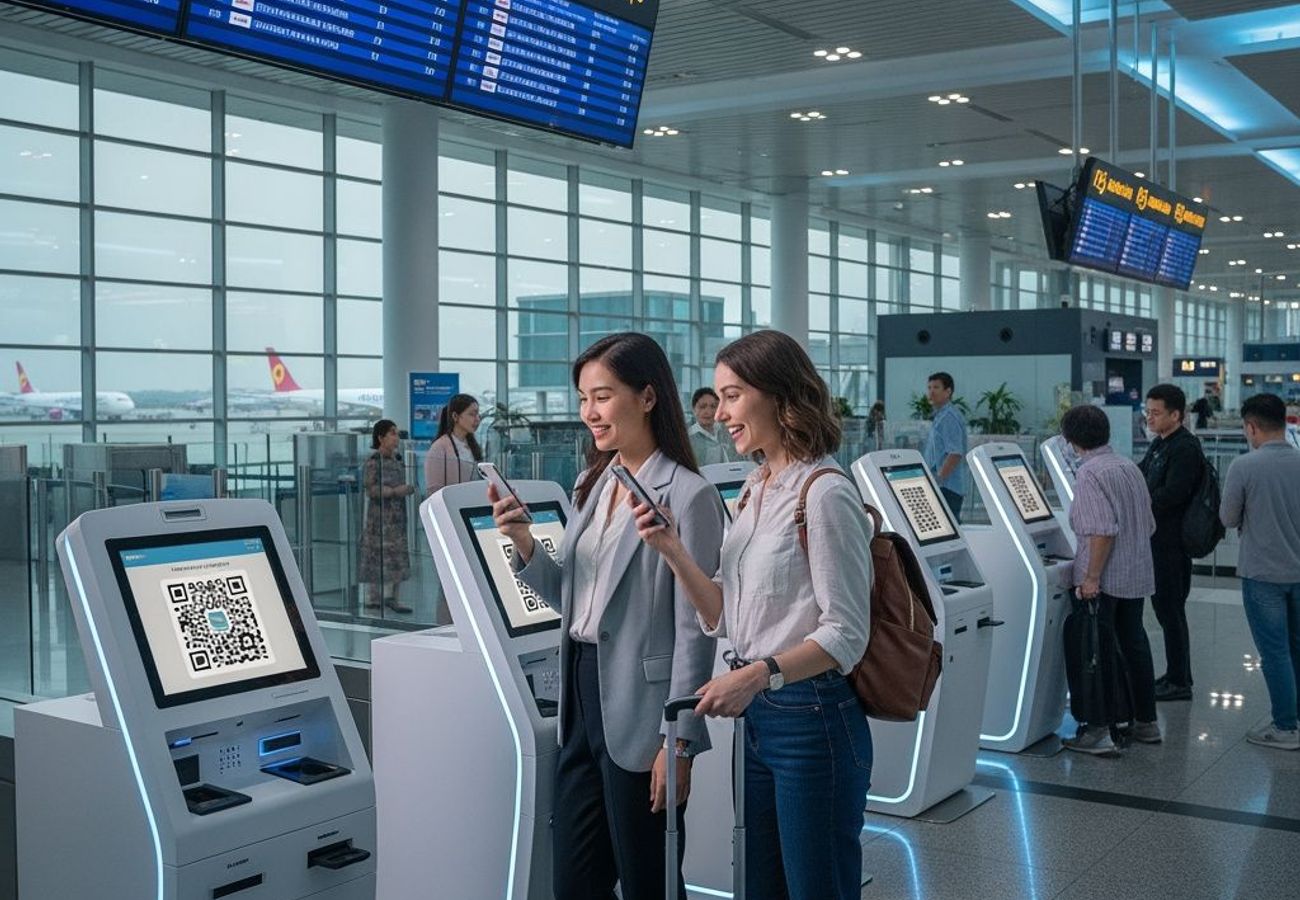
Image generated by AI
The End Of Paper Forms: Vietnam's Silent Airport Revolution
If you're planning a trip to Vietnam in 2026, forget everything you know about arrival cards. The country has quietly dismantled its paper-based immigration system and replaced it with something that fundamentally changes how you experience landing at the airport.
No handwritten forms. No frantic queue shuffling. No arrival card confusion. Instead: a digital-first process built around pre-departure declarations and QR code verification that starts before you even board your flight.
What sounds like bureaucratic fine-tuning actually transforms the rhythm of airport arrival entirely. I've watched travelers move through immigration in under five minutes—compared to the 20-30 minute waits that used to be routine at Tan Son Nhat International Airport during peak hours.
What The New Vietnam Travel Requirements Actually Look Like
The system is straightforward once you understand it, but it requires preparation.
Here's the mandatory process:
Step 1: Complete Online Declaration. Before you fly, you must submit personal and travel details through Vietnam's digital immigration portal within 72 hours of your scheduled arrival.
Step 2: Receive QR Code Approval. Once processed and approved, the system generates a unique QR code tied to your passport data.
Step 3: Immigration Scan At Arrival. When you reach the immigration counter, officers scan your code—pulling up all pre-submitted information instantly.
Step 4: Passport Control. Officers verify information against your documents and passport, then clear entry. Total time at counter: typically 3-5 minutes.
This isn't optional. The Vietnam digital arrival card for tourists is now mandatory for most international air arrivals at major airports.
Reddit: "Game changer. Went through Tan Son Nhat last month and was at baggage claim in 15 minutes. Used to spend half an hour just filling out forms on the plane." — r/VietnamTravel
Which Airports Have Gone Full Digital
The rollout didn't happen nationwide simultaneously. Vietnam prioritized its busiest entry points, and the system now operates at:
- Tan Son Nhat International Airport (Ho Chi Minh City)
- Noi Bai International Airport (Hanoi)
- Phu Quoc International Airport (Island destination)
These three airports collectively handle the majority of international arrivals. Smaller regional airports are gradually adopting the system, but these remain the primary entry hubs.
The difference is most noticeable at Tan Son Nhat, which historically struggled with congestion during peak arrival windows. Immigration staff can now review submitted data before passengers even reach the counter, dramatically improving flow.
Why The QR Code Changes Everything
The leap from paper to QR code isn't just convenience theater. It fundamentally restructures how immigration officers process travelers.
Before: Manual verification meant flipping through physical forms, cross-referencing passport information, entering data by hand into systems, and handling paperwork delays when forms were incomplete or illegible.
After: A single code contains all pre-verified information, eliminating manual data entry, reducing human error, accelerating security background checks, and allowing officers to focus on verification rather than transcription.
The results are measurable. According to Vietnam's immigration authority reporting, processing times at digital-enabled airports have dropped approximately 60% compared to paper-based operations.
For travelers, this means:
- No arrival card confusion or missing information
- Shorter immigration queues during busy periods
- Faster passport control verification
- Fewer delays caused by form errors or missing documents
- More predictable arrival timelines
Vietnam Entry Travel Rules 2026: What Changed
Vietnam has formally updated its entry framework under the 2026 Immigration Rules, which now mandate digital submission before travel.
Key rule changes:
No Paper Arrival Cards: The physical form you used to receive on aircraft or at airport counters no longer exists as a primary entry document.
Mandatory Pre-Arrival Submission: Digital declaration must be completed before boarding your international flight.
QR Verification Required: Approval generates a QR code that becomes your official entry credential.
Structured Processing: Immigration checks are now standardized, requiring advance preparation rather than on-arrival form completion.
What this means practically: If you forget to submit your digital declaration before traveling, you'll face delays at arrival. The system isn't designed to accommodate last-minute submissions. Plan accordingly.
The Regional Shift: Southeast Asia Goes Digital
Vietnam isn't pioneering this alone. Across Southeast Asia, countries are systematically abandoning paper-based immigration for digital alternatives.
This coordinated movement is often referred to as ASEAN digital travel authorization systems—a regional push toward pre-arrival digital verification, QR-based processing, and centralized data management.
Thailand, Indonesia, Malaysia, and the Philippines are implementing similar frameworks. ASEAN member states have committed to harmonizing digital border procedures over the next 24 months, creating a more standardized entry experience across the region.
Vietnam's rapid adoption of QR-based immigration positions it as a regional leader in modernized border management. For travelers moving between Southeast Asian countries, this creates consistency: one digital submission, QR-based processing, streamlined arrivals.
What Travelers Actually Experience On The Ground
The benefit becomes obvious the moment you enter the immigration hall at a digital-enabled airport.
Instead of the traditional scene—crowded queues, passengers frantically completing forms, officers processing paperwork methodically—you now see:
- Organized queue segments by passport type and QR code status
- Immigration officers working exclusively with pre-verified data
- Significantly reduced processing time at counters
- Fewer bottlenecks caused by incomplete forms
- Faster movement through passport control
At Ho Chi Minh City, peak arrival periods (typically 8 AM-12 PM and 5 PM-8 PM) show the most dramatic improvement. Where you once waited 25-40 minutes, you now clear immigration in 8-15 minutes.
This shift redistributes effort: instead of handling paperwork at arrival, you invest 5-10 minutes submitting your declaration at home. Most travelers find this trade-off significantly more convenient.
Why This Matters For Your 2026 Travel Plans
Digital immigration isn't just faster—it's more reliable. Here's what changes for your experience:
Predictability: You know before landing that your entry is processed and approved.
Reduced Friction: No surprises at immigration counters, fewer questions about incomplete forms, streamlined verification.
Better Data Security: Pre-submitted information is encrypted and verified in advance, reducing document handling at crowded counters.
Improved Accessibility: No language barriers filling out forms under time pressure; you can translate and complete your declaration at your own pace.
Peace Of Mind: Knowing your entry credentials are ready before you land eliminates arrival anxiety.
For families, business travelers, and tourists, this creates a dramatically smoother entry experience.
The Bottom Line
The Vietnam travel requirements have fundamentally shifted from a paper-dependent, airport-based process to a digital-first, preparation-based system. The Vietnam digital arrival card for tourists has replaced physical paperwork. The Vietnam immigration QR code process is now standard at major airports.
This isn't a minor administrative adjustment. It's a structural reimagining of how international travelers enter the country—one that prioritizes efficiency, security, and traveler convenience.
For anyone planning to visit Vietnam in 2026, the key takeaway is simple: prepare your digital declaration before you travel. The system is faster, more reliable, and designed to get you through immigration with minimal friction.
Your next arrival at Tan Son Nhat or Noi Bai will feel noticeably different. And honestly, after a long-haul flight, that improvement in airport experience makes all the difference.
Welcome to borderless bureaucracy—where your phone replaces your paperwork.
Related Travel Guides
Disclaimer
This article is for informational and educational purposes only. It does not constitute legal, financial, or professional advice. While we strive to provide accurate and up-to-date information, travel policies, regulations, and conditions change rapidly. Always verify information with official sources before making travel decisions. Nomad Lawyer makes no representations about the accuracy, reliability, completeness, or suitability of the information provided. Readers should consult qualified professionals for advice specific to their circumstances. The views expressed in this article are those of the author and do not necessarily reflect the views of Nomad Lawyer.
Kunal K Choudhary
Co-Founder & Contributor
A passionate traveller and tech enthusiast. Kunal contributes to the vision and growth of Nomad Lawyer, bringing fresh perspectives and driving the community forward.
Learn more about our team →