
Widespread Flight Cancellations and Delays Disrupt Saudi Arabia Air Travel
Over 200 flight delays and 100 cancellations disrupted Saudi Arabian airports on July 31, 2026, driven by network constraints and aircraft issues.

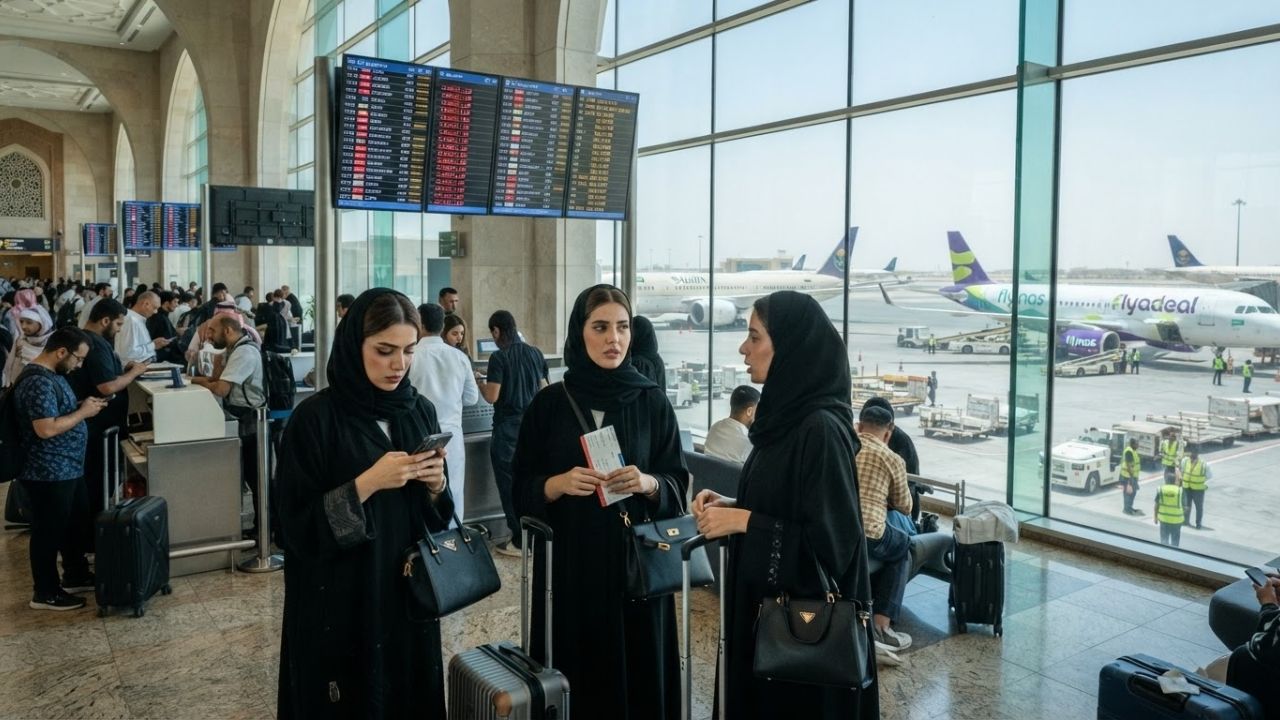
Image generated by AI
More than 200 flight delays and 100 cancellations disrupted aviation networks across Saudi Arabia on July 31, 2026, driven by network scheduling constraints and a lack of available aircraft. This widespread scheduling breakdown affected primary international gateways and regional terminals, prompting passengers to verify local consumer protection frameworks and carrier rebooking obligations.
Over Two Hundred Flight Delays Disrupt Saudi Airports
Our analysis of real-time flight tracking data indicates that 245 flights were delayed and 111 were cancelled across Saudi Arabia on July 31, 2026. Riyadh's King Khalid International Airport (RUH) recorded the highest disruption level with 108 delays and 36 cancellations, followed by Jeddah's King Abdulaziz International (JED) with 67 delays and 21 cancellations. Dammam's King Fahd International Airport (DMM) recorded 66 delays and only 3 cancellations, while regional airports in Gizan, Najran, and Abha experienced concentrated cancellations.
Across the affected airlines, flag carrier Saudia recorded the highest disruption impact, logging 54 cancellations and 54 delays combined across Riyadh and Jeddah hubs. Flynas reported 44 delays across Riyadh and Dammam, while flyadeal registered 22 delays across Riyadh and Jeddah. Several international carriers also faced challenges, with SalamAir and Air India Express experiencing elevated delay rates among their scheduled operations.
Airport Terminals and Regional Flight Impact
The operational disruptions have altered flight rotations across key Saudi Arabian gateways:
- King Khalid International (RUH): The capital hub experienced the highest cancellation volume, affecting domestic network connections.
- King Abdulaziz International (JED): The Jeddah gateway recorded 21 cancellations, all concentrated on Saudia flights, impacting Middle East transit routes.
- King Fahd International (DMM): The East Coast terminal experienced a delay-driven disruption pattern, impacting connecting flights to South Asia.
- Southern Regional Airports: Terminals in Gizan, Najran, and Abha recorded a combined 54 cancellations, disrupting regional commuter flows.
Passenger Rights & Advisory (Information Gain & Experience)
For travelers affected by flight cancellations and delays within Saudi Arabia, understanding consumer rights under regional aviation laws is essential. Our analysis of transit policies highlights the following protections:
- GACA Flight Cancellation Compensations: Under the General Authority of Civil Aviation (GACA) passenger protection regulations, if your flight is cancelled by the airline with less than 14 days' notice, you are entitled to an alternative flight or a full ticket refund. If the cancellation is due to controllable carrier factors (such as technical faults or aircraft availability), passengers may also claim cash compensation up to 100% of the ticket value.
- Duty of Care and Terminal Assistance: During extended flight delays exceeding three hours, airlines operating in the Kingdom must provide passengers with complimentary refreshments and meals. If the delay requires an overnight stay, the carrier must arrange free hotel accommodation and local airport transfers.
- US DOT Codeshare Cancellation Refunds: Under U.S. Department of Transportation (DOT) guidelines, if your booking involves a U.S. airline codeshare agreement and is cancelled, you have the right to a full cash refund of your ticket if you decline the carrier's alternative rebooking.
Industry Analyst View
The widespread disruptions across Riyadh, Jeddah, and Dammam highlight the capacity pressures that Saudi Arabia's expanding aviation sector faces during peak travel windows. Relying on highly centralized airline networks means that aircraft shortages at main hubs quickly cause rolling delays across regional commuter routes.
However, addressing these operational constraints requires carriers to maintain higher fleet reserves and improve maintenance response times. To support the Kingdom's long-term tourism goals, airport operators must coordinate slot management during peak hours to prevent terminal bottlenecks. This infrastructure coordination is key to maintaining customer satisfaction and securing transit traffic as Saudi hubs continue to expand.
Related Travel Guides
Disclaimer
This article is for informational and educational purposes only. It does not constitute legal, financial, or professional advice. While we strive to provide accurate and up-to-date information, travel policies, regulations, and conditions change rapidly. Always verify information with official sources before making travel decisions. Nomad Lawyer makes no representations about the accuracy, reliability, completeness, or suitability of the information provided. Readers should consult qualified professionals for advice specific to their circumstances. The views expressed in this article are those of the author and do not necessarily reflect the views of Nomad Lawyer.
Kunal K Choudhary
Co-Founder & Contributor
A passionate traveller and tech enthusiast. Kunal contributes to the vision and growth of Nomad Lawyer, bringing fresh perspectives and driving the community forward.
Learn more about our team →