
Breaking Airline News: SAS Aggressively Combats Global Travel Chaos With Massive Airbus Widebody Fleet Renewal
Breaking airline news: Amidst a terrifying era of severe airport disruptions and supply chain gridlock, SAS Scandinavian Airlines executes a massive multi-billion dollar Airbus fleet renewal to combat global travel chaos.

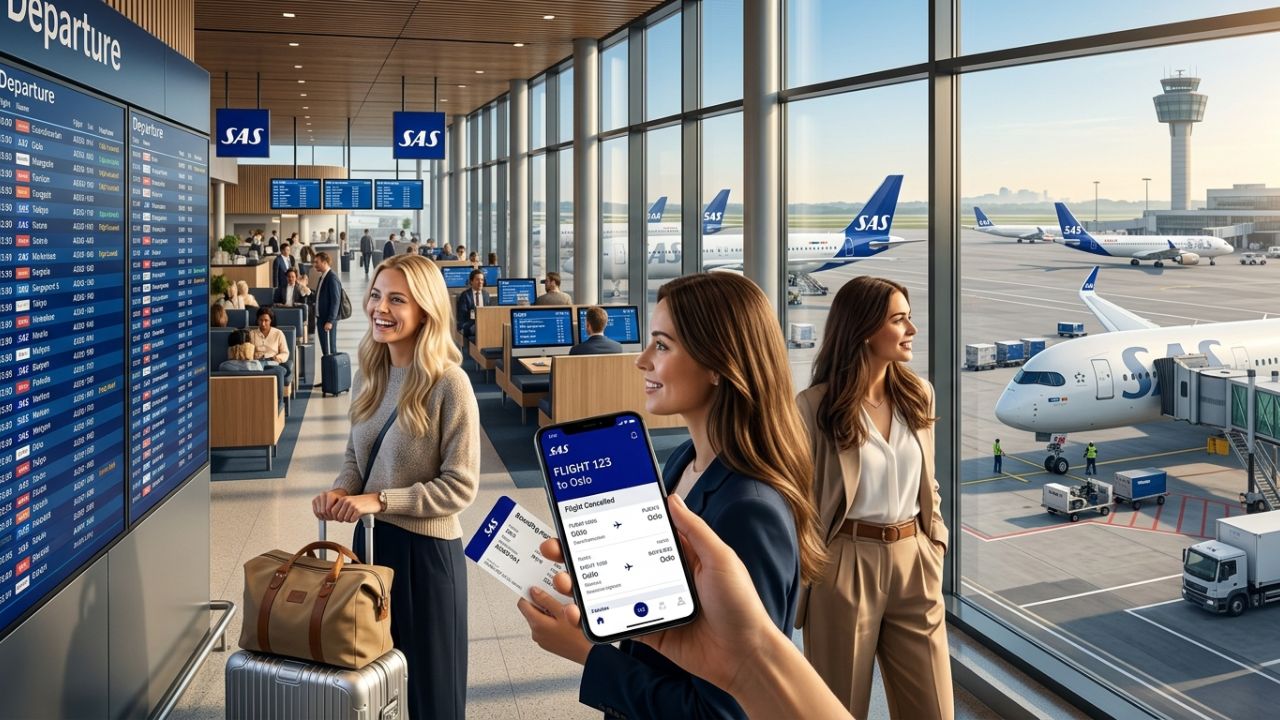
Image representing SAS Scandinavian Airlines' massive operational strategy aggressively combating future travel chaos by deploying advanced Airbus A350 and A330neo widebody jets.
Breaking Airline News: SAS Aggressively Combats Global Travel Chaos With Massive Airbus Widebody Fleet Renewal
As paralyzing airport disruptions, devastating flight cancellations, and severe aerospace supply chain gridlocks violently threaten the survival of international aviation networks, SAS Scandinavian Airlines is executing a high-stakes, multi-billion dollar operational offensive. The carrier has officially moved to close a massive widebody fleet renewal agreement with Airbus, securing up to 20 highly advanced long-haul aircraft to aggressively insulate its passengers against future travel chaos.
In a dramatic pivot designed to completely bypass the crippling vulnerabilities currently plaguing the global airline industry, SAS has successfully mapped out its ultimate long-haul defense strategy. While rival carriers helplessly battle severe manufacturing backlogs and paralyzing operational constraints, SAS has aggressively finalized a custom mixture of Airbus A330neo and A350 flagship jets. By ruthlessly rejecting highly competitive bids for the Boeing 787 Dreamliner, the airline is fiercely prioritizing extreme cost efficiency and operational stability. This massive contract explicitly locks in highly coveted delivery slots for the early 2030s period, securing a massive volume of between 15 and 20 advanced long-range passenger aircraft. This strategic acquisition guarantees that travelers will enjoy state-of-the-art, disruption-resistant intercontinental operations for decades to come.
Expanded Overview: Weaponizing Manufacturer Commonality
The crisis currently paralyzing modern commercial aviation frequently stems from overcomplicated, deeply fragmented airline fleets. Introducing entirely foreign aircraft types inevitably creates massive operational hurdles for mid-sized carriers, rapidly accelerating the risk of travel chaos during peak demand. SAS has completely neutralized this threat by aggressively weaponizing manufacturer commonality. The airline heavily bypassed massive financial outlays associated with complex fleet diversification. By maintaining an exclusively Airbus network, the carrier saves millions on fresh pilot training courses, ground support equipment overhauls, and specialized spare part storage facilities. Current flight crews can transition seamlessly between existing aircraft and the upcoming variants, insulating the carrier against severe labor shortages and allowing them to aggressively buffer operations against unexpected flight cancellations.
Section-Wise Breakdown: The Transcontinental Network Strategy
The Airbus Offensive: A330neo and A350 Deployment
The core of this massive fleet renewal heavily relies on the strategic deployment of highly advanced Airbus machinery. The highly flexible mix of A330neo and A350 variants will systematically replace aging passenger cabins rapidly approaching fifteen years of active service. The smaller A330neo is engineered to handle medium-range routes highly efficiently, while the massive, high-capacity A350 is explicitly designed to tackle high-density, heavily slot-constrained international gateways where airport disruptions are most prevalent.
Copenhagen Hub Consolidation
The timing of this historic equipment acquisition aligns perfectly with massive corporate restructuring initiatives. Following a highly successful Chapter 11 exit, the carrier secured a vital, lifeline investment from aviation giant Air France-KLM. This massive financial injection prompted a swift, strategic transition directly into the expansive SkyTeam alliance network. Now, SAS is aggressively positioning Copenhagen Airport as its primary international connecting nexus. This fortress hub strategy, supported by the new widebody fleet, significantly reduces the probability of travelers getting ensnared in severe connecting flight disruptions.
Navigating the Aerospace Gridlock
Global operational pressures remain undeniably intense. By violently securing production slots immediately, SAS completely protects itself against the terrifying reality of severe aerospace manufacturing backlogs that are currently crippling rival networks. Furthermore, this aggressive investment effectively shields the airline against volatile geopolitical disruptions and horrific international fuel pricing spikes that routinely trigger widespread travel chaos.
Flight Details & Aviation Defense Matrix
To fully comprehend the sheer magnitude of this systemic overhaul, aviation analysts must review the exact operational footprint currently deployed by SAS. This massive baseline dictates the airline's total commitment to an impenetrable Airbus defense grid.
| Aircraft Type | Active Fleet Count | Operational Domain |
|---|---|---|
| Airbus A319-100 | 4 | Short-haul / Regional |
| Airbus A320-200 | 5 | Short-haul / Regional |
| Airbus A320neo | 46 | Short-haul Mainline |
| Airbus A321LR | 3 | Transatlantic Narrowbody |
| Airbus A330-300 | 8 | Medium/Long-haul Widebody |
| Airbus A350-900 | 6 | Flagship Long-haul Widebody |
| Total Mainline Fleet | 72 | Network Wide |
Passenger Impact: Surviving Exhausting Oceanic Crossings
For the everyday traveler dreading the physical toll of modern travel chaos, this massive SAS fleet renewal delivers immense, tangible upgrades over previous generations. Passengers attempting to survive grueling, multi-hour oceanic crossings will immediately notice the proprietary Airspace by Airbus cabin architecture. This layout forcefully eliminates boarding bottlenecks by providing noticeably larger overhead baggage bins, while heavily customizable LED ambient lighting profiles actively combat travel fatigue. Most crucially, the advanced composite construction of the premier A350 flagship offers a significantly lower cabin altitude environment. This stunning engineering feat drastically improves overall humidity levels, heavily reducing the devastating effects of jet lag. Quieter engine technology also fosters a peaceful, far less fatiguing environment, ensuring that international vacationers arrive physically prepared to enjoy their destinations.
Industry Analysis: The Economics of Carbon Reduction
From a macroeconomic perspective, record-high fuel expenses require carriers to operate the most efficient machinery possible. Older, conventional jet models consume excessive fuel, making certain long routes completely financially unviable and highly susceptible to sudden flight cancellations. Through this massive SAS Scandinavian Airlines widebody fleet renewal, the airline is aggressively targeting an unprecedented 25% reduction in carbon emissions per seat. This impressive efficiency jump heavily safeguards the network against unpredictable, catastrophic energy market spikes. By ruthlessly adhering to extreme cost efficiency and operational stability, the carrier actively protects its profit margins, ultimately allowing the operator to offer far more competitive, budget-friendly ticket pricing to everyday consumers.
Conclusion: A Strategic Blueprint for Aviation Survival
The imminent finalization of the SAS Scandinavian Airlines widebody fleet renewal represents a monumental triumph of operational discipline. By fiercely expanding its long-term commitment to Airbus and outright rejecting complex fleet diversification, the carrier guarantees a highly reliable, unified, and fuel-efficient long-haul operation. As these highly advanced widebodies debut in the early 2030s, passengers will reap the massive long-term rewards through cutting-edge cabin comfort, highly reliable schedules, and a vastly expanded global route map securely anchored at the Copenhagen connecting hub.
Key Takeaways
- Massive Order Volume: SAS is aggressively locking in between 15 and 20 advanced long-range passenger aircraft to completely overhaul its widebody fleet.
- Strategic Rejection: The carrier fiercely protected its unified Airbus network by successfully turning down highly competitive bids for the Boeing 787 Dreamliner.
- Dual-Model Deployment: The multi-billion dollar contract utilizes a highly flexible mix of highly advanced A330neo and A350 variants.
- Early 2030s Lock: Initial airline deliveries are explicitly locked for the early 2030s period to actively avoid severe aerospace manufacturing backlogs.
- SkyTeam Alliance Integration: The massive capacity injection directly supports the airline’s aggressive transition into the global SkyTeam alliance network.
- Extreme Efficiency: The new widebody fleet aggressively targets a massive 25% reduction in carbon emissions per seat, violently combating extreme fuel pricing spikes.
Related Travel Guides
Disclaimer
This article is for informational and educational purposes only. It does not constitute legal, financial, or professional advice. While we strive to provide accurate and up-to-date information, travel policies, regulations, and conditions change rapidly. Always verify information with official sources before making travel decisions. Nomad Lawyer makes no representations about the accuracy, reliability, completeness, or suitability of the information provided. Readers should consult qualified professionals for advice specific to their circumstances. The views expressed in this article are those of the author and do not necessarily reflect the views of Nomad Lawyer.
Kunal K Choudhary
Co-Founder & Contributor
A passionate traveller and tech enthusiast. Kunal contributes to the vision and growth of Nomad Lawyer, bringing fresh perspectives and driving the community forward.
Learn more about our team →