San Francisco Festival Tourism Booms as Oktoberfest and Castro Night Market Transform September Travel

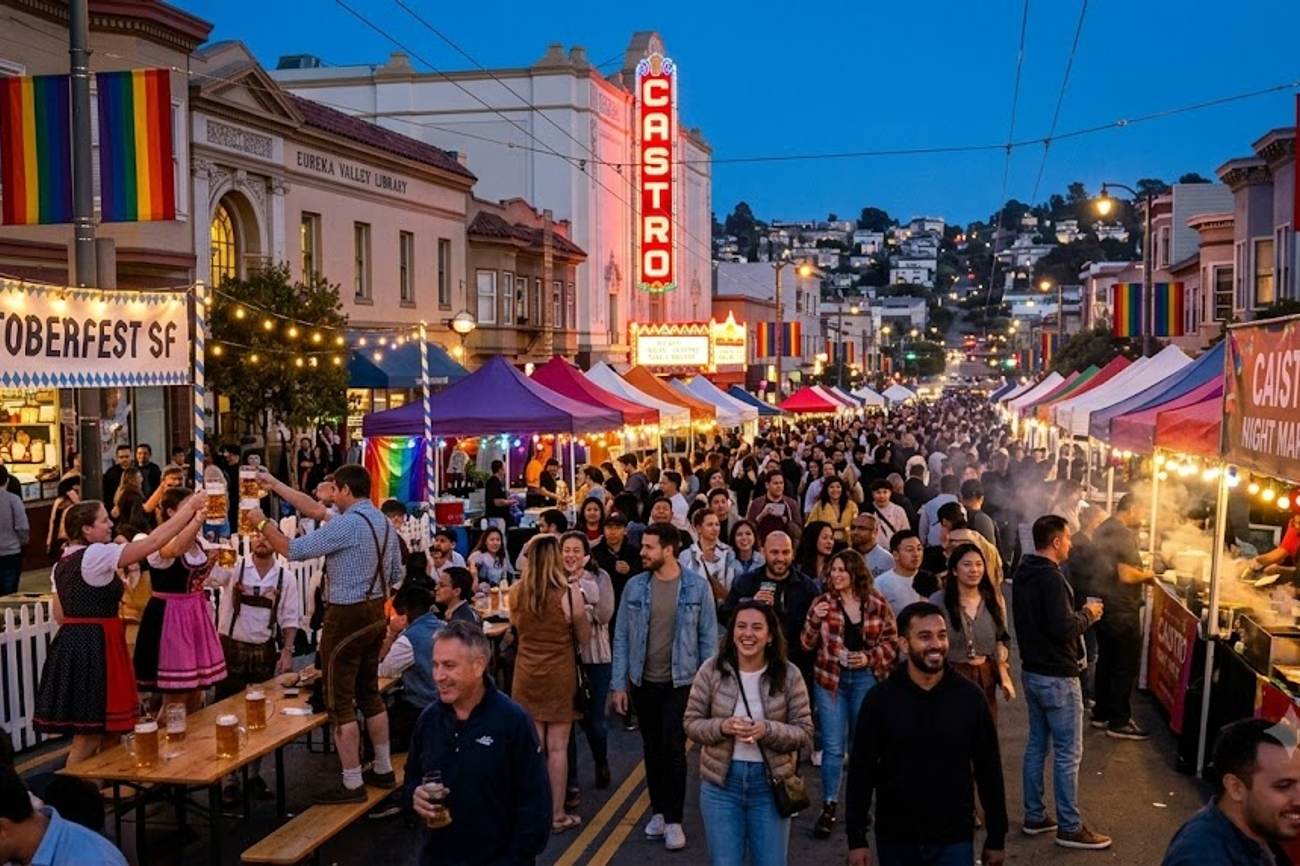
Image generated by AI
Downtown San Francisco’s Front Street Entertainment Zone recorded 46,300 attendees across 15 events during its inaugural year, establishing a high-density baseline for the city's shift toward event-driven urban recovery. This data point provides the necessary context for the events scheduled for 18 September 2026, where the city is deploying a dual-node festival strategy to distribute visitor traffic between the commercial core and residential neighborhoods. By leveraging free, high-engagement experiences like Oktoberfest on Front and the Castro Night Market, San Francisco is attempting to pivot from a reliance on static landmarks toward a dynamic, event-based tourism economy.
The September 18 Surge in Numbers
The activity scheduled for 18 September 2026 represents a coordinated effort to maximize "night-time economy" metrics. The data reveals a strategic split in timing and location designed to capture different traveler demographics. Oktoberfest on Front operates from 2pm to 10pm in the Front Street Entertainment Zone, utilizing a "free with RSVP" model to manage capacity while ensuring a baseline of committed attendees. Simultaneously, the Castro Night Market operates from 5pm to 10pm, focusing on a purely open-access model.
The operational scale of these events is mirrored in the infrastructure restrictions. The city is implementing a significant road closure on 18th Street from 11am until 1am the following morning. This 14-hour window of restricted vehicle access indicates a high expectation of pedestrian volume. Furthermore, the transit impact extends beyond the Castro; the SFMTA has flagged potential delays on Route 24 (Divisadero) and Route 35 (Eureka), alongside a full reroute of Route 33 (Ashbury/18th Street) starting at 11am.
Beyond the festivals, the data shows a city operating at peak capacity. The 18 September window includes a Golden State Valkyries game at the Chase Center starting at 7pm and a separate night market on Ocean Avenue affecting the 49 Van Ness/Mission line. Most critically for regional logistics, northbound US 101 will undergo a full weekend closure between Cesar Chavez Street and the 7th Street exit starting 18 September. This convergence of events and infrastructure maintenance creates a high-friction environment for transit but a high-value environment for local business revenue.
Comparative Context: The Shift to Neighborhood Tourism
Historically, San Francisco tourism has been concentrated in "anchor zones" such as Fisherman's Wharf and the Golden Gate Bridge. However, the emergence of the Front Street Entertainment Zone—California's first of its kind—signals a move toward "zonal licensing." This allows businesses to serve alcohol in designated outdoor areas, effectively turning a street into a managed venue. When compared to traditional tourism, this model shifts the value proposition from sightseeing to "experiential consumption."
The contrast between the two 18 September events highlights a regional strategy to balance "Commercial Core" tourism with "Neighborhood" tourism. While Oktoberfest targets the corporate and downtown crowd with Bavarian-themed programming and 70+ beer varieties, the Castro Night Market targets the "localist" traveler, emphasizing craft vendors and neighborhood DJs. According to World Travel & Tourism Council (WTTC), the global trend is shifting toward authentic, community-based experiences over mass-market attractions, a pattern San Francisco is mirroring by pushing visitors into the Castro and Ocean Avenue.
The following table breaks down the operational differences between the two primary drivers of the September 18 surge:
| Metric | Oktoberfest on Front | Castro Night Market |
|---|---|---|
| Operational Window | 2pm – 10pm | 5pm – 10pm |
| Entry Requirement | Free (RSVP Required) | Free (Open Access) |
| Primary Location | Front Street Entertainment Zone | 18th Street and Castro |
| Transit Impact | High Downtown Congestion | Route 33 Reroute / Route 24 & 35 Delays |
| Street Closure | Front Street Event Space | 18th St (11am – 1am) |
| Core Value Prop | Bavarian Culture / Corporate Core | Local Merchants / Neighborhood Culture |
Practical Traveler Advisory and Strategic Insights
The data suggests that 18 September 2026 will be one of the most complex days for navigation in the city this quarter. For travelers, the "friction cost" of moving between events will be high. If you are planning to visit both Oktoberfest and the Castro Night Market, the 2pm to 5pm window is your primary transition period. Attempting to move between these zones after 5pm will coincide with the peak congestion of the Castro road closures and the 7pm influx of fans heading to the Chase Center.
September's surge in festival attendance is driving increased demand for regional transit and hotel accommodations across the city. Travelers are encouraged to coordinate their arrivals via San Francisco International Airport, which serves as the primary gateway for international and domestic tourists attending these autumn events.
Actionable Booking and Transit Advice:
- Avoid US 101 Northbound: Because of the full weekend closure between Cesar Chavez and 7th Street, travelers arriving from the south should avoid US 101 entirely. Use alternative arterials or public transit to avoid total gridlock.
- Prioritize the RSVP: Since Oktoberfest on Front requires an RSVP, securing this early is essential. Given the previous year's Front Street data (46,300 attendees), these free events typically hit capacity quickly.
- Accessibility Planning: Travelers requiring ADA access at the Castro Station should note that the new elevator is still under completion. You must use the north-side escalator as directed by the SFMTA.
- Timing the "Night-Time Economy": To maximize the experience without the stress of the 11am–1am road closures, aim to arrive in the Castro via BART or a walking route before the 5pm peak.
Forward Projection: The "Event-Zone" Model
The success of the Front Street Entertainment Zone is likely a pilot for a wider city-wide rollout. By transforming commercial districts into "event zones," San Francisco is creating a repeatable framework for tourism recovery. We can expect to see similar designated zones appearing in other underutilized commercial corridors to combat the decline in traditional office-worker foot traffic.
Based on current trajectory and data from IATA regarding urban mobility, the integration of sports (Golden State Valkyries) and cultural festivals on a single day indicates a move toward "Super-Saturdays" (or in this case, "Super-Fridays"). The city is intentionally stacking events to create a "critical mass" of visitors, which increases the average spend per visitor per day. If the 18 September data shows a high conversion rate of festival-goers to nearby business patrons, expect an increase in these coordinated "multi-node" event days throughout 2027.
FAQ: San Francisco Festival Tourism 2026
Will hotel prices increase for the September 18 weekend? Yes. The convergence of two major festivals, a Valkyries game, and a night market typically drives up demand. Based on historical patterns for "Super-Event" days, booking 12-16 weeks in advance is recommended to avoid peak surge pricing.
Is it possible to drive to the Castro Night Market? It is highly discouraged. With 18th Street closed from 11am to 1am and Route 33 rerouted, parking will be extremely limited. Use BART or rideshares dropping off outside the restricted zone.
Which event is better for families? Oktoberfest on Front is open to all ages, though alcohol is restricted to those 21+. The Castro Night Market is also family-friendly but will be significantly more crowded due to the narrower street layout and lack of RSVP capacity limits.
How will the US 101 closure affect my trip? The closure is northbound between Cesar Chavez and 7th Street. This will cause significant backups for anyone entering the city from the south. Plan for an additional 45-60 minutes of travel time or use alternative routes.
The shift from landmark-based tourism to event-driven urbanism is no longer a theory—it is now a measurable data trend in San Francisco.
Tags: San Francisco-Tourism-2026, Front-Street-Entertainment-Zone, Castro-Night-Market-Data, SFMTA-Transit-Impacts, Urban-Event-Economy-Growth
Related Travel Guides
This article is for informational purposes. Flight routes, passenger regulations, visa rules, and transit advisories are subject to change by airlines and aviation authorities. Readers are advised to verify schedules and travel documentation with relevant carriers and border agencies before departure.
Related Stories
United States Turns Up the Heat with Las Vegas Sale Offering 180+ Travel Deals from September 22
UK Cheshire West and Chester Launches £1 NextGenTravel Pass to Transform Youth Bus Travel and Boost Sustainable Mobility