
San Francisco Airport Chaos: United, Air Canada, KLM, Southwest Cancel Flights, Disrupt 50+ Destinations
Four major airlines suspended flights at SFO on July 3, 2026, impacting hundreds of passengers across North America, Europe, and Asia with cascading delays.

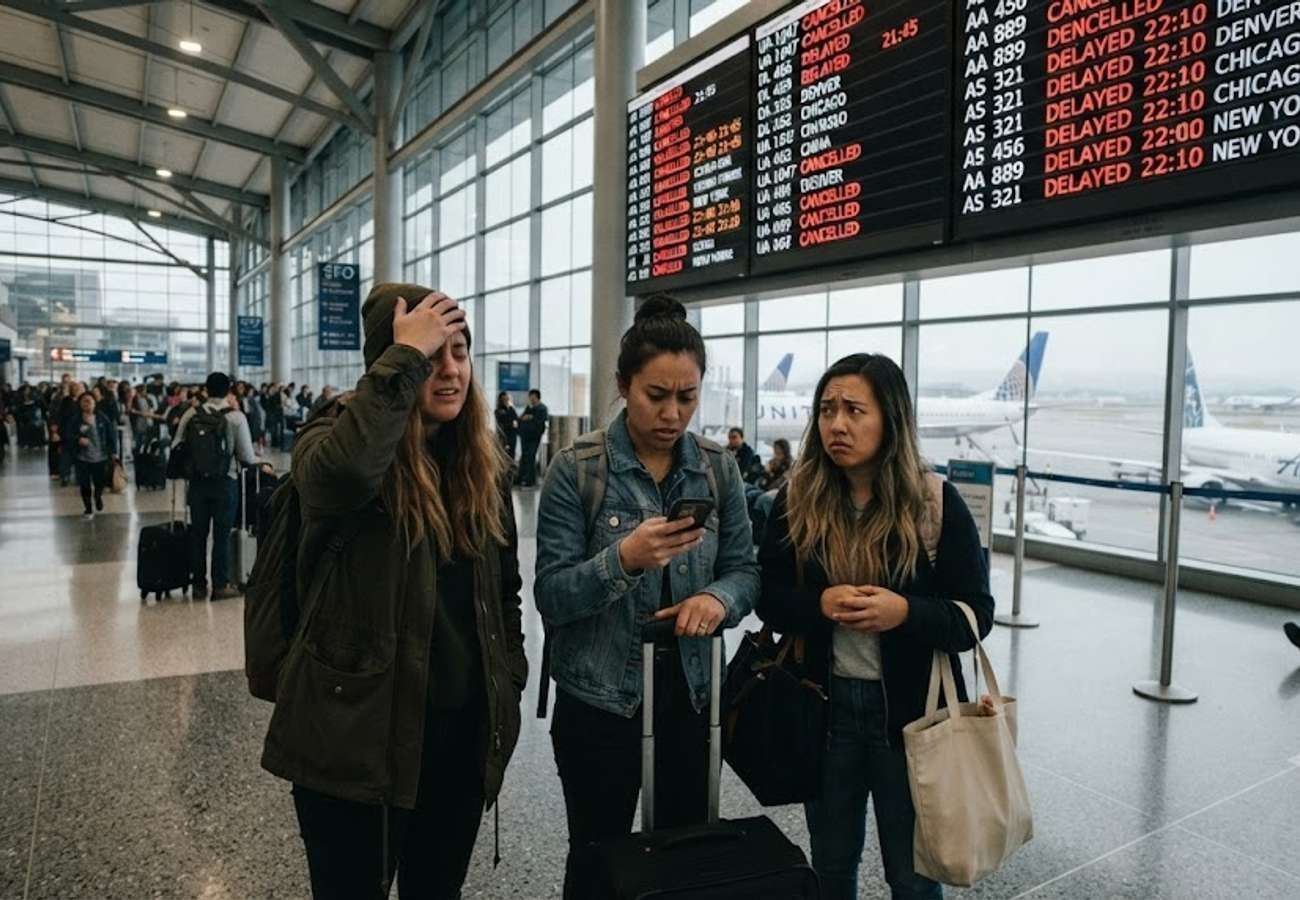
Image generated by AI
Four Airlines, One Airport, Hundreds of Stranded Passengers
San Francisco International Airport descended into operational chaos on July 3, 2026, as United Airlines, Air Canada, KLM, and Southwest Airlines each suspended a single flight—but the ripple effects proved anything but minor. Hundreds of travellers found themselves caught in a web of cancellations and cascading delays that rippled across more than 50 destinations spanning North America, Europe, the Middle East, and Asia.
What started as four cancelled flights ballooned into a day-long travel nightmare. The disruption underscored how fragile modern aviation infrastructure truly is, and how quickly a manageable problem can spiral into widespread chaos when multiple carriers are operating at capacity.
The Scale of Disruption: By the Numbers
The numbers tell a sobering story. According to FlightAware data, United Airlines reported the heaviest impact with 1 cancellation and 63 delayed flights. Southwest Airlines followed with 1 cancellation and 25 delayed departures. Air Canada recorded 1 cancellation and 6 delays, while KLM suspended 1 flight with no reported additional delays.
Four cancellations. Ninety-five delays. Hundreds of passengers scrambling for alternatives.
Reddit: "I was supposed to get to Dallas by 6 PM. Didn't leave SFO until 10:30 PM. No apology, no compensation offered. Just rebooked on a different airline." — r/unitedairlines
The affected network spread across an impossibly wide geographic footprint: Dallas, Phoenix, New York, Salt Lake City, Boise, Denver, Los Angeles, Seattle, San Diego, Toronto, Vancouver, Paris, Rome, Amsterdam, Frankfurt, Tokyo, Singapore, and dozens more cities all felt the impact of operations grinding down at one critical hub.
Which Routes Got Hit Hardest?
United Airlines bore the brunt of operational stress, a reflection of the carrier's outsized presence at SFO. The majority of its 63 delayed flights connected passengers to key destinations including New York, Los Angeles, Denver, and Chicago—all major revenue-generating routes. The carrier's single cancellation, while numerically small, created a domino effect that rippled through connection points across the network.
Southwest Airlines, which operates heavily on domestic West Coast routes, saw 25 flights delayed. Passengers heading to Las Vegas, Phoenix, Denver, and Salt Lake City experienced compression of departure windows, creating longer waits and tighter connection margins.
Air Canada and KLM maintained relatively controlled situations, but their international flights—connecting passengers to Toronto, Vancouver, Amsterdam, and European destinations—meant that delays propagated across multiple time zones and connected networks.
What Actually Caused This?
The source article points to operational disruptions without specifying root cause. Whether mechanical issues, staffing shortages, ground handling delays, or air traffic control constraints triggered the cascade remains unclear—but that's precisely the problem travellers face in real time. When an airline's status page says "operational disruption," you're left guessing what actually went wrong.
What we know: at a hub like San Francisco International Airport, where airlines have optimized schedules to near-breaking point, even minor friction spirals into major delays. There's no buffer. There's no slack in the system.
Your Flight Gets Cancelled: Here's What to Actually Do
If you're caught in a similar situation, here's your action plan:
Stay Plugged In Immediately
The moment you learn of a cancellation, don't panic—pivot to information gathering. Check your email, text messages, and the airline's mobile app. Most major carriers will attempt to notify you via multiple channels, but speed matters. Log into the airline's website or call customer service before queues explode.
Contact Customer Service—But Choose Your Channel Wisely
Calling an airline's main line after a mass cancellation is a fool's errand. You'll wait hours. Instead: use the airline's mobile app chat feature, visit the airport ticket counter if you're already there, or tweet directly at the airline's customer service account. Speed of response varies, but app-based chat typically moves faster than phone queues during crisis situations.
Know What You're Actually Entitled To
Here's where your legal rights matter. In the European Union, passengers receive automatic compensation up to €600 per person under EU Regulation 261/2004 if an airline cancels within certain thresholds and fails to provide alternative transport. In the United States, compensation is less standardized—the Department of Transportation regulates some aspects, but don't expect automatic cash payouts. Check your airline's specific policy.
Explore Your Options Proactively
Don't wait for the airline to rebook you on another flight three days later. Ask immediately about the next available departure. If nothing works, check whether you can:
- Book with a competing airline and potentially claim reimbursement later
- Use alternative transport (Amtrak, bus services, rental cars)
- Request a full refund if you decide not to travel
On July 3, 2026, hundreds of passengers should have asked these questions immediately.
The Bigger Picture: System Fragility
The San Francisco International Airport incident reveals an uncomfortable truth: modern airline networks operate with razor-thin margins. A single day of disruption at one major hub cascades across continents. Passengers heading to Rome, Tokyo, and Toronto all felt the impact of problems originating at SFO.
This is what happens when the system works exactly as designed—and why that's actually a problem. Airlines have optimized for efficiency, not resilience. When disruptions occur, there's nowhere for pressure to escape.
What Airlines and Passengers Learned (Or Should Have)
Travellers were advised to monitor flight status obsessively, confirm boarding information repeatedly, and arrive at airports with substantial time buffers—in other words, add hours to already-lengthy travel days just to account for operational instability. Airlines, meanwhile, faced the uncomfortable reality that their scheduling practices leave zero room for operational error.
According to the source data from FlightAware, operations began normalizing as the day progressed, but the damage was already done. Passengers missed connections. Business meetings were postponed. Vacation days dissolved.
The lesson: if you're travelling through major US hubs during peak seasons, build in connection buffers of at least 90 minutes for domestic flights and 2+ hours for international connections. Assume delays will happen. Check flight status obsessively. Have a backup plan before you need it.
When four carriers suspend flights at once, something's fundamentally broken—and it's usually the assumption that the system has any slack left.
Related Travel Guides
Disclaimer
This article is for informational and educational purposes only. It does not constitute legal, financial, or professional advice. While we strive to provide accurate and up-to-date information, travel policies, regulations, and conditions change rapidly. Always verify information with official sources before making travel decisions. Nomad Lawyer makes no representations about the accuracy, reliability, completeness, or suitability of the information provided. Readers should consult qualified professionals for advice specific to their circumstances. The views expressed in this article are those of the author and do not necessarily reflect the views of Nomad Lawyer.
Kunal K Choudhary
Co-Founder & Contributor
A passionate traveller and tech enthusiast. Kunal contributes to the vision and growth of Nomad Lawyer, bringing fresh perspectives and driving the community forward.
Learn more about our team →