
Dublin Airport Abolishes 100ml Liquid Rule With Next-Gen C3 Scanners as Aer Lingus, Ryanair, British Airways, Lufthansa, United, Delta and American Airlines Prepare for Record 11 Million Summer Passengers in 2026
Dublin Airport has eliminated the 100ml liquid restriction after fully deploying C3 3D security scanners, allowing passengers to carry up to 2 litres in hand luggage — a game-changer for 11 million summer travelers flying Aer Lingus, Ryanair, Lufthansa, United, Delta and American Airlines.

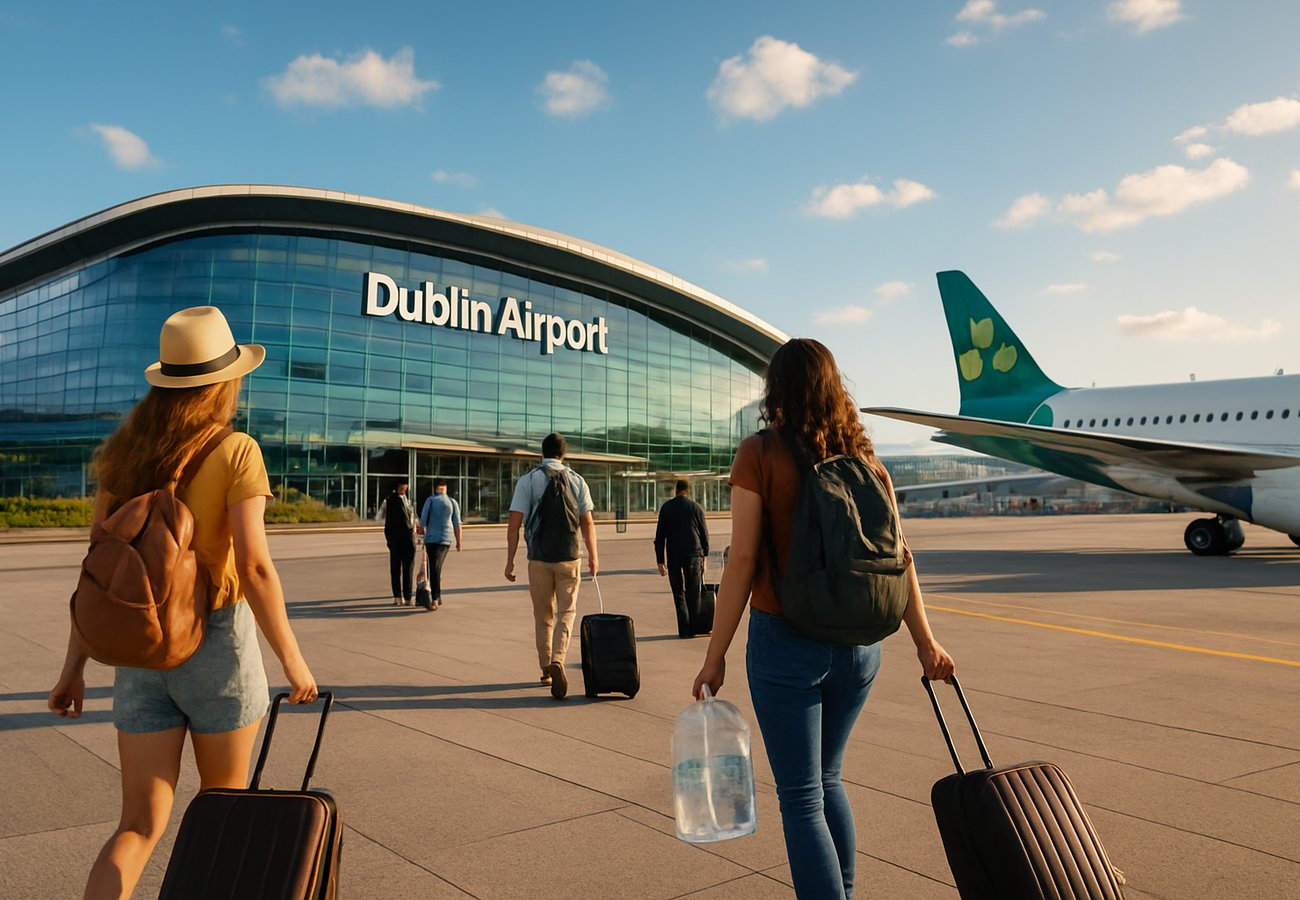
Image generated by AI
Dublin Airport has officially consigned the 100-millilitre liquid rule to history, becoming one of Europe's leading aviation hubs to fully eliminate the two-decade-old restriction after completing the deployment of next-generation C3 security scanners — a landmark shift in passenger processing that arrives precisely as the airport braces for a record 11 million passengers this summer across airlines including Aer Lingus, Ryanair, British Airways, Lufthansa, United Airlines, Delta Air Lines, and American Airlines.
The End of the 100ml Era: What Changed and Why
The 100ml liquid restriction has been a defining feature of airport security since 2006, introduced globally following intelligence about a foiled plot to detonate liquid explosives aboard transatlantic flights. For nearly two decades, travelers worldwide have adapted their packing around the rule — decanting toiletries into miniature containers, surrendering water bottles at checkpoints, and navigating the clear plastic bag requirement that became synonymous with modern air travel inconvenience.
Dublin Airport's elimination of the rule is not a relaxation of security standards — it is an upgrade of the technology underpinning them. The airport has fully implemented C3 (Computed Tomography) security scanners, which generate 3D high-resolution imaging of bag contents. Unlike the flat 2D X-ray systems that made it impossible to reliably screen dense or overlapping liquids, C3 technology allows security personnel to rotate and examine a virtual model of every item in a passenger's bag — detecting threats within liquid containers without requiring those containers to be removed or limited in volume.
Under the new policy, passengers departing from Dublin Airport may carry liquid containers of up to 2 litres in their hand luggage, with no requirement to remove liquids, gels, or electronics for separate screening. The clear plastic bag is no longer mandatory. The bottled water you buy before the checkpoint, the full-size skincare products, the travel-size olive oil — all of it can now stay inside the bag.
11 Million Passengers, Seven Major Airlines, One Streamlined Security Lane
The timing of this policy shift is deliberate. Dublin Airport is forecasting 11 million passengers through the summer 2026 season — a record volume that will stress every aspect of terminal throughput, from check-in to gate. Security queues are historically the most volatile bottleneck in the passenger journey, and any per-passenger time reduction at the checkpoint compounds significantly across millions of travelers.
The seven airlines that dominate Dublin's departure boards are already moving to capitalize on the improved processing environment. New and expanded routes for summer 2026 include:
| Airline | Route | Update |
|---|---|---|
| Aer Lingus | Dublin to New York | Daily flights |
| Ryanair | Dublin to Frankfurt | Increased service |
| United Airlines | Dublin to Chicago | Increased service |
| Delta Air Lines | Dublin to Boston | Additional flights |
| Lufthansa | Dublin to Munich | Daily flights |
Aer Lingus and Ryanair, which together account for the largest share of Dublin's passenger volume on short-haul and transatlantic routes, stand to benefit most directly. Faster security throughput means faster gate availability, tighter turnaround times, and less downstream disruption from checkpoint delays that have historically cascaded into departure slot misses.
For Lufthansa, United, Delta, and American Airlines — all operating long-haul transatlantic services — the improvement matters for a different reason: passengers connecting through Dublin will have a materially better experience than at competing European hubs still operating under the 100ml regime, making Dublin a more competitive transit option for US-Europe traffic.
Who Benefits Most: UK, US, and European Travelers
The geographic scope of travelers affected by this change is broad but concentrated in specific high-volume markets:
United Kingdom: The UK-Ireland air corridor is one of the world's busiest, with tens of thousands of passengers moving between Dublin and London, Manchester, Edinburgh, and other UK cities weekly. British travelers — who still face the 100ml rule at most UK airports — will encounter a notably different experience when transiting through or departing from Dublin.
United States: With Dublin serving as a transatlantic gateway for US immigration pre-clearance — the only such facility outside North America — American travelers clear US Customs and Border Protection at Dublin before their flight, arriving in the US as domestic passengers. The security experience at Dublin is therefore their last Irish interaction before landing stateside. A smoother, faster checkpoint is a meaningfully better end to the departure process.
Germany, France, and Spain: European leisure and business travelers connecting through Dublin or flying direct with Lufthansa, Ryanair, and Vueling-group airlines will benefit from the streamlined outbound security process.
What This Means for Travelers: Actionable Advice
The rule change is live — but it comes with important caveats for anyone with onward connections:
- The 100ml rule removal applies at Dublin Airport departures only. If you are transiting through another airport — London Heathrow, Frankfurt, JFK — that airport's rules govern what you can carry through their security. Liquids you bring from Dublin may be confiscated at a connecting checkpoint still enforcing the 100ml limit. Consume or stow larger liquids before transiting.
- Arrive at your normal recommended time — 2 hours for short-haul, 3 hours for long-haul. While security queues are expected to move faster, summer 2026 will set passenger volume records and queue times may still build at peak hours.
- Electronics remain in your bag under C3 scanning — no more removing laptops separately at Dublin checkpoints.
- Verify your destination airport's rules before packing oversized liquid containers. Many European and US airports still enforce the 100ml restriction and will screen arriving carry-on bags if you are departing from those airports on return legs.
- Duty-free liquids purchased airside at Dublin remain compliant — buy your 1-litre whiskey after the checkpoint as you normally would.
FAQ: Dublin Airport Liquid Rule Change 2026
Q: Can I now bring a full-size water bottle or large toiletries through Dublin Airport security? Yes. Dublin Airport's full implementation of C3 security scanners means passengers can carry liquid containers up to 2 litres in hand luggage without placing them in a clear plastic bag or removing them from their bag at the checkpoint. Electronics also remain in bags during screening.
Q: Does the new liquid rule apply to all flights departing from Dublin Airport? The rule applies to all passengers departing from Dublin Airport through its new C3 scanning checkpoints. However, connecting airports may still enforce the 100ml restriction — always check the rules at your layover airport separately before packing large liquid containers.
Q: Which airlines are most affected by the Dublin Airport liquid rule change? All airlines departing Dublin benefit from faster security throughput. The highest-volume carriers — Aer Lingus, Ryanair, British Airways, Lufthansa, United Airlines, Delta Air Lines, and American Airlines — will see the most significant operational gains, particularly on high-frequency short-haul and transatlantic routes where boarding speed is a key efficiency metric.
The Bigger Picture: Europe's Security Technology Race
Dublin's full C3 deployment places it among the leaders in a Europe-wide upgrade cycle. The European Union Aviation Safety Agency (EASA) has been coordinating with member state authorities on C3 implementation timelines, with airports across the continent at varying stages of rollout. Some major hubs — including Heathrow and Charles de Gaulle — have completed partial deployments but not yet eliminated the 100ml restriction across all terminals.
Dublin's decision to move to a full rule elimination — rather than a partial or lane-by-lane rollout — is a competitive statement. Ireland's tourism and aviation sectors have consistently positioned Dublin Airport as a premium gateway, particularly for US visitors availing of the pre-clearance facility. A frictionless, modern security experience reinforces that positioning at the most visceral level: the first physical interaction a traveler has with the airport.
For the 11 million passengers expected this summer, the change is simply practical. No more hunting for 100ml bottles. No more quizzing oneself about whether sunscreen counts as a gel. No more watching a full bottle of premium moisturizer land in the bin. The C3 scanner has solved the problem that the 100ml rule was a blunt instrument solution for — and Dublin has been the first to act on it at scale.
Key Takeaways
- Dublin Airport has eliminated the 100ml liquid rule, allowing passengers to carry liquids up to 2 litres in hand luggage — enabled by full deployment of C3 (Computed Tomography) 3D security scanners
- No need to remove liquids, gels, or electronics from bags at Dublin security checkpoints
- 11 million passengers are expected through Dublin Airport this summer 2026 — a record volume
- Seven major airlines benefit: Aer Lingus, Ryanair, British Airways, Lufthansa, United, Delta, and American Airlines
- New and expanded summer routes include Dublin–New York (Aer Lingus, daily), Dublin–Chicago (United, increased), Dublin–Boston (Delta, additional), Dublin–Frankfurt (Ryanair, increased), Dublin–Munich (Lufthansa, daily)
- The rule change applies at Dublin departures only — connecting airports may still enforce 100ml restrictions
- Dublin joins a select group of European airports leading the C3 technology upgrade cycle, ahead of major hubs including Heathrow and Charles de Gaulle
Related Travel Guides
Disclaimer
This article is for informational and educational purposes only. It does not constitute legal, financial, or professional advice. While we strive to provide accurate and up-to-date information, travel policies, regulations, and conditions change rapidly. Always verify information with official sources before making travel decisions. Nomad Lawyer makes no representations about the accuracy, reliability, completeness, or suitability of the information provided. Readers should consult qualified professionals for advice specific to their circumstances. The views expressed in this article are those of the author and do not necessarily reflect the views of Nomad Lawyer.
Kunal K Choudhary
Co-Founder & Contributor
A passionate traveller and tech enthusiast. Kunal contributes to the vision and growth of Nomad Lawyer, bringing fresh perspectives and driving the community forward.
Learn more about our team →