
Saint Kitts and Nevis Travel Guide: Volcano Trails, Sugar Railways, and Island Escapes

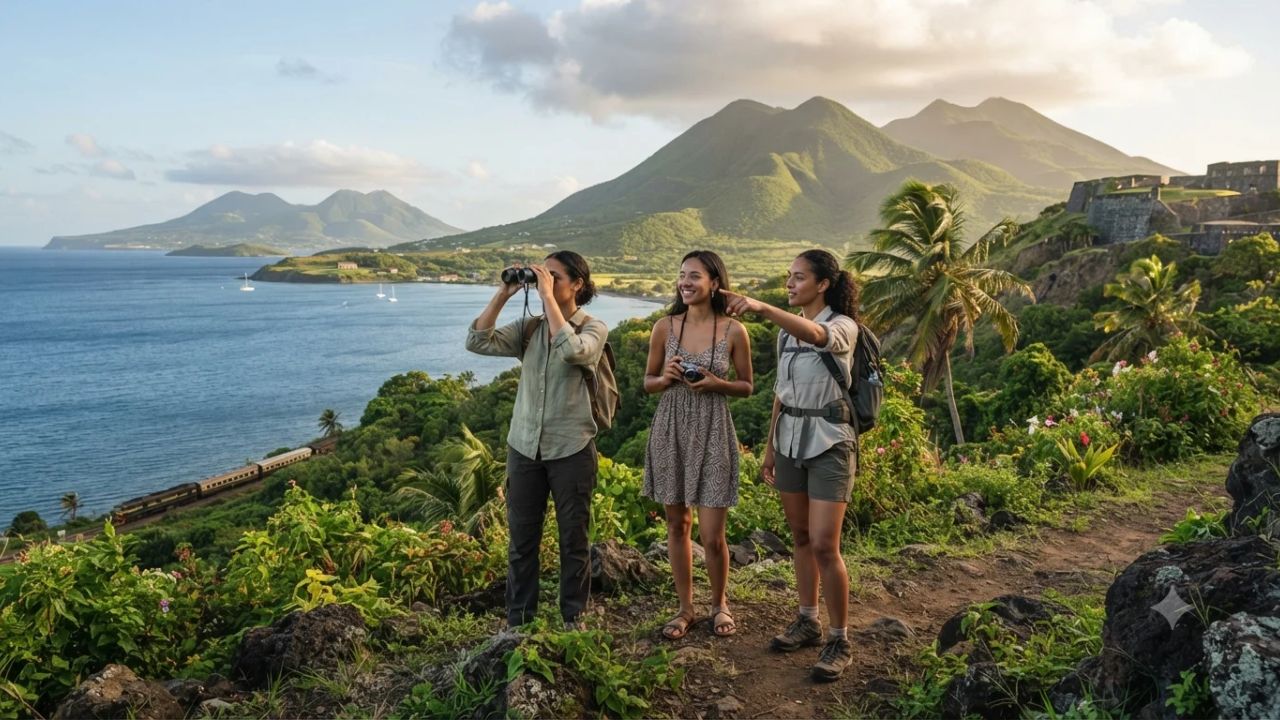
While most Caribbean destinations dismantled their historic sugar cane transport infrastructure decades ago, Saint Kitts operates the last functioning passenger railway in the West Indies—a narrow-gauge route constructed between 1912 and 1926 that encircles volcanic coastlines. Combined with its serene sister island of Nevis, just two miles across a shallow marine channel known as The Narrows, this dual-island federation delivers two contrasting travel tempos. Saint Kitts provides high-energy outdoor excursions, volcanic trekking, and formidable colonial bastions, while Nevis cultivates an unhurried sanctuary of boutique plantation inns, geothermal mineral baths, and pristine golden sands.
The Dual-Island Synergy of Saint Kitts and Nevis
International tourism across the Eastern Caribbean is shifting toward multi-dimensional itineraries that blend physical adventure with living history. Rather than confining themselves to single resort enclaves, travelers are drawn to destinations offering diverse micro-regions within compact geographic borders. Strategic campaigns led by the St. Kitts Tourism Authority highlight how seamlessly visitors can alternate between adrenaline-fueled mountain excursions and peaceful coastal retreats.
Arriving through Robert L. Bradshaw International Airport or the cruise docks of Port Zante in Basseterre, travelers immediately encounter Saint Kitts's dramatic topography dominated by Mount Liamuiga, a 3,792-foot dormant stratovolcano cloaked in dense tropical rainforest. Meanwhile, a scenic ten-minute water taxi across The Narrows transports visitors into the tranquil embrace of Nevis, where planning guidance from the Nevis Tourism Authority steers guests toward restorative wellness retreats and preserved eighteenth-century architecture.
What Distinguishes Saint Kitts from Nevis: A Dual-Island Contrast
The defining strength of this Caribbean nation lies in the harmonious contrast between its two constituent islands. Saint Kitts anchors the nation's commercial vitality, heritage landmarks, and water sports, whereas Nevis preserves an intimate, pastoral atmosphere where traffic lights do not exist and wild green vervet monkeys outnumber resident humans.
On Saint Kitts, visitors explore the majestic ramparts of UNESCO World Heritage Brimstone Hill Fortress National Park, known historically as the Gibraltar of the Caribbean. On Nevis, cultural heritage centers around Charlestown, the historic birthplace of American Founding Father Alexander Hamilton, and the Caribbean's earliest thermal resort at the historic Bath Hotel, constructed in 1778 beside natural volcanic hot springs.
| Dimension | Saint Kitts (The Energetic Sister) | Nevis (The Serene Sanctuary) |
|---|---|---|
| Capital & Hub | Basseterre (commercial port & capital) | Charlestown (historic colonial village) |
| Volcanic Landmark | Mount Liamuiga (3,792 ft crater hike) | Nevis Peak (3,232 ft cloud-capped cone) |
| Signature Heritage | Brimstone Hill Fortress & 1912 Scenic Railway | Alexander Hamilton Birthplace & Bath Hotel (1778) |
| Beaches & Coves | Cockleshell Beach, South Friars Bay | Pinney's Beach, Oualie Bay, Nisbet Beach |
| Atmospheric Rhythm | Active adventure, beach clubs, sailing | Quiet boutique stays, wellness, botanical gardens |
| Transportation Style | Coastal highways, open-air safari trucks | Scenic island loop road, shared water taxis |
Dividing a weekly holiday by spending three to four nights on Saint Kitts followed by three to four nights on Nevis allows travelers to experience both dynamic adventures and tranquil relaxation without rushing.
Visitor Insider Tips for Exploring Saint Kitts and Nevis
- Hire an Accredited Local Guide for the Mount Liamuiga Crater Trek: Ascending the steep rainforest trail to the rim of Mount Liamuiga requires scrambling over slick tree roots and volcanic boulders. Hire a licensed Kittitian guide who carries first-aid gear and can point out endemic herbal remedies and wild medicinal plants along the ascent.
- Book the Upper Deck of the St. Kitts Scenic Railway: The three-hour narrow-gauge train and bus tour traverses former sugar estates along the northern coastline. Reserve a seat on the open-air upper observation deck to capture unobstructed views of volcanic peaks and the Atlantic Ocean while enjoying onboard folk choir performances.
- Take Scheduled Water Taxis Across The Narrows from Reggae Beach: Avoid standard vehicle ferry delays by boarding passenger speedboats departing from the southern peninsula of Saint Kitts (near Cockleshell Beach) directly to Oualie Beach on Nevis. The crossing takes under ten minutes and costs around $15 to $20 USD each way.
- Soak in the Historic Bath Village Geothermal Springs: Visit the public mineral springs in Bath Village on Nevis during the cooler morning hours. The mineral-rich volcanic water flows naturally at approximately 104 degrees Fahrenheit (40 degrees Celsius), offering therapeutic relief after strenuous mountain hikes.
- Sample Fresh Spiny Lobster and Local Goat Water Stew: Savor authentic regional culinary traditions by ordering slow-simmered goat water—a rich, clove-spiced stew served with breadfruit—at roadside village cookshops, followed by fresh grilled spiny lobster at beachside grills along South Friars Bay.
Colonial History, Sugar Heritage, and Environmental Conservation
The cultural identity of Saint Kitts and Nevis reflects centuries of complex historical transformation. During the seventeenth and eighteenth centuries, the islands served as the financial engine of the British Caribbean sugar trade, built entirely upon the grueling labor of enslaved Africans. The preservation of Brimstone Hill Fortress and the St. Kitts Scenic Railway honors the architectural mastery and resilience of the African builders who carved massive stone citadels out of sheer volcanic rock.
Modern conservation efforts prioritize safeguarding the islands' rich biodiversity. The Central Forest Reserve National Park on Saint Kitts protects all rainforest territory above the 1,000-foot contour line, preserving crucial watersheds and providing a protected habitat for resident bird species. On Nevis, coastal regulations enforce strict setback rules to preserve sea turtle nesting grounds along Pinney's Beach and protect fragile coral barrier systems from anchor destruction.
By supporting community-owned guesthouses, hiring licensed local boat operators, and adhering to strict Leave No Trace guidelines along volcanic ridge trails, visitors help ensure that the cultural memory and ecological health of both islands endure.
FAQ: Visiting Saint Kitts and Nevis 2026
How do you travel between Saint Kitts and Nevis?
Passenger water taxis run continuously between the South Peninsula of Saint Kitts and Oualie Bay on Nevis in under 10 minutes, while car ferries operate between Basseterre and Charlestown.
Do visitors need a visa to enter Saint Kitts and Nevis?
Citizens of the United States, Canada, the United Kingdom, the European Union, and Commonwealth nations do not require a tourist visa for stays up to 90 days with a valid passport.
What is the best time of year to visit Saint Kitts and Nevis?
The peak season runs from December through April, offering dry weather, low humidity, and calm Caribbean seas ideal for hiking Mount Liamuiga and snorkeling off coastal bays.
Can you hike Mount Liamuiga and Nevis Peak without a guide?
Hiring a certified local guide is strongly advised for both volcanic peaks due to steep scrambles, dense rainforest trails, and unpredictable cloud cover near the summits.
From the thunderous ramparts of Brimstone Hill to the peaceful shores of Nevis Peak, this two-island nation offers a timeless Caribbean journey where adventure and serenity walk hand in hand.
Related Travel Guides
Disclaimer
This article is for informational and educational purposes only. It does not constitute legal, financial, or professional advice. While we strive to provide accurate and up-to-date information, travel policies, regulations, and conditions change rapidly. Always verify information with official sources before making travel decisions. Nomad Lawyer makes no representations about the accuracy, reliability, completeness, or suitability of the information provided. Readers should consult qualified professionals for advice specific to their circumstances. The views expressed in this article are those of the author and do not necessarily reflect the views of Nomad Lawyer.
Raushan Kumar
Founder & Lead Developer
Full-stack developer with 11+ years of experience and a passionate traveller. Raushan built Nomad Lawyer from the ground up with a vision to create the best travel and law experience on the web.
Learn more about our team →