
Global Airport Worker Strikes Trigger Widespread Flight Disruptions and Baggage Chaos in 2026
Ongoing industrial action by airport security and ground handlers is causing systemic delays and cancellations across Europe, Africa, and the Middle East, complicating late-summer travel schedules.

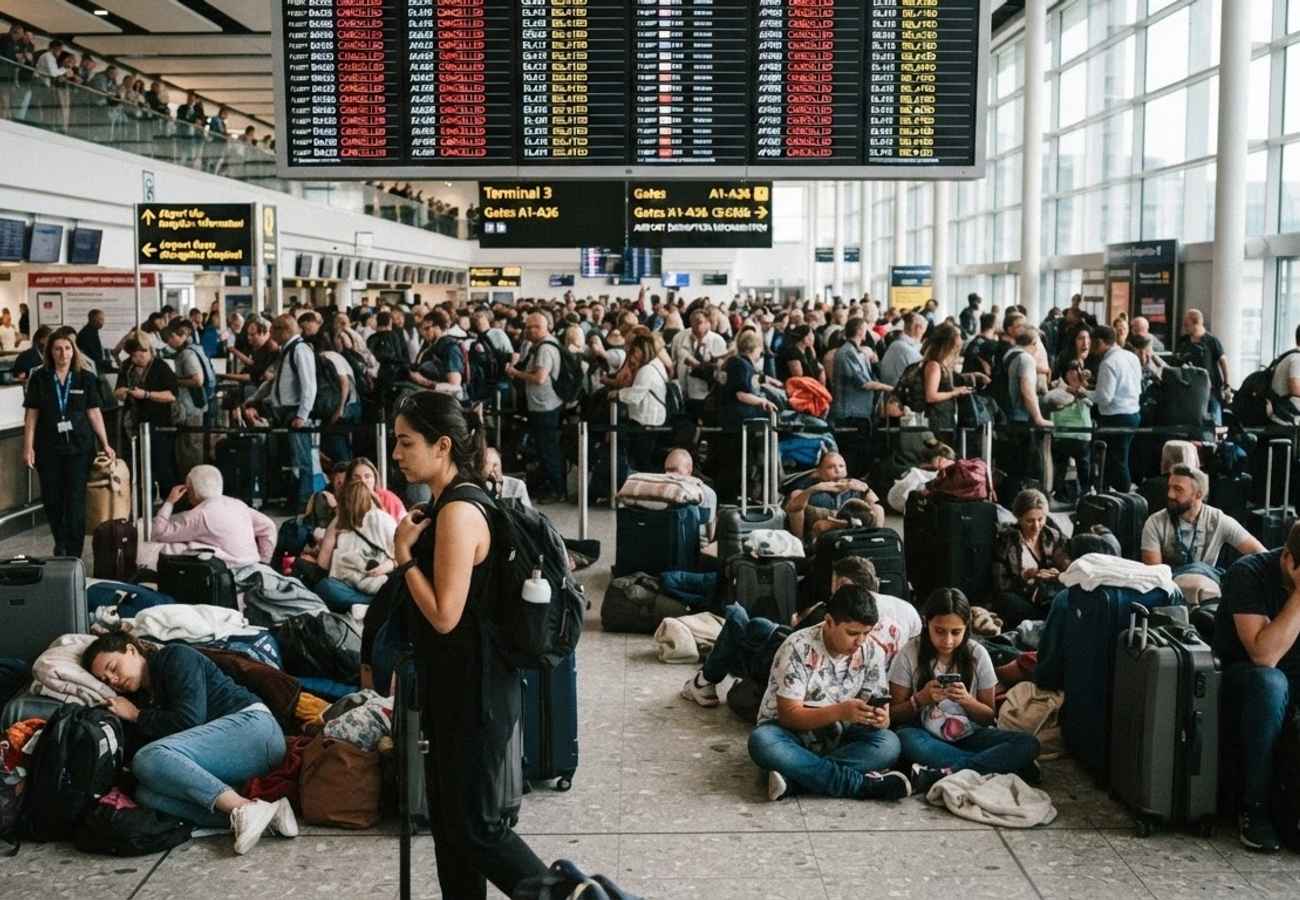
Image generated by AI
Flight schedules remain volatile globally as the residual effects of labor disputes among security staff and ground handlers create a ripple effect of cancellations and baggage failures.
The aviation industry is currently struggling with a "fragile" operational state. Even when formal strikes end, the tightly choreographed nature of aircraft rotations, crew scheduling, and airport resource allocation means that a few days of industrial action can result in a week of systemic instability.
Post-Strike Recovery Bottlenecks in Nairobi and Canada
While some labor disputes have reached formal resolutions, the "knock-on" effect continues to plague passengers. At Jomo Kenyatta International Airport in Nairobi, aviation workers ended a two-day stoppage on September 1, 2026. Despite the resumption of flights, carriers are still battling backlogs of stranded passengers and the complex task of repositioning aircraft and crew to their original stations.
A similar pattern emerged in Canada following a brief August strike by WestJet cabin crew. Although a tentative labor agreement was reached, the resulting hundreds of canceled services created a multi-day recovery period. Network adjustments and rebookings continued to impact travelers long after the picket lines were dismantled.
Ground Handling Failures and Baggage Delays
Ground operations have become a primary point of failure, particularly across European hubs. At Josep Tarradellas Barcelona El Prat Airport, Groundforce staff initiated indefinite industrial action on August 4. Rather than a total shutdown, workers have employed "work-to-rule" measures and targeted stoppages.
This strategy has led to inconsistent passenger experiences:
- Some travelers report minimal luggage wait times.
- Others face hours-long delays or find their bags held at departure airports due to constrained handling capacity.
- Increased aircraft turnaround times are hindering departure schedules.
Industry data suggests that when ground-handling staffing falls below specific thresholds, the risk of secondary cancellations spikes. This is because aircraft spend more time on the ground, missing their onward rotations and triggering delays across regional networks where no strike is actually occurring.
Security Checkpoint Congestion in Europe and the Middle East
Labor unrest among airport authority and security personnel creates immediate bottlenecks that airlines cannot mitigate. At Amsterdam’s Schiphol Airport, late-August work stoppages by security screeners resulted in peak-time queues of up to 25 minutes. For a hub already operating at maximum summer capacity, these delays create a cascade of missed connections.
In Israel, Ben Gurion Airport experienced multi-day delays following a strike by Israel Airports Authority workers. Even as the most severe slowdowns subsided, airlines continued to warn passengers of altered timetables and extended processing times.
Security strikes are uniquely disruptive because they decouple the passenger's arrival from the aircraft's departure. Reduced screening capacity often leads to:
- Last-minute gate changes.
- Boarding delays.
- Aircraft being held at stands, which consumes limited runway and stand capacity.
European Aviation's Volatile Strike Calendar
The late-summer travel window is being squeezed by a broader trend of elevated labor activity across the European Union. In France, sector-wide labor protests are scheduled through September, with cabin crew from various carriers—including low-cost airlines—filing strike notices.
While EU minimum-service rules provide some protection, the reality for travelers remains a landscape of reduced flight frequencies and consolidated services. According to Eurocontrol data, strikes in air traffic management and airport operations have become a primary driver of network delay minutes, alongside weather and capacity constraints.
Operational Outlook for September 2026
As the peak August window closes, demand is shifting. While leisure travel may dip, business travel typically increases in September, and "shoulder-season" leisure travelers are opting for later dates to avoid peak pricing. This ensures that airports remain crowded even as the calendar turns.
Passenger Mitigation Strategies
To navigate this environment, aviation experts suggest the following:
- Frequency of Checks: Monitor flight status every few hours within the 24-hour window before departure.
- Arrival Buffers: Arrive significantly earlier than recommended at hubs with recent strike history.
- Luggage Strategy: Prioritize carry-on bags for essentials to avoid the heightened risk of baggage delays.
Legal and Compensation Frameworks
Under EU261 and UK261 regulations, passengers may be entitled to refunds or rerouting. However, labor disputes involving airport authorities or air traffic services are frequently classified as "extraordinary circumstances." This legal distinction often exempts airlines from paying financial compensation, even if the disruption mirrors that of an airline-specific strike.
The aviation labor market remains tight, suggesting that industrial tensions will be a persistent feature of global travel for the foreseeable future.
Related Travel Guides
Disclaimer
This article is for informational and educational purposes only. It does not constitute legal, financial, or professional advice. While we strive to provide accurate and up-to-date information, travel policies, regulations, and conditions change rapidly. Always verify information with official sources before making travel decisions. Nomad Lawyer makes no representations about the accuracy, reliability, completeness, or suitability of the information provided. Readers should consult qualified professionals for advice specific to their circumstances. The views expressed in this article are those of the author and do not necessarily reflect the views of Nomad Lawyer.
Kunal K Choudhary
Co-Founder & Contributor
A passionate traveller and tech enthusiast. Kunal contributes to the vision and growth of Nomad Lawyer, bringing fresh perspectives and driving the community forward.
Learn more about our team →