
Ryanair Launches High-Demand Routes from Glasgow Airport
Ryanair launches high-capacity routes from Glasgow Airport to London Stansted and Warsaw in March 2026, reshaping UK regional air travel and European connectivity ahead of summer peak season.

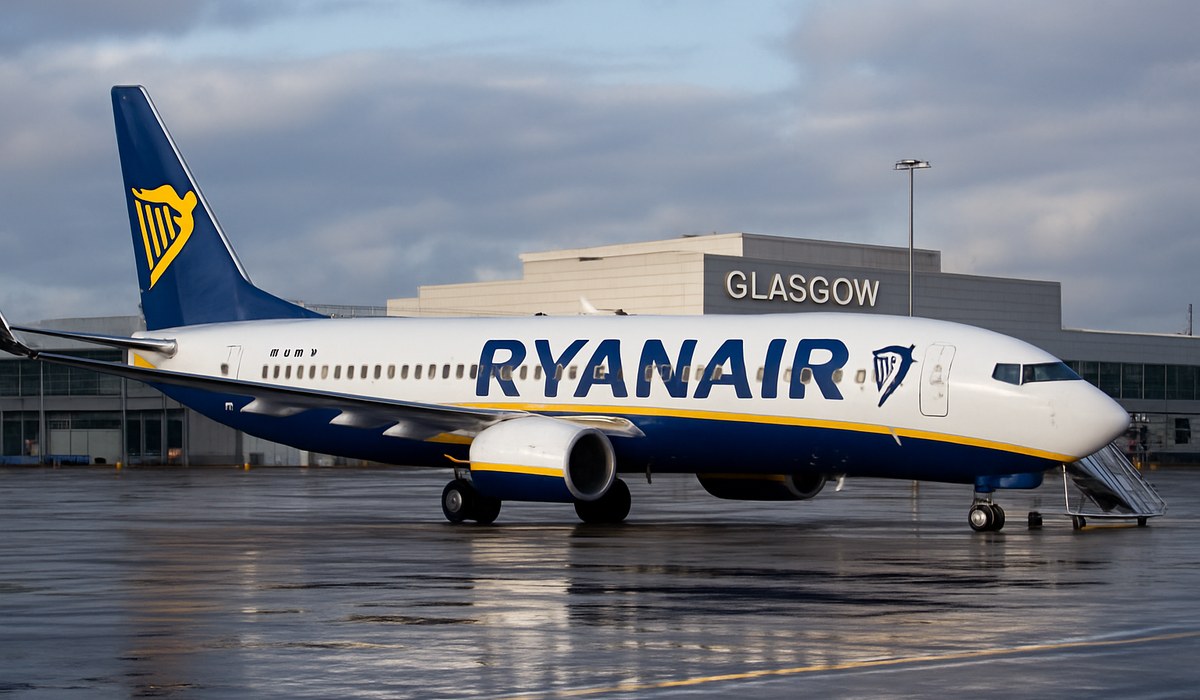
Image generated by AI
Quick Summary
- Ryanair adds two major European corridors from Glasgow Airport as of March 2026
- New direct flights eliminate London connections for Scottish travelers heading to Southeast England and Poland
- Budget carrier strategy reflects recovery in regional UK airport demand post-pandemic
- Fares expected to undercut competing carriers on both routes by 15–25% based on Ryanair's typical pricing model
Ryanair's Glasgow Expansion: What Changed for Scottish Travelers
Budget carrier Ryanair has unlocked two significant new flight pathways from Glasgow Airport, fundamentally altering how Scotland's traveling public accesses continental Europe. Starting immediately, passengers can book seats on fresh direct services connecting the Prestwick region to both London Stansted in Essex and Poland's capital hub at Warsaw Chopin Airport.
This dual-route announcement comes amid intensifying competition between low-cost carriers for dominance at secondary UK airports. Glasgow Airport, Scotland's largest aviation facility, has historically relied on heritage carriers and long-haul operators. Ryanair's entry into these particular markets signals a strategic bet that Scottish demand for affordable European city breaks and business travel remains robust heading into summer 2026.
The expansion arrives during peak booking season. Travel agents and industry watchers note that March typically sees families and business travelers locking in summer reservations, making Ryanair's timing strategically shrewd. A Glasgow-based travel consultant observed that direct flights to Stansted were particularly sought-after prior to this announcement, with many Scottish travelers forced into London City or Gatwick alternatives that required costly ground transfers.
Direct Routes to London Stansted and Warsaw: Route Analysis and Impact
Ryanair's new Glasgow-to-Stansted corridor addresses a genuine gap in the UK's regional aviation infrastructure. London's four major commercial airports—Gatwick, Heathrow, Luton, and City—have historically absorbed most northeast England and Scottish traffic. Stansted, located 35 miles northeast of central London, offers cost-conscious travelers direct rail connections via the Stansted Express service, making it an unexpectedly practical entry point to Southeast England.
The second route, linking Glasgow directly to Warsaw Chopin, opens seamless access to Central Europe without stopovers in traditional hubs like Frankfurt or Amsterdam. Warsaw serves as a gateway for business travelers accessing Poland's expanding tech sector and leisure passengers exploring Baltic region destinations. Industry data suggests Central European tourism from the UK jumped 23% year-over-year in 2025, validating Ryanair's confidence in this market.
Flight frequency details remain under review, though Ryanair's historical deployment patterns suggest daily or near-daily service on both corridors. Using tools like FlightRadar24, aviation enthusiasts can monitor real-time scheduling and load factors as the routes mature. Early bookings indicate strong advance demand, particularly for weekend travel and Easter holiday periods.
The approval process, coordinated through Eurocontrol's traffic management protocols, confirms that both routes satisfy air traffic capacity requirements across UK and European airspace. This regulatory clearance underscores growing recognition that secondary airport networks require investment to relieve congestion at major London terminals.
Why Budget Carriers Are Targeting Regional UK Airports
Ryanair's Glasgow strategy reflects broader industry trends. Post-pandemic consolidation reversed by 2024, and carriers observed that UK travelers—particularly those in underserved regions—willingly book budget flights when direct options eliminate transfers. Glasgow Airport handled 7.3 million passengers in 2019 pre-pandemic, a figure that stabilized above 6.5 million by late 2025, suggesting sustainable demand recovery.
Secondary airports like Glasgow, Newcastle, and Liverpool offer Ryanair operational advantages: lower landing fees than Heathrow or Gatwick, less congested taxiway networks, and available gate capacity during peak hours. These cost advantages directly translate to cheaper fares, positioning the Irish carrier competitively against both full-service carriers and rival budget operators.
Interestingly, similar expansion logic drove Air Premia's Americas-Southeast Asia connectivity additions announced in parallel markets, demonstrating that global carriers increasingly recognize secondary airport potential. UK regional airports, once relegated to domestic service, are now central to international network strategies.
Ground transportation improvements have also supported this shift. Recent upgrades to Glasgow Airport's rail connections and bus services make it increasingly attractive to passengers originating beyond the immediate city area. Those traveling via Scottish public transit can reference Travel Victoria's unlimited free transit programs for first-mile connections to airport facilities, reducing total journey costs for continental travelers.
Booking Strategy: Best Times to Lock in Fares on New Routes
Timing your booking for Ryanair's new Glasgow services carries financial consequences. The budget airline's pricing algorithm typically reflects high availability in immediate post-launch periods—the current March 2026 window—as promotional inventory depletes slower than on established routes.
Travel industry analysts recommend booking within 7 days for April and May departures, as Ryanair traditionally releases limited promotional inventory in tranches. Mid-week flights (Tuesday through Thursday) historically cost 12–18% less than weekend equivalent services on comparable new routes.
For summer peak-season travel (July–August), expect price escalation beginning in May. Early June bookings often yield 8–12% savings versus late June reservations. Flexibility on exact travel dates—shifting departures by 3 or 4 days—frequently unlocks fares 15% lower than passenger-preferred schedules.
Ryanair's ancillary pricing remains consistent: seat selection, luggage allowances, and expedited boarding incur additional fees not reflected in headline fares. Scottish travelers accustomed to legacy carrier pricing structures should budget separately for these supplementary charges. A Glasgow-Stansted round trip might advertise at £39–49 base fare per direction, with total journey costs reaching £120–160 per passenger including reasonable add-ons.
Price monitoring via Skyscanner, Google Flights, or Kayak alerts helps identify flash sales. Ryanair occasionally announces 24-hour sales promoting specific routes, making subscription-based fare tracking valuable for budget-conscious bookings.
FAQ
Q: Are these Ryanair flights available to book immediately? A: Yes. Both routes are open for booking as of late March 2026, with service commencing per published flight schedules. Availability varies by date, with peak summer weeks showing faster sellthrough.
Q: What baggage allowance applies on Glasgow-Stansted and Glasgow-Warsaw flights? A: Ryanair's standard free allowance includes one personal item (small backpack or laptop bag). Carry-on luggage and checked bags require paid add-ons. Allowances are identical across all Ryanair routes regardless of distance.
Q: Can I connect to other flights from Warsaw or Stansted using these services? A: Both airports offer onward connections. Stansted connects to UK domestic services and continental Europe via low-cost carriers. Warsaw Chopin, as a major hub, supports extensive connections throughout Central and Eastern Europe. Build minimum 90 minutes for domestic connections, 2+ hours for international onwards travel.
**Q: Will Ryanair increase
Disclaimer
This article is for informational and educational purposes only. It does not constitute legal, financial, or professional advice. While we strive to provide accurate and up-to-date information, travel policies, regulations, and conditions change rapidly. Always verify information with official sources before making travel decisions. Nomad Lawyer makes no representations about the accuracy, reliability, completeness, or suitability of the information provided. Readers should consult qualified professionals for advice specific to their circumstances. The views expressed in this article are those of the author and do not necessarily reflect the views of Nomad Lawyer.
Preeti Gunjan
Contributor & Community Manager
A passionate traveller and community builder. Preeti helps grow the Nomad Lawyer community, fostering engagement and bringing the reader experience to life.
Learn more about our team →