
Rome Milan and Florence Drive Luxury Rail Boom as Italy Expands High-Speed Train Tourism in 2026
Italy is witnessing a surge in luxury rail travel as Rome, Milan, and Florence integrate high-speed connectivity with premium gastronomic and cultural experiences.

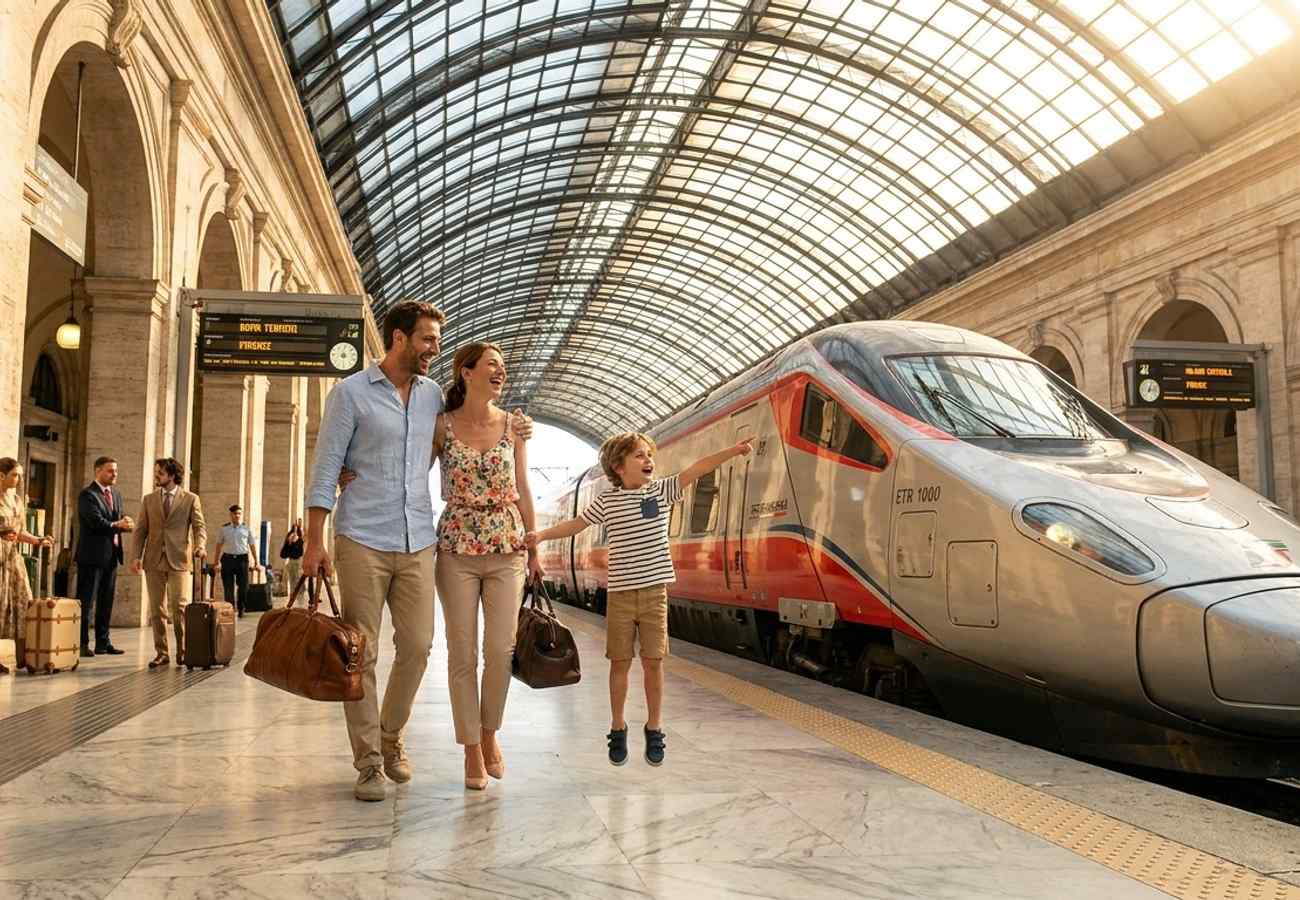
Image generated by AI
[Rome, July 7, 2026] — Italy is undergoing a fundamental shift in its tourism model as the cities of Rome, Milan, and Florence spearhead a luxury rail movement that is redefining how international visitors traverse the peninsula. By integrating high-speed rail infrastructure with high-end hospitality and authentic culinary experiences, the country is seeing an explosive growth in "train tourism," where the transit itself is marketed as a primary attraction.
The transition toward premium rail travel is part of a broader global trend where affluent travelers prioritize sustainable, experience-driven journeys over traditional air travel. In Italy, this is manifesting as a "tourism triangle" between the capital and the northern hubs, allowing visitors to blend ancient history, Renaissance art, and modern luxury into a single, seamless itinerary.
High-Speed Infrastructure Driving Multi-City Italian Itineraries
The rise of Italy as a premier luxury rail destination is directly tied to the aggressive development of its fast-rail corridors. By reducing travel times between major urban centers, Italy has successfully shifted visitor behavior; where tourists once focused on a single city, they are now opting for multi-destination trips.
The synergy between Rome, Florence, and Milan allows for a comprehensive cultural circuit. A traveler can now transition from the archaeological sites of Rome to the artistic masterpieces of Florence, and finally to the fashion houses of Milan, without the friction of airport security or long transfers. This shift is bolstered by the fact that high-speed trains deliver passengers directly into city centers, significantly enhancing the overall visitor experience.
Beyond the primary cities, this infrastructure is stimulating regional growth. The speed of these connections enables "micro-trips" into the surrounding countryside, where travelers can engage with local wine producers, artisanal cheesemakers, and traditional villages that were previously too remote for short-term visitors.
The Role of the Frecciarossa 1000 in Modern Mobility
Central to this expansion is the technical capability of the national rail fleet. According to data from the FS Italiane Group, the Frecciarossa 1000 stands as one of the most advanced high-speed trains in Europe. It is designed specifically to balance velocity with extreme comfort, serving as the backbone of Italy’s sustainable mobility strategy.
The Frecciarossa 1000 has transitioned from a simple transport vehicle to a symbol of Italian luxury. By offering premium classes and high-efficiency service, it supports the national vision of attracting high-value tourists who prioritize quality and environmental consciousness over the lowest cost.
| Route Connection | Primary Focus | Key Experience |
|---|---|---|
| Rome $\rightarrow$ Florence | Cultural Heritage | Renaissance Art & Tuscan Cuisine |
| Florence $\rightarrow$ Milan | Design & Fashion | Luxury Shopping & Modern Architecture |
| Milan $\rightarrow$ Rome | Global Connectivity | Imperial History & Urban Luxury |
| Regional Spokes | Gastronomy | Local Vineyards & Traditional Markets |
Rome as the Strategic Hub for Cultural Rail Journeys
Rome continues to function as the primary gateway for the Italian tourism ecosystem. However, its role has evolved from being a final destination to acting as the launchpad for broader explorations of the Italian landscape.
The city's ability to combine ancient ruins with modern luxury hospitality makes it the ideal starting point for high-speed journeys. As "slow travel" gains popularity, visitors are opting to replace short-haul flights with rail journeys that offer scenic views of the Italian countryside, turning the commute into a curated experience of discovery.
Industry observers note that Rome’s integration with Florence and Milan prevents the "over-concentration" of tourists in one spot. Instead of overwhelming the capital, the rail network distributes high-spending visitors across the country, preserving the authenticity of the sites while maximizing economic impact.
Milan’s Influence on Luxury and Gastronomic Tourism
While Rome provides the history, Milan offers the cutting edge of Italian luxury. As a global center for fashion and innovation, Milan has utilized high-speed rail to solidify its position as a critical European travel hub.
The connectivity between Milan and other major cities allows for a diverse range of travel motivations to coexist. Business travelers can easily pivot into leisure trips, and luxury tourists can integrate Milan’s sophisticated dining and architecture into their wider Italian tour.
Furthermore, Milan serves as the gateway to Northern Italy's distinct gastronomic traditions. The city's rail links make it easier for visitors to explore the regional products and cooking methods of the north, adding a layer of culinary authenticity to the luxury experience. This intersection of high-end shopping and deep-rooted food culture is a primary driver for the current rail boom.
Why This Matters: The Shift Toward High-Value Tourism
The convergence of luxury rail and high-speed infrastructure signals a strategic pivot in Italy's economic approach to tourism. By focusing on "quality over quantity," Italy is moving away from mass tourism and toward a model that attracts visitors who stay longer and spend more within local communities.
The "Information Gain" here lies in the realization that rail is no longer a utility—it is a product. When transportation is rebranded as a "gastronomic journey" or a "cultural corridor," it removes the "dead time" from a vacation. This creates a virtuous cycle: better infrastructure leads to more diverse itineraries, which in turn increases the spend per visitor across multiple regions rather than just in the major hubs.
Moreover, this movement addresses the urgent need for sustainable travel. By replacing short-haul aviation with high-speed electric rail, Italy is positioning itself as a leader in "green luxury," proving that high-end travel does not have to come at a high environmental cost.
Italy is effectively transforming its geography into a curated gallery, where the train is the moving frame.
Related Travel Guides
Disclaimer
This article is for informational and educational purposes only. It does not constitute legal, financial, or professional advice. While we strive to provide accurate and up-to-date information, travel policies, regulations, and conditions change rapidly. Always verify information with official sources before making travel decisions. Nomad Lawyer makes no representations about the accuracy, reliability, completeness, or suitability of the information provided. Readers should consult qualified professionals for advice specific to their circumstances. The views expressed in this article are those of the author and do not necessarily reflect the views of Nomad Lawyer.
Preeti Gunjan
Contributor & Community Manager
A passionate traveller and community builder. Preeti helps grow the Nomad Lawyer community, fostering engagement and bringing the reader experience to life.
Learn more about our team →