
How California is Initiating America's High-Speed Rail Renaissance and Cross-State Connectivity Under a Thirty-Month Operation Agreement in 2026
California enters a 30-month agreement with SNCF and Keolis, leading a national passenger rail renaissance and high-speed corridor expansion in 2026.

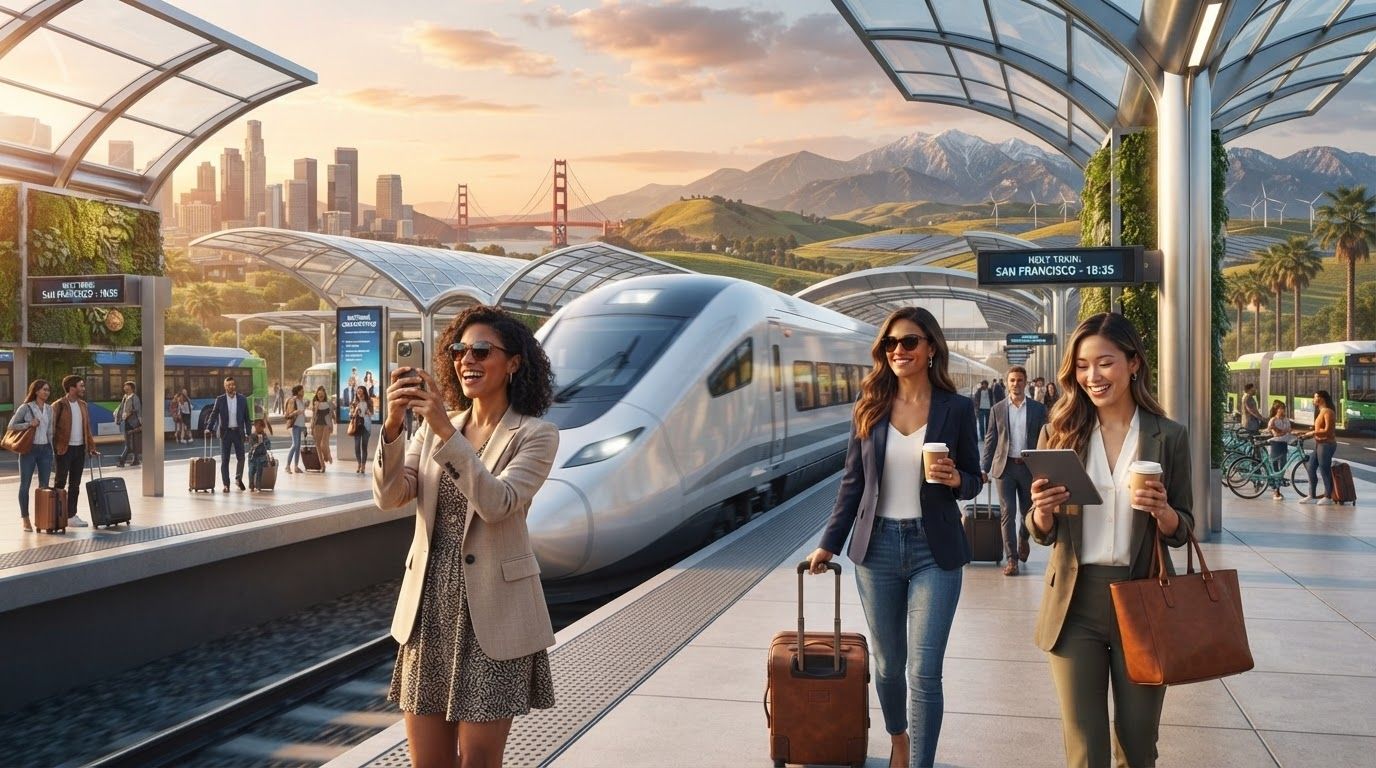
Image generated by AI
Published on July 14, 2026
California is leading a passenger rail renaissance across the United States, signing a thirty-month development agreement to prepare for its first true high-speed bullet train. This modernization is driving a nationwide shift toward sustainable cross-state connectivity and carbon-neutral tourism in 2026.
The state of California is redefining regional transportation with its high-speed rail program, designed to reduce highway congestion, substitute short-haul flights, and encourage sustainable tourism. A newly signed 30-month development agreement with international rail operators Keolis and SNCF Voyageurs represents a major step in establishing operational readiness for the network. This state-level investment coincides with similar passenger rail upgrades, higher-speed corridors, and terminal modernizations across Nevada, Texas, Florida, Virginia, North Carolina, Illinois, and Washington.
The Local Trend Revealed
The collaboration with Keolis and SNCF Voyageurs focuses on system planning, station preparation, and integrating international operations expertise to prepare the network for commercial service. By connecting major metropolitan hubs with trains capable of operating at world-class speeds, California is creating a travel alternative that connects cities, wine regions, and natural attractions without relying on automobiles.
This rail revolution is expanding across several major US states. The following table highlights the current projects and passenger rail developments driving this national transportation upgrade:
| State | Major Rail Project | Current Situation | Similarity with California | Tourism Benefits |
|---|---|---|---|---|
| California | California High-Speed Rail | Construction progressing with operational planning | America’s first true bullet train | Faster access between major cities and tourism regions |
| Nevada | Brightline West | Under construction | High-speed rail connecting Southern California and Las Vegas | Easier leisure travel and weekend tourism |
| Texas | Texas Central | Planning and development | Proposed bullet train using Shinkansen technology | Faster business and leisure travel between Dallas and Houston |
| Florida | Brightline Florida | Operational and expanding | Modern intercity passenger rail | Improved access to beaches, theme parks, and cruise ports |
| Virginia | Transforming Rail in Virginia | Major infrastructure expansion | Large-scale passenger rail modernization | Better connectivity to historic destinations and national parks |
| North Carolina | Raleigh-Richmond Corridor | Corridor upgrades underway | Faster regional passenger rail | Easier exploration of cultural and outdoor attractions |
| Illinois | Chicago Hub Improvement Program | Network modernization | Midwest higher-speed rail development | Improved access to multiple Midwestern destinations |
| Washington | Cascadia High-Speed Rail | Long-term planning | Vision for future ultra-high-speed corridor | Better regional tourism across the Pacific Northwest |
This state-level coordination establishes rail travel as a competitive option for domestic and international visitors alike.
Cultural & Environmental Value (Information Gain)
The transition toward high-speed rail aligns with climate action goals by substituting carbon-heavy short-haul flights and private vehicle trips with electrified passenger rail. This shift significantly reduces greenhouse gas emissions along highly traveled transit corridors, helping to protect regional environments and national parks.
Additionally, this rail expansion distributes the economic benefits of tourism to smaller, intermediate communities. By providing convenient stops along regional corridors, high-speed rail allows travelers to explore rural heritage zones, agricultural communities, and minor historical attractions. This redirects tourist spending away from major hubs and directly to local homestays, family-owned farm-to-table restaurants, and community-guided tours. The California High-Speed Rail Authority and local conservation groups are highlighting how this infrastructure preserves regional heritage while supporting sustainable local economies.
Visitor Insider Tips
For travelers looking to explore the United States using these expanding rail networks, keep these local tips in mind:
- Utilize Operational Corridors: In Florida, use the Brightline network to travel between Miami, Fort Lauderdale, West Palm Beach, and Orlando without renting a car. In the future, Nevada's Brightline West will connect Las Vegas with Southern California with train speeds approaching 200 mph.
- Plan Departures Mid-Week: Depart on a Tuesday or Wednesday to avoid busy weekend commuter travel. You will experience quieter cabins, easier boarding, and better booking options.
- Observe Train Etiquette: Maintain low volume levels, respect designated quiet cars, and use headphones for all electronic devices to ensure a comfortable travel environment for everyone.
- Dine Locally Near Departure Hubs: Skip standard station fast food and try regional specialties near major rail terminals. Enjoy sourdough bread bowls near San Francisco terminals or street-style tacos in Los Angeles to support local culinary small businesses.
- Use Multi-City Ticketing: Take advantage of stopover ticketing options to visit intermediate destinations and support regional tourism operators located outside major gateways.
Tourism Outlook
The long-term development of California's high-speed rail and other regional networks will redefine domestic travel in the United States. Reinvesting in passenger rail creates a cleaner, more efficient, and connected transport system that meets the expectations of modern travelers.
In the coming years, as construction progress continues and networks like Brightline West begin operations, rail travel will become a standard option for cross-country tourism. This transition ensures that the natural beauty and diverse cultural sites of the United States remain accessible and protected for future generations of travelers.
Related Travel Guides
Disclaimer
This article is for informational and educational purposes only. It does not constitute legal, financial, or professional advice. While we strive to provide accurate and up-to-date information, travel policies, regulations, and conditions change rapidly. Always verify information with official sources before making travel decisions. Nomad Lawyer makes no representations about the accuracy, reliability, completeness, or suitability of the information provided. Readers should consult qualified professionals for advice specific to their circumstances. The views expressed in this article are those of the author and do not necessarily reflect the views of Nomad Lawyer.
Kunal K Choudhary
Co-Founder & Contributor
A passionate traveller and tech enthusiast. Kunal contributes to the vision and growth of Nomad Lawyer, bringing fresh perspectives and driving the community forward.
Learn more about our team →