
Rome Fiumicino Airport FCO Guide 2026: Navigating Terminals, Transfers, and Fixed-Rate Taxis
Master Rome Fiumicino Airport (FCO) with this 2026 expert guide covering Terminal 1 and 3 layouts, Leonardo Express transfers, and essential security tips for 50 million annual passengers.

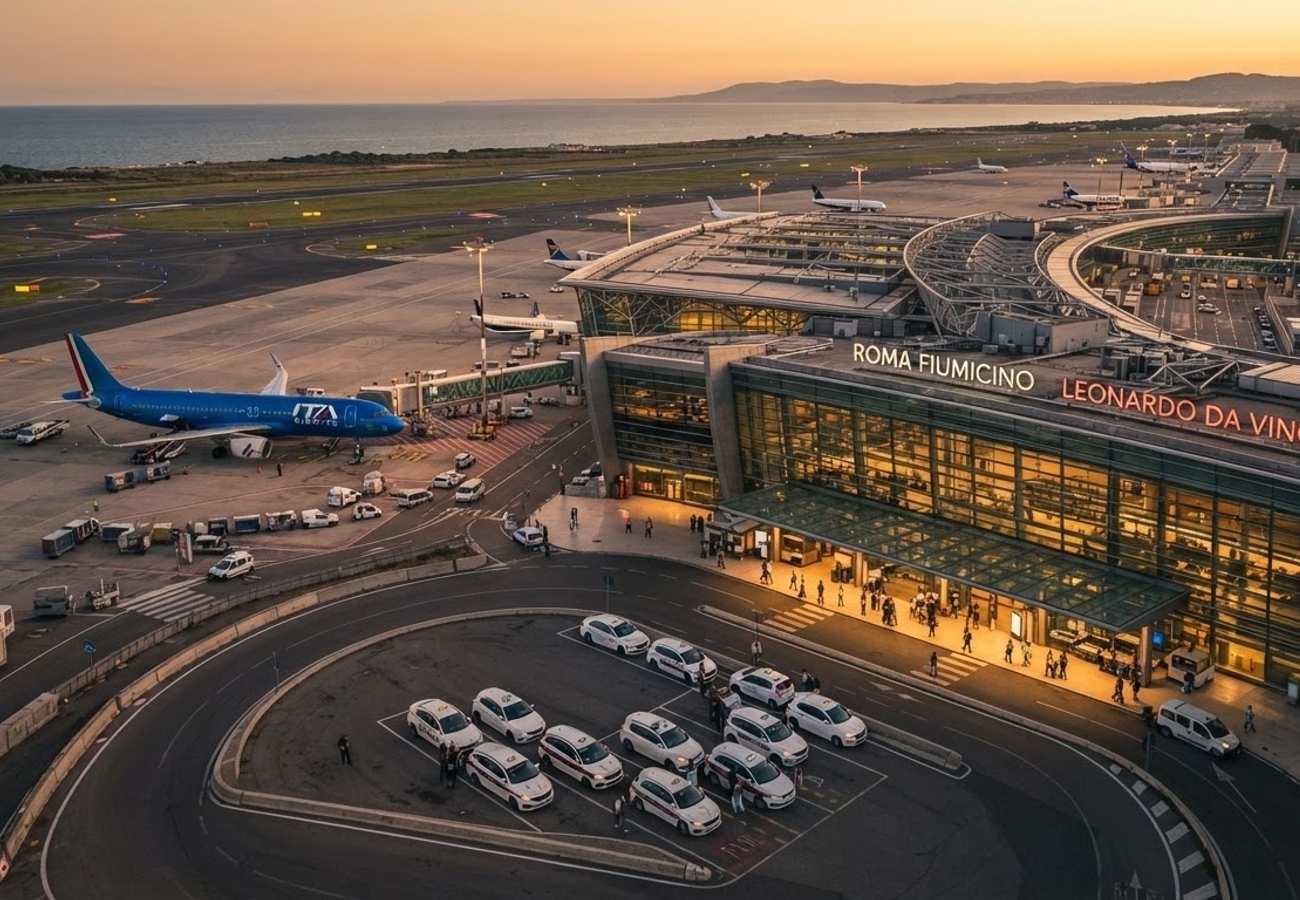
Image generated by AI
50 million passengers annually flow through Leonardo da Vinci – Fiumicino Airport (FCO), making it Italy's primary gateway. Mastering its layout and transit options can reduce your airport dwell time by over an hour.
The Shift in FCO Terminal Dynamics
For the modern traveler in 2026, the complexity of Fiumicino has been streamlined. While legacy guides may mention Terminals 2 or 5, the operational reality is now centered on two primary hubs: Terminal 1 and Terminal 3. These are housed within a single interconnected complex, allowing for internal movement without the need for shuttle buses.
Terminal 3 remains the powerhouse for intercontinental and non-Schengen traffic, hosting the bulk of flights to North America, Asia, and the Middle East. Terminal 1 has evolved into the primary base for ITA Airways, domestic Italian hops, and most Schengen Area services.
The real challenge for visitors is the physical scale of the facility. A walk from a Terminal 3 check-in desk to a far-end gate in the E area can take 15 to 20 minutes. For those with limited mobility or traveling with families, this distance is a critical factor in timing your arrival.
Navigating Connections and Logistics
The efficiency of your transit depends entirely on your ticket structure. If you are on a single itinerary—for example, arriving from New York and connecting to Florence via ITA Airways—you can typically bypass the arrivals hall. By following the yellow "Transfer / Connecting Flights" signs and monitoring the "Voli in coincidenza" boards, you can move between T3 and T1 internally.
Conversely, "self-transfer" passengers (those booking separate tickets on different airlines) must account for the full cycle: immigration, baggage claim, customs, and re-checking in. A three-hour window is the minimum recommended buffer for this process to avoid missing transatlantic departures.
Arrival Logistics: From Tarmac to City Center
Arrivals from outside the Schengen Area are processed through passport control, where biometric e-gates now expedite the process for eligible travelers. During the peak North American arrival wave (06:00 to 09:00), these automated lanes are essential for avoiding lengthy staffed queues.
Once in the public arrivals area, travelers face four primary transport choices:
| Transport Option | Destination | Key Detail | Estimated Time |
|---|---|---|---|
| Leonardo Express | Roma Termini | Non-stop, dedicated luggage space | 32 Minutes |
| Regional FL1 Train | Various Stations | More affordable, multiple stops | Variable |
| Official White Taxi | Inside Aurelian Walls | Fixed city-regulated fare (mid-50s €) | Variable |
| Airport Buses | City Center | Budget-friendly, subject to traffic | 45-60 Minutes |
The official white city taxis are particularly efficient for groups of three or four. The 2026 flat rate covers the journey to any location within the historic Aurelian Walls, providing a predictable cost that often beats individual train tickets for families.
Departure Strategy and Security
To avoid the stress of peak-hour congestion, arrival times should be calibrated by destination:
- Domestic/Schengen: 1 hour 30 minutes.
- European/Other: 2 hours.
- Intercontinental: 3 hours (add 30 minutes during summer peaks).
Security peaks occur between 06:00–09:00 and 16:00–19:00. To bypass these surges, the airport has implemented "QPass," allowing travelers to book specific time slots for security checkpoints, shifting the experience from a gamble to a scheduled appointment.
Visitor Insider Tips
For a seamless FCO experience, keep these local nuances in mind:
- The Coffee Window: Avoid the main terminal cafes during the 07:00 rush. Look for smaller kiosks near the E-gates for faster service.
- Tax Refund Hack: If claiming VAT refunds, the customs lines can be unpredictable. Use the digital kiosks to start your paperwork before reaching the physical desk.
- Water Strategy: Italy has a high cost for bottled water in terminals. Bring a reusable bottle; the airport has several filtered water stations that are free and hygienic.
- Taxi Protocol: Only use the official white taxis at the designated rank. Ignore "independent" drivers soliciting passengers inside the arrivals hall to avoid inflated fares.
Tourism Outlook
Fiumicino is transitioning from a mere transit point to a high-efficiency logistics hub. By integrating digital booking for security (QPass) and maintaining a strict fixed-fare taxi system, the airport is mitigating the "friction" typically associated with major European hubs. As Italy continues to push sustainable tourism, expect further integration of electric shuttle options and expanded rail connectivity to the wider Lazio region.
Navigate the Eternal City's gateway with precision and avoid the tourist traps.
Related Travel Guides
Disclaimer
This article is for informational and educational purposes only. It does not constitute legal, financial, or professional advice. While we strive to provide accurate and up-to-date information, travel policies, regulations, and conditions change rapidly. Always verify information with official sources before making travel decisions. Nomad Lawyer makes no representations about the accuracy, reliability, completeness, or suitability of the information provided. Readers should consult qualified professionals for advice specific to their circumstances. The views expressed in this article are those of the author and do not necessarily reflect the views of Nomad Lawyer.
Kunal K Choudhary
Co-Founder & Contributor
A passionate traveller and tech enthusiast. Kunal contributes to the vision and growth of Nomad Lawyer, bringing fresh perspectives and driving the community forward.
Learn more about our team →