
Rome Aligns Berlin and More Introducing New AI-Driven Technology in Hotels to Boom Tourism Across Europe in 2026
Rome Aligns Berlin and More Introducing New AI-Driven Technology in Hotels to Boom Tourism Across Europe in 2026

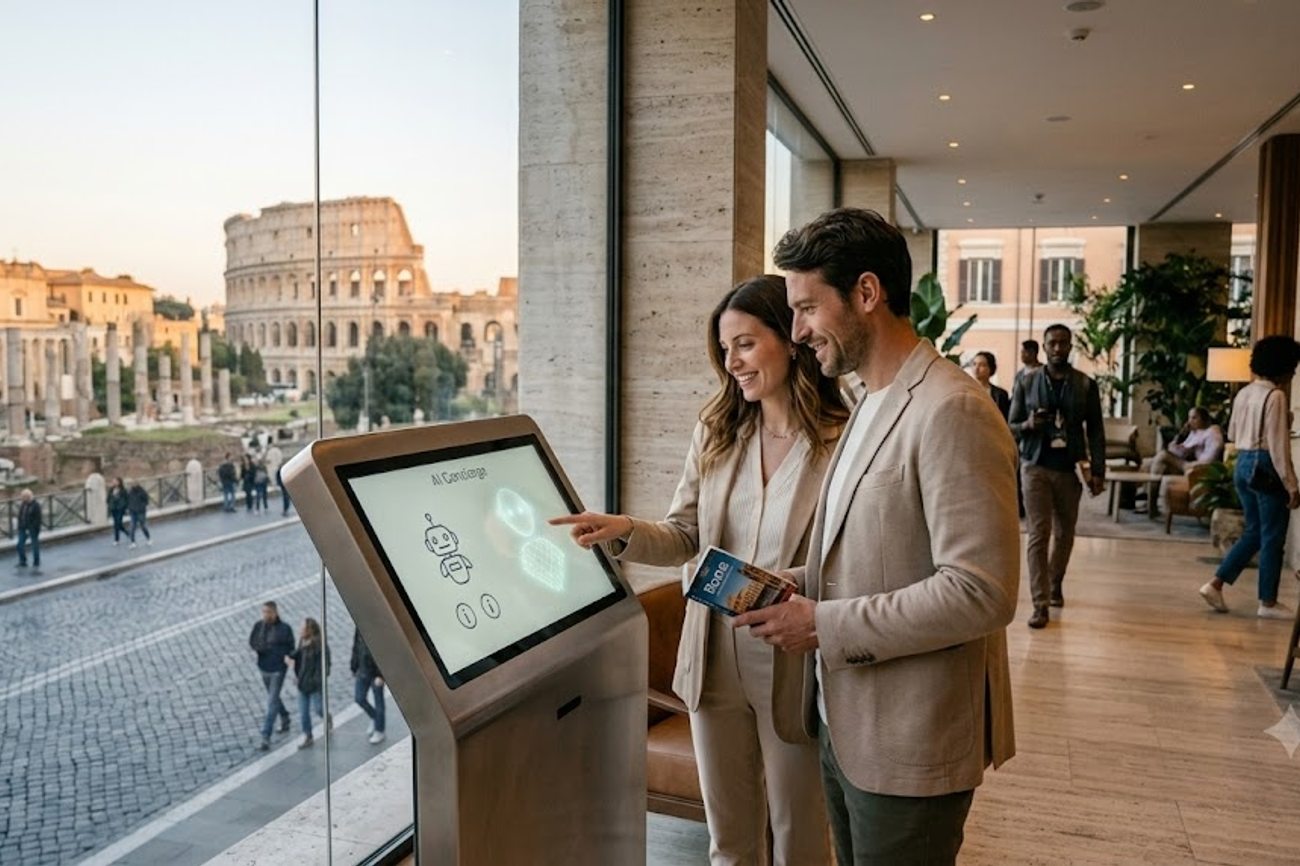
Image generated by AI
Over 80% of upscale properties in London have now transitioned to self-service mobile key entry, effectively eliminating the traditional front-desk queue. This shift is part of a broader European movement where the hotel lobby is being reimagined not as a checkpoint, but as a social space, as the administrative friction of checking in vanishes into a smartphone app.
The Digital Pivot of European Urban Hospitality
The hospitality sector across Europe's major capitals is currently undergoing a structural metamorphosis. We are seeing a definitive move away from the fragmented, paper-heavy administrative styles that defined the previous decade. In cities like London, Paris, and Rome, the goal for 2026 is the creation of a "frictionless journey." This isn't just about adding a few tablets to the lobby; it is a complete overhaul of the Property Management System (PMS) to create integrated digital ecosystems.
The urgency behind this shift is driven by a volatile mix of record-breaking visitor numbers and a persistent shortage of skilled labor. With peak month occupancy rates consistently hitting or exceeding 73% across the continent, hotels can no longer rely on manual workflows to maintain service standards. To survive this high-volume environment, hoteliers are turning to enterprise-grade software that handles the "invisible" work—revenue management, housekeeping synchronization, and energy regulation—leaving the human staff to focus on high-touch guest interactions.
What Makes the European Tech Transition Different
Unlike the rapid, often sterile automation seen in some Asian markets, Europe is attempting a delicate balancing act: integrating cutting-edge tech into historical shells. The challenge is most evident in Rome and Milan, where hotels operating out of centuries-old palaces cannot simply tear down walls to install cabling. Instead, these cities have become hubs for discreet, cloud-based wireless IoT (Internet of Things) infrastructure. By using cloud solutions, Italian heritage hotels have successfully boosted their direct bookings by 15% to 20%, finally breaking their heavy dependence on third-party online travel agencies.
In Paris, the focus is less on the guest interface and more on the environmental footprint. Following a wave of major international events, the city has implemented some of the strictest municipal environmental mandates in the world. This has forced a surge in IoT-powered HVAC systems that adjust room climates based on real-time occupancy and external weather patterns. The result is a streamlined operation where housekeeping schedules are synced with real-time checkout data, reducing room turnaround delays by nearly 35%.
Meanwhile, in the tech-forward hubs of Amsterdam and Berlin, the innovation is financial. Here, 67% of hoteliers have prioritized integrated payment gateways to ensure cybersecurity and speed. These cities are also the primary testing grounds for dynamic pricing engines that adjust room rates on an hourly basis, reacting instantly to flight arrival data and local event schedules.
Visitor Insider Tips
Navigating the "Smart Hotel" era of Europe requires a different approach than it did five years ago. To make the most of these upgrades, keep these local nuances in mind:
The Mobile-First Strategy In London and Berlin, don't wait until you reach the hotel to start your check-in. Use the hotel's app or mobile link the moment you land. By the time you arrive at the property, your digital key will be active, allowing you to bypass the lobby entirely and go straight to your room.
Timing the "Smart" City In Paris and Rome, boutique hotels are increasingly using AI-driven revenue management. To find the best rates, avoid booking exactly 30 days out. Because these systems react to real-time data, you can often find significant price drops in the 72-hour window before arrival if the AI detects a dip in expected occupancy.
Etiquette and the "Invisible" Staff As automation increases, the role of the concierge is shifting. In luxury properties, the AI handles the basics (WiFi passwords, breakfast times), but the human staff are now specialized "experience curators." When engaging with them, ask for "off-menu" local recommendations rather than standard tourist spots; they have more time for deep curation now that they aren't processing paperwork.
Transport Integration When staying in Amsterdam or Berlin, check if your hotel is integrated with local transit APIs. Many modern properties now provide real-time transit updates and integrated booking for e-bikes or public transport directly through the guest portal. For official transit planning, refer to the European Commission's mobility frameworks or local authority sites.
Cultural and Environmental Context
The digitalization of European hotels is not happening in a vacuum; it is heavily steered by the European Union's "Digital Decade" policy. This framework isn't just about efficiency—it's about survival and sustainability. The EU and various national governments have introduced digital voucher schemes that cover up to 50% of the costs for independent hotels to upgrade to cloud-based systems and energy-efficient hardware.
This is a critical intervention because it prevents a "digital divide" where only global chains can afford to be sustainable. By subsidizing the transition to smart room technology, the EU is helping small, family-run pensions in the south of France or Italy meet the same carbon-reduction targets as a Hilton or Marriott.
Furthermore, the strict enforcement of the General Data Protection Regulation (GDPR) has shaped how this technology is deployed. Unlike in other regions, European hotel tech must be "privacy by design." When a London hotel uses predictive analytics to set your room temperature, it does so within a very rigid legal framework regarding data consent, ensuring that the "hyper-personalization" doesn't cross the line into surveillance. For those interested in the preservation of the sites these hotels inhabit, the UNESCO World Heritage Centre provides context on how these urban centers balance modernization with the protection of historical integrity.
FAQ: Visiting Europe 2026
What is the best way to handle check-ins in major European cities? Download the hotel's app in advance. In cities like London, most upscale hotels now use mobile keys, allowing you to skip the front desk and head directly to your room upon arrival.
Will I need a physical credit card for payments? While digital wallets are ubiquitous in Berlin and Amsterdam, it is still wise to carry a physical card as a backup, though 67% of hotels in these hubs now use fully integrated, frictionless digital payment gateways.
How do I find the best rates in "Smart" hotels? Since many hotels now use hourly dynamic pricing based on flight and event data, keep an eye on rates in the 72 hours leading up to your trip for potential last-minute AI-driven discounts.
Is it safe to use hotel AI for personal preferences? Yes. Because of the EU's GDPR laws, hotels in Europe must adhere to strict data protection standards, ensuring your personal preferences are handled with high levels of privacy and consent.
The lobby is no longer a place to wait; it is a place to be.
Tags: LondonHotelTech, ParisSustainableTourism, EuropeanHospitality2026, RomeDigitalTransformation, EUDigitalDecade
Related Travel Guides
- Thailand Pairs Up With Singapore And More Asian Countries As UAE Multiple Entry Tourist Visa Unlocks New Travel Opportunities
- Travellers Could Save Up to 33% on eSIMs by Choosing a Plan That Actually Matches Their Trip
- Travelex Extends Airport, Port and Selfridges Deals as Travel Money Demand Surges
Disclaimer
This article is for informational and educational purposes only. It does not constitute legal, financial, or professional advice. While we strive to provide accurate and up-to-date information, travel policies, regulations, and conditions change rapidly. Always verify information with official sources before making travel decisions. Nomad Lawyer makes no representations about the accuracy, reliability, completeness, or suitability of the information provided. Readers should consult qualified professionals for advice specific to their circumstances. The views expressed in this article are those of the author and do not necessarily reflect the views of Nomad Lawyer.
Raushan Kumar
Founder & Lead Developer
Full-stack developer with 11+ years of experience and a passionate traveller. Raushan built Nomad Lawyer from the ground up with a vision to create the best travel and law experience on the web.
Learn more about our team →