
Riyadh Metro Yellow Line Guide 2026: Connecting King Khalid International Airport to KAFD
A comprehensive logistics guide to navigating Riyadh's Yellow Line (Line 4), providing a high-speed, driverless alternative to taxi congestion between King Khalid International Airport (RUH) and the King Abdullah Financial District (KAFD).

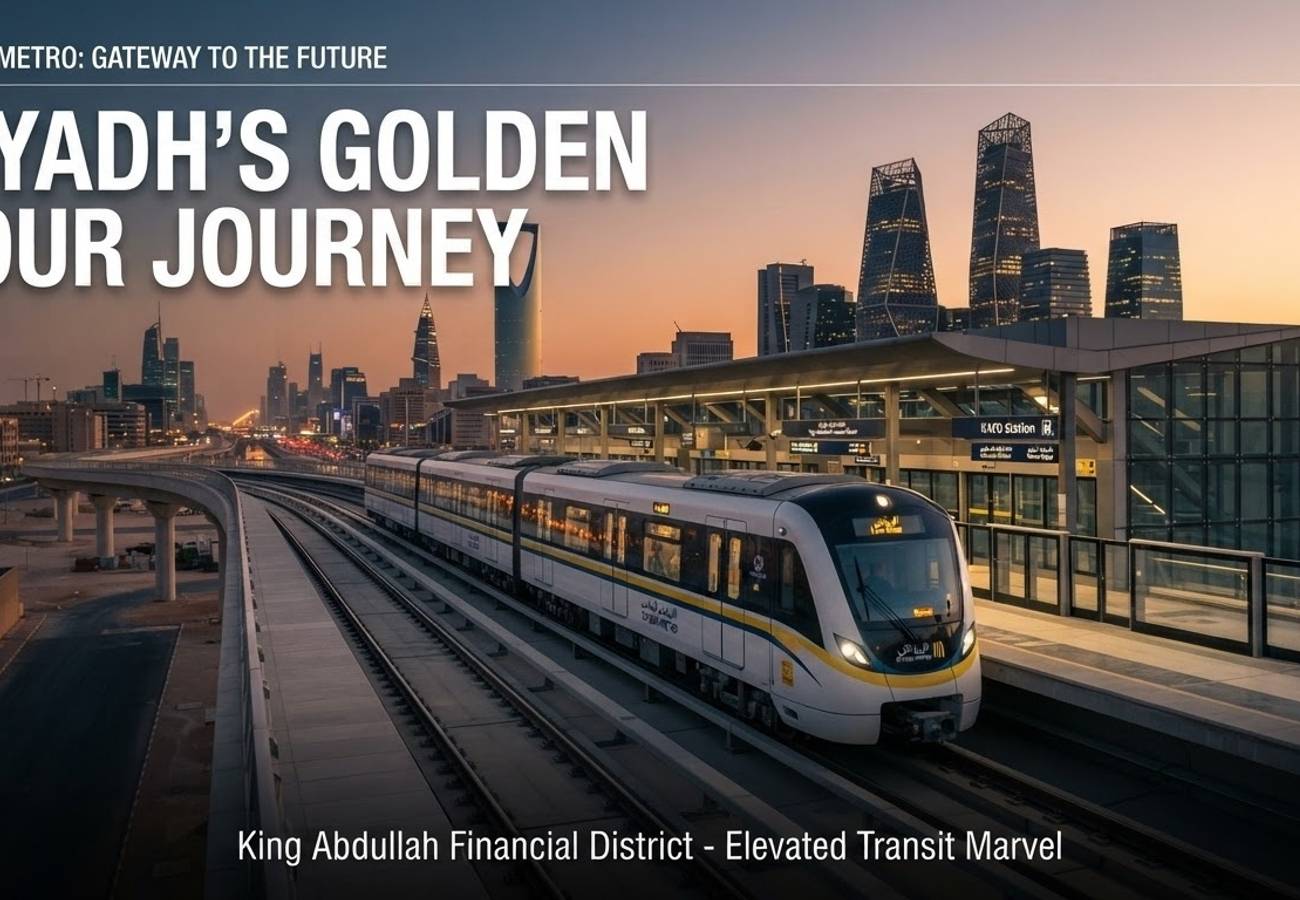
Image generated by AI
The Riyadh Metro Yellow Line now provides a predictable, driverless transit corridor between King Khalid International Airport (RUH) and the King Abdullah Financial District (KAFD), slashing travel times and bypassing the capital's chronic road congestion.
The launch of the Riyadh Metro, a 176-kilometre network spanning six lines, has fundamentally altered the logistics of entering Saudi Arabia's capital. For international arrivals and business travelers, Line 4—the Yellow Line—serves as the primary artery connecting the airport complex to the city's financial heart. By utilizing an automated system with platform screen doors and full climate control, the Yellow Line removes the volatility of Riyadh's highway traffic, turning a potential 60-minute taxi ordeal into a streamlined rail journey.
Route Specifications and Transit Times
The Yellow Line operates as a high-frequency service running from the northwest hub of KAFD toward the north at King Khalid International Airport. The system is integrated with the Blue, Red, Green, Orange, and Purple lines, allowing for seamless transfers to central districts such as Olaya and Al Batha.
| Route Segment | Primary Connection | Estimated Travel Time | Key Feature |
|---|---|---|---|
| KAFD $\rightarrow$ Airport | Line 4 (Yellow) | 25–35 Minutes | Driverless, Automated |
| Airport $\rightarrow$ Olaya | Line 4 $\rightarrow$ Line 1 (Blue) | 40–45 Minutes | KAFD Interchange |
| T5 $\rightarrow$ T3/T4 | Internal Metro Link | < 10 Minutes | Climate-controlled walkways |
Airport Terminal Integration: T1 through T5
The Yellow Line is not a single-stop service at the airport; it is strategically branched to align with the terminal clusters of King Khalid International Airport. This ensures passengers remain within the secure, climate-controlled perimeter.
- Terminal 5 (T5): The primary hub for domestic flights, including Saudia internal routes to Jeddah, Dammam, and Abha. The T5 station provides direct access for those connecting from international arrivals to domestic departures.
- Terminals 3 & 4 (T3–4): These stations serve the bulk of international and regional Gulf carriers. Passengers exiting immigration can follow bilingual (English/Arabic) signage directly to the Line 4 platforms.
- Terminals 1 & 2 (T1–2): Serving the older terminal complexes, these stations are linked via the "Metro Link" internal shuttle system, ensuring connectivity regardless of the airline's assigned terminal.
KAFD Interchange and Urban Connectivity
The King Abdullah Financial District (KAFD) serves as a flagship multi-level node where Lines 1, 4, and 6 intersect. For the corporate traveler, this is the most critical junction in the city. A passenger landing at T3 can board the Yellow Line, transfer to the Blue Line (Line 1) at KAFD, and reach government offices or luxury hotels on King Fahd Road without ever exiting the metro environment.
From a ground-level perspective, the predictability of the rail timetable is the decisive factor. During peak afternoon hours, road transport on the Northern Ring Road often sees nominal 35-minute trips extend beyond an hour. The metro maintains a consistent 25-to-30-minute window between KAFD and the airport terminals.
Ticketing and Fare Logistics
The Riyadh Metro employs a time-based fare structure designed for efficiency.
- Standard Tickets: A two-hour window ticket is available for a low single-digit Saudi riyal fee, sufficient for a one-way trip from RUH to KAFD.
- Multi-Day Passes: Three-day and seven-day unlimited passes are available for those with intensive schedules, often costing less than three individual taxi fares.
- Payment Methods: Tickets are available via automated kiosks (accepting cash and major credit cards), staffed counters at KAFD and airport hubs, and the official mobility applications provided by the local transport authority.
Traveler Logistics Guide: Expert Navigation Tips
From a ground-level perspective, the best way to navigate this system is to prioritize the metro over taxis during the 7:00 AM to 10:00 AM and 4:00 PM to 8:00 PM windows.
Optimal Connection Strategies:
- For Business Meetings in Olaya: Do not take a taxi from the airport. Take the Yellow Line to KAFD, switch to the Blue Line, and exit at the station closest to your hotel. This avoids the unpredictable congestion of King Fahd Road.
- Luggage Handling: The driverless trains are designed with designated luggage areas. Ensure you keep your bags clear of the platform screen doors to avoid boarding delays.
- Digital Transit: Download the official transport app before landing. This allows you to bypass ticket machine queues at T3 or T5 and provides real-time updates on train frequency.
- Customs & Immigration: Factor in an additional 45–90 minutes for immigration and baggage claim before your "station-to-station" time begins.
Infrastructure Impact Assessment
The integration of the Yellow Line transforms Riyadh from a car-dependent city into a connected metropolis. By linking the financial district (KAFD) directly to the primary international gateway (RUH), Saudi Arabia is reducing the carbon footprint of business travel and increasing the efficiency of the "last mile" for tourists. This infrastructure shift is a cornerstone of the city's strategy to attract global corporate headquarters and increase international tourism capacity.
The predictability of the rail ensures that the first impression of Riyadh is one of efficiency rather than traffic.
Related Travel Guides
Disclaimer
This article is for informational and educational purposes only. It does not constitute legal, financial, or professional advice. While we strive to provide accurate and up-to-date information, travel policies, regulations, and conditions change rapidly. Always verify information with official sources before making travel decisions. Nomad Lawyer makes no representations about the accuracy, reliability, completeness, or suitability of the information provided. Readers should consult qualified professionals for advice specific to their circumstances. The views expressed in this article are those of the author and do not necessarily reflect the views of Nomad Lawyer.
Preeti Gunjan
Contributor & Community Manager
A passionate traveller and community builder. Preeti helps grow the Nomad Lawyer community, fostering engagement and bringing the reader experience to life.
Learn more about our team →