
Riviera Travel Pauses Rhine and Danube River Cruise Sales Due to Critical Low Water Levels in 2026
Riviera Travel has suspended sales for selected Rhine and Danube cruises through mid-September 2026 as extreme drought impacts European waterway navigation.
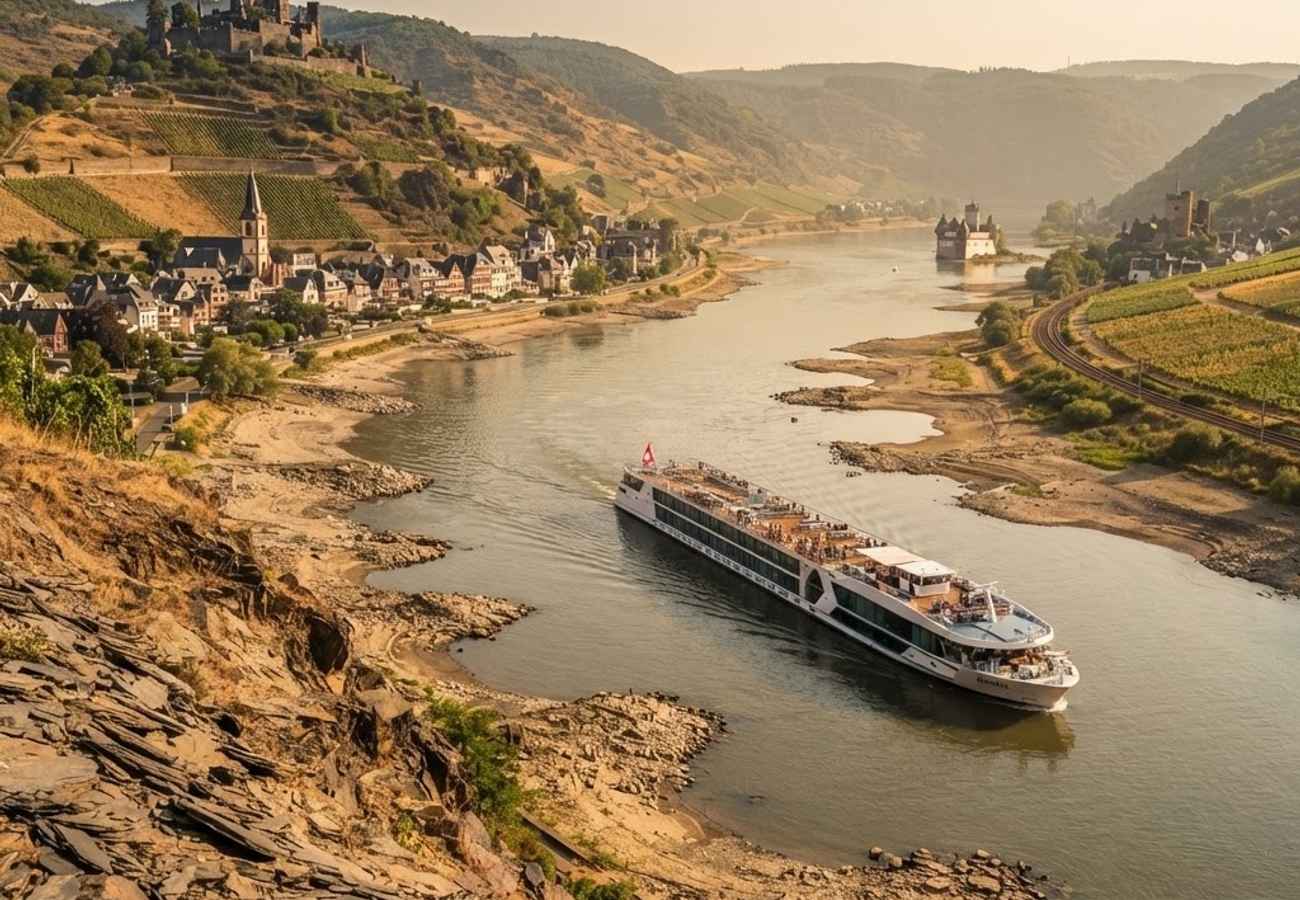
Image generated by AI
Extreme drought has forced Riviera Travel to pause sales for selected Rhine and Danube cruises through mid-September 2026. This strategic suspension aims to prevent "coach-heavy" itineraries where road transport replaces the authentic river experience.
The Shift Toward Experience-First Scheduling
The European river cruise sector is currently facing one of its most challenging operational periods since 2018. Riviera Travel has implemented a temporary freeze on sales for specific departures on the Rhine and Danube, with a planned resumption date of 13 September, contingent on water levels.
Unlike many operators who maintain schedules by substituting sailing segments with extensive bus transfers, Riviera Travel is prioritizing the integrity of the water-based journey. For the traveler, this means a refusal to compromise the "slow travel" appeal of river cruising in favor of rigid adherence to a calendar. While affected journeys have not been cancelled, the pause provides a window for the operator to ensure that the vessels can safely navigate the critical corridors of Europe's most famous waterways.
Environmental Impact on Regional Heritage
The Rhine and Danube are more than just tourist routes; they are the lifelines of Central Europe, connecting historic vineyard regions, imperial cities, and cultural hubs. The current crisis—driven by prolonged heat and drought—highlights a growing vulnerability in regional tourism.
When water levels drop, the impact ripples beyond the cruise ships. Local economies in smaller riverside towns rely on the consistent arrival of passengers to support boutiques, family-run cafes, and heritage sites. The shift toward "experience-first" scheduling is a necessary adaptation to a changing climate. By avoiding the pitfalls of over-reliance on coach transfers, operators are acknowledging that the value of these destinations lies in their relationship with the river, not just the accessibility of the town square.
Navigating Low-Water Disruptions
For those currently booked or planning an autumn getaway, understanding the mechanics of river navigation is essential. River vessels lack the deep-draft flexibility of ocean liners; they are entirely dependent on seasonal rainfall and snowmelt.
| Travel Consideration | Potential Impact on Your Journey |
|---|---|
| Low River Levels | Restricted navigation on shallow sections, potentially skipping specific ports. |
| Extreme Heat | Increased evaporation rates that worsen drought conditions rapidly. |
| Drought Cycles | Prolonged periods of difficult cruising that test contingency plans. |
| Coach Transfers | Used as a last resort to move passengers around unnavigable stretches. |
| Sales Pauses | A signal that operators are auditing the viability of the experience. |
| Itinerary Changes | Shifts in sightseeing arrangements or the order of port visits. |
| Communication | Increased frequency of operator updates regarding vessel positioning. |
Visitor Insider Tips
To navigate the uncertainties of the 2026 European river season, travelers should adopt a more flexible approach to their itineraries.
- The "Shoulder Season" Window: Consider booking for late October or November. While cooler, these months often see a return of stable water levels following autumn rains, offering a more serene experience with fewer crowds.
- Cultural Etiquette: When itineraries shift to coach transfers, be mindful that local towns may be overwhelmed by sudden influxes of passengers arriving at once. Support small, off-the-beaten-path vendors rather than the main tourist hubs.
- Dining Specialty: If your ship is docked longer than expected due to water levels, seek out Spätzle in the Swabian regions of the Danube or a traditional Riesling tasting in the Rhine Valley's terrace vineyards.
- Hidden Gem: If a port is skipped, ask your concierge about "river-adjacent" villages that are accessible by small local ferries, which can often navigate shallower waters than large cruise ships.
Tourism Outlook and Sustainability
The 2026 disruptions serve as a catalyst for the industry to rethink sustainable river tourism. There is an increasing push toward the development of shallower-draft vessels and more dynamic, flexible itinerary planning that respects environmental limits.
Regional conservation bodies and tourism departments are now coordinating more closely to manage the ecological stress on these waterways. The long-term viability of the Rhine and Danube as premier destinations depends on the industry's ability to move away from rigid schedules and toward a model that adapts to the natural rhythm of the river.
The future of European river travel lies in the balance between luxury and ecological reality.
Related Travel Guides
Disclaimer
This article is for informational and educational purposes only. It does not constitute legal, financial, or professional advice. While we strive to provide accurate and up-to-date information, travel policies, regulations, and conditions change rapidly. Always verify information with official sources before making travel decisions. Nomad Lawyer makes no representations about the accuracy, reliability, completeness, or suitability of the information provided. Readers should consult qualified professionals for advice specific to their circumstances. The views expressed in this article are those of the author and do not necessarily reflect the views of Nomad Lawyer.