
Rio de Janeiro Galeão Airport Arrival Guide: Customs, Immigration, and Connection Timing 2026
A professional guide to navigating passport control, baggage claim, and customs at Rio de Janeiro Galeão Airport (GIG), including critical timing for domestic connections.

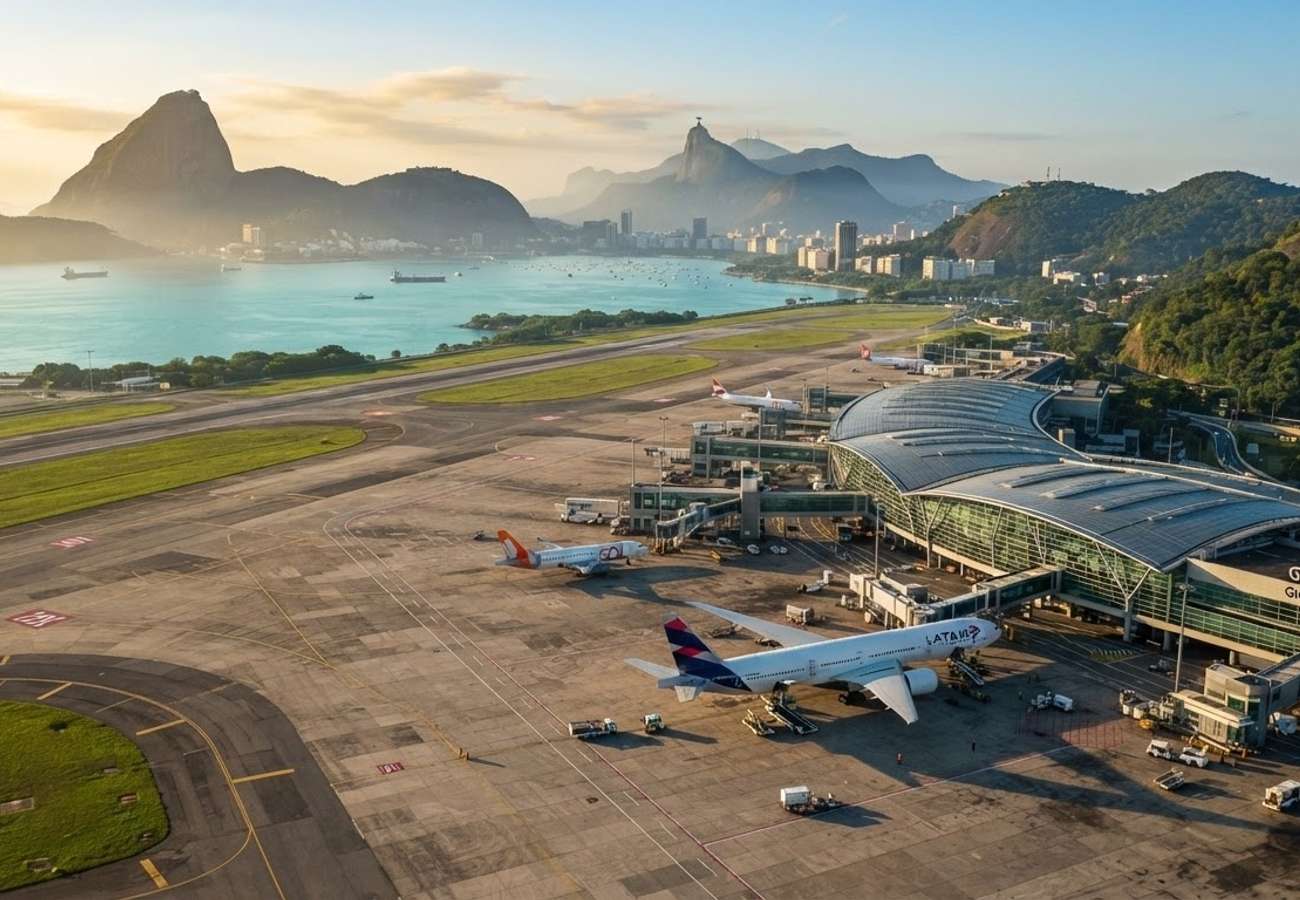
Image generated by AI
International arrivals at Rio de Janeiro/Galeão Antonio Carlos Jobim International Airport (GIG) follow a strict linear sequence. Travelers must clear immigration and customs before accessing any public areas or domestic transfer desks.
Navigating the International Arrivals Layout
Almost all international arrivals are concentrated in Terminal 2. This centralization simplifies the layout but creates significant bottlenecks when multiple wide-body aircraft land simultaneously.
The arrival flow is non-negotiable:
- Immigration: All passengers, including those connecting to domestic flights, must pass through the Federal Police passport control hall.
- Baggage Claim: Located on the level below immigration; passengers must monitor overhead screens for specific carousel assignments.
- Customs: A mandatory checkpoint following baggage collection.
- Public Hall: Access to taxis, ride-shares, and domestic check-in is only granted after completing the previous three steps.
Passport Control: Processing Times and Requirements
Immigration is managed by the Brazilian Federal Police. Processing speed is highly volatile and depends on the "wave" of arrivals.
- Off-Peak Wait Times: 10 to 20 minutes (typically mid-afternoon or late evening).
- Peak Wait Times: 30 to 60 minutes (typically early morning arrivals from North America and Europe).
- Fast Track: Brazilians and legal residents have separate queues and access to automated e-gates.
Foreign nationals must use the “Estrangeiros / Foreigners” line. Officers frequently request proof of accommodation, length of stay, and onward travel. Our analysis suggests that having digital or printed hotel confirmations and return tickets ready can significantly accelerate the interview process.
Baggage Claim and Customs Procedures
Baggage delivery at GIG varies based on aircraft load and ground handling efficiency.
- Fast Delivery: 20 to 30 minutes for flights with high carry-on ratios.
- Delayed Delivery: 45 to 60 minutes for full flights during peak periods.
The Customs Channel System
Brazil utilizes a two-channel system for exiting the airport:
- Green Channel (Nada a Declarar): For passengers with no items to declare. While usually fast, random X-ray inspections are common.
- Red Channel: Mandatory for those exceeding duty-free limits or carrying commercial quantities of electronics and currency.
Travelers carrying high-value professional gear or multiple sealed electronics should be prepared to present receipts to avoid delays.
Arrival Timing and Peak Windows
The timing of your landing dictates your experience at GIG.
- The Morning Rush (05:00 – 09:00): The most congested period due to overnight arrivals from Europe and North America. Expect maximum queue lengths.
- The Mid-Day Lull (14:00 – 16:00): Generally the fastest processing window, particularly on weekdays outside of holiday seasons.
- The Late Window (After 22:00): Rapid processing, though ground transportation options (specifically airport buses) are reduced.
Seasonal Impact: Expect extreme congestion during Carnival, New Year, and the Brazilian school holidays in January and July.
Connection Logistics and Minimum Timings
For those transitioning from an international flight to a domestic Brazilian route, the process is time-intensive because you must fully exit the international zone before re-entering the domestic zone.
Estimated Processing Timeline
| Stage | Estimated Time (Minutes) |
|---|---|
| Aircraft Door to Passport Control | 10 – 60 |
| Baggage Claim | 20 – 60 |
| Customs Clearance | 5 – 20 |
| Total to Public Hall | 35 – 140 |
Minimum Connecting Times (MCT):
- International to International: 55 to 60 minutes.
- International to Domestic: 90 minutes.
Why This Matters: Industry Analysis
From a logistical perspective, the linear design of Terminal 2 means there is zero redundancy in the arrival process. If the Federal Police are understaffed or a flight from a high-volume route (like New York or Lisbon) lands simultaneously with others, the entire chain—baggage and customs—stalls.
For the business traveler or digital nomad, the 90-minute minimum connection time for domestic flights is an optimistic baseline. Given the potential for 60-minute immigration queues and 60-minute baggage waits, a "safe" connection window is actually closer to 3 hours. Booking tight connections at GIG is a high-risk strategy that often leads to missed flights.
Forward Outlook
As GIG continues to handle increasing long-haul traffic, the reliance on automated e-gates for residents will likely expand to more passport categories to alleviate the morning rush. Travelers should monitor current wait-time tools and passenger reports 48 hours prior to arrival to gauge staffing levels during their specific landing window.
Avoid the early morning rush to ensure a seamless entry into Rio.
Related Travel Guides
Disclaimer
This article is for informational and educational purposes only. It does not constitute legal, financial, or professional advice. While we strive to provide accurate and up-to-date information, travel policies, regulations, and conditions change rapidly. Always verify information with official sources before making travel decisions. Nomad Lawyer makes no representations about the accuracy, reliability, completeness, or suitability of the information provided. Readers should consult qualified professionals for advice specific to their circumstances. The views expressed in this article are those of the author and do not necessarily reflect the views of Nomad Lawyer.
Raushan Kumar
Founder & Lead Developer
Full-stack developer with 11+ years of experience and a passionate traveller. Raushan built Nomad Lawyer from the ground up with a vision to create the best travel and law experience on the web.
Learn more about our team →