
Severe Flooding Paralyzes Rhodes and Aegean Transit: UK Foreign Office Issues Emergency Warning for Stranded Tourists

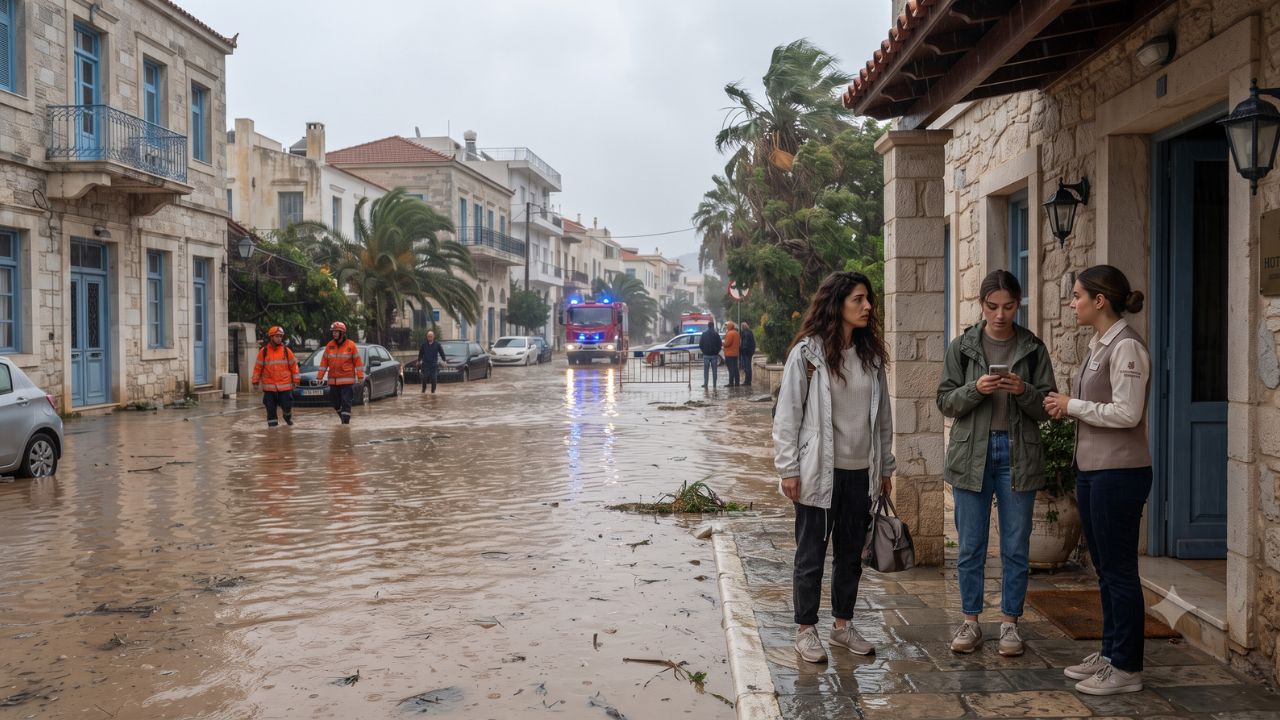
Following catastrophic flash flooding on 14 October 2026 that triggered Greece’s nationwide 112 digital alert across the entire Rhodes regional unit and resulted in a confirmed fatality after raging currents swept vehicles into the Aegean Sea, the Hellenic Coast Guard suspended commercial ferry departures out of Piraeus and Lavrio while the British government issued emergency travel advisories for holidaymakers. With the primary Archangelos–Malona roadway impassable, municipal transit suspended across Faliraki, and concurrent storm fronts causing mudslides across Northern Evia and Skiathos, thousands of international visitors remain confined to resort complexes under shelter-in-place directives. The sudden environmental emergency highlights the growing operational fragility of Mediterranean island infrastructure when subjected to unseasonal convective storm cells.
Civil Protection authorities and Rhodes Mayor Alexandros Koliadis deployed municipal emergency personnel in coordination with Hellenic rescue services to secure inundated thoroughfares. With emergency dispatch centers inundated by distress calls, Greek authorities have instructed both permanent residents and foreign tourists to restrict all physical movements to strictly essential travel.
Infrastructure Breakdown Across the Rhodes Regional Unit
The meteorological event overwhelmed municipal drainage systems across the eastern and northern perimeters of Rhodes. Torrential runoff from elevated interior hills turned paved urban corridors into fast-moving rivers, washing sediment, debris, and parked passenger vehicles down toward coastal estuaries. Structural damage and transit paralyzations center heavily on primary resort districts:
- Town of Rhodes: Major urban intersections throughout the historic capital became submerged, causing commercial gridlock and halting ground transfers between downtown boutique properties and Diagoras International Airport.
- Ialysos and Afantou: Both municipal districts reported extensive structural damage to local roads, residential basements, and beachfront retail promenades, leaving surface avenues impassable for civilian sedans.
- Faliraki and Archangelos: As two of the island's densest holiday centers, both communities experienced rapid water ingress. Municipal authorities completely cancelled the Faliraki public bus network until conditions stabilize, while police erected barricades across the vital Archangelos–Malona highway after sections of the roadway suffered severe washouts.
Tragically, maritime rescue units recovered the body of an adult male swept offshore by flash floodwaters, prompting the Ministry of Citizen Protection to reiterate warnings regarding the fatal hazards of driving through standing water.
Regional Scope: Impact Metrics Across Greek Holiday Destinations
The storm system extended beyond Rhodes, paralyzing maritime links across the central Aegean Sea and triggering localized evacuations in central Greece. The table below details the operational disruptions documented across affected regional units:
| Geographic Region | Primary Meteorological Hazard | Transport Infrastructure Status | Tourist & Passenger Impact | Official Governmental Directives |
|---|---|---|---|---|
| Rhodes (Dodecanese) | Torrential rainfall & flash flooding | Archangelos–Malona road shut; Faliraki buses halted | Holidaymakers stranded in hotel resorts | National 112 alert activated; non-essential travel banned |
| Skiathos (Sporades) | Concentrated storm deluge | Airport runways operational; regional access blocked | Widespread flight and transfer delays | Municipal monitoring; hotel shelter-in-place orders |
| Northern Evia | Destructive mudslides & runoff | Rural and coastal road networks impassable | Localized village and guest evacuations | Mayoral emergency declarations requested |
| Port of Piraeus | Aegean gale-force winds | Commercial ferry departures suspended | Mainland-to-island sea transit halted | Hellenic Coast Guard departure bans enforced |
| Port of Lavrio | Coastal storm surges | Commercial ferry departures halted | Island supply and passenger lines frozen | Maritime navigation bans active |
Sources: Compiled from official releases by the Greek Ministry of Citizen Protection, Hellenic Coast Guard bulletins, Rhodes Municipal Directives, and the Hellenic National Meteorological Service (HNMS).
Maritime Gridlock and International Advisory Escalation
In response to sustained gale-force winds across the Aegean basin, the Hellenic Coast Guard placed blanket departure prohibitions on passenger ferries departing major mainland hubs. Piraeus—the primary passenger maritime terminus for the Cyclades and Dodecanese—ground to an absolute standstill, stranding inter-island travelers, while operations at Lavrio were similarly terminated. For travelers scheduled to transit between Athens and island ports, maritime transit remains completely unavailable pending storm moderation.
Diplomatic missions responded swiftly to the infrastructural collapse. The UK Foreign, Commonwealth and Development Office (FCDO) updated its formal travel advice for Greece, strongly cautioning British citizens against all unnecessary travel across affected districts. The advisory emphasizes that tourists must activate digital roaming to receive Greek 112 emergency broadcasts, observe municipal road barricades, and avoid entering coastal drainage zones.
On the lodging front, the Greek Ministry of Tourism and representative hotel associations issued operational assurances confirming that major resort properties in Rhodes retain stable food, bottled water, and auxiliary generator power. Hotel general managers have been instructed to keep guests within secure interior premises, preventing tourists from attempting hazardous departures toward airports or ferry ports without police-cleared corridors.
Expert Analysis: Island Evacuation Bottlenecks, Package Holiday Liabilities, and Climate Volatility
The emergency in Rhodes exposes the logistical vulnerabilities inherent in high-density island tourism. While aviation facilities at Rhodes Diagoras Airport remained structurally operational, the collapse of surface transit arteries severed the physical connection between passenger terminals and coastal hotels.
According to crisis management frameworks analyzed by travel safety specialists, island geography severely restricts alternative transit options when arterial roads wash out. For travelers booking this route, the direct consequence is missed international flights and stranded reservations, as private taxis, hotel shuttles, and rental vehicles cannot navigate flooded thoroughfares in Faliraki and Archangelos to reach departure gates.
Simultaneously, the widespread suspension of ferry services traps multi-destination tourists on the mainland or across smaller archipelago islands that lack emergency medical infrastructure. The pricing pressure this creates means stranded travelers face unexpected accommodation extension expenses, while regional airlines must absorb costly aircraft repositioning rotations and compensation claims under European passenger protection frameworks.
From a regulatory and financial perspective, British and European travelers booked under package travel regulations possess statutory protections requiring tour operators to provide hotel accommodation and care during force majeure weather disruptions. However, independent travelers who assembled unbundled itineraries—purchasing flights, villa rentals, and ferries separately—must rely entirely on comprehensive travel insurance policies, which frequently require formal proof of government non-essential travel advisories to validate claims for interrupted or abandoned vacations.
Key Takeaways
- Severe Island Flooding: Heavy flash floods struck Rhodes on 14 October 2026, prompting national 112 emergency alerts and resulting in at least one confirmed fatality.
- Arterial Transport Failures: The main Archangelos–Malona highway is closed indefinitely, Faliraki buses are suspended, and urban streets in the Town of Rhodes and Ialysos are submerged.
- Aegean Maritime Lockdown: The Hellenic Coast Guard halted all commercial ferry sailings out of Piraeus and Lavrio due to gale-force winds, isolating island networks.
- UK FCDO Travel Alert: The British government updated official advisories, urging citizens to avoid non-essential regional travel and monitor local 112 alerts.
- Multi-Region Weather Crisis: Secondary storm impacts, mudslides, and localized evacuations were reported across Northern Evia and Skiathos.
FAQ: Greece and Rhodes Severe Flooding 2026
What official emergency warnings are currently in effect for Rhodes?
The Greek Civil Protection authority activated the national 112 emergency alert system across the Rhodes regional unit, while the UK Foreign Office advised against all non-essential travel due to dangerous flash floods and severed roads.
Are ferries operating between Athens and the Greek islands?
No. The Hellenic Coast Guard enforced sailing bans due to gale-force winds, halting commercial passenger ferry departures from major mainland ports including Piraeus and Lavrio.
Is Rhodes Diagoras International Airport open?
While airport runways and air traffic control remain functional, severe flooding and police barricades along the Archangelos–Malona road and Faliraki corridors make ground transit to the airport hazardous and impassable in many areas.
What should stranded holidaymakers do inside their resorts?
Tourists are advised by local civil authorities to shelter in place, remain inside designated hotel structures, avoid driving or crossing flooded streets, and register mobile devices for continuous Greek 112 digital emergency broadcasts.
[When Mediterranean skies unleash atmospheric rivers, the most vital travel itinerary is the discipline to shelter in place and let raging waters recede.]
Related Travel Guides
- Kenya Approves $350M Shareholder Loan for Kenya Airways: Fleet Groundings and Balance-Sheet Restructuring Unfold
- The Wet-Lease Mechanics Behind SAS Regional Flights: How CityJet Powers Nordic Connectivity
- Global Aviation Services Market to Double to US$422B by 2045: Airbus Forecast Details Severe Fleet Maintenance and Crew Deficits
Disclaimer
This article is for informational and educational purposes only. It does not constitute legal, financial, or professional advice. While we strive to provide accurate and up-to-date information, travel policies, regulations, and conditions change rapidly. Always verify information with official sources before making travel decisions. Nomad Lawyer makes no representations about the accuracy, reliability, completeness, or suitability of the information provided. Readers should consult qualified professionals for advice specific to their circumstances. The views expressed in this article are those of the author and do not necessarily reflect the views of Nomad Lawyer.
Raushan Kumar
Founder & Lead Developer
Full-stack developer with 11+ years of experience and a passionate traveller. Raushan built Nomad Lawyer from the ground up with a vision to create the best travel and law experience on the web.
Learn more about our team →