
Bali Petrol Shortage Disrupts Island Transit: Pertamina Mobilizes 57.9M-Liter Emergency Influx Amid Tanker Delays

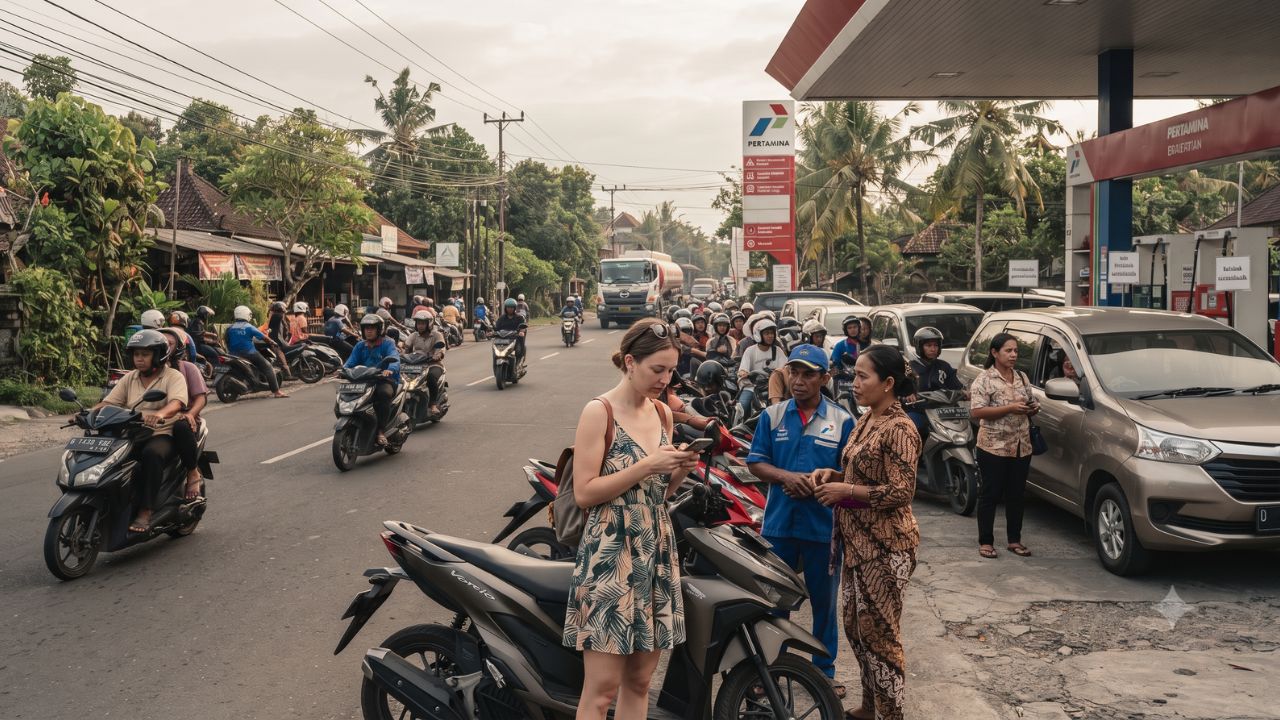
With retail filling station allocations plunging by 30% to 40% across South Kuta and vehicle queues extending up to 200 meters in northern regencies, a maritime distribution bottleneck at the Manggis and Sanggaran fuel terminals has triggered widespread petrol shortages across Bali. Following an emergency order in Denpasar shifting municipal schools to remote learning from 15 to 17 October 2026 and police escorts deployed for road tankers, state energy company Pertamina announced an emergency 57.9 million-liter fuel shipment between 14 and 17 October to stabilize transport across an island hosting 685,994 monthly international visitors. While national oil reserves remain secure at 18 to 20 days of forward consumption according to the Indonesia Ministry of Energy and Mineral Resources, localized delivery breakdowns have paralyzed ride-hailing services, delayed airport transfers, and left independent scooter travelers stranded at depleted pumps.
The crisis demonstrates how fragile island tourism infrastructure remains when just-in-time maritime supply chains encounter terminal berthing delays. With star-rated hotels averaging 68.19% room occupancy and Ngurah Rai International Airport processing 750,262 departing international passengers in August alone, the inability to purchase retail fuel threatens the everyday mobility of tourists traveling between southern resorts, Ubud, and coastal transit hubs.
The Maritime Chokepoint: Manggis Terminal and Regional Allocation Cuts
The underlying cause of Bali's fuel shortfall stems from marine logistics rather than an absolute domestic crude deficit. On 14 October, Indonesia’s national Ombudsman revealed that preliminary investigations linked retail queues directly to delayed coastal tanker arrivals and discharge complications at the primary Manggis maritime terminal, compounded by distribution friction at the secondary Sanggaran depot.
Field inspections conducted by the Bali Police on 7 October confirmed early warning signs across South Kuta, encompassing the high-density resort hubs of Jimbaran and Nusa Dua. Station managers reported receiving 30% to 40% less petrol than standard operational quotas, leading to the complete exhaustion of Pertalite and Pertamax grades at several outlets and forcing at least one Jimbaran station to shutter entirely.
As road tankers struggled to replenish station storage tanks, vehicle queues spilled into adjacent traffic lanes. By 14 October, Badung Regency traffic authorities were actively deployed to manage vehicular gridlock around service stations in Lukluk, Kapal, Abianbase, Umahanyar, Sibang, and Kuta. In Buleleng Regency, police reported refuelling lines in Singaraja stretching between 150 and 200 meters, while similar traffic monitoring operations were mandated across Klungkung and Jembrana.
Island-Wide Fuel Strain Profile Across Balinese Regencies
The table below delineates the geographic extent of fuel distribution disruptions, station constraints, and civil interventions documented across Bali's primary tourist and commercial centers:
| Regency or Municipal District | Primary Fuel Impact | Documented Queue Intensity | Municipal & Police Countermeasures | Tourist Mobility Exposure |
|---|---|---|---|---|
| South Kuta (Badung) | Station allocations down 30%–40% | Intermittent pump closures | Station stock monitoring by police | Hotel shuttle delays in Jimbaran and Nusa Dua |
| Airport Corridor (Tuban) | Heavy queues at Angkasa station | Congestion on airport access roads | Airport police directing vehicle flow | Elevated risk of missed international flight check-ins |
| Denpasar Municipality | Severe commuter fuel deficits | Extended urban station lines | Schools moved to online learning (15–17 Oct) | Ride-hailing driver unavailability (Grab / Gojek) |
| Central Badung | Gridlock at retail forecourts | Multi-lane spillover traffic | Traffic police deployed in 6 sub-districts | Excursion delays on routes toward Ubud and Tanah Lot |
| Buleleng (Singaraja) | Severe regional fuel depletion | Lines reaching 150–200 meters | Local police queue control | North Bali overland road trip itineraries disrupted |
| Klungkung & Jembrana | Evening refuelling bottlenecks | Concentrated peak-hour waits | Traffic management around terminals | Inter-island ferry connecting traffic delayed |
Sources: Compiled from official field reports by Bali Regional Police, Badung Regency Transportation Agency, Denpasar Education Department decrees, and Indonesia Ombudsman monitoring releases.
The Emergency Recovery Framework: Pertamina’s 57.9M-Liter Injection
To restore retail fuel equilibrium, Pertamina Patra Niaga enacted an emergency logistics response on 14 October. The operator scheduled 57.9 million liters of motor fuel to arrive at Manggis and Sanggaran through 17 October, comprising:
- Pertalite (RON 90): 44.9 million liters designated for mass public consumption, commercial ride-hailing drivers, and local scooter fleets.
- Pertamax (RON 92): 13.0 million liters allocated for modern rental vehicles, premium taxis, and private tour buses.
To accelerate distribution, Bali Police established dedicated armed escorts for tanker convoys departing Manggis, clearing congested bypass corridors to ensure delivery trucks reach depleted stations without traffic delays. Simultaneously, Pertamina authorized 24-hour continuous operations at designated high-volume stations, aiming to dissipate daytime queue concentrations.
Importantly for international air travelers, aviation turbine fuel (Avtur) reserves at I Gusti Ngurah Rai International Airport (DPS) remain entirely separate from commercial automotive supply lines. Flight schedules and airline refueling operations have experienced zero direct disruptions. The primary threat to air travelers centers on ground transit: reaching the departure terminal through congested arterial corridors surrounding the airport.
Tourism Baseline Metrics: High Stakes for Bali's Economy
The economic exposure generated by fuel rationing is magnified by peak tourist arrivals documented by Statistics Indonesia (BPS). In August 2026, Bali welcomed 685,994 direct foreign visitors, with Australian citizens representing the largest national contingent at 23.51%. With star-rated hotel occupancy standing at 68.19% and Ngurah Rai handling over 750,000 departing international flyers in a single month, ground transport operators cannot absorb prolonged fuel delivery pauses without widespread commercial fallout.
The unprecedented decision by Denpasar's municipal government to transition all early childhood, primary, and junior secondary schools to digital learning between 15 and 17 October illustrates the severity of the transport bottleneck. By removing thousands of daily school-run vehicles from city avenues, authorities aimed to preserve remaining petrol stocks for essential logistics, emergency services, and the tourism workforce.
Expert Analysis: Ride-Hailing Contraction, Rental Scams, and Transfer Strategies
The breakdown in retail fuel logistics generates direct operational challenges for independent international travelers. Ride-hailing platforms like Grab and Gojek, which form the primary affordable transport network across Seminyak, Canggu, and Sanur, operate on razor-thin driver margins. For travelers booking this route, the direct consequence is widespread ride cancellations, extended pickup wait times, and aggressive driver requests for cash surcharges to offset hours spent waiting in petrol queues.
Simultaneously, the scooter rental sector—the lifeblood of budget tourism in Bali—faces acute operational disruptions. The pricing pressure this creates means roadside fuel vendors (Pertamini roadside pumps and glass-bottle vendors) are marking up unofficial fuel prices by 50% to 100%, often dispensing diluted low-octane fuel that risks damaging modern scooter engines. Tourists who rent motorbikes with near-empty tanks find themselves stranded in traffic lines instead of sightseeing.
For holidaymakers scheduled to catch international departures from Ngurah Rai, relying on last-minute ride-hailing poses severe financial risks. Travelers should arrange airport transfers through certified hotel transport desks at least 24 hours in advance, ensuring that the allocated vehicle has secured adequate fuel reserves the night before. Furthermore, passengers should budget an additional 90 to 120 minutes of travel time to absorb traffic bottlenecks around airport perimeter filling stations.
Key Takeaways
- Logistics Bottleneck, Not National Shortage: Bali's petrol shortage results from tanker discharge delays at Manggis and Sanggaran terminals, despite national reserves holding 18–20 days of stock.
- Massive Emergency Fuel Injection: Pertamina Patra Niaga deployed 57.9 million liters of fuel (44.9M liters Pertalite, 13M liters Pertamax) scheduled for delivery through 17 October.
- Severe Localized Allocation Cuts: Station supplies dropped 30% to 40% in South Kuta, generating 200-meter queues and prompting police escorts for delivery tankers.
- Civic Interventions in Denpasar: Municipal schools were shifted to mandatory online learning from 15 to 17 October to alleviate strain on urban fuel supplies.
- Aviation Operations Stable: Commercial flights at Ngurah Rai Airport operate normally; the primary risk is surface transit delays and ride-hailing cancellations.
FAQ: Bali Petrol Shortage 2026
What caused the sudden petrol shortage across Bali?
The shortage was triggered by delayed maritime tanker arrivals and offloading bottlenecks at Pertamina’s Manggis and Sanggaran fuel terminals, reducing station delivery allocations by up to 40%.
Are flights at Bali Ngurah Rai International Airport grounded?
No. Commercial aircraft utilize aviation turbine fuel (Avtur), which operates under a completely separate, fully stocked supply chain. Flight schedules remain unaffected.
How are airport taxi transfers and ride-hailing apps impacted?
Grab and Gojek drivers face long station lines, leading to higher cancellation rates and extended wait times. Travelers heading to the airport should book private transfers early and add a two-hour buffer.
Can tourists still rent and refuel scooters safely?
Scooter rentals remain operational, but many gas stations face temporary stockouts of Pertalite and Pertamax. Travelers should inspect fuel gauges before renting and avoid purchasing unverified roadside bottled fuel.
[In an island paradise governed by just-in-time maritime logistics, the difference between catching your flight and missing your vacation lies in securing your fuel buffer well before the tank runs dry.]
Related Travel Guides
- Mexico Pacific Coast Faces Compounded Cyclone Threats: Hurricane Simon Residuals and Tropical Storm Trudy Menace Resorts
- US Reissues Uncompromising Level 4 Yemen Travel Warning: Extreme Hostage, DNA, and Socotra Protocols Enforced
- Severe Flooding Paralyzes Rhodes and Aegean Transit: UK Foreign Office Issues Emergency Warning for Stranded Tourists
Disclaimer
This article is for informational and educational purposes only. It does not constitute legal, financial, or professional advice. While we strive to provide accurate and up-to-date information, travel policies, regulations, and conditions change rapidly. Always verify information with official sources before making travel decisions. Nomad Lawyer makes no representations about the accuracy, reliability, completeness, or suitability of the information provided. Readers should consult qualified professionals for advice specific to their circumstances. The views expressed in this article are those of the author and do not necessarily reflect the views of Nomad Lawyer.
Kunal K Choudhary
Co-Founder & Contributor
A passionate traveller and tech enthusiast. Kunal contributes to the vision and growth of Nomad Lawyer, bringing fresh perspectives and driving the community forward.
Learn more about our team →