
Major US Airports Set to Welcome Airbus A380 Superjumbos This Summer in Historic Shift
Breaking airline news and aviation industry updates for 2026.

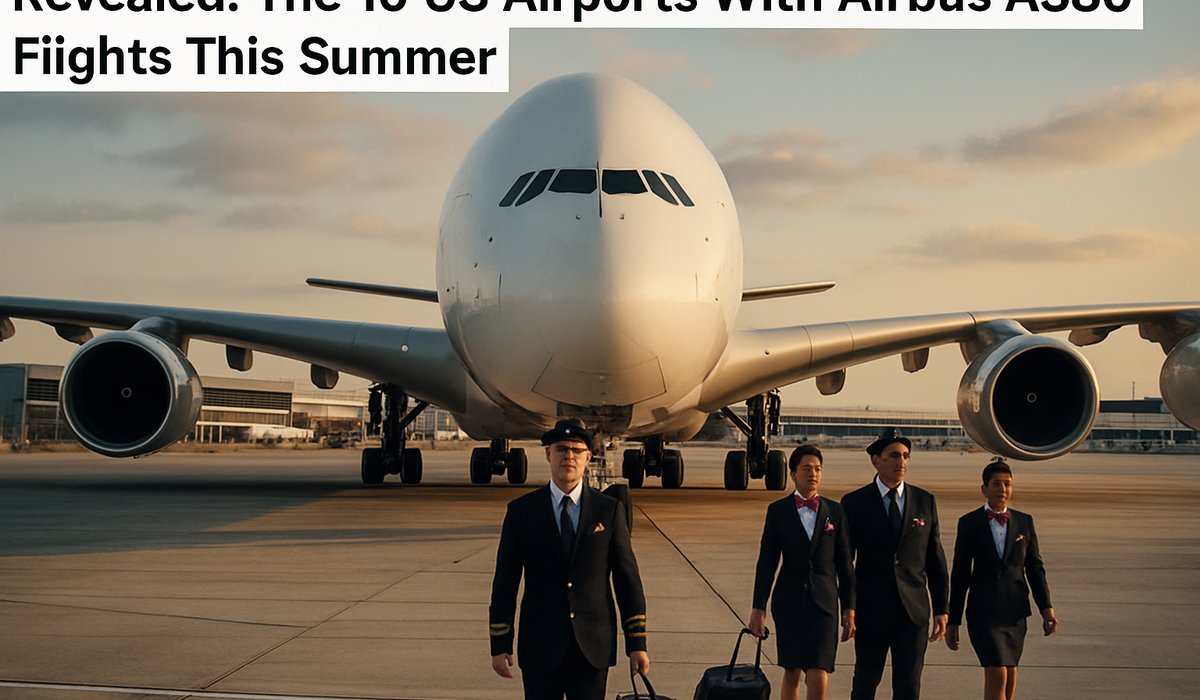
Image generated by AI
Major US Airports Set to Welcome Airbus A380 Superjumbos This Summer in Historic Shift
Massive double-deck aircraft finally gain foothold in American market after two decades of industry resistance
The A380's Long-Delayed American Breakthrough
The Airbus A380—aviation's most ambitious wide-body aircraft—is poised to make a significant appearance across ten major US airports this summer, marking a watershed moment for an aircraft that has struggled to gain traction in the world's largest aviation market. The move represents a dramatic reversal for a jet that has largely remained absent from American soil throughout its commercial history, with production figures languishing at just 251 aircraft plus three prototypes since its 2007 debut.
Why America's Airlines Resisted the Superjumbo
The A380's failure to capture the US market stems from fundamental operational realities. America's "Big Three" carriers—American Airlines, Delta Air Lines, and United Airlines—dominate global aviation through their sprawling multi-hub network strategy. These carriers require aircraft flexibility across diverse route networks rather than maximum-capacity single flights. The A380's enormous 555+ passenger capacity, while impressive on select international routes, creates inefficiencies when deployed across the fragmented hub-and-spoke model that defines American carrier operations.
Additionally, US airport infrastructure—including gate availability, ground handling capabilities, and runway specifications—was never optimized for aircraft of the A380's dimensions. European and Asian hubs invested heavily in A380 infrastructure, but American airports largely bypassed such investments, further limiting the aircraft's viability for domestic operators.
A New Era for Ultra-Large Aircraft Operations
The upcoming summer deployments signal shifting market dynamics, potentially driven by rising jet fuel prices and post-pandemic capacity pressures that incentivize maximizing passenger loads on premium international routes. Ten major US hubs are expected to accommodate A380 operations, though industry observers note this likely represents charter, lease, or foreign carrier arrangements rather than permanent adoption by legacy US carriers.
The development could reshape airline fee structures and baggage charge strategies, as carriers operating larger aircraft often adjust ancillary revenue models. Premium transatlantic routes, in particular, may see competitive pressures that filter down to passenger pricing and service offerings.
Industry Implications
This summer's A380 presence underscores broader aviation sector trends: demographic growth on key international corridors, the evergreen appeal of ultra-high-capacity aircraft on profitable long-haul routes, and evolving financial pressures that make even unconventional aircraft deployments strategically sensible. Whether this represents sustained operational change or a temporary summer surge remains uncertain, but it definitively ends the A380's complete absence from the American market.
FAQ: Airbus A380 Operations in the United States
What is an Airbus A380 and why is it significant? The A380 is the world's largest passenger airliner, featuring a distinctive double-deck fuselage and carrying up to 555 passengers. Its arrival in the US market ends decades of market rejection.
Which ten US airports will host A380 flights this summer? Major international hubs including New York JFK, Los Angeles, San Francisco, Chicago O'Hare, Miami, Boston, Washington DC, Dallas-Fort Worth, Atlanta, and Houston are expected to accommodate operations.
Why have US airlines avoided the A380 for so long? America's hub-and-spoke network model requires aircraft flexibility across multiple routes, while the A380's massive capacity suits only the largest international routes. US carriers prioritize operational efficiency over single-flight maximization.
How will A380 deployments affect airline fees and baggage charges? Higher-capacity aircraft may allow carriers to lower per-seat operational costs, potentially influencing competitive pricing on transatlantic routes, though ancillary fees remain revenue-critical.
Is this a permanent shift in US aviation strategy? Current indications suggest these are temporary or seasonal deployments, likely foreign carrier or charter operations rather than permanent adoption by major American airlines.
Related Travel Guides
- Widespread European Aviation Chaos as 2,233 Flights Are Delayed and 56 Cancelled Across England, Germany, France, Spain, Netherlands and Russia — Ryanair, Lufthansa, KLM and Air France Passengers Stranded in May 2026
- Delta Air Lines Flight DL528 Chattanooga Airport Diversion
- Cancun Delays Cancellations: 43 Flight Disruptions Hit CUN Airport
Disclaimer
This article is for informational and educational purposes only. It does not constitute legal, financial, or professional advice. While we strive to provide accurate and up-to-date information, travel policies, regulations, and conditions change rapidly. Always verify information with official sources before making travel decisions. Nomad Lawyer makes no representations about the accuracy, reliability, completeness, or suitability of the information provided. Readers should consult qualified professionals for advice specific to their circumstances. The views expressed in this article are those of the author and do not necessarily reflect the views of Nomad Lawyer.
Raushan Kumar
Founder & Lead Developer
Full-stack developer with 11+ years of experience and a passionate traveller. Raushan built Nomad Lawyer from the ground up with a vision to create the best travel and law experience on the web.
Learn more about our team →