
JetBlue's Premium Mint Strategy: How 24 Business Class Seats Finance Entire Transatlantic Flights
Breaking airline news and aviation industry updates for 2026.

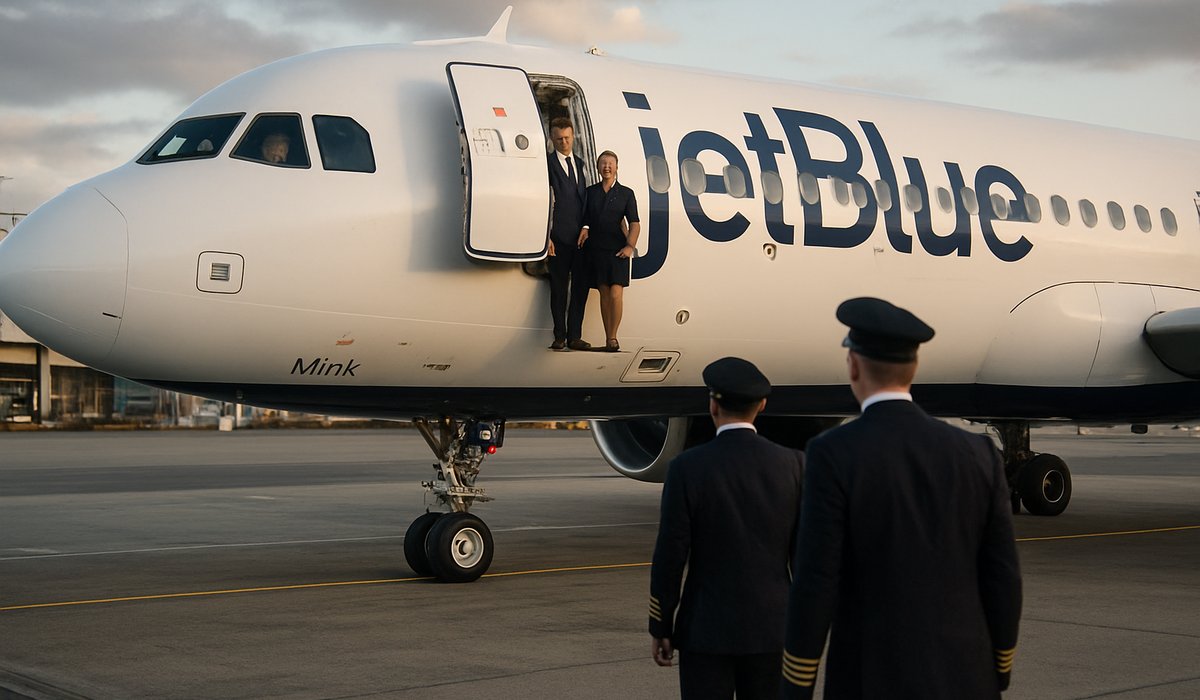
Image generated by AI
JetBlue's Premium Mint Strategy: How 24 Business Class Seats Finance Entire Transatlantic Flights
The airline's high-yield European expansion reveals a radical new business model where ultra-premium cabin revenue subsidizes widebody operations on narrow-body aircraft
The Economics of Ultra-Premium Travel
JetBlue Airways has cracked a counterintuitive formula in aviation economics: just 24 premium passengers can generate sufficient revenue to cover the operational costs of an entire transatlantic flight. As the carrier accelerates its European expansion—including a landmark debut in Milan during mid-2026—the mathematics behind its Mint business class suite strategy illuminates a fundamental shift in how airlines approach long-haul narrow-body operations.
The model represents a deliberate pivot away from traditional capacity-driven strategies. While legacy carriers maximize seat counts on transatlantic routes, JetBlue's Airbus A321LR configuration demonstrates that concentrated high-yield revenue can offset the inherent cost disadvantages of operating a narrower aircraft across the Atlantic. Fuel consumption, crew expenses, landing fees, and airport handling charges are distributed across the entire operating cost structure, yet the airline's pricing strategy ensures that a small cohort of premium travelers absorbs these baseline expenditures.
Premium Seating as a Profit Engine
The Mint suite product has garnered critical acclaim from industry reviewers and frequent flyers alike, but its true value proposition extends beyond customer satisfaction metrics. Each Mint seat commands pricing that reflects not only the enhanced amenities—direct aisle access, lay-flat recline, premium bedding, elevated catering—but also the economic necessity of subsidizing the remaining aircraft configuration.
This cabin-within-a-cabin approach generates disproportionate revenue margins compared to economy seating. Industry analysts note that premium transatlantic fares can exceed economy pricing by 400-600%, creating an outsized revenue per available seat mile (RASM) that transforms the financial viability of JetBlue's European strategy.
Strategic Expansion Into High-Yield Markets
The Milan route inauguration signals JetBlue's confidence in this revenue model. European transatlantic corridors traditionally dominated by major carriers like Lufthansa, Air France, and British Airways represent lucrative territory for operators willing to differentiate through premium product quality rather than scale.
By deploying the A321LR—a fuel-efficient narrow-body with extended range—JetBlue achieves lower unit costs than traditional widebody operators while maintaining pricing power in the premium segment. The aircraft's 88-passenger capacity, with roughly 24 configured in Mint suites, creates an optimal yield profile that existing carriers have largely ignored.
Broader Industry Implications
This strategy reflects broader aviation industry trends responding to elevated jet fuel prices and structural cost pressures. Rather than competing on volume, carriers increasingly recognize that capturing high-willingness-to-pay customer segments can sustain profitability on challenging routes.
JetBlue's transatlantic expansion suggests that the future of long-haul aviation may favor specialized, premium-focused operators over mass-market carriers on certain international corridors. As fuel costs remain volatile and airport fees continue climbing globally, the cabin revenue concentration model offers a sustainable alternative to traditional seat-maximization approaches.
FAQ: JetBlue Mint Seats, Airline Revenue, and Transatlantic Travel
How much do JetBlue Mint seats typically cost on transatlantic routes? Mint suites command premium pricing on transatlantic flights, generally ranging from 400-600% above economy fares, though exact pricing varies by season, demand, and route-specific competition.
Why is the A321LR more efficient than traditional widebody aircraft on transatlantic routes? The A321LR features modern fuel-efficient engines and aerodynamic design, reducing per-seat operating costs despite its narrower fuselage, making it ideal for carriers pursuing premium-focused strategies on long-haul routes.
What percentage of airline revenue typically comes from premium cabin passengers? Industry data indicates that premium cabin passengers—often representing 15-25% of total seat capacity—generate 40-60% of total airline revenue on long-haul international routes.
How does JetBlue's Milan expansion fit into the broader transatlantic market? JetBlue's Milan route entry challenges established carriers by offering differentiated Mint service on a cost-efficient platform, targeting premium leisure and business travelers seeking alternatives to legacy carriers.
Are other airlines adopting narrow-body aircraft for transatlantic premium service? While a few carriers experiment with extended-range narrow-body operations, most major transatlantic operators maintain widebody fleets, making JetBlue's strategy relatively unconventional in the market.
Related Travel Guides
Flight Delay Compensation Guide 2026
Understanding Airline Route Changes
Airport Security Process Updated (2026)
External Resources
Disclaimer
This article is for informational and educational purposes only. It does not constitute legal, financial, or professional advice. While we strive to provide accurate and up-to-date information, travel policies, regulations, and conditions change rapidly. Always verify information with official sources before making travel decisions. Nomad Lawyer makes no representations about the accuracy, reliability, completeness, or suitability of the information provided. Readers should consult qualified professionals for advice specific to their circumstances. The views expressed in this article are those of the author and do not necessarily reflect the views of Nomad Lawyer.
Preeti Gunjan
Contributor & Community Manager
A passionate traveller and community builder. Preeti helps grow the Nomad Lawyer community, fostering engagement and bringing the reader experience to life.
Learn more about our team →