
The Safety Science Behind Why Commercial Aircraft Cabin Lights Dim During Takeoff and Landing in 2026
Commercial airlines dim cabin lights during takeoff and landing to facilitate rapid passenger ocular adaptation and ensure emergency exit visibility during critical flight phases.

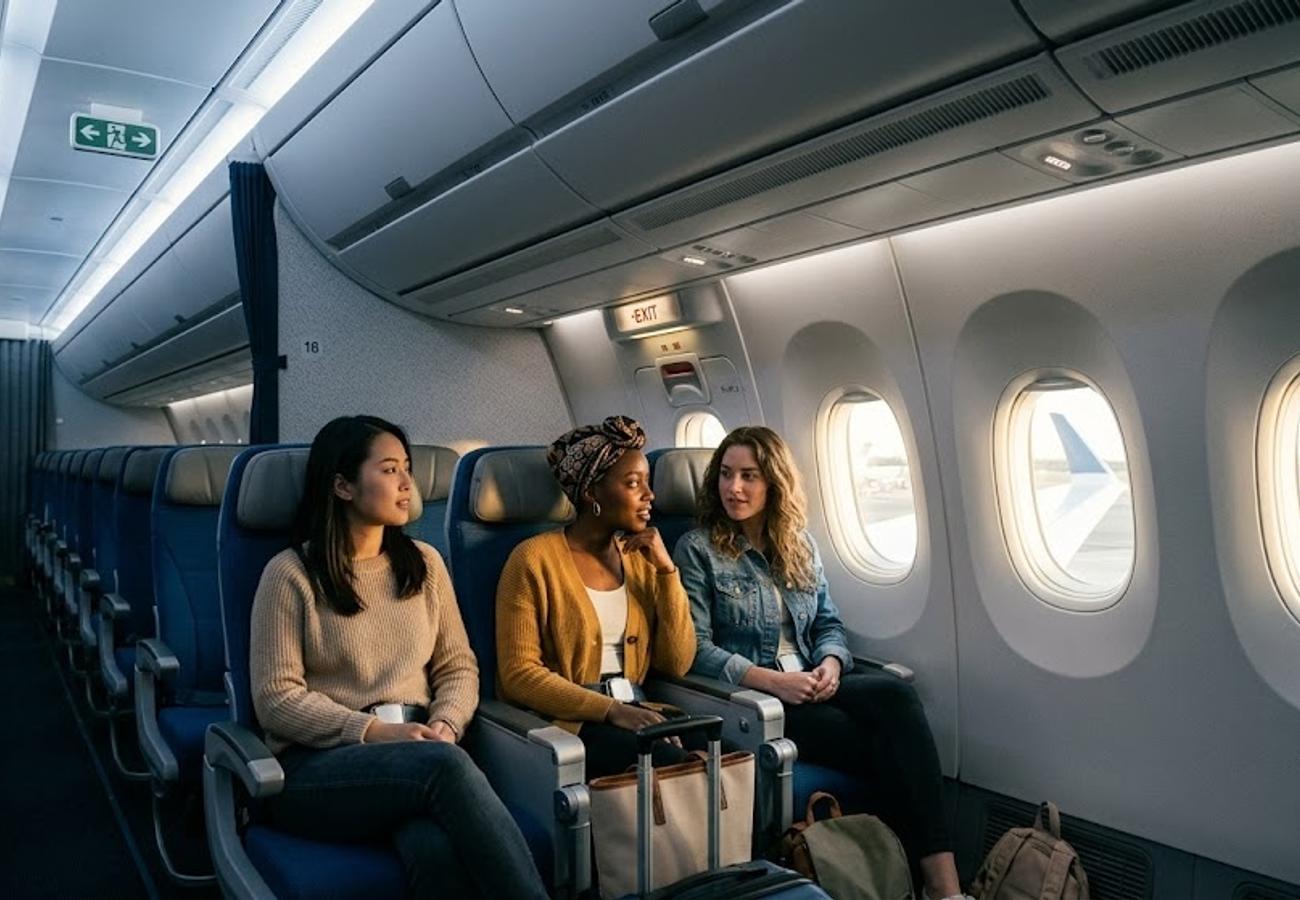
Image generated by AI
Aviation safety protocols dictate the dimming of cabin lights during the most critical phases of flight to ensure passengers can evacuate within a strict 90-second window.
The practice of reducing interior illumination during takeoff and landing is a standardized global procedure. Whether operating a short-haul jump or a long-haul international route, carriers including American Airlines (AA), Delta Air Lines (DL), and Emirates (EK) adhere to these requirements. While passengers often mistake this for a gesture toward comfort or energy conservation, the logic is rooted in human physiology and emergency logistics.
The Physiology of Ocular Adaptation
Takeoff and landing represent the highest percentage of aviation incidents. To mitigate risk, airlines prepare the cabin for potential power failure or smoke infiltration.
The primary objective is "dark adaptation." Human vision requires a transition period to adjust to low-light environments. By dimming the lights before the aircraft reaches a critical phase, passengers' eyes begin this adaptation process. If a total electrical failure occurs, passengers are not plunged into sudden, blinding darkness but are already primed to see in low-light conditions.
This adaptation is vital if smoke fills the cabin, as it allows passengers to identify emergency escape routes and exit signs with greater speed and confidence.
Evacuation Logistics and Certification
Aviation regulators certify commercial aircraft based on the ability to achieve a complete evacuation within 90 seconds. This mandate remains in effect even if only 50% of the available emergency exits are usable.
The success of this timeline depends on high visual contrast. Bright cabin lighting washes out the glow of illuminated exit signs and floor path lighting. A dimmed cabin increases the contrast, making the emergency lighting significantly more visible and reducing the time it takes for passengers to recognize the path to safety.
Crew Visibility and External Monitoring
The benefit of dimmed lighting extends to the cabin crew's ability to monitor the aircraft's exterior. High interior brightness creates reflections on the cabin windows, which can obscure the crew's view of the outside environment.
By reducing these reflections, crew members can more effectively detect:
- Engine fires
- External smoke
- Fuel leaks
- Structural damage
This real-time visual data allows the crew to determine which emergency exits are safe for deployment and which must remain closed to avoid exposing passengers to external hazards.
Integrated Safety Measures
The lighting protocol is one component of a broader safety ecosystem deployed during takeoff and landing. These synchronized actions include:
- Window Shades: Raised during daytime operations to allow passengers and crew to observe external conditions.
- Cabin Configuration: Ensuring tray tables are stowed and seat belts are fastened to remove obstructions during a rapid exit.
- Device Management: Switching electronics to airplane mode to prevent interference.
While modern aircraft like the Boeing 787 Dreamliner and Airbus A350 utilize advanced LED mood lighting to combat jet lag and fatigue, these features are secondary to the primary safety function of the lighting system during critical flight phases.
Critical Safety Specifications
| Requirement | Standard / Metric |
|---|---|
| Maximum Evacuation Time | 90 Seconds |
| Minimum Exit Availability | 50% of total exits |
| Primary Lighting Goal | Ocular adaptation and contrast enhancement |
| Critical Flight Phases | Takeoff and Landing |
Why This Matters: Industry Implication
From a logistical perspective, the 90-second evacuation rule is the "gold standard" of aviation safety. The dimming of lights is not a suggestion but a calculated tool to ensure human behavior aligns with this timeframe.
For the traveler, the real impact is the reduction of panic. In a high-stress emergency, the brain struggles to process new visual information. By pre-adapting the eyes to low light and highlighting the exit paths through contrast, the airline removes a layer of cognitive friction, allowing the "fight or flight" response to move passengers toward the exits more efficiently.
Forward Outlook
As aviation moves toward more integrated "smart cabins," we expect to see LED systems that can transition instantly from "comfort mode" to "emergency high-contrast mode." However, the fundamental requirement for ocular adaptation means that the practice of dimming lights before takeoff and landing will remain a permanent fixture of commercial flight, regardless of the technology used.
Safety in the air is a game of seconds; lighting is the tool that saves them.
Related Travel Guides
Disclaimer
This article is for informational and educational purposes only. It does not constitute legal, financial, or professional advice. While we strive to provide accurate and up-to-date information, travel policies, regulations, and conditions change rapidly. Always verify information with official sources before making travel decisions. Nomad Lawyer makes no representations about the accuracy, reliability, completeness, or suitability of the information provided. Readers should consult qualified professionals for advice specific to their circumstances. The views expressed in this article are those of the author and do not necessarily reflect the views of Nomad Lawyer.
Raushan Kumar
Founder & Lead Developer
Full-stack developer with 11+ years of experience and a passionate traveller. Raushan built Nomad Lawyer from the ground up with a vision to create the best travel and law experience on the web.
Learn more about our team →