
Gateway to the Andes: How Quito Airport’s Triple Level 5 Triumph Is Elevating South American Travel
Quito's Mariscal Sucre International Airport secures its third consecutive ACI Level 5 accreditation, standing among only 12 airports globally and just two in the Americas offering pinnacle passenger service.

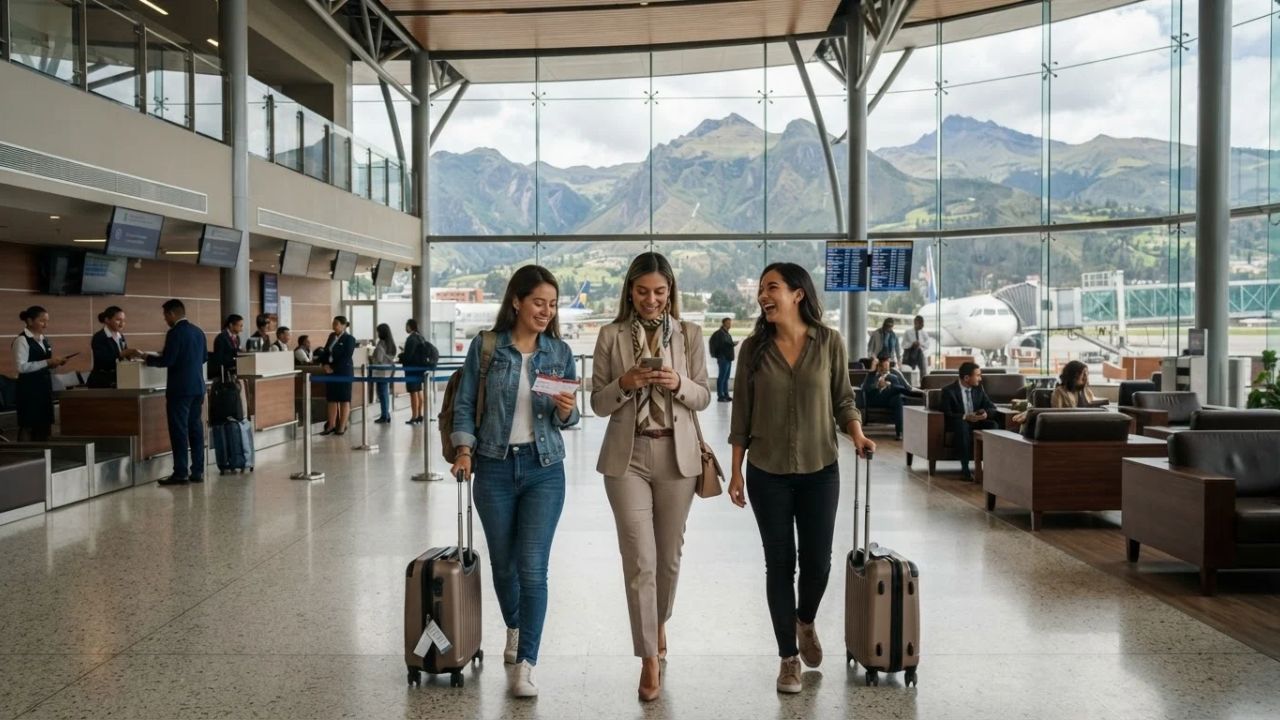
Quito's modern airport terminal pairs world-class passenger efficiency with stunning Andean mountain scenery
Out of more than forty thousand airports operating across the globe, exactly twelve facilities have ever reached the highest tier of the Airports Council International (ACI) Customer Experience Accreditation Programme—and across the entirety of North and South America, only two airports possess that honor. For the third consecutive evaluation cycle, Mariscal Sucre International Airport in Quito, Ecuador, has secured Level 5 accreditation, the absolute pinnacle of passenger experience recognized by international aviation authorities. Managed by Corporación Quiport and guided by President and CEO Ramón Miró, this high-altitude gateway perched in the Tababela valley has transformed what was once an intimidating mountain landing into one of the smoothest, most human-centered transit hubs on Earth.
For international travelers flying into the high Andes, this recognition reflects a dramatic reality on the ground. Long before visitors stroll the cobblestones of the world’s first UNESCO-designated cultural capital or embark on conservation voyages to the Galápagos archipelago, their introduction to Ecuador begins with an airport culture that views hospitality as a national mission. By linking employee well-being directly to passenger satisfaction, integrating real-time traveler data, and coordinating seamlessly with airlines, customs authorities, and local artisans, Quito has constructed an arrival experience that rivals Singapore, Incheon, and Zurich.
The Architecture of Hospitality: How Quito Reached ACI Level 5
Achieving Level 5 accreditation through ACI is fundamentally distinct from winning popularity-based travel awards. The program is the first global framework designed strictly to evaluate how deeply customer care is woven into an airport's operational DNA, strategic planning, and daily organizational governance. To earn and maintain the highest classification, an airport must prove a continuous, closed-loop methodology: listening to passenger feedback, deploying predictive operational data, implementing immediate structural improvements, and fostering cross-organizational collaboration between ground handlers, airlines, retail concessionaires, and border police.
At Quito Airport, Corporación Quiport anchors its operational philosophy in the principle that outstanding passenger service begins with a supported, motivated airport workforce. When airport employees—from security screeners and baggage handlers to customer ambassadors and janitorial teams—feel valued within their internal culture, that empathy translates directly to the traveler. As Ramón Miró noted, passenger care is not treated as a temporary marketing campaign, but as an institutional method of managing an airport community.
The evaluation process confirmed the efficacy of Quiport’s data-driven decision-making. Insights gathered from departing, arriving, and transferring voyagers directly shape terminal accessibility initiatives, quiet zone designs, digital flight communication boards, and artisanal dining offerings. Rather than feeling sterile or congested, the terminal acts as an unhurried cultural threshold where natural Andean daylight floods open concourses, security lines flow with calm efficiency, and travelers receive compassionate, dignified care at every touchpoint.
What Makes Quito Different: The Sovereign Crest of the Americas
Perched at an elevation of 2,850 metres (9,350 feet) above sea level in a narrow mountain valley beneath the active Pichincha volcano, Quito is a city of astounding natural and historical drama. In 1978, the UNESCO World Heritage Centre inscribed the City of Quito as the very first World Cultural Heritage site alongside Krakow, honoring it as the largest, least-altered, and best-preserved historic colonial center in the Americas.
The colonial core (Centro Histórico) represents an architectural marvel where Spanish Moorish Mudéjar woodwork, Italian baroque facades, and indigenous Quichua stone-carving traditions merged into the celebrated "Quito School of Art." Walking into the Church of the Society of Jesus (La Compañía de Jesús), visitors are overwhelmed by seven tons of shimmering gold leaf gilding every arch, pillar, and altar. Just down the cobblestone incline lies the sprawling Plaza San Francisco, framed by its 16th-century volcanic stone monastery and backed by snow-draped Andean peaks.
Equally captivating is the city's role as a springboard to planetary biodiversity. Within a two-hour drive from Quito's international runway, the chilly subalpine grasslands of the Andes yield to the lush, subtropical cloud forests of Mindo and Mashpi, home to thousands of rare orchid species, toucans, and iridescent hummingbirds. Flying out from the airport connects travelers directly to the pristine shores of the Galápagos Islands or deep into the primary rainforest reserves of the Ecuadorian Amazon basin along the Napo River.
Visitor Insider Tips: Navigating Quito and the Andean Gateway
- Acclimatize Mindfully on Day One: Because the city sits at nearly 3,000 metres, altitude sickness (soroche) can surprise even fit travelers. Upon arrival at the airport, drink plenty of bottled water, sip traditional mate de coca (coca leaf tea) offered at hotels, and avoid heavy alcohol or strenuous uphill walks during your first twenty-four hours. Plan gentle strolls through flat historic plazas before tackling the climb up El Panecillo hill.
- Organize Airport Transit via Official Desks: Mariscal Sucre International Airport is located in Tababela, roughly 40 minutes east of the historic center. Avoid informal curb solicitors outside the terminal. Instead, book your transfer directly at the official taxi kiosk inside the arrivals hall, which offers regulated, flat-rate fares into the city center, or board the reliable AeroSur express shuttle bus connecting directly to the central bus terminals.
- Savor Authentic High-Altitude Gastronomy: Move beyond tourist cafes to taste traditional Andean comfort foods. Seek out neighborhood dining rooms serving steaming bowls of Locro de papa—a velvety, golden potato soup simmered with achiote, topped with fresh highland cheese (queso fresco) and ripe avocado slices. On the historic street of Calle La Ronda, warm up with a mug of Canelazo, a hot spiced cider made from local naranjilla fruit juice, cinnamon, cloves, and a dash of sugarcane liquor (aguardiente).
- Time Your Visits to Churches for Golden Morning Light: Visit major historic sites like the Basilica del Voto Nacional and the San Francisco monastery between 8:30 AM and 11:00 AM. Morning skies in the Andes are generally crystal-clear before afternoon mountain clouds gather, and climbing the steep spires of the Basilica rewards you with panoramic vistas of the Cotopaxi and Cayambe volcanoes.
- Explore Local Artisan Cooperatives: Ecuador produces some of the world's finest single-origin Arriba Nacional cacao. Visit artisanal chocolateries in the bohemian neighborhood of La Floresta or San Marcos for guided tastings of dark chocolate infused with Andean salt and passion fruit. If shopping for authentic woven toquilla straw hats (historically misnamed "Panama hats"), purchase directly from certified fair-trade craft boutiques to support indigenous female weavers from Cuenca and Montecristi. Explore certified tour listings at Ecuador Travel.
Cultural and Environmental Context: Eco-Stewardship at the Equator
Managing an internationally recognized airport amidst the fragile ecosystems of the high Andes introduces profound environmental responsibilities. Unlike the cramped urban footprint of the city's former airfield, the modern facility at Tababela was designed with extensive environmental buffer zones, water treatment facilities that purify 100 per cent of terminal wastewater, and comprehensive recycling systems that divert significant waste from local landfills. Corporación Quiport has achieved carbon neutrality under ACI's Airport Carbon Accreditation program, actively investing in regional reforestation projects that restore native Andean dry-forest flora.
Furthermore, tourism in mainland Ecuador operates as a vital funding mechanism for wildlife conservation across both the mainland and the Galápagos marine reserve. The strict biosecurity screening protocols conducted at Quito Airport protect island ecosystems from invasive species, ensuring that travelers heading to sensitive wildlife habitats do not inadvertently carry pests, seeds, or pathogens.
In the historic center, sustainable cultural tourism directly supports architectural restoration trusts and community preservation projects. By staying in restored boutique heritage mansions, patronizing family-run embroidery and wood-carving workshops on Calle La Ronda, and respecting local indigenous traditions, travelers help ensure that Quito’s centuries-old soul remains vibrant and economically self-sustaining.
FAQ: Visiting Quito and Mariscal Sucre Airport 2026
What makes Quito Airport's Level 5 status so unusual? Level 5 is the highest customer experience honor awarded by Airports Council International. Only 12 airports globally and just two in the Americas hold this status, signifying industry-leading service culture and operational efficiency.
How do travelers get from Quito Airport to the historic city center? Travelers can take official flat-rate airport taxis booked at arrivals kiosks (around 40 minutes to the center), private pre-arranged hotel transfers, or the AeroSur express airport bus to the city transit terminal.
Do international tourists need a visa to enter Ecuador? Citizens from most countries, including the United States, Canada, the European Union, Australia, and the United Kingdom, can enter Ecuador visa-free for tourist stays of up to 90 days within a 12-month period.
What is the best time of year to visit Quito and the Andes? June through September constitutes the dry season, featuring the clearest mountain skies, minimal rainfall, and breathtaking views of surrounding volcanic peaks, ideal for city walking tours and highland trekking.
Suspended between volcanic peaks and equatorial skies, Quito greets every arriving traveler with the quiet dignity of a city that has mastered the noble art of welcome.
Related Travel Guides
- Tracks Across the Dunes: How Etihad Airways and Etihad Rail Are Unlocking Seamless Air-Rail Travel in the UAE
- Tunnels Through the Sacred Peaks: How New Rail Corridors Are Halving Travel Times to Rishikesh and Karnaprayag
- At the Foot of Pichincha: The Insider Cultural Guide to Quito, Cloud Forests, and Andean Markets
Disclaimer
This article is for informational and educational purposes only. It does not constitute legal, financial, or professional advice. While we strive to provide accurate and up-to-date information, travel policies, regulations, and conditions change rapidly. Always verify information with official sources before making travel decisions. Nomad Lawyer makes no representations about the accuracy, reliability, completeness, or suitability of the information provided. Readers should consult qualified professionals for advice specific to their circumstances. The views expressed in this article are those of the author and do not necessarily reflect the views of Nomad Lawyer.
Raushan Kumar
Founder & Lead Developer
Full-stack developer with 11+ years of experience and a passionate traveller. Raushan built Nomad Lawyer from the ground up with a vision to create the best travel and law experience on the web.
Learn more about our team →