
Queen Beatrix International Airport to Baby Beach: 2026 Transit Guide and Route Analysis
Comprehensive logistics guide for traveling from Queen Beatrix International Airport to Baby Beach, featuring rental car costs, fixed taxi rates, and optimized transit timing.

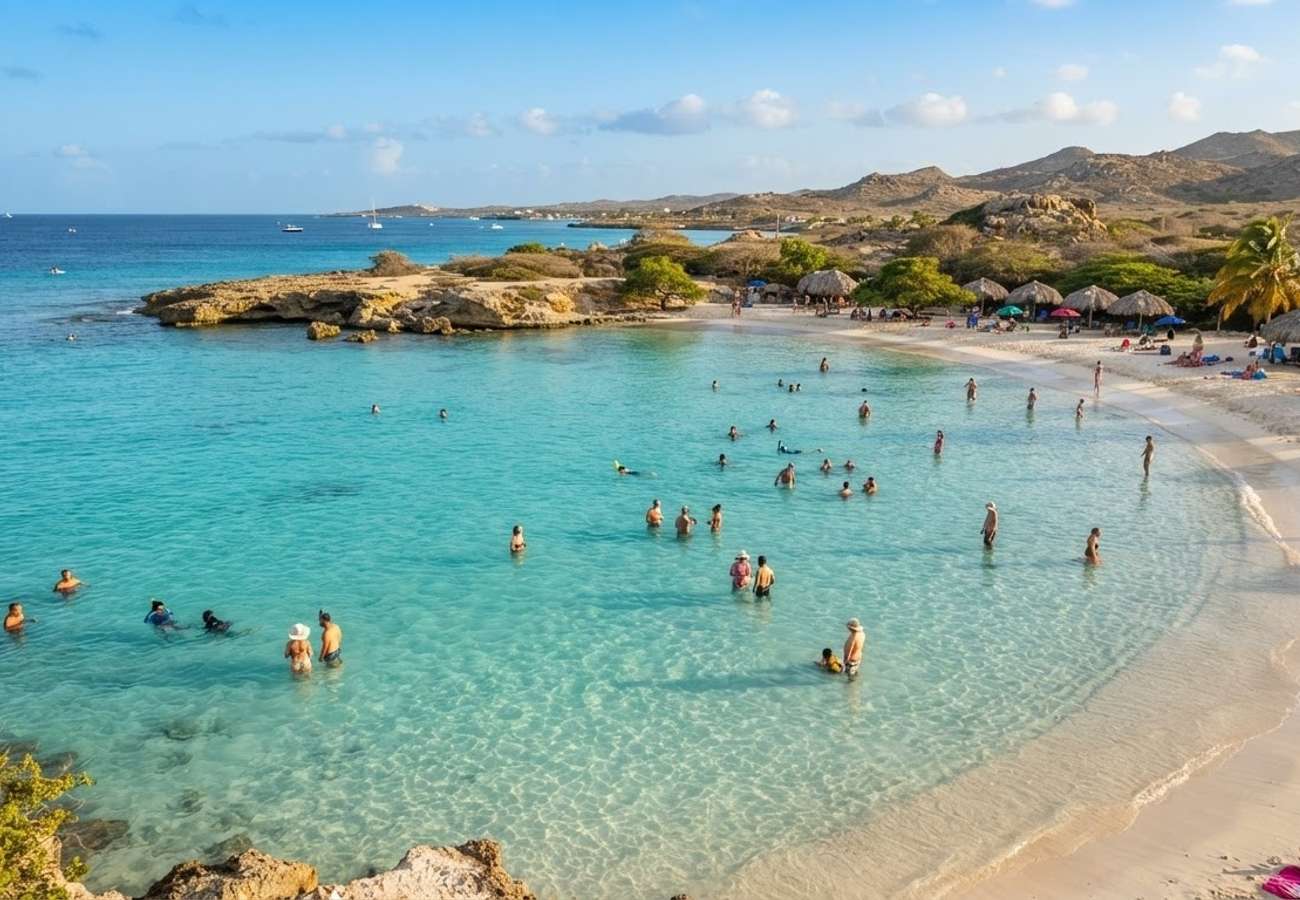
Image generated by AI
Landing at Queen Beatrix International Airport (AUA) and heading directly to the southeast coast is a high-reward move for those seeking immediate seclusion. The 40 to 45-minute transit to Baby Beach requires strategic timing to avoid peak heat and maximize limited shade availability.
Transit Overview: Airport to Baby Beach
Queen Beatrix International Airport is situated on the western edge of the island, while Baby Beach is located in the far southeast near San Nicolas. The primary artery for this journey is Route 1 South, which bypasses the industrial refinery zones and leads into the Seroe Colorado region.
Travelers must choose between three primary modalities: airport rental cars, government-regulated taxis, or a hybrid approach using public buses and local transfers from San Nicolas.
Transit Route Specifications
| Transport Mode | Estimated Duration | Estimated Cost (USD) | Primary Route | Best For |
|---|---|---|---|---|
| Rental Car | 40–45 Minutes | Low-200s / week (Economy) | Route 1 South $\rightarrow$ Seroe Colorado | Long-term flexibility & families |
| Official Taxi | 40–45 Minutes | Fixed Rate (Govt. Set) | Route 1 South $\rightarrow$ Baby Beach | Short stays & group transfers |
| Hybrid (Bus/Taxi) | 60–90 Minutes | Variable (Low) | Airport $\rightarrow$ San Nicolas $\rightarrow$ Baby Beach | Budget solo travelers |
Modal Analysis and Cost Comparison
Rental Car Logistics
Renting a vehicle at the terminal offers the highest degree of autonomy. While global brands are available, local operators such as Royal, Amigo, or Jay’s are frequently cited for better value. Economy compacts—specifically hatchbacks like the Kia Picanto—are sufficient for the fully paved roads leading to Baby Beach and Rodgers Beach.
A critical financial benchmark for 2026 is the weekly rental rate for basic compacts, which typically sits in the low-200s USD when booked via local agencies. Travelers should be wary of global brand "sand fees" or strict cleaning penalties associated with beach visits.
Regulated Taxi Systems
Aruba utilizes a fixed-fare system rather than meters. These rates are established by the government and published on the official taxi platform. For the long southbound run to Baby Beach, fares are significantly higher than transfers to Palm Beach.
Costs are calculated based on:
- Fixed destination rate.
- Surcharges for Sundays and official holidays.
- Late-night hour premiums.
- Per-piece luggage fees for the trunk.
Traveler Logistics Guide: Ground-Level Strategy
From a ground-level perspective, the decision to head south immediately upon landing depends entirely on your accommodation and arrival time.
The "Direct-to-Beach" Strategy: This is optimal for travelers with late-morning arrivals and self-check-in arrangements in San Nicolas. The most efficient workflow is:
- Collect rental car at Queen Beatrix Airport.
- Stop at Super Food or Ling & Sons supermarkets in Oranjestad for supplies.
- Proceed south to Baby Beach for a mid-afternoon snorkel.
- Exit to San Nicolas for dinner before checking into accommodation.
The "Delayed Departure" Strategy: If landing late in the day, avoid the immediate drive south. The stretch through Seroe Colorado can be confusing for tired drivers, and beach services have limited evening hours. It is more effective to check into Eagle or Palm Beach first, then schedule a sunrise excursion to Baby Beach on a subsequent day.
Essential Logistics Tips:
- Sun Management: Shade at Baby Beach is a finite resource. Arrive early or bring a collapsible beach tent.
- Provisions: There are no large supermarkets near the lagoon. All snacks, reef-safe sunscreen, and water must be procured in Oranjestad or San Nicolas.
- Navigation: Download offline GPS maps to avoid roaming charges while navigating the refinery bypass.
- Vehicle Choice: A 4x4 is unnecessary for Baby Beach. However, if your itinerary includes unpaved sections of Arikok National Park, a standard compact will not suffice.
Infrastructure and Regional Impact
The connectivity between the airport and the southeast coast is vital for the economic health of San Nicolas. By streamlining the transit from Queen Beatrix International Airport, Aruba is successfully shifting a portion of its tourism density away from the high-rise hotel districts of Palm Beach toward the more authentic, industrial-meets-nature vibe of the south coast. The reliance on fixed-fare taxi systems reduces friction for international arrivals, though the cost-benefit analysis still heavily favors rental cars for any visitor staying longer than three days.
Avoid the mid-afternoon heat—the south coast is a sunrise destination.
Related Travel Guides
Disclaimer
This article is for informational and educational purposes only. It does not constitute legal, financial, or professional advice. While we strive to provide accurate and up-to-date information, travel policies, regulations, and conditions change rapidly. Always verify information with official sources before making travel decisions. Nomad Lawyer makes no representations about the accuracy, reliability, completeness, or suitability of the information provided. Readers should consult qualified professionals for advice specific to their circumstances. The views expressed in this article are those of the author and do not necessarily reflect the views of Nomad Lawyer.
Kunal K Choudhary
Co-Founder & Contributor
A passionate traveller and tech enthusiast. Kunal contributes to the vision and growth of Nomad Lawyer, bringing fresh perspectives and driving the community forward.
Learn more about our team →