
Qionghai Boao City Exhibition Positions China as Asia's Next Medical Tourism Leader
Qionghai's 2026 Boao exhibition reveals Hainan's strategy to compete with Thailand and Singapore for global medical tourism market share through wellness innovations.

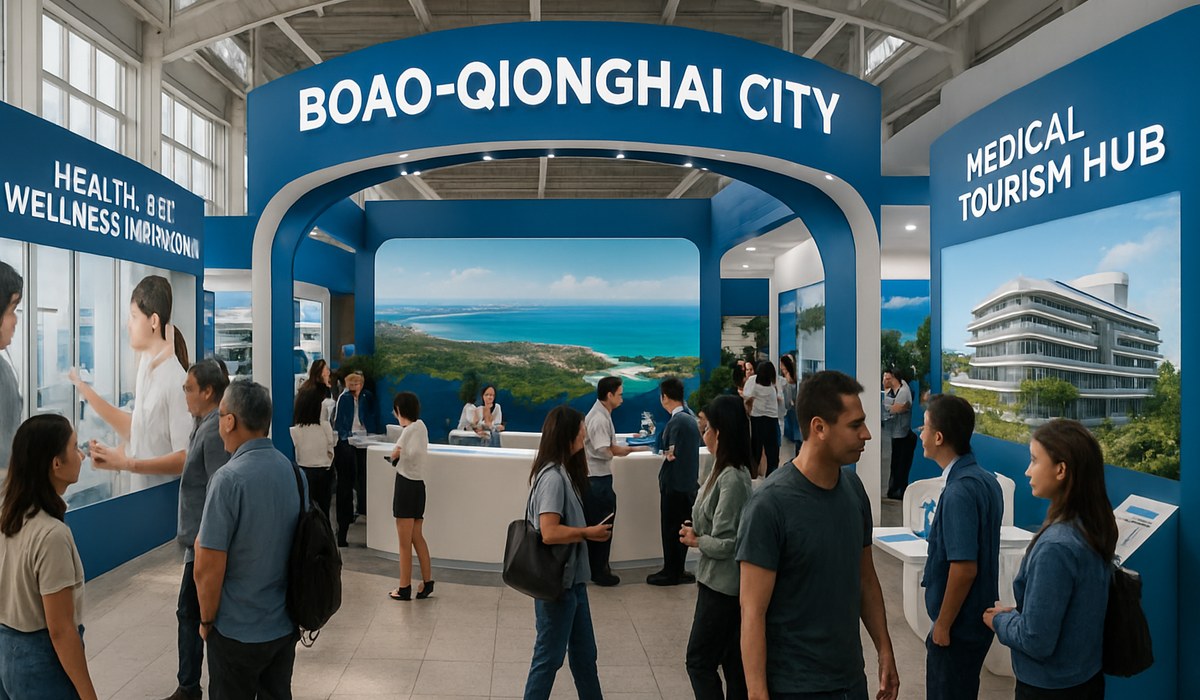
Image generated by AI
Quick Summary • Qionghai's March 2026 Boao exhibition positioned Hainan province as a serious contender in Asia's medical tourism sector • The showcase revealed advanced health technologies targeting international wellness travelers seeking alternatives to Thailand and Singapore • China's policy reforms in Hainan now permit experimental treatments previously unavailable to foreign patients • The city's infrastructure investments aim to capture a larger share of the $100 billion global health travel market
While Western travelers flock to Thailand for affordable surgery and Singapore for cutting-edge treatments, a lesser-known Chinese coastal city is quietly positioning itself to capture the billion-dollar medical tourism market with innovations that could redefine health-focused travel. The timing couldn't be more strategic: as the medical tourism industry{:target="_blank" rel="noopener noreferrer"} continues its post-pandemic recovery with projections showing 25% annual growth through 2028, destinations worldwide are racing to attract patients willing to cross borders for specialized care.
Why Qionghai Is Betting Big on Medical Tourism Now
Qionghai's aggressive push into health-focused travel stems from China's 2018 decision to designate Hainan province as a pilot zone for medical innovation. This designation granted facilities in the Boao Lecheng International Medical Tourism Pilot Zone unprecedented access to pharmaceuticals and treatments unapproved elsewhere in mainland China — the same regulatory flexibility that made Singapore's medical sector a regional powerhouse.
Provincial authorities revealed during the March exhibition that Qionghai received 47,000 international medical visitors in 2025, representing a 340% increase from 2022 figures. Li Wei, director of Hainan's Health Commission, stated that the province aims to attract 200,000 foreign patients annually by 2028, which would generate an estimated 15 billion yuan ($2.1 billion) in medical tourism revenue.
The exhibition itself drew representatives from 34 countries, with particularly strong attendance from Southeast Asian nations where middle-class populations increasingly seek specialized procedures unavailable locally. Unlike traditional tourism promotion events, this gathering focused exclusively on clinical capabilities, with live demonstrations of robotic surgery systems and consultations with physicians trained at Johns Hopkins and Mayo Clinic.
Infrastructure investments support these ambitions. Hainan opened three new internationally accredited hospitals in the past eighteen months, with two specifically located in Qionghai. The city's Meilan International Airport now offers direct flights from eight Asian capitals, reducing travel friction that previously deterred medical tourists who preferred Thailand's extensive connectivity.
What the Boao-Qionghai Exhibition Revealed About Health Travel Innovation
The showcase unveiled technologies designed to attract patients who might otherwise choose South Korea for cosmetic procedures or India for cardiac surgery. Among the most discussed innovations was a cellular therapy program offering treatments for degenerative conditions using stem cell protocols approved under Hainan's special regulatory framework but unavailable in most countries, including the United States and European Union nations.
Demonstration areas highlighted oncology programs utilizing immunotherapy drugs accessible through compassionate-use provisions that bypass standard Chinese regulatory timelines. Dr. Chen Ming, lead oncologist at Boao Super Hospital, noted that 60% of the facility's international patients in late 2025 specifically sought cancer treatments not yet approved in their home countries, with American and Australian citizens comprising the largest groups.
Wellness programs occupied significant exhibition space, reflecting data showing medical tourists increasingly combine surgical procedures with recovery periods focused on traditional Chinese medicine, spa therapies, and nutritional counseling. One facility presented seven-day post-operative packages that integrate acupuncture, tai chi instruction, and personalized dietary planning — services that echo the holistic approach that makes business travel patterns across Southeast Asia increasingly incorporate wellness components.
Pricing transparency emerged as a key theme, with facilities displaying standardized cost breakdowns in multiple currencies. A knee replacement with three weeks of rehabilitative care costs approximately 120,000 yuan ($16,800), roughly 40% less than comparable procedures in Singapore and 60% below typical U.S. pricing when factoring in insurance limitations.
Translation services and cultural liaison programs featured prominently, addressing previous complaints from international patients about language barriers. Every showcased hospital now employs multilingual coordinators and maintains partnerships with interpretation services covering 15 languages — infrastructure that particularly appeals to solo female travelers prioritizing safety and wellness who comprise a growing medical tourism demographic.
Comparing Qionghai to Established Medical Tourism Destinations
Thailand handled an estimated 2.5 million medical tourists in 2025, making it Asia's undisputed leader, but Qionghai's targeted approach focuses on niches where established competitors face limitations. While Bangkok excels at cosmetic procedures and dental work, Chinese facilities emphasize cutting-edge oncology and regenerative medicine, areas where regulatory restrictions limit therapeutic options in many Western countries.
Singapore's reputation for excellence carries premium pricing that pushes middle-income patients toward alternatives. A cardiac bypass in Singapore averages $35,000 versus $22,000 in Qionghai for procedures performed by surgeons with comparable credentials. This pricing advantage becomes decisive for patients whose insurance provides limited international coverage or who pay entirely out-of-pocket.
Malaysia offers strong competition in fertility treatments and orthopedics, but Qionghai counters with specializations in traditional Chinese medicine integration. Facilities pair Western surgical techniques with TCM protocols in ways that appeal to patients specifically seeking Chinese medical approaches — a differentiation strategy that Bangkok and Kuala Lumpur cannot easily replicate.
India dominates the budget-conscious segment with rock-bottom pricing, yet quality concerns persist despite accredited facilities. China's government-backed push for medical tourism comes with strict facility standards and malpractice frameworks that provide legal protections often absent in South Asian medical tourism destinations, a consideration that resonates with international patients evaluating risk factors. Before committing to treatment abroad, patients should consult traveler reviews and facility ratings{:target="_blank" rel="noopener noreferrer"} alongside official certifications to assess both clinical quality and patient experience.
South Korea leads in cosmetic surgery and dermatological procedures, but Qionghai deliberately avoids direct competition in this saturated market. Instead, Chinese facilities target medical travelers seeking treatments for serious conditions rather than elective aesthetic enhancements, carving out a distinct market position.
Practical Considerations for International Medical Travelers to Hainan
Visa policies underwent significant relaxation to facilitate medical tourism. Citizens of 59 countries now qualify for 30-day visa-free entry when arriving through Hainan's airports, eliminating bureaucratic obstacles that previously complicated treatment planning. Patients requiring extended stays for complex procedures can apply for medical visas valid up to 180 days, with streamlined processing through hospital administrative offices.
Travel insurance represents a critical consideration, as most standard policies exclude pre-planned medical procedures abroad. Specialized medical tourism insurance products have emerged from Chinese and international providers, covering complications, emergency evacuation, and follow-up care disruptions. Premiums typically range from 3-7% of total procedure costs depending on medical complexity and patient age.
Currency considerations favor international patients given the yuan's relative stability and China's acceptance of major credit cards in medical facilities. However, travelers should confirm payment protocols in advance, as some facilities require deposits in yuan while others accommodate foreign currency payments at prevailing exchange rates. ATMs are readily available in Qionghai, though withdrawal limits may necessitate multiple transactions for substantial medical expenses.
Climate patterns make November through April ideal for medical tourism, with temperatures ranging from 20-28°C and minimal rainfall. Summer months bring heat and humidity that may complicate post-surgical recovery, particularly for patients with cardiovascular conditions. Typhoon season peaks in August and September, potentially disrupting travel plans for scheduled procedures.
Safety for international visitors remains strong, with crime rates in Hainan significantly below global averages for tourist destinations. Medical facilities employ security protocols comparable to Western hospitals, and Qionghai's police maintain dedicated tourism assistance units with English-speaking officers. Communication apps like WeChat prove essential for navigation and daily transactions, as English proficiency outside medical facilities remains limited. Travelers planning Hainan medical trips should review comprehensive destination guides{:target="_blank" rel="noopener noreferrer"} for broader logistics including accommodation near hospitals, local transportation options, and cultural norms that affect patient experience.
Accommodation options near medical facilities range from international hotel chains to medical tourism-specific lodging offering nursing support and specialized dietary services. Prices span 300-1,200 yuan ($42-$168) nightly depending on amenities and proximity to hospitals, with most facilities providing partnership arrangements that include discounted rates and patient transportation.
FAQ: Medical Tourism in Qionghai
Can I receive follow-up care in my home country after procedures in Qionghai? Most Qionghai medical facilities provide comprehensive medical records in English and coordinate with physicians worldwide for post-operative monitoring. Patients should discuss continuity of care protocols before committing to treatment, as some complex procedures require in-person follow-up visits that necessitate return travel to China.
What happens if complications arise after I return home? Accredited facilities in the Boao zone maintain 24/7 international patient hotlines and can arrange telemedicine consultations for non-emergency complications. Serious issues may require return to China or transfer to facilities in your home country, underscoring the importance of medical tourism insurance covering such scenarios.
Are medical records private and protected under Chinese law? Hainan medical tourism facilities comply with international patient privacy standards comparable to HIPAA regulations in the United States. Hospitals cannot share your medical information without explicit consent, though you should clarify data handling policies during intake procedures.
How do I verify that Qionghai facilities meet international quality standards? Look for Joint Commission International (JCI) accreditation, which independently verifies that facilities meet global healthcare standards. As of March 2026, seven Hainan medical centers hold JCI certification. Additionally, check physician credentials through international medical boards and verify hospital partnerships with recognized Western institutions.
What legal recourse exists if medical malpractice occurs? Chinese law permits medical malpractice litigation, and Hainan's medical tourism zone established specialized arbitration procedures for international patients. However, legal processes differ substantially from Western jurisdictions, and damage awards typically run lower than in the United States or Europe. Medical tourism insurance with legal assistance coverage provides important protection.
Related Articles:
Disclaimer
This article is for informational and educational purposes only. It does not constitute legal, financial, or professional advice. While we strive to provide accurate and up-to-date information, travel policies, regulations, and conditions change rapidly. Always verify information with official sources before making travel decisions. Nomad Lawyer makes no representations about the accuracy, reliability, completeness, or suitability of the information provided. Readers should consult qualified professionals for advice specific to their circumstances. The views expressed in this article are those of the author and do not necessarily reflect the views of Nomad Lawyer.
Preeti Gunjan
Contributor & Community Manager
A passionate traveller and community builder. Preeti helps grow the Nomad Lawyer community, fostering engagement and bringing the reader experience to life.
Learn more about our team →