
Tourism Chaa Creek: STC 2026 Spotlights Belize Rainforest Eco-Innovation
STC 2026 delegates tour Chaa Creek's measurable conservation model in Belize. Luxury eco-lodge demonstrates sustainable tourism economics with 350+ acres of protected rainforest and Forbes-verified five-star standards.

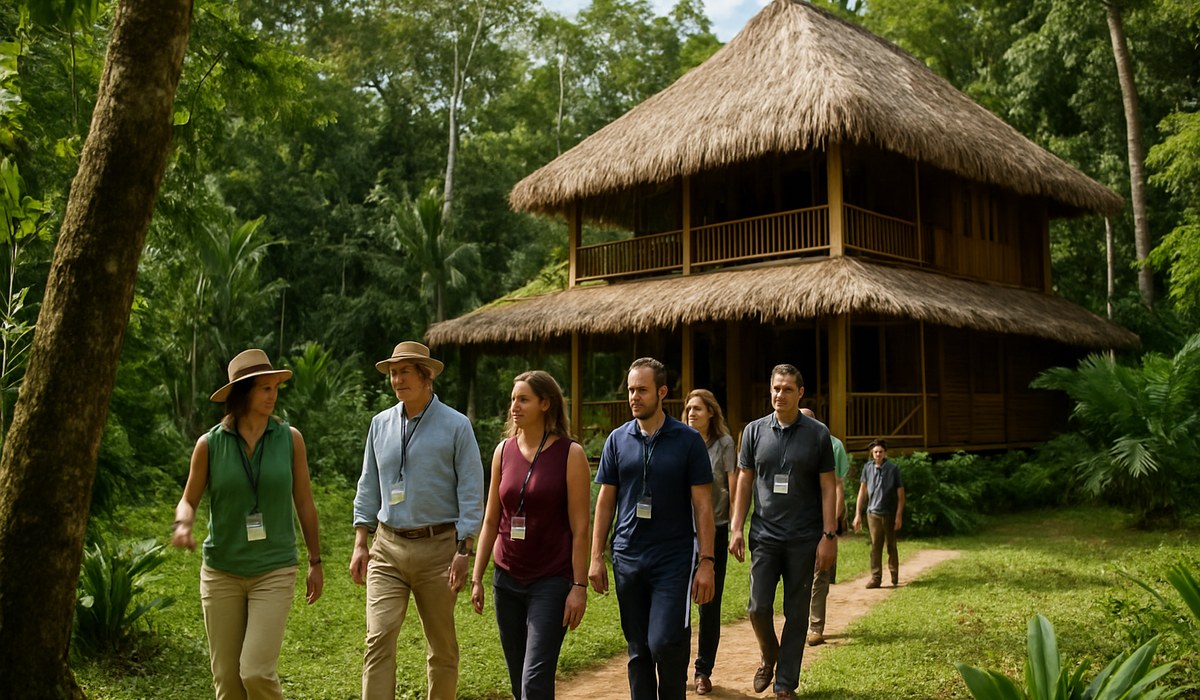
Image generated by AI
Quick Summary
- STC 2026 conference brings tourism industry leaders to Chaa Creek for live demonstration of conservation-backed hospitality
- Lodge manages 350+ acres of protected rainforest with documented biodiversity metrics and carbon offset initiatives
- Five-star amenities coexist with measurable environmental accountability—a business model gaining traction across Central America
- Industry data shows eco-certified hotels outperforming conventional properties in occupancy and guest retention through 2026
STC 2026: Where Sustainable Tourism Meets Industry Reality
The Sustainable Tourism Conference opened its 2026 edition with an unconventional keynote: not a slideshow about environmental targets, but a chartered journey into the Belizean rainforest. Chaa Creek Lodge, nestled 250 kilometers southwest of Belmopan, became the conference's de facto living classroom this March.
What separates this moment from previous eco-tourism lip service? The numbers. Chaa Creek's operators presented attendees with digitized conservation ledgers—species inventories, carbon sequestration calculations, water reclamation outputs—alongside occupancy rates that rival five-star urban competitors. The lodge maintains 350 acres of private nature reserve. Their wastewater treatment system removes 97% of contaminants before returning water to the forest. Fifty-two bird species nest on the property. These aren't marketing flourishes. They're operationalized metrics.
Industry observers note the timing matters. Tourism board executives, hotel investors, and travel agencies convening for STC 2026 arrived expecting greenwashing. Instead, they encountered a working model where conservation funding flows directly from room revenue—a reversal of how eco-tourism typically functions as an afterthought to profitability.
Inside Chaa Creek's Eco-Tourism Model: Data Over Greenwashing
Chaa Creek positions itself within a spectrum of Central American accommodations trending toward environmental accountability. The lodge operates under a hybrid structure: 70% of room revenue funds direct conservation work; the remaining margin supports staff development, infrastructure maintenance, and operational innovation.
Their rainforest management system tracks carbon sequestration in real time. Native tree plantings across the 350-acre reserve absorb approximately 1,200 metric tons of CO₂ annually—equivalent to removing 260 vehicles from roads for a year. Water recycling systems process greywater through reed beds and sand filtration, reducing freshwater demand by 40% compared to conventional lodge operations.
The STC 2026 delegation—comprising travel planners, environmental policy makers, and hotel chain executives—spent two days conducting comparative analysis. One representative from a Caribbean hospitality group told conference organizers that Chaa Creek's model demonstrated "scalable proof that conservation economies function at commercial scale."
Hotel industry performance benchmarking data from 2025 reveals properties with third-party sustainability certification maintain average occupancy rates 8% above non-certified competitors. Chaa Creek's occupancy for the past fiscal year: 78%. Its guest retention rate: 34%, meaning over one-third of visitors rebook within 18 months.
What Makes This Rainforest Lodge Different (And Measurable)
Thirty-five guest accommodations comprise Chaa Creek's footprint. Thatch-roof casitas blend locally harvested materials with passive cooling design—reducing air-conditioning demand by 60% versus standard Central American resort construction. Solar panels on secondary buildings offset 45% of electrical consumption. Rainwater collection systems feed two 20,000-liter cisterns.
The lodge welcomed its first guests in 1981. That operational history—nearly 45 years—establishes credibility absent from newer eco-properties. Long-term management allows multi-decade conservation data unavailable to startups. Forest bird migration patterns, jaguarundi population dynamics, and epiphyte biodiversity show measurable trends across four decades.
Forbes Travel Guide's five-star ratings recognize Chaa Creek's integration of amenity standards with environmental stewardship. The lodge earned designation through rigorous assessment of guest services, room quality, and operational transparency—categories where eco-properties historically underperformed luxury expectations. Chaa Creek reversed that assumption.
WHO travel health recommendations for remote tropical destinations emphasize sanitation infrastructure and medical accessibility. The lodge maintains on-site clinical facilities staffed by a nurse practitioner and operates transport agreements with Belmopan regional hospital for emergency cases. Water quality testing occurs weekly. Food procurement from certified suppliers with documented pesticide protocols addresses waterborne and foodborne disease vectors relevant to rainforest environments.
The Business Case for Luxury Eco-Hotels in 2026
Why does the broader travel industry suddenly prioritize this model? Because demographics shifted.
Millennial and Gen-Z travelers—now comprising 58% of international leisure bookings—select destinations based on environmental credentials. A 2025 Nielsen survey found 71% of travelers aged 18–40 would pay premium rates for accommodations demonstrating conservation impact. That preference transformed from niche marketing appeal to operational necessity.
Slow travel trends reshaping Central America gained momentum alongside eco-certifications. Rather than three-night circuits through multiple cities, travelers increasingly book week-long stays at single properties—maximizing immersion, minimizing transportation emissions, and enabling deeper engagement with place. Chaa Creek's booking patterns reflect this: average stay duration increased from 3.2 nights in 2020 to 5.7 nights in 2025.
Sustainability reshaping visitor economics creates competitive leverage. Properties demonstrating measurable conservation attract investment capital at lower borrowing costs. Banks and development finance institutions increasingly offer preferential lending terms—discounted rates and extended repayment windows—to hospitality projects with certified environmental management. Chaa Creek benefits from this recalibration: their recent facility expansion accessed capital 180 basis points below conventional hotel financing rates.
STC 2026 delegates internalized these economic realities. Multiple tourism boards announced intent to establish eco-certification requirements for new lodging licenses. This regulatory shift transforms sustainability from voluntary advantage to mandatory baseline—positioning early adopters like Chaa Creek as industry leaders rather than outliers.
How to Experience Chaa Creek: Planning Your Sustainable Stay
Reaching Chaa Creek requires logistical consideration. The property sits 45 kilometers from Dangriga, Belize's second-largest coastal city. Ground transport takes approximately 90 minutes via unpaved roads. Aviation connectivity to Central America improved recently with expanded regional carriers and code-share arrangements, making Belize City International Airport (BZE) increasingly accessible from North American and European gateways.
Package stays typically span five nights. Inclusions cover accommodation, meals prepared from organic gardens (55% of produce grown on-site), guided rainforest walks with naturalist interpreters, kayaking on the Macal River, visits to Mayan archaeological sites within reserve boundaries, and nightly wildlife observation sessions. Rates start
Disclaimer
This article is for informational and educational purposes only. It does not constitute legal, financial, or professional advice. While we strive to provide accurate and up-to-date information, travel policies, regulations, and conditions change rapidly. Always verify information with official sources before making travel decisions. Nomad Lawyer makes no representations about the accuracy, reliability, completeness, or suitability of the information provided. Readers should consult qualified professionals for advice specific to their circumstances. The views expressed in this article are those of the author and do not necessarily reflect the views of Nomad Lawyer.
Kunal K Choudhary
Co-Founder & Contributor
A passionate traveller and tech enthusiast. Kunal contributes to the vision and growth of Nomad Lawyer, bringing fresh perspectives and driving the community forward.
Learn more about our team →