
Qatar Airways Deploys Starlink on Boeing 787-9 Fleet to Boost Doha and Johannesburg Connectivity in 2026
Qatar Airways becomes the first airline to equip Boeing 787-9 Dreamliners with Starlink, offering speeds up to 500 Mbps for long-haul travelers.
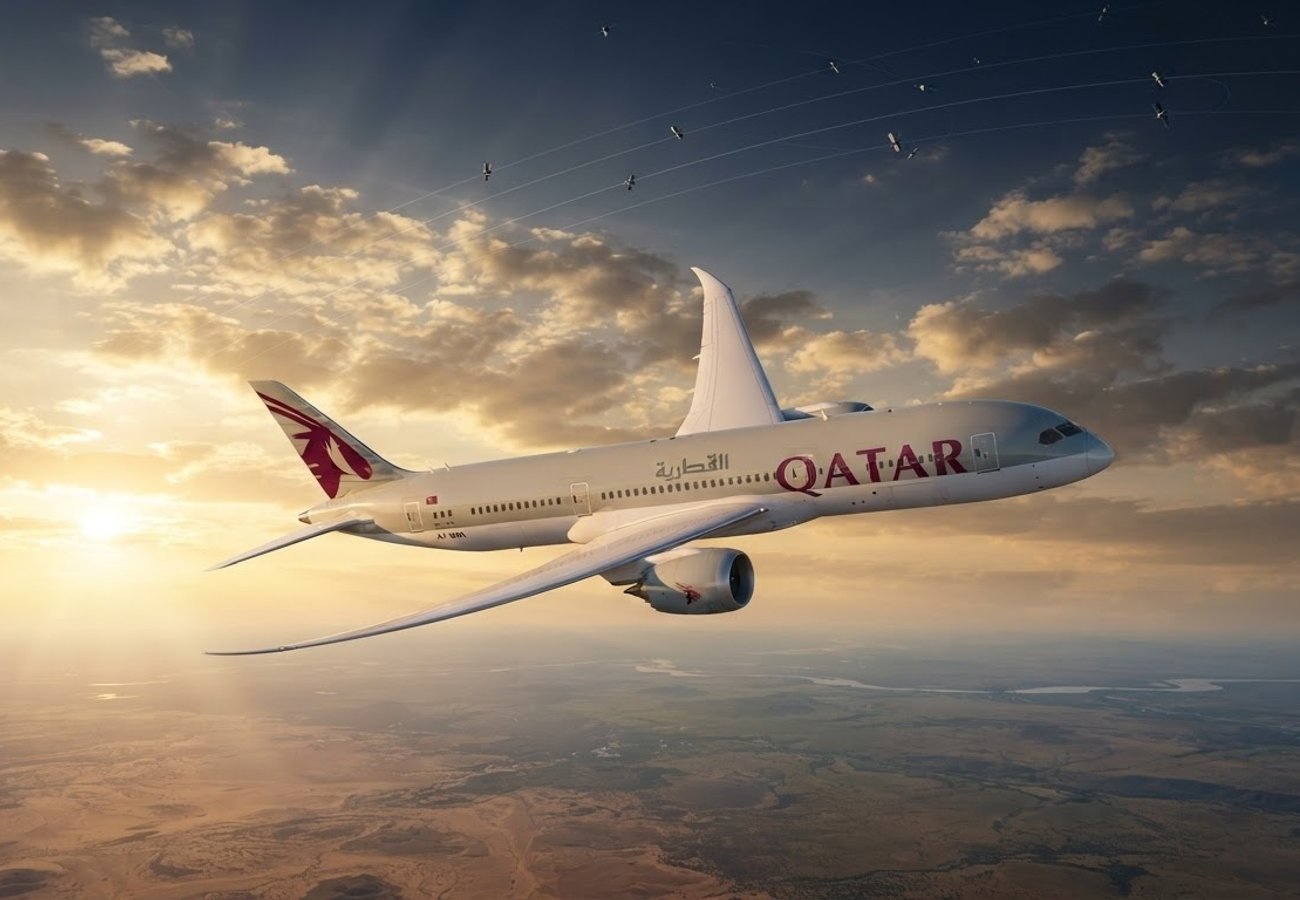
Image generated by AI
Over 23 million passengers have already accessed high-speed satellite internet via Qatar Airways, with the carrier now becoming the first globally to integrate Starlink into its Boeing 787-9 Dreamliner fleet.
The shift in long-haul aviation is no longer just about seat pitch or gourmet dining; it is about bandwidth. Qatar Airways has accelerated its digital transformation by completing Starlink installations across its Boeing 787-8 sub-fleet within seven months and now extending that capability to the Boeing 787-9. This move brings the total number of Starlink-connected widebody aircraft in the fleet to 150.
For the modern nomad and corporate traveler, this represents a fundamental change in how "dead time" is spent during transit. The airline is targeting a full rollout across its entire Boeing 787 fleet by the end of 2026.
The New Standard of Inflight Connectivity
The integration of Starlink allows Qatar Airways to offer internet speeds reaching up to 500 Mbps. This is a significant jump from traditional satellite Wi-Fi, enabling high-bandwidth activities such as seamless video streaming, real-time cloud collaboration, and stable VoIP communication at cruising altitude.
The rollout has been aggressive across multiple aircraft types to ensure consistency across the network:
- Boeing 787-8: Initial launch and completed sub-fleet installation.
- Boeing 777: Installation program completed in nine months.
- Airbus A350: Installation program completed in eight months.
- Boeing 787-9: Latest addition to the Starlink ecosystem.
With up to 323 Starlink-equipped flights operating daily, the technology is transitioning from a niche luxury to a standard utility. To date, the system has served over 86,000 flights, with the overall widebody installation program now 83% complete.
Impact on the Africa-Asia Corridor
This connectivity surge is particularly impactful for travelers moving between African gateways, such as Johannesburg, and the central hub at Hamad International Airport in Doha. For passengers on these long-haul segments, the ability to maintain a professional workflow or stay connected with home reduces the friction of ultra-long-distance travel.
For the visitor, the real impact is the removal of the "digital blackout." Corporate travel managers and agencies are now viewing onboard internet capabilities as a primary metric when comparing premium itineraries, placing Qatar Airways in a strong competitive position for the 2026-2027 travel season.
Visitor Insider Tips
To make the most of high-speed connectivity and your transit through Doha, keep these local insights in mind:
- Verify Your Tail Number: While the rollout is extensive, aircraft substitutions occur for operational reasons. Check your flight details or ask the cabin crew upon boarding to confirm if your specific aircraft is Starlink-equipped.
- Hamad International Airport (DOH) Strategy: If you have a long layover in Doha, utilize the airport's high-speed zones to sync large files before boarding, ensuring your onboard 500 Mbps connection is used for active communication rather than bulk downloads.
- Regional Regulatory Gaps: Be aware that Starlink connectivity may be momentarily interrupted over certain countries due to local regulatory requirements or airspace restrictions.
- Eco-Tip: Support local Qatari artisans at the airport's curated boutiques rather than generic duty-free shops to directly contribute to the regional creative economy.
Future Tourism Outlook
The rapid adoption of LEO (Low Earth Orbit) satellite technology suggests that the aviation industry is moving toward a "home-office in the sky" model. By removing the technical barriers of long-haul travel, Qatar Airways is likely to attract a higher volume of digital nomads and remote executives who previously avoided long flights due to productivity losses.
As the carrier completes its 787 rollout by the end of 2026, the benchmark for global commercial aviation will shift. Connectivity is no longer a value-add; it is a requirement for the 2026 traveler.
The sky is no longer a barrier to the boardroom.
Related Travel Guides
Disclaimer
This article is for informational and educational purposes only. It does not constitute legal, financial, or professional advice. While we strive to provide accurate and up-to-date information, travel policies, regulations, and conditions change rapidly. Always verify information with official sources before making travel decisions. Nomad Lawyer makes no representations about the accuracy, reliability, completeness, or suitability of the information provided. Readers should consult qualified professionals for advice specific to their circumstances. The views expressed in this article are those of the author and do not necessarily reflect the views of Nomad Lawyer.