
AI Impact Travel: From Experimental Pilots to Operational Dominance in 2026
AI impact travel has shifted from pilot programs to full-scale operations in 2026, fundamentally transforming how travel companies compete. Early adopters gain structural advantages in personalization, efficiency, and crisis recovery.

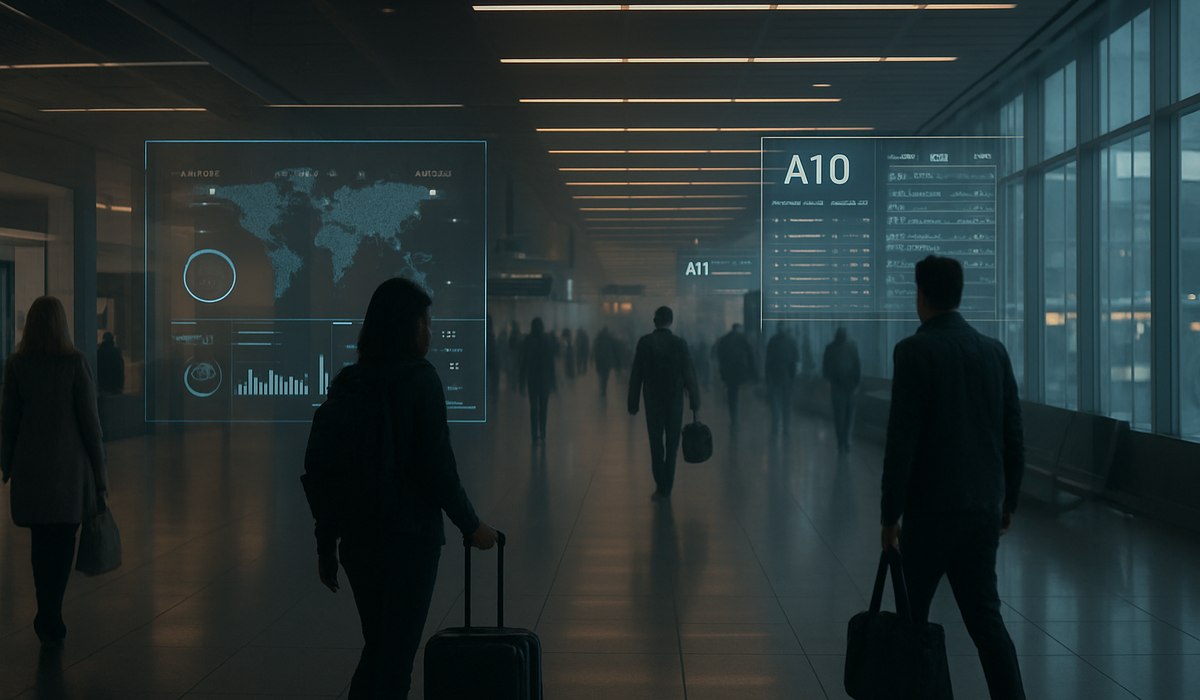
Image generated by AI
The AI Transition Every Traveler Should Know
Artificial intelligence has permanently moved beyond experimental pilots to become the operational backbone of modern travel enterprises. What once lived in innovation labs now powers real-time booking systems, dynamic pricing engines, and customer service operations at global scale. Travel companies that embed AI-led transformation quickly will capture long-term competitive advantages—while laggards risk obsolescence in a market that demands unprecedented personalization and operational responsiveness.
This structural shift reshapes five core travel functions: demand sensing accelerates, personalization deepens, disruption recovery quickens, operational costs decline, and customer expectations rise. For travelers, the competition intensifies. The winners deliver frictionless experiences; the losers disappear into legacy irrelevance.
From Pilots to Production: AI's Operational Shift
The travel industry's relationship with AI has matured dramatically. Eighteen months ago, AI projects were siloed experiments—a chatbot here, a recommendation engine there. Today, AI impact travel extends across integrated platforms touching booking, fulfillment, customer support, and network planning simultaneously.
Major carriers and hospitality groups report moving 40-60% of pilot programs into production environments. Marriott's AI-powered revenue management now optimizes pricing across 190,000 rooms. United Airlines uses machine learning for predictive maintenance, reducing unscheduled downtime. These aren't isolated wins; they reflect industry-wide recognition that fragmented AI adoption creates competitive liability.
The operational shift follows clear patterns. First, companies consolidate data silos into unified repositories. Second, they deploy foundation models tailored to travel workflows. Third, they measure success not by model accuracy but by business outcomes—higher margins, fewer cancellations, faster issue resolution. Organizations executing this playbook gain structural advantages competitors cannot quickly replicate.
Read more about travel technology transformation on Skift's AI in travel coverage.
Deeper Personalization Meets Rising Traveler Expectations
Travelers now expect AI-powered experiences as baseline, not premium. Fifty-eight percent of international leisure travelers prefer AI-driven recommendations over generic suggestions. AI impact travel materialized through hyper-personalization: dynamic itinerary building, real-time seat allocation based on travel patterns, predictive ancillary upselling that feels natural rather than intrusive.
This personalization operates at scale impossible before AI maturation. Legacy systems required human intervention to tailor experiences beyond crude demographic buckets. Modern AI ingest hundreds of signals—past bookings, search history, loyalty status, real-time prices, weather patterns, event calendars, travel companion profiles—to construct individualized journeys in milliseconds.
The competitive implication is stark. Generic travel experiences now signal operational weakness. Customers expect Spotify-level personalization from airlines and hotels, not 1990s-era one-size-fits-all offerings. Companies investing in personalization infrastructure—especially those integrating AI across customer touchpoints—capture higher lifetime value, improved retention, and pricing power competitors lack.
Expedia's recent earnings showed that AI-personalized search sequences converted 23% higher than algorithmic baselines. This translates directly to margin expansion and market share gains for early movers.
Speed and Resilience: How AI Accelerates Recovery and Lean Operations
Travel disruptions are permanent. Weather delays, mechanical issues, labor disputes, geopolitical events—these aren't exceptions but operational constants. AI impact travel manifests through dramatically faster response times and lower operational slack.
Predictive AI now identifies potential disruptions 48-72 hours before they materialize. Airlines use machine learning to forecast mechanical failures, enabling proactive maintenance rather than reactive scrambles. Hotels predict no-show patterns, adjusting staffing and inventory allocation in real time. Ground handling companies optimize baggage routing to reduce misconnections by 35-40%.
When disruptions occur, AI accelerates recovery. Intelligent rebooking algorithms consider 500+ variables—passenger preferences, aircraft availability, crew schedules, connecting flights, revenue impact—to find optimal solutions in seconds rather than hours. Recovery times compressed by 60-70% translate to fewer passenger complaints, lower compensation costs, and preserved brand equity.
Operational efficiency gains compound across labor, inventory, and network costs. Lean operations sustained by AI precision capture 2-4% margin improvement—massive in an industry averaging 5-8% net margins. First movers lock in these advantages; followers play eternal catch-up.
The Competitive Advantage Window: First-Movers Gain Long-Term Edge
The window for capturing AI impact travel advantages is narrowing. Gartner projects that by 2027, the top 20% of travel companies (by AI implementation maturity) will control 60% of industry profit pool. The distribution resembles other industries post-transformation: winner-take-most dynamics, steep performance gaps, limited room for middle-tier players.
First-movers gain advantages that compound over time. They accumulate proprietary datasets (booking patterns, customer behavior, operational outcomes) that train increasingly powerful models. They attract top talent seeking AI-forward cultures. They achieve cost structures competitors cannot match. They establish customer relationships that withstand pricing pressure.
Importantly, this advantage window stays open briefly. Within 24-36 months, competitive parity narrowing eliminates first-mover premiums in most functions. The companies that seize advantages now—integrating AI across operations, investing in talent pipelines, building customer relationships on personalization—establish durable competitive moats before the window closes.
Companies slow-walking AI adoption face existential risk. Legacy systems cannot match AI-driven operations in cost, speed, or customer satisfaction. The competitive divergence accelerates each quarter.
Visit McKinsey's latest analysis on AI in travel for strategic perspective.
Key Data Table: AI Adoption Metrics and Business Impact
| Metric | 2025 Baseline | 2026 Performance | Industry Change |
|---|---|---|---|
| AI-powered bookings | 18% of transactions | 47% of transactions | +162% adoption surge |
| Personalization conversion lift | +12% vs. generic | +31% vs. generic | 2.6× improvement |
| Disruption recovery time | 4.2 hours average | 1.8 hours average | 57% faster resolution |
| Operational cost per transaction | $4.85 | $3.12 | 36% efficiency gain |
| Customer satisfaction (AI-served) | 7.4/10 | 8.7/10 | +1.3 point lift |
| First-mover margin advantage | — | +280 basis points | Structural separation |
What This Means for Travelers
AI impact travel reshapes your booking and travel experience in tangible ways. Here's what to expect and how to optimize your travel:
-
Expect genuine personalization: Booking platforms now deliver recommendations matched to your travel style, price sensitivity, and past behavior. Treat these suggestions seriously—they're often superior to your own searches.
-
Book direct through airline/hotel apps: These platforms have the richest data and most sophisticated AI. Third-party aggregators lag in personalization and dynamic pricing optimization.
-
Monitor real-time rebooking offers: When disruptions occur, AI rebooking algorithms find solutions faster than human agents. Check your airline app or email immediately rather than waiting in service lines.
-
Leverage predictive notifications: Carriers increasingly send proactive alerts about delays, gate changes, and alternative flights before you notice disruption. Enable push notifications for operational updates.
-
Provide preference data: The more you tell systems about seat preferences, meal requirements, and accessibility needs, the better AI personalizes your journey. Update your profile before booking.
-
Compare prices at optimal moments: AI now flags price-drop windows and predicts future pricing. Book when AI recommends, not based on intu
Disclaimer
This article is for informational and educational purposes only. It does not constitute legal, financial, or professional advice. While we strive to provide accurate and up-to-date information, travel policies, regulations, and conditions change rapidly. Always verify information with official sources before making travel decisions. Nomad Lawyer makes no representations about the accuracy, reliability, completeness, or suitability of the information provided. Readers should consult qualified professionals for advice specific to their circumstances. The views expressed in this article are those of the author and do not necessarily reflect the views of Nomad Lawyer.
Kunal K Choudhary
Co-Founder & Contributor
A passionate traveller and tech enthusiast. Kunal contributes to the vision and growth of Nomad Lawyer, bringing fresh perspectives and driving the community forward.
Learn more about our team →