
Bypassing Travel Chaos: Qantas Deploys 22-Hour Non-Stop Sydney-London Flight to Shield Passengers from Global Transit Hub Meltdowns: Airline News
As travel chaos paralyzes major international transit hubs, Qantas launches Project Sunrise, a 22-hour non-stop Sydney-London flight designed to completely bypass intermediate layovers.

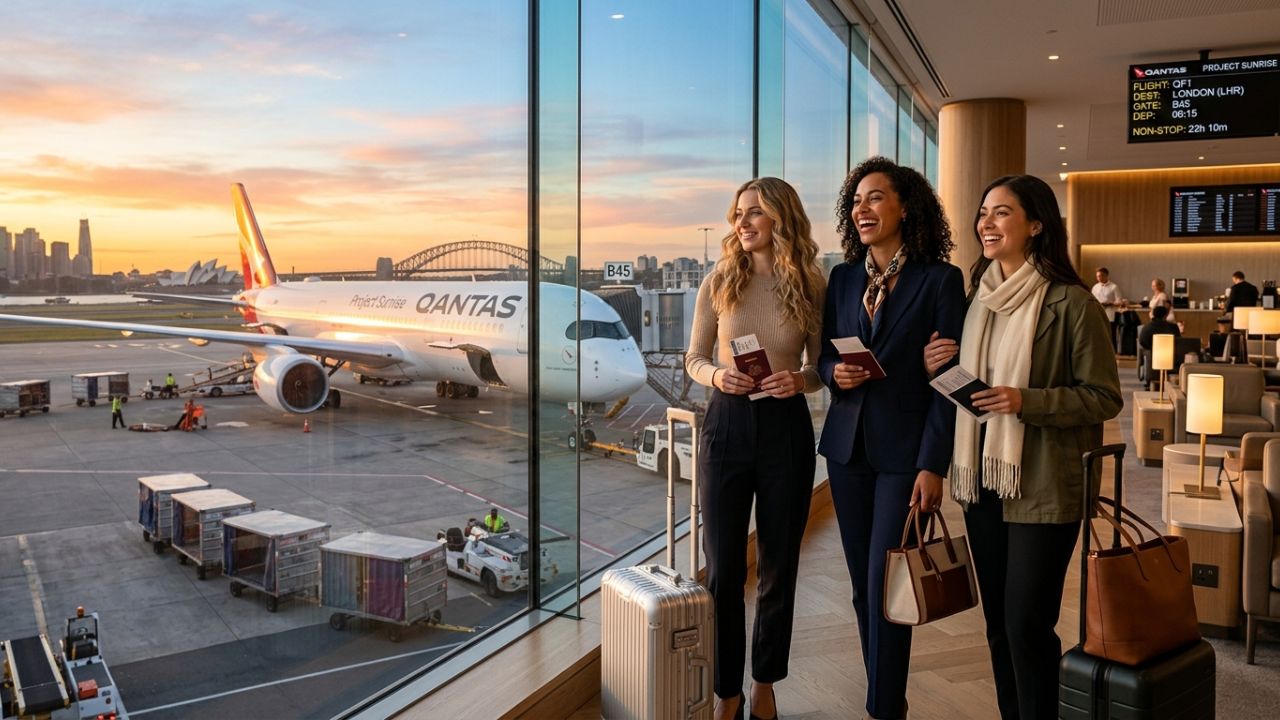
Image generated by AI
In a massive technological breakthrough designed to permanently bypass the systemic travel chaos that routinely paralyzes global aviation networks, Qantas Airways has confirmed the imminent launch of its historic ultra-long-haul expansion. Reported on June 20, 2026, as exhausted corporate executives frantically monitor the latest airline news for an escape from sudden flight cancellations at saturated intermediate transit hubs, the airline’s highly anticipated "Project Sunrise" provides the ultimate intercontinental shield. By deploying specially configured Airbus aircraft to execute a single, 22-hour non-stop flight directly between Sydney and London, Qantas is actively eliminating the severe airport disruptions caused by forced layovers in the Middle East or Southeast Asia. Completely severing reliance on the fragile traditional "Kangaroo Route," this massive network upgrade guarantees highly reliable, uninterrupted access between Australia and the United Kingdom, cementing this launch as today's most crucial headline in breaking aviation updates.
By introducing direct passenger coordination and dynamic scheduling backups, the regional aviation hubs target growing passenger demand across vital commerce sectors. The choice to coordinate flight departures in phases helps to manage gate capacity, supporting the country's broader regional transportation network.
Context: Eradicating the Intermediate Transit Nightmare
For the modern traveler navigating between the Asia-Pacific region and Europe, relying on traditional, highly congested third-country transit hubs is the absolute ultimate exposure to structural transit failure.
Historically, passengers traveling between Australia and the United Kingdom were forced to endure grueling layovers in massive, heavily congested mega-hubs like Dubai, Doha, or Singapore. These intermediate stops exposed travelers directly to the severe travel chaos of sudden regional airspace closures, cascading air traffic control delays, and catastrophic baggage failures that routinely shatter complex international itineraries. Qantas Airways’ Project Sunrise permanently bypasses this logistical nightmare. By linking Sydney directly to London without a single stopover, the airline completely removes the unpredictable variables of third-country transit. This highly strategic, 10,573-mile route directly addresses the escalating passenger demand for highly reliable, ultra-long-haul travel, shielding global tourists and corporate executives from the unpredictability of saturated global mega-hubs and saving up to four hours of total journey time.
To view live flight schedules, verify the active deployment of the Airbus A350-1000ULR on this specific route, or to track potential route restorations prior to heading to the airport, travelers must consult official aviation directories. For direct updates regarding how this massive capacity injection might shield you from current flight cancellations out of Europe or Asia, travelers should aggressively utilize the official digital portals of Qantas. To explore live flight tracking and monitor the exact severity of the cascading bottlenecks paralyzing alternative Eurasian airspace, passengers can consult the official FlightAware tracking service.
Section-Wise Breakdown: The Ultra-Long-Haul Bypass
London and Sydney: The Ultimate Non-Stop Extraction
The historic non-stop service between London and Sydney will cover approximately 10,573 miles (17,015 kilometres), making it one of the most extensive commercial flight paths ever attempted. By keeping passengers in the air for approximately 22 continuous hours, Qantas completely eliminates the extreme vulnerability of the traditional "Kangaroo Route." Travelers no longer have to deplane, navigate secondary security checkpoints, or risk missing connecting flights due to inbound delays; they simply board in Sydney and disembark in London, fully insulated from ground-level travel chaos.
The A350-1000ULR Deployment: Precision Long-Haul Defense
To execute this ambitious 22-hour mission, Qantas is deploying a bespoke fleet of 12 specially configured Airbus A350-1000ULR (Ultra Long Range) aircraft. This aircraft is the ultimate weapon against transit exhaustion, engineered with massive technical modifications including an additional fuel capacity of approximately 20,000 litres. This crucial upgrade enables extended flight endurance beyond 16,000 kilometres without refuelling. To optimize fuel efficiency and passenger wellness over extremely long durations, Qantas has implemented a reduced-density layout, carrying only 238 passengers.
Passenger Wellness: Surviving the 22-Hour Journey
Because the flight duration extends close to a full day in the air, Qantas has aggressively prioritized cabin configuration to address the physical and psychological demands of ultra-long-haul travel. The seating arrangement features six First Class suites with lie-flat beds, 52 Business Class suites with extended workspaces, 40 Premium Economy seats, and 140 Economy seats optimized for ergonomic support. Furthermore, the interior design strategy integrates improved cabin lighting cycles and enhanced air quality systems to aggressively combat jet lag, ensuring passengers arrive ready for high-stakes business meetings rather than exhausted from transit gridlock.
Technical Roster: Official Project Sunrise Operational Matrix
To ensure absolute factual accuracy regarding the exact operational timelines, geographical transit points, and specific aircraft configurations defining this massive network expansion, the following matrix details the strictly verified aviation data:
Official Qantas Project Sunrise Operational Matrix
| Operational Metric / Strategy | Verified Aviation Data |
|---|---|
| Route Distance | Approx. 10,573 miles (17,015 kilometres) |
| Total Flight Duration | Approximately 22 hours (Non-stop) |
| Aircraft Fleet Deployed | 12 specially configured Airbus A350-1000ULR aircraft |
| Engineering Enhancements | Extra 20,000 litres fuel capacity; 16,000+ km endurance |
| Total Passenger Capacity | 238 passengers (Reduced-density layout) |
| Cabin Configuration | 6 First, 52 Business, 40 Premium Economy, 140 Economy |
| Ticket Sales Launch | Scheduled to commence in February 2027 |
| Commercial Flight Launch | Inaugural operational flight planned for October 2027 |
| Future Expansion Target | Direct non-stop service between Sydney and New York City |
Data accurately reflects the verified destination targets, aircraft modifications, and strategic launch timelines tracking the Qantas Project Sunrise expansion as of June 2026.
Industry Analysis: The Value of the Non-Stop Fortress
Aviation analysts monitoring the intensely competitive ultra-long-haul market note that Project Sunrise is a massive tactical strike designed to monopolize the chaos-averse, premium passenger demographic.
Analysts emphasize that the traditional one-stop routes through the Middle East or Singapore are highly susceptible to geopolitical volatility and airspace closures. By offering a direct 22-hour flight, Qantas instantly captures high-yield corporate travelers who refuse to risk multi-million dollar business deals on unpredictable third-country layovers. The reduction of up to four hours in total travel time, combined with the complete elimination of transit risk, justifies a massive premium on ticket prices. Furthermore, by evaluating a subsequent direct connection between Sydney and New York City, Qantas is rapidly establishing a highly resilient, point-to-point global network. Airlines that fail to offer these direct, delay-free corridors will completely lose market share to carriers that insulate their passengers from the severe travel chaos of saturated global mega-hubs.
Actionable Advice for Intercontinental Travelers
Because the October 2027 launch of the Sydney-London route fundamentally alters Asia-Europe travel logistics, passengers must execute this strategic planning checklist immediately:
- Abandon the Kangaroo Route: If you are traveling between Australia and the UK, prepare to permanently stop booking itineraries that force you to connect through highly congested Middle Eastern hubs. When ticket sales open in February 2027, book the direct Qantas flights to completely eliminate the massive risk of missing your connection due to sudden airspace restrictions or terminal gridlock.
- Exploit the Reduced-Density Cabin: The strategic 238-passenger configuration of the A350-1000ULR means seats will be highly limited and extremely competitive. Corporate travelers must aggressively secure Business Class or Premium Economy bookings the moment they are released, as the guarantee of uninterrupted workflow and lay-flat sleep over 22 hours is the ultimate corporate advantage.
- Prepare for the New York Expansion: Corporate travel managers should begin updating their transit policies now to favor ultra-long-haul direct flights. With Sydney-New York slated as the next potential phase, companies must prepare to route their personnel exclusively on these non-stop fortresses, actively bypassing the travel chaos of North American West Coast transit hubs like LAX.
FAQ: Qantas Project Sunrise Sydney-London
What aircraft is Qantas using for the 22-hour flight?
The airline is deploying a fleet of 12 specially modified Airbus A350-1000ULR aircraft, featuring an extra 20,000 litres of fuel capacity for extended intercontinental endurance.
When will the Sydney-London non-stop flights actually begin?
Ticket sales for the highly anticipated non-stop route will commence in February 2027, with the inaugural commercial flight officially launching in October 2027.
How is the passenger cabin configured for a 22-hour flight?
To ensure maximum wellness, the aircraft utilizes a low-density 238-seat layout: 6 First Class suites, 52 Business suites, 40 Premium Economy seats, and 140 Economy seats.
The Reality of Point-to-Point Defense
The massive strategic launch of Project Sunrise by Qantas Airways proves definitively that targeting highly specific, non-stop intercontinental corridors is the ultimate weapon against systemic global travel chaos. By physically linking Sydney to London without intermediate stops, the airline has successfully guaranteed that tourists and business executives can escape the terrifying gridlock and route volatility of legacy transit hubs. Yet, as passengers prepare to book these historic A350 flights in 2027, they must accept a critical new reality: surviving the massive disruptions of modern global commerce demands strategic routing. Navigating the highly saturated global network requires a complete refusal to accept unnecessary layovers in congested airspace, and the tactical discipline to fly exclusively on direct, highly optimized ultra-long-haul routes.
Key Takeaways
- Massive Hub Bypass: The historic 22-hour Sydney-London flight allows travelers to completely avoid connecting through congested third-country mega-hubs, shielding them from severe travel chaos.
- A350-1000ULR Deployment: Qantas will utilize 12 specially modified Airbus aircraft featuring an extra 20,000 litres of fuel for non-stop endurance.
- Low-Density Wellness: The cabin is restricted to just 238 passengers across four classes to optimize physical and psychological comfort over the 10,573-mile journey.
- Strategic Timeline: Ticket sales for the flagship route open in February 2027, with the official commercial launch scheduled for October 2027.
- Future US Expansion: Following the London launch, Qantas plans to deploy the same ultra-long-haul strategy for direct non-stop flights between Sydney and New York City.
Related Travel Guides
Massive Travel Chaos Paralyzes Chicago O'Hare with 1,425 Disruptions
Disclaimer
This article is for informational and educational purposes only. It does not constitute legal, financial, or professional advice. While we strive to provide accurate and up-to-date information, travel policies, regulations, and conditions change rapidly. Always verify information with official sources before making travel decisions. Nomad Lawyer makes no representations about the accuracy, reliability, completeness, or suitability of the information provided. Readers should consult qualified professionals for advice specific to their circumstances. The views expressed in this article are those of the author and do not necessarily reflect the views of Nomad Lawyer.
Kunal K Choudhary
Co-Founder & Contributor
A passionate traveller and tech enthusiast. Kunal contributes to the vision and growth of Nomad Lawyer, bringing fresh perspectives and driving the community forward.
Learn more about our team →