Qantas Project Sunrise: A350-1000ULR Fleet to Launch Direct Sydney-London Flights by 2027

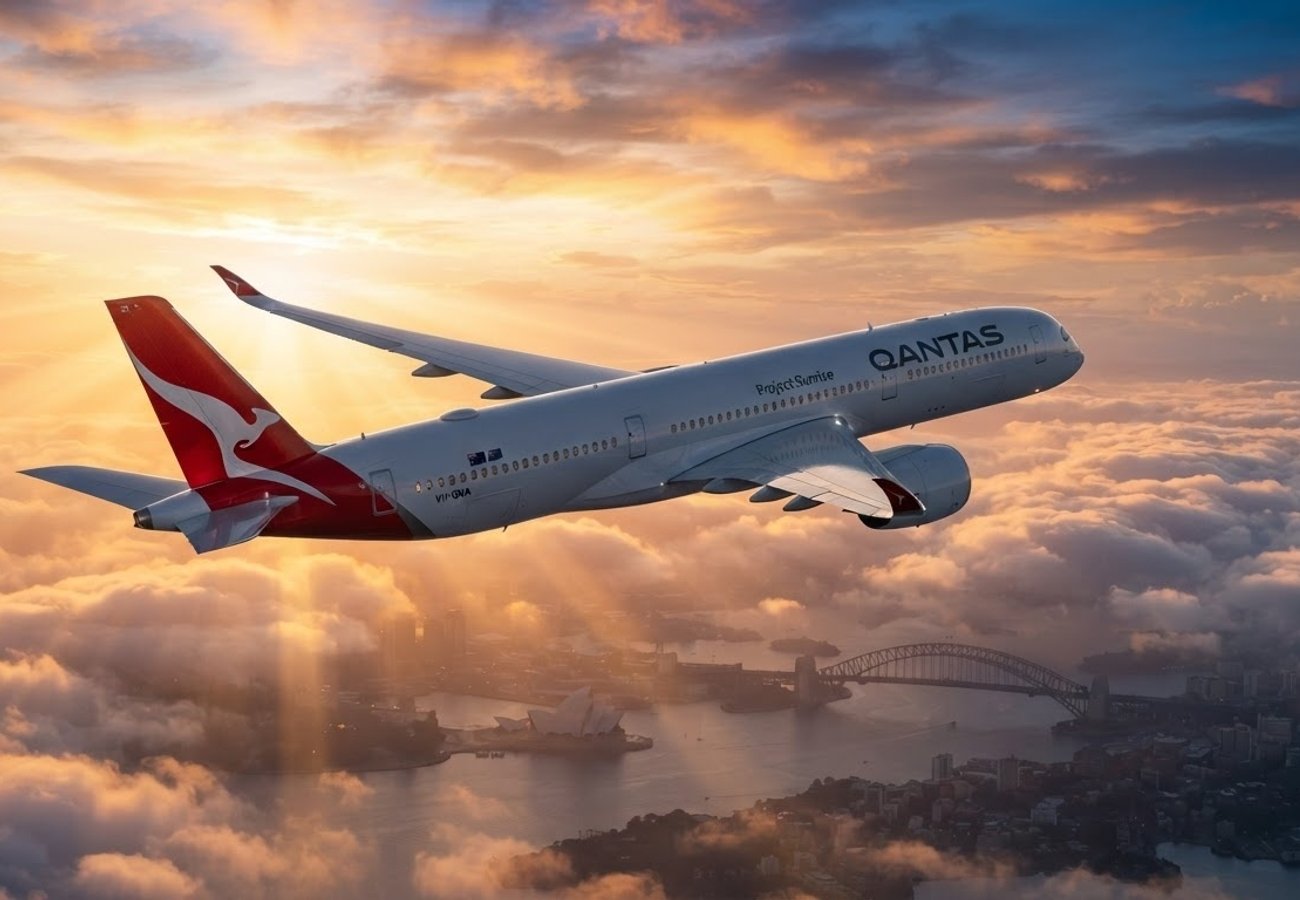
Image generated by AI
Australia’s flagship carrier is eliminating the need for stopovers on the world's longest routes. With the arrival of the Airbus A350-1000ULR, Qantas is preparing to link Sydney and London non-stop by late 2027.
The aviation landscape in Australia is undergoing a fundamental shift as Qantas accelerates its Project Sunrise initiative. This strategic overhaul focuses on three pillars: the deployment of ultra-long-haul (ULH) aircraft, a comprehensive fleet modernization program, and the aggressive expansion of international connectivity to the world's highest-value tourism markets.
By integrating the Airbus A350-1000ULR, Qantas is not merely adding new planes but is redefining the physics of international travel. This shift addresses a growing passenger demand for direct, non-stop services that bypass traditional connecting hubs in Asia or the Middle East, significantly reducing total travel time between Australia and Europe.
Project Sunrise: The Roadmap to Ultra-Long-Haul Connectivity
The centerpiece of this transformation is the Airbus A350-1000ULR. This specific variant is engineered for extreme distances, allowing the airline to maintain operational efficiency without sacrificing passenger comfort on flights that exceed 20 hours.
The rollout is scheduled with precision, beginning with the arrival of the first A350-1000ULR in April 2027. This leads directly into the launch of the highly anticipated Sydney–London non-stop service in October 2027.
As the airline pivots toward these next-generation aircraft, it will begin a phased retirement of the Airbus A380 fleet starting in 2028. This transition marks the end of the "super-jumbo" era in favor of leaner, more efficient, and more flexible long-range aircraft.
Project Sunrise Implementation Timeline
| Aviation Development | Expected Timeline | Travel Impact |
|---|---|---|
| First Airbus A350-1000ULR arrival | April 2027 | Enables ultra-long-haul operations |
| Sydney–London direct flights | October 2027 | Creates faster Australia-Europe connectivity |
| A380 retirement programme | From 2028 | Transition to next-generation aircraft |
| Additional A350 and Boeing 787 aircraft | From FY28 | Expands international network capacity |
Fleet Modernization and Capacity Growth
The scale of Qantas' investment extends beyond Project Sunrise. The airline is executing a broader fleet renewal strategy to ensure versatility across domestic and international sectors. In FY26 alone, Qantas integrated 17 new aircraft into its operations, with an additional 31 aircraft expected to arrive during FY27.
This modernization includes a diversified approach to aircraft utility:
- Airbus A220: Expanding to 12 aircraft to modernize domestic routes.
- Airbus A321XLR: Seven aircraft have entered service to bolster regional and medium-haul capacity.
- Boeing 787 Dreamliner: Continuing to serve as the backbone for long-range international operations.
Strategic Aircraft Allocation
| Aircraft Programme | Primary Purpose |
|---|---|
| Airbus A350-1000ULR | Ultra-long-haul international routes |
| Airbus A350 | Future global network expansion |
| Boeing 787 Dreamliner | Long-range international operations |
| Airbus A321XLR | Regional and medium-haul expansion |
| Airbus A220 | Domestic fleet modernisation |
Driving Tourism Recovery via Air Connectivity
The expansion of Qantas' network is timed to coincide with a robust recovery in Australian international tourism. Data from Tourism Research Australia indicates a steady climb in visitor demand across business, leisure, and VFR (Visiting Friends and Relatives) segments.
Because Australia's tourism economy is heavily dependent on aviation capacity, the introduction of direct long-haul routes is a critical economic lever. By strengthening links to North America, Europe, and Asia, Qantas is effectively lowering the "barrier of distance" for high-spending international travelers.
Impact on the Visitor Economy
| Tourism Factor | Importance for Australia |
|---|---|
| International visitors | Supports tourism businesses and regional economies |
| Global airline connectivity | Improves destination accessibility |
| Long-haul routes | Strengthens Europe and North America links |
| Premium travel demand | Supports higher-value tourism |
| Fleet investment | Enables future aviation growth |
The Pivot Toward Premium Travel Demand
A significant trend emerging from FY26 data is the surge in premium cabin revenue, which has outpaced growth in Economy operations. Travelers on ultra-long-haul journeys are increasingly prioritizing privacy, wellness, and comfort.
To capture this high-value segment, Qantas is redesigning the passenger experience. Future Boeing 787 and A350 cabins will feature:
- Enhanced Privacy: New seating designs incorporating privacy doors.
- Advanced Tech: Larger entertainment screens and updated in-flight systems.
- Ergonomic Comfort: Redesigned Business Class seating to mitigate fatigue on 20+ hour flights.
The era of the connecting flight is fading as Australia bridges the gap to the Northern Hemisphere.
Related Travel Guides
This article is for informational purposes. Flight routes, passenger regulations, visa rules, and transit advisories are subject to change by airlines and aviation authorities. Readers are advised to verify schedules and travel documentation with relevant carriers and border agencies before departure.
Related Stories

Qantas Frequent Flyer Status Credits Expand to Home Loans and Banking in December 2026

Australia Aviation Weather Disruptions 2026: Navigating Wind Shear and Flight Diversions