
Australia and Asia's 24/7 Greenfield Airport Boom: Redefining Regional Tourism in 2026
From Western Sydney to Navi Mumbai, a new wave of 24/7 'aerotropolises' is bypassing city-center curfews to ignite regional economic growth and tourism.

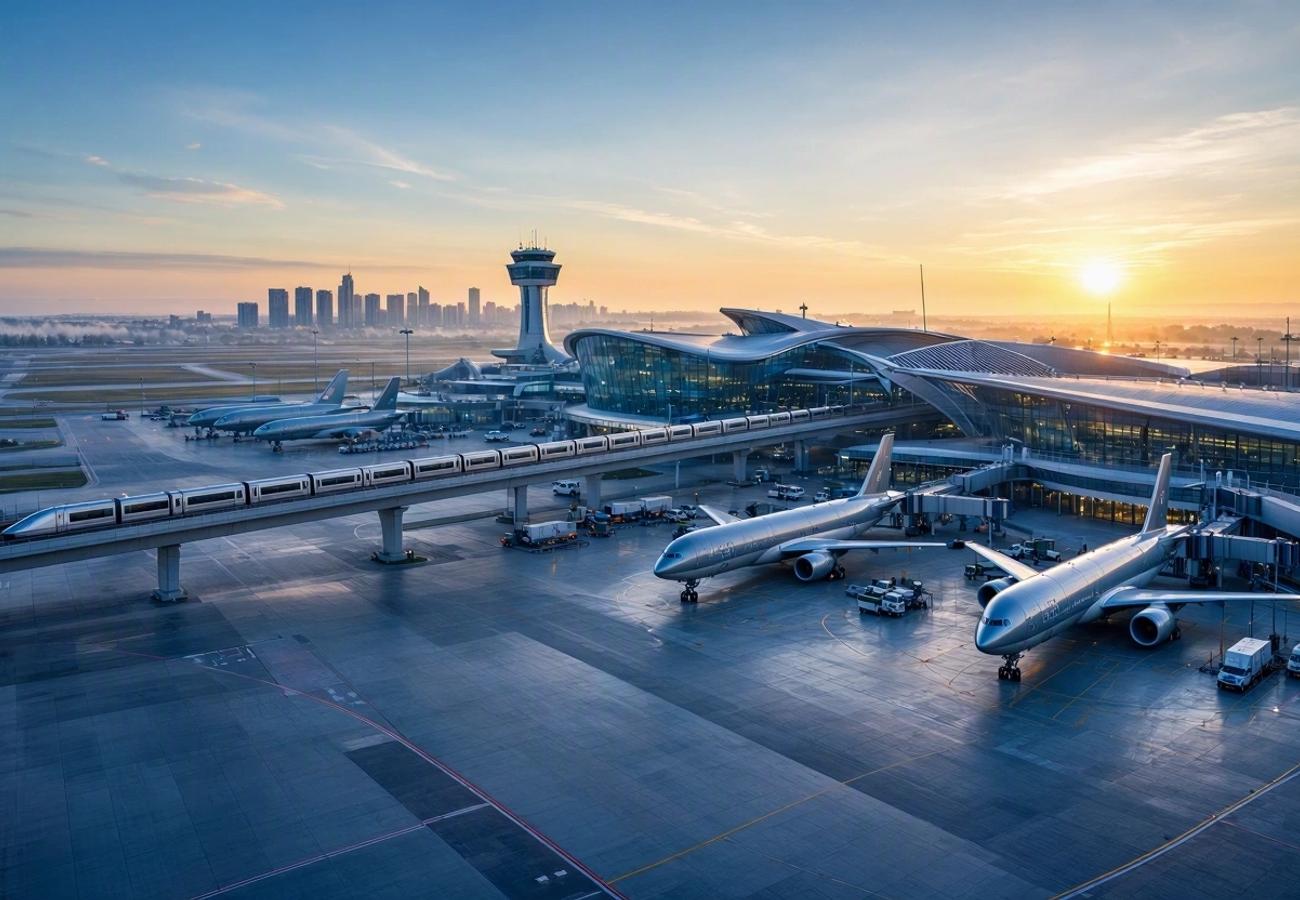
Image generated by AI
The Sydney Airport Curfew Act 1995 effectively froze the city's primary gateway in time, banning aircraft movements between 23:00 and 06:00 to protect suburban sleep. This regulatory wall created a systemic bottleneck, forcing intercontinental flights into congested arrival banks and leaving aircraft grounded during peak productivity hours. Now, a global shift toward "greenfield" aerotropolises is dismantling these restrictions, moving the center of gravity away from suffocating city cores toward unrestricted, 24-hour aviation hubs.
The Rise of the Aerotropolis Model
For decades, airports grew alongside the cities they served. However, as urban sprawl engulfed these airfields, residential neighborhoods became "noise buffers," leading to strict night curfews and movement caps. In legacy hubs like London Heathrow or Sydney Kingsford Smith, the conflict between acoustic pollution and aviation growth reached a breaking point.
The solution is the aerotropolis: a master-planned economic region where the airport is the anchor, not an appendage. Unlike legacy airports, these are built on massive tracts of unencumbered land far from dense residential zones. This allows for 24/7 operations, multi-directional parallel runways, and the integration of high-tech manufacturing and commercial zones directly on the airport perimeter. By removing the "nightly shutdown," these hubs optimize fleet utilization and open the door for nocturnal air cargo, which in turn pumps tourism and investment into previously peripheral regions.
Infrastructure Comparison: Legacy vs. Greenfield
The difference between a retrofitted city airport and a purpose-built aerotropolis is stark, particularly regarding operational freedom and logistics.
| Gateway Metric | Legacy Urban Airport | Master-Planned Greenfield Aerotropolis |
|---|---|---|
| Daily Operating Window | 16 to 17 hours (Curfew restricted) | Unrestricted 24 hours / 365 days |
| Hourly Traffic Caps | Capped by noise statutes (e.g., 80/hr) | Uncapped; limited only by runway capacity |
| Runway Layout | Intersecting or closely spaced | Wide-spaced parallel independent runways |
| Urban Buffers | Narrow or non-existent | Multi-thousand-hectare industrial zones |
| Freight Integration | Congested urban arterial roads | Direct on-apron rail and expressways |
| Surface Transit | Retrofitted shared urban lines | Purpose-built automated metros/motorways |
Global Benchmarking: The New Aviation Powerhouses
The Asia-Pacific region is currently the epicenter of this transition. These new gateways are designed to relieve saturated primary airports while unlocking "polycentric" economic zones.
Western Sydney International (WSI), Australia
Located at Badgerys Creek, roughly 44 to 50 kilometers west of the Sydney CBD, WSI is the largest aviation investment in Australian history. Managed by WSA Co Limited, it features a 3,700-meter CAT IIIB runway. While Stage 1 targets 10 million annual passengers, the long-term plan scales to 82 million by 2063. Crucially, it operates without curfews, attracting carriers like Qantas Freight, Jetstar, Singapore Airlines, and Air New Zealand.
Navi Mumbai International Airport (NMIA), India
A partnership between CIDCO and Adani Airports, NMIA serves as the essential relief valve for the overcapacity Chhatrapati Shivaji Maharaj International Airport. With dual parallel 3,700-meter runways, it launched domestic flights in December 2025 and international services in July 2026. It is designed to scale from 20 million to 90 million annual passengers.
Noida International Airport (Jewar / DXN), India
Managed by the Yamuna Expressway Industrial Development Authority (YEIDA) and Zurich Airport International, this hub relieves pressure on Delhi's Indira Gandhi International. Commercial operations began in June 2026, focusing heavily on cargo freighters and IndiGo passenger services, with a long-term capacity goal of 70 million passengers.
Regional Hubs in China and Cambodia
The trend extends further east. China's Chengdu Tianfu (TFU) handled 56.7 million passengers in 2025, while Qingdao Jiaodong (TAO) saw 26.9 million. Meanwhile, Cambodia's Techo International Airport (KTI), which launched in September 2025, is scaling toward a 50-million-passenger capacity to modernize the nation's tourism entry point. For those tracking regional connectivity, the International Civil Aviation Organization (ICAO) provides global standards for these expanding hubs.
Visitor Insider Tips
When transitioning from a city-center airport to a greenfield aerotropolis, the logistics change completely.
- Transport Hacks: Do not rely on traditional city taxis. These airports are designed for dedicated expressways and automated metros. In Western Sydney, plan for a 45-60 minute transit to the CBD; use the purpose-built transit links rather than ride-shares to avoid perimeter congestion.
- Timing Your Arrival: Take advantage of the 24/7 nature. Late-night or early-morning arrivals that would be illegal at legacy airports are now the norm. This often means shorter queues at immigration and baggage claim.
- Base Your Stay: Instead of the city center, look for hotels within the "Airport City" or aerotropolis perimeter. These zones are becoming hubs for business and luxury tourism, offering faster access to the terminal.
- Regional Exploration: These airports are gateways to "peripheral" regions. Use WSI to explore Western Sydney’s growing culinary scene or NMIA to access the outskirts of Maharashtra without fighting Mumbai's inner-city traffic. You can check official travel requirements via the Australian Department of Home Affairs.
Cultural and Environmental Context
The shift to greenfield airports is not without friction. While they solve the "noise vs. growth" paradox of city centers, they require the conversion of thousands of hectares of land. In Western Sydney, this meant navigating the ecology of Badgerys Creek; in India, it involved complex land acquisition in Uttar Pradesh and Maharashtra.
However, the environmental trade-off is often a reduction in urban congestion. By moving freight and high-volume transit to the periphery, cities can reduce the number of heavy trucks in residential cores. Furthermore, these new hubs are being built with 2026-era sustainability standards—integrating solar arrays and LEED-certified terminals—which is far more cost-effective than retrofitting a 50-year-old terminal.
FAQ: Visiting Greenfield Hubs 2026
How do I get to the new Western Sydney International Airport from the CBD? The airport is 44-50km west of the city. The most efficient method is using the purpose-built express transit links or dedicated motorways; avoid traditional city-center routes which remain congested.
Are these new airports safer for solo travelers? Yes. Because they are master-planned "aerotropolises," they feature integrated security, modern lighting, and dedicated transit corridors, making them highly navigable and safe for solo arrivals at any hour.
Do I need a different visa for these regional airports? No. Visa requirements are national. Whether you land at Sydney Kingsford Smith or Western Sydney International, the same Australian visa or national entry rules apply.
Why should I choose a greenfield airport over a city airport? The primary advantages are 24/7 operational flexibility (no curfew delays), more modern facilities, and often faster processing times due to less saturation compared to legacy city gateways.
The era of the midnight shutdown is ending, replaced by cities that breathe and move around the clock.
Related Travel Guides
Disclaimer
This article is for informational and educational purposes only. It does not constitute legal, financial, or professional advice. While we strive to provide accurate and up-to-date information, travel policies, regulations, and conditions change rapidly. Always verify information with official sources before making travel decisions. Nomad Lawyer makes no representations about the accuracy, reliability, completeness, or suitability of the information provided. Readers should consult qualified professionals for advice specific to their circumstances. The views expressed in this article are those of the author and do not necessarily reflect the views of Nomad Lawyer.
Raushan Kumar
Founder & Lead Developer
Full-stack developer with 11+ years of experience and a passionate traveller. Raushan built Nomad Lawyer from the ground up with a vision to create the best travel and law experience on the web.
Learn more about our team →