
Qantas Confirms Airbus A380 Retirement by 2028: The End of Australia’s Double-Decker Era and the Rise of Project Sunrise A350s

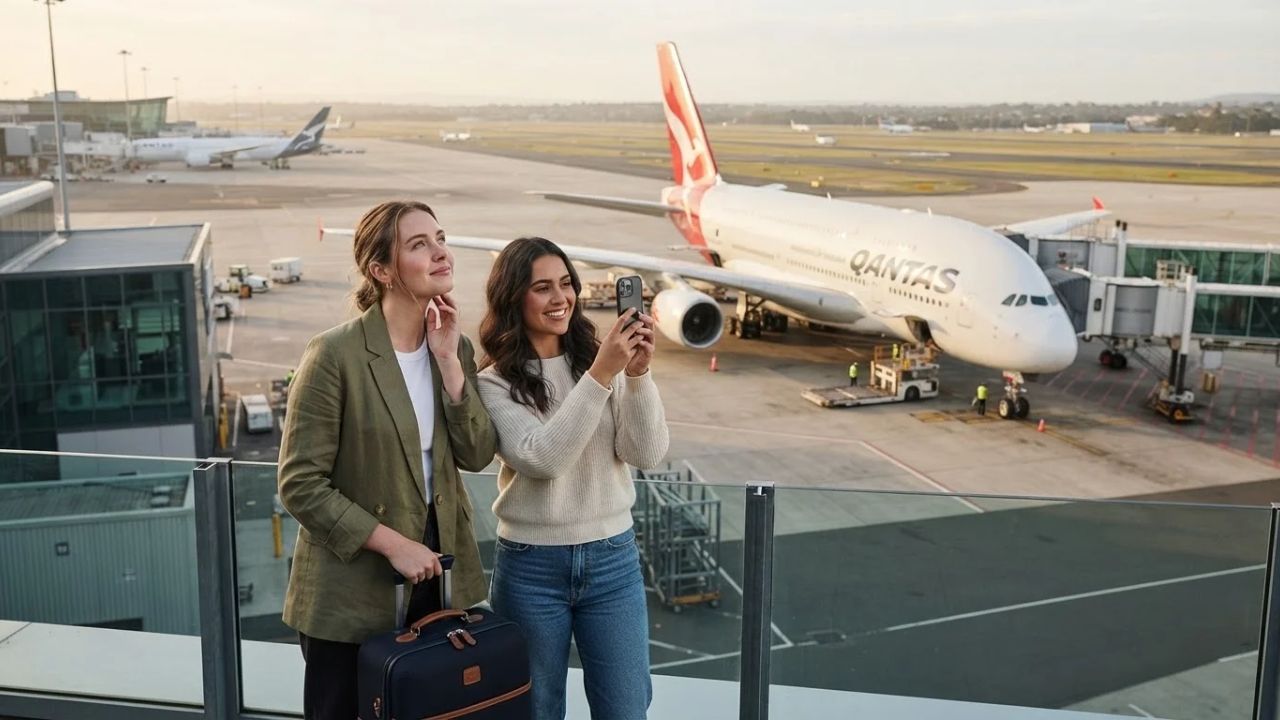
Bringing forward the curtain on an iconic era of transpacific and Kangaroo Route aviation, Qantas has confirmed it will retire its entire fleet of 10 Airbus A380 superjumbos starting in 2028, four years earlier than originally planned. The decision, articulated by Qantas International and Freight Chief Executive Cam Wallace during investor briefings, marks a definitive structural pivot away from four-engine mega-transports toward agile, ultra-long-range twin-engine aircraft led by the incoming Airbus A350-1000 fleet.
The early phase-out of the double-decker flagship reflects escalating maintenance expenses, persistent post-production supply chain shortages, and the shifting economics of international long-haul passenger travel. With Airbus ending A380 production in 2021 after manufacturing 251 aircraft worldwide, maintaining a boutique fleet of just ten superjumbos has become increasingly uneconomical compared to modern twin-engine airframes that burn substantially less fuel while offering unprecedented point-to-point routing freedom.
The Local Trend Revealed: Retiring the Double-Decker Giant
For Australian travelers, the Airbus A380 has represented the pinnacle of long-haul travel since Qantas took delivery of its first superjumbo, named Nancy-Bird Walton, in September 2008. Spanning two complete passenger decks, the aircraft transformed the grueling 14-hour crossing from Sydney and Melbourne to Los Angeles, as well as the marathon journey to London Heathrow via Singapore.
Stepping onto the A380 was never just a flight; it was an architectural experience:
- The Scale of the Superjumbo: Certified to carry up to 853 passengers in maximum-density configurations, Qantas configured its A380s with 485 seats across four cabins: 14 First Class suites on the lower deck, 70 Business Class lie-flat suites on the upper deck, 60 Premium Economy seats, and 341 Economy seats.
- Why 2028 Marks the Finish Line: Qantas initially envisioned operating the superjumbo deep into the 2030s. However, Cam Wallace revealed to financial analysts that sourcing specialized spare parts and structural components for an out-of-production airframe creates acute operational vulnerabilities. With Airbus having shut down the final assembly line in Toulouse half a decade ago, inventory lead times for A380 landing gear assemblies, wing spars, and Rolls-Royce Trent 900 engine components continue to lengthen.
- The Shift from Volume to Yield: The A380 was engineered around a traditional hub-and-spoke philosophy that funneled massive passenger volumes through global mega-hubs like Singapore, Dubai, and Los Angeles. Today's commercial aviation landscape prioritizes high-yield point-to-point routes, where smaller aircraft operate more frequent departures directly between destination cities.
Technical Comparison: Four Engines Versus Modern Ultra-Long-Haul Twins
The economics governing intercontinental passenger transit have evolved radically over the past two decades. The following comparison illustrates why Qantas and global airlines are retiring four-engine jumbos in favor of next-generation composite twins:
Fleet Specification Breakdown
- Airbus A380-800: Four Rolls-Royce Trent 900 engines; maximum certified seating of 853 (Qantas configuration: 485 seats); operational range of approximately 14,800 km (8,000 nautical miles); production ceased in 2021 with 251 units delivered globally. Its core strength remains unmatched cabin volume, cavernous interior headroom, and low perceived engine noise.
- Airbus A350-1000ULR: Two Rolls-Royce Trent XWB-97 turbofans; Qantas Project Sunrise configuration capped at just 238 seats (over 40% dedicated to premium cabins); operational range exceeding 16,000 km; active production. Core strength lies in carbon-composite fuselage construction, 25% lower fuel consumption per seat, and ability to fly non-stop for up to 22 hours.
- Boeing 787-9 Dreamliner: Two General Electric GEnx-1B engines; Qantas configuration of 236 seats; range exceeding 14,400 km; active production. Core strength is flexible deployment on secondary long-haul routes such as Perth to London, Melbourne to Dallas, and Sydney to Las Vegas.
While the A380 requires burning tons of aviation fuel to lift its massive empty weight and four engine nacelles into the stratosphere, the A350-1000 achieves equivalent or superior range with half the engine maintenance, lower landing fees, and vastly reduced carbon emissions.
The Rise of Project Sunrise: Replacing Size with Premium Sanctuary
The most significant takeaway from Qantas's fleet transition is not merely the retirement of an aircraft type, but the complete reinvention of the passenger value proposition.
Under the banner of "Project Sunrise," Qantas is using the arrival of its custom Airbus A350-1000ULR aircraft to unlock the final frontier of commercial aviation: non-stop flights connecting Sydney and Melbourne directly to London and New York. By bypassing intermediate refueling stops in Singapore, Dubai, or the US West Coast, Project Sunrise cuts total travel time by up to four hours:
- The 238-Seat Sanctuary: Standard airline configurations for the A350-1000 seat between 350 and 410 passengers. Qantas has radically restricted its cabin layout to just 238 seats, allocating more than 40% of the entire cabin floorplan to First Class, Business Class, and Premium Economy.
- Dedicated Wellbeing Zones: Developed in collaboration with sleep researchers and aviation scientists at the University of Sydney’s Charles Perkins Centre, the A350-1000 features a purpose-built Wellbeing Zone situated between the Premium Economy and Economy cabins. The area includes physical stretching stations, guided mobility handles, tailored hydration stations, and healthy refreshment bars.
- Advanced Circadian Lighting: Cabin illumination sequences are programmed to align with destination time zones from the moment of takeoff, scientifically encouraging natural melatonin production to minimize jet lag over 20-hour sectors.
The future of luxury long-haul travel is no longer about building the largest flying hotel; it is about providing personalized space, direct non-stop routing, and scientifically validated health protection.
The Global Superjumbo Divergence: Who Keeps Flying the A380?
While Qantas has finalized its retirement countdown, the Airbus A380 will not vanish from global skies overnight. The international airline industry has fractured into two distinct camps:
The Committed Mega-Operators
- Emirates: The defining champion of the superjumbo, Emirates operates a staggering fleet of over 115 A380s. Leveraging Dubai International Airport's geographical position as the world's pre-eminent crossroads, Emirates plans to operate the A380 well into the early 2040s. The carrier has committed billions of dollars to complete nose-to-tail cabin refurbishments, installing premium economy cabins, updated shower spas, and high-speed Starlink satellite connectivity.
- Lufthansa: Having originally planned to permanently retire its A380s during the pandemic, the German flag carrier reactivated eight aircraft to plug severe wide-body capacity shortages caused by Boeing 777X delivery delays. Lufthansa has upgraded these aircraft with modern business-class seating featuring direct aisle access.
- British Airways and Singapore Airlines: Both legacy operators continue to deploy their A380 fleets on slot-constrained, high-density trunk routes out of London Heathrow and Singapore Changi, utilizing the superjumbo's immense capacity to maximize revenue at airports where adding flight frequencies is impossible.
- All Nippon Airways (ANA): ANA retains its distinctive trio of "Flying Honu" sea-turtle-liveried A380s dedicated exclusively to the high-demand Tokyo Narita to Honolulu leisure corridor.
For airlines operating fleets of 50 to 100 superjumbos, scale creates viable maintenance ecosystems. For carriers like Qantas with just ten airframes, the overhead of dedicated simulator facilities, specialized maintenance tooling, and bespoke parts warehousing becomes unsustainable.
Cultural & Environmental Value: The Superjumbo’s Place in Australian Lore
In Australia, commercial aviation is not a luxury; it is a lifeline bridging an island continent with the rest of the planet. The A380 earned an indelible place in the national consciousness:
- The Spirit of Nancy-Bird Walton: Named after the pioneering Australian aviator Nancy-Bird Walton, the Qantas A380 fleet became a flying symbol of Australian engineering prowess and sovereign capability.
- The QF32 Miracle: On 4 November 2010, Qantas Flight 32 suffered an uncontained engine failure shortly after takeoff from Singapore. Captain Richard de Crespigny and his flight crew safely returned the crippled superjumbo to Changi Airport with zero passenger injuries, a masterclass in airmanship and redundant airframe durability that entered global aviation textbooks.
- Repatriation Lifelines: During the global travel shutdowns of 2020 and 2021, Qantas A380s were called upon to operate extraordinary long-range rescue missions, bringing stranded Australian citizens home from Europe, India, and the Americas.
From an environmental standpoint, retiring the A380 supports Qantas's legally binding commitment to achieve net-zero carbon emissions by 2050. Replacing four heavy kerosene-burning engines with state-of-the-art twin-engine technology reduces carbon emissions per seat by 25%, marking a critical environmental milestone for transpacific aviation.
Visitor Insider Tips: How to Experience the Qantas A380 Before 2028
Aviation enthusiasts and travelers wanting to savor the superjumbo experience before its final Qantas touchdown in 2028 should plan strategically:
Booking the Right Routes
Qantas currently deploys its remaining active A380s across a select group of flagship long-haul routes:
- QF11 and QF12: Daily service between Sydney (SYD) and Los Angeles (LAX).
- QF93 and QF94: Daily service between Melbourne (MEL) and Los Angeles (LAX).
- QF1 and QF2: The legendary Kangaroo Route connecting Sydney (SYD) to London Heathrow (LHR) via Singapore Changi (SIN).
The Secret Economy Seats on the Upper Deck
Most travelers assume the upper deck of the A380 is reserved exclusively for Business and Premium Economy passengers. However, on Qantas's updated cabin layouts:
- Rows 32 through 36: A small, intimate Economy cabin of just 30 seats is situated at the very rear of the upper deck behind Premium Economy.
- The 2-4-2 Advantage: While the lower deck is arranged in a dense 3-4-3 layout, the upper deck features a 2-4-2 seating arrangement with significantly wider aisles.
- Deep Window Storage Bins: If you secure a window seat (A or K) on the upper deck, you gain access to deep, lockable side storage bins between your seat cushion and the curving fuselage wall, perfect for storing laptops, blankets, and personal bags.
Pre-Flight Lounge Rituals in Sydney and Melbourne
Make your departure memorable by arriving early at the airport to enjoy Qantas's premier terminal hospitality:
- Sydney Terminal 1 First Lounge: Designed by Marc Newson, this architectural masterpiece features an 8,400-plant vertical living garden wall, marble bathrooms with private showers, and complimentary treatment sessions at the Aurora Spa.
- Neil Perry Gastronomy: Savor à la carte dining with table service, pairing salt and pepper calamari with a crisp glass of Margaret River Chardonnay or a Tasmanian Pinot Noir.
Tourism & Aviation Outlook: The Next Chapter of Long-Haul Flying
The impending retirement of Qantas's Airbus A380 fleet by 2028 is a poignant milestone in global aviation history. It marks the conclusion of an era when aircraft size was the primary metric of prestige, and ushers in a new era defined by digital optimization, point-to-point convenience, and bespoke passenger wellbeing.
While commercial aviation romantics will forever miss the majesty of a double-decker superjumbo banking gracefully over Sydney Harbour, the traveler of 2028 will inherit something equally transformative: the ability to board an A350 in Sydney and wake up in London without touching the ground in between. The superjumbo built the modern air bridge; the twin-engine generation will perfect it.
Related Travel Guides
Disclaimer
This article is for informational and educational purposes only. It does not constitute legal, financial, or professional advice. While we strive to provide accurate and up-to-date information, travel policies, regulations, and conditions change rapidly. Always verify information with official sources before making travel decisions. Nomad Lawyer makes no representations about the accuracy, reliability, completeness, or suitability of the information provided. Readers should consult qualified professionals for advice specific to their circumstances. The views expressed in this article are those of the author and do not necessarily reflect the views of Nomad Lawyer.
Raushan Kumar
Founder & Lead Developer
Full-stack developer with 11+ years of experience and a passionate traveller. Raushan built Nomad Lawyer from the ground up with a vision to create the best travel and law experience on the web.
Learn more about our team →