
Puebla and Los Cabos Travel Guide 2027: Mexico's Dual Faces of Culture and Coast

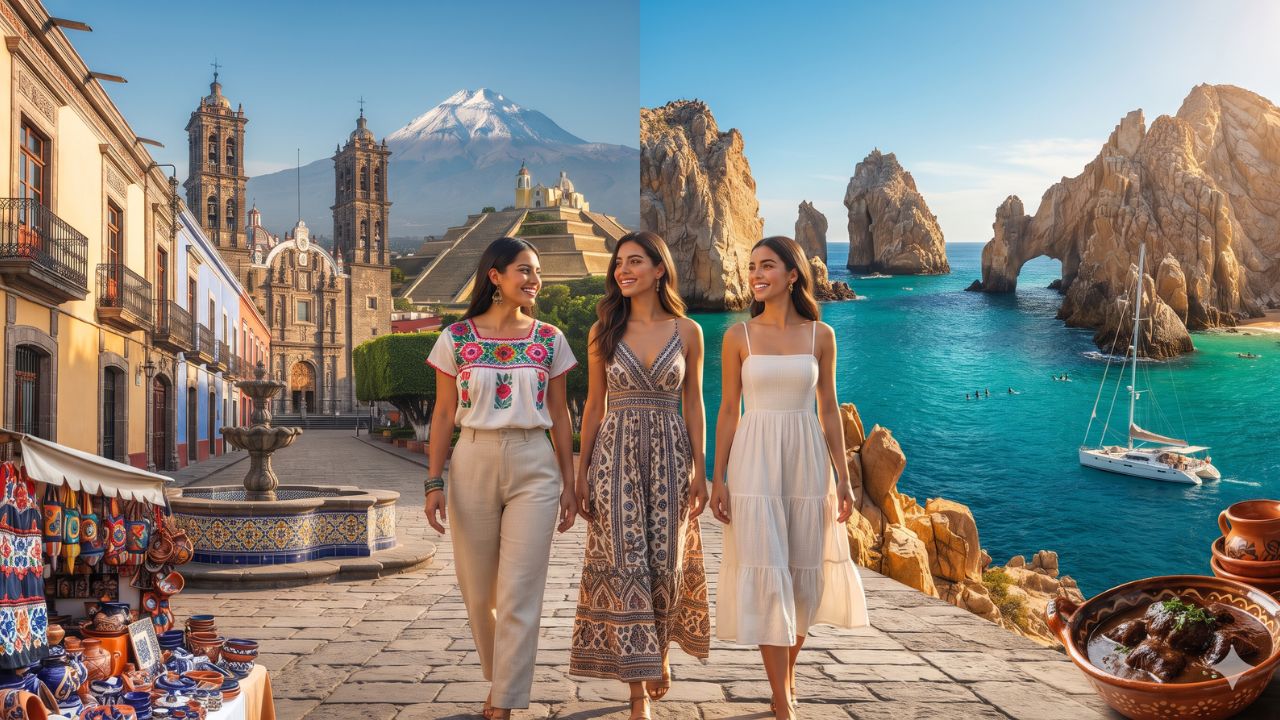
Beneath a Spanish colonial church built on an artificial hill in Cholula sits the largest pyramid base on Earth—a pre-Hispanic monument whose 450-meter foundation holds nearly double the volume of Egypt’s Great Pyramid of Giza. Framing this monumental ancient engineering work in central Mexico is the active Popocatépetl volcano, puffing smoke rings above fertile highland valleys. Over a thousand miles to the northwest at the southern tip of the Baja California Peninsula, desert cliffs plunge into azure swells where migrating humpback whales breach beside the granite monolith of El Arco in Los Cabos.
As international travelers look toward 2027, venturing beyond the saturated Caribbean resort strips of Cancun and Tulum reveals Mexico’s compelling duality: the baroque culinary kitchens and indigenous highlands of Puebla versus the marine sanctuaries and desert shores of Los Cabos.
Two Opposing Realities on the Mexican Travel Map
Puebla and Los Cabos serve distinct travel styles, yet together they capture the country's geographic range:
| Dimension | Puebla (Central Highlands) | Los Cabos (Baja California Sur) |
|---|---|---|
| Setting | Volcanic valleys at 2,135 meters | Desert peninsula where Sea of Cortez meets Pacific |
| Core Appeal | Baroque architecture & culinary heritage | Marine biodiversity, luxury retreats & coastal sports |
| Landmarks | Great Pyramid of Cholula & Puebla Cathedral | El Arco rock arch & Cabo Pulmo coral reef |
| Cuisine | Mole poblano, chiles en nogada & cemitas | Fresh ceviche, smoked marlin & Baja fish tacos |
| Seasonality | October to April for clear volcanic vistas | December to April for peak whale migration |
| Villages | Atlixco, Cuetzalan, Zacatlán, Chignahuapan | Miraflores, Santiago & Fox Canyon |
Puebla: Living Heritage and Culinary Alchemy
Puebla City's historic quarter, recognized by the UNESCO World Heritage Centre, preserves centuries of colonial civic planning and artisan workshops:
Architectural Monuments and Artisan Streets
The central Zócalo is anchored by Puebla Cathedral, flanked by the Rosario Chapel inside the Church of Santo Domingo, where gold leaf and plasterwork define high Mexican Baroque design. Steps away, the Biblioteca Palafoxiana preserves over 45,000 rare volumes as the first public library in the Americas. In Callejón de los Sapos, travelers browse antique stalls, brass hardware, and workshops crafting tin-glazed Talavera pottery.
A Gastronomic Capital Shaped by Convento Kitchens
Puebla stands as Mexico's intellectual kitchen. In colonial convent kitchens like Santa Rosa, nuns blended indigenous chilies, chocolate, seeds, and Old World spices to invent mole poblano. Seasonally during late summer and autumn, restaurants prepare chiles en nogada—roasted poblano peppers stuffed with shredded meat and fruit, blanketed in chilled walnut cream and bright red pomegranate seeds to honor the national flag. Casual daytime travelers head to local markets for cemitas, crusty sesame rolls packed with milanesa, shredded quesillo cheese, avocado, and fragrant pápalo herb leaves.
Cholula and Highland Villages
Ten kilometers west lies Cholula, where Spanish friars constructed the Santuario de Nuestra Señora de los Remedios atop the Great Pyramid. Walking the perimeter offers views of Popocatépetl’s snow-capped rim. Beyond the capital, mountain communities under Mexico’s Pueblos Mágicos program offer distinct traditions:
- Atlixco: Known for plant nurseries and temperate climate.
- Cuetzalan: Set in northern cloud forests, preserving Nahua traditions and waterfalls.
- Zacatlán: Famous for apple orchards, clockmakers, and canyon lookouts.
- Chignahuapan: A craft center producing hand-blown glass ornaments beside thermal springs.
- Cantona: An ancient archaeological site with stone roads and ballcourts.
Los Cabos: Where Desert Canyons Meet Oceanic Trenches
Occupying the southern tip of the Baja Peninsula, Los Cabos divides into two distinct centers linked by a thirty-kilometer corridor:
Cabo San Lucas and the Pacific Rim
Cabo San Lucas centers around a marina where boats head toward El Arco, the granite arch framing the meeting of the Pacific Ocean and Sea of Cortez. Médano Beach provides swimmable waters, while the Pacific coast features dramatic cliffs and resorts. Due to rip currents, swimming is prohibited along unpatrolled Pacific beaches; travelers should stick to designated calm coves like Chileno Bay and Santa María Bay.
San José del Cabo: Arts and Estuary Ecology
Twenty miles east, San José del Cabo offers a relaxed cultural rhythm. Its historic quarter features colonial arcades, jacaranda-shaded plazas, and a weekly Thursday night Art Walk showcasing contemporary Mexican sculpture. Adjacent lies the San José del Cabo Estuary, a freshwater marsh supporting over 200 bird species.
Marine Conservation at Cabo Pulmo and the East Cape
Two hours north along desert tracks lies Cabo Pulmo National Park, a marine reserve monitored by the Comisión Nacional de Áreas Naturales Protegidas. Once depleted by commercial fishing, Cabo Pulmo’s community protection restored a living coral reef where divers encounter schools of jacks, reef sharks, and sea turtles. Further along the East Cape, remote fishing villages provide off-grid tranquility.
Inland Foothills of the Sierra de la Laguna
Heading inland into desert foothills reveals unexpected mountain spots:
- Miraflores: Known for leathercraft and rural ranching.
- Santiago: A historic village situated beside natural hot springs.
- Fox Canyon (Cañón de la Zorra): A freshwater swimming pool and waterfall amid granite boulders.
Visitor Insider Tips: Practical Guidance
- Monitor Popocatépetl Volcanic Bulletins: When touring Cholula and Puebla, check official ash advisories. Wind shifts occasionally carry light ash falls that disrupt regional flight operations at Puebla International Airport.
- Observe Sea Flag Warnings in Los Cabos: Pacific beaches frequently fly red or black flags indicating dangerous undertows. For safe swimming, snorkeling, and paddleboarding, base yourself near Médano Beach, Chileno Bay, or Santa María Bay.
- Time Your Visit for Whale Migrations: In Los Cabos, humpback and gray whale migration runs from mid-December through mid-April. Morning catamaran excursions encounter calmer waters and active surface displays.
- Acclimate to Altitude in Puebla: Puebla sits at 2,135 meters (over 7,000 feet) above sea level. Drink plenty of water and plan lighter walking tours on your initial arrival day to avoid mild altitude fatigue.
Cultural Context and Environmental Stewardship
Both regions showcase how local communities balance rapid tourism development with heritage preservation. In Puebla’s Sierra Norte, indigenous cooperatives manage ecotourism cabins and craft markets, preserving Nahuatl linguistic roots and ancestral agricultural techniques.
In Baja California Sur, the recovery of Cabo Pulmo stands as a global conservation benchmark, demonstrating that community-led fishing moratoria can regenerate marine biomass by more than 400 percent. Supporting certified eco-guides, respecting marine sanctuaries, and purchasing authentic Talavera ceramics with official denominación de origen stamps ensures tourism directly supports regional stewardship.
For official regional advisories and travel planning tools, consult Visit Mexico.
FAQ: Visiting Puebla and Los Cabos 2027
Can I combine Puebla and Los Cabos in a single trip?
Yes. Domestic airlines operate regular flights connecting Mexico City and Puebla with San José del Cabo (SJD), making a dual-destination vacation feasible over 10 to 14 days.
What is the best month to visit both destinations?
February and March offer clear skies and comfortable temperatures in Puebla, coinciding with peak whale-watching season and pleasant beach weather in Los Cabos.
Is tap water safe to drink in Puebla and Los Cabos?
No. Visitors should drink purified or bottled water in both destinations. Reputable hotels and restaurants use commercially filtered water and purified ice cubes.
Do tourists need a car in Puebla and Los Cabos?
In Puebla City and San José del Cabo, historic centers are easily walkable or served by taxis. However, renting a car is beneficial for exploring Pueblos Mágicos or the East Cape.
Exploring Puebla and Los Cabos reveals the full spectrum of Mexico, where highland baroque heritage meets untamed Pacific horizons.
Related Travel Guides
This article is for informational purposes. Flight routes, passenger regulations, visa rules, and transit advisories are subject to change by airlines and aviation authorities. Readers are advised to verify schedules and travel documentation with relevant carriers and border agencies before departure.
Related Stories
Beyond the All-Inclusive Resort: Mexico’s Most Compelling Regional Destinations for 2027

Alabama Road Trip Guide 2026: Cullman and Seven Underrated Mountain and Heritage Towns
