
PSA American Airlines Flight JIA5282 CRJ-700 Diverts to Philadelphia from Washington-White Plains Route on June 18, 2026
PSA Airlines-operated American Airlines Flight JIA5282 diverted safely to Philadelphia International Airport after detecting a precautionary in-flight issue en route from Washington to White Plains, with all passengers unharmed.

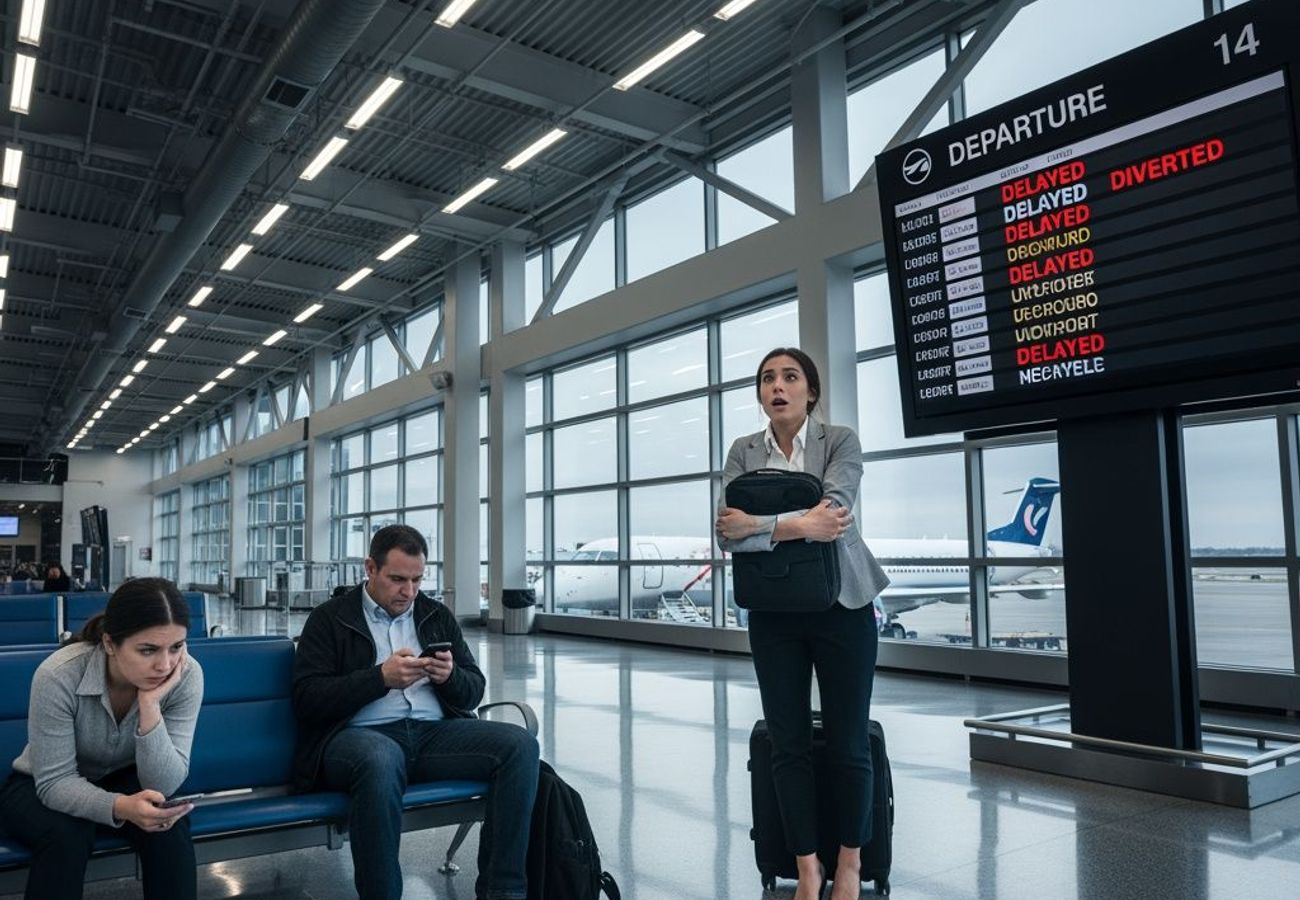
Image generated by AI
A Routine Regional Flight Takes an Unexpected Turn
On the morning of June 18, 2026, a PSA Airlines regional aircraft operating under the American Airlines brand was forced to alter its course mid-journey. Flight JIA5282, a Canadair Regional Jet CRJ-700 registered as N515AE, departed Washington National Airport at approximately 9:05 AM bound for Westchester County Airport in White Plains, New York. What should have been a standard 90-minute regional hop became a textbook example of modern aviation's safety-first culture.
About halfway through the flight, the crew detected a precautionary in-flight issue requiring immediate assessment. Following Federal Aviation Administration (FAA) safety protocols, pilots made the decision to divert the aircraft to the nearest suitable airport: Philadelphia International Airport. The aircraft touched down safely, with all 76 passengers and crew members unharmed.
Reddit: "Regional carriers like PSA are absolutely diligent about safety. A diversion like this is exactly how the system is supposed to work." — r/aviation
What Triggered the Diversion?
The exact nature of the precautionary condition has not been publicly disclosed in detail, but sources indicate it involved an onboard system advisory rather than a critical emergency. Modern CRJ-700 aircraft are equipped with sophisticated monitoring systems designed to detect even subtle deviations in engine performance, avionics behavior, or cabin pressure systems.
When these systems flag an irregularity, pilots are trained to immediately assess the situation and divert to the nearest appropriate airport rather than continue to their intended destination. This preventive approach has become standard across the U.S. regional aviation network, particularly on high-frequency routes operating through congested Northeast airspace.
According to FlightAware and Flightradar24 tracking data, the aircraft's transponder signal showed the deviation from its planned flight path approximately one hour into the flight, with the diversion completed smoothly under air traffic control coordination.
Why Philadelphia Was the Optimal Choice
Philadelphia International Airport sits strategically within the Northeast air corridor and serves as a critical diversion hub for regional carriers. The airport offers several operational advantages that made it the logical choice for this unscheduled landing.
First, Philadelphia provides full emergency response infrastructure, comprehensive maintenance facilities, and ground support capabilities compatible with PSA Airlines and American Airlines operations. Second, the airport experiences lower congestion than alternatives closer to the New York metropolitan area, enabling faster coordination with air traffic control and ground services.
Third, American Airlines maintains a structured diversion network across the eastern United States, with Philadelphia serving as a predefined alternate for Washington-to-White Plains routes. This network design ensures rapid passenger handling, aircraft assessment, and rebooking logistics when unexpected landings occur.
The diversion was completed under completely controlled conditions with no emergency declarations, emergency equipment deployments, or passenger distress reported during the landing or subsequent ground operations.
What This Reveals About Regional Aviation Safety Culture
The safe handling of Flight JIA5282 reflects a broader shift in how the aviation industry approaches risk management. Rather than treating diversions as failures, modern carriers and regulators view them as successful safety interventions—evidence that the system is working exactly as designed.
The FAA's regulations require airlines to establish clear protocols for mid-flight anomalies. Pilots undergo extensive training to recognize system alerts, assess severity, and make rapid decisions about whether to continue to the planned destination or divert to an alternate airport. In most cases, the precautionary approach wins.
CRJ-700 aircraft have proven themselves among the most reliable regional jets in service. When anomalies do occur, they typically involve minor system irregularities that pose no immediate danger but warrant conservative management. The aircraft's excellent safety record stems partly from this culture of early intervention.
"What we're seeing with flights like JIA5282 is not a failure of aviation—it's a success," said one regional pilot in an interview with aviation industry publication. "We're trained to eliminate uncertainty before it becomes a problem."
The Broader Significance for Passengers and the Industry
This incident underscores why U.S. regional aviation remains among the safest transportation systems globally. The integration of FAA oversight, airline safety management systems, advanced aircraft technology, and coordinated air traffic control creates multiple layers of protection that catch issues before they escalate.
Passengers on regional routes operate in dense, highly managed airspace where hundreds of flights coordinate their movements simultaneously. Diversions like this one happen with relative frequency—not as emergencies, but as routine safety management decisions made dozens of times daily across the U.S. aviation network.
For American Airlines and PSA Airlines, the successful handling of Flight JIA5282 represents normal operations at their highest standard. Passengers were eventually rebooked to their destinations, maintenance teams inspected the aircraft, and the flight network continued operating without significant disruption.
The key takeaway: precautionary diversions are not signs of system failure. They are signs of a system that works.
The safest flights are often the ones you never hear about—until something goes slightly wrong and the system responds perfectly.
Related Travel Guides
Disclaimer
This article is for informational and educational purposes only. It does not constitute legal, financial, or professional advice. While we strive to provide accurate and up-to-date information, travel policies, regulations, and conditions change rapidly. Always verify information with official sources before making travel decisions. Nomad Lawyer makes no representations about the accuracy, reliability, completeness, or suitability of the information provided. Readers should consult qualified professionals for advice specific to their circumstances. The views expressed in this article are those of the author and do not necessarily reflect the views of Nomad Lawyer.
Kunal K Choudhary
Co-Founder & Contributor
A passionate traveller and tech enthusiast. Kunal contributes to the vision and growth of Nomad Lawyer, bringing fresh perspectives and driving the community forward.
Learn more about our team →