
JFK Airport Travel Chaos: 375 Delays, 13 Cancellations Hit JetBlue, Delta, American Airlines June 19 2026
Major disruption at New York JFK Airport saw 375 delayed flights and 13 cancellations affecting JetBlue, Delta, American Airlines, and international carriers across US, Canada, Europe, and Asia.

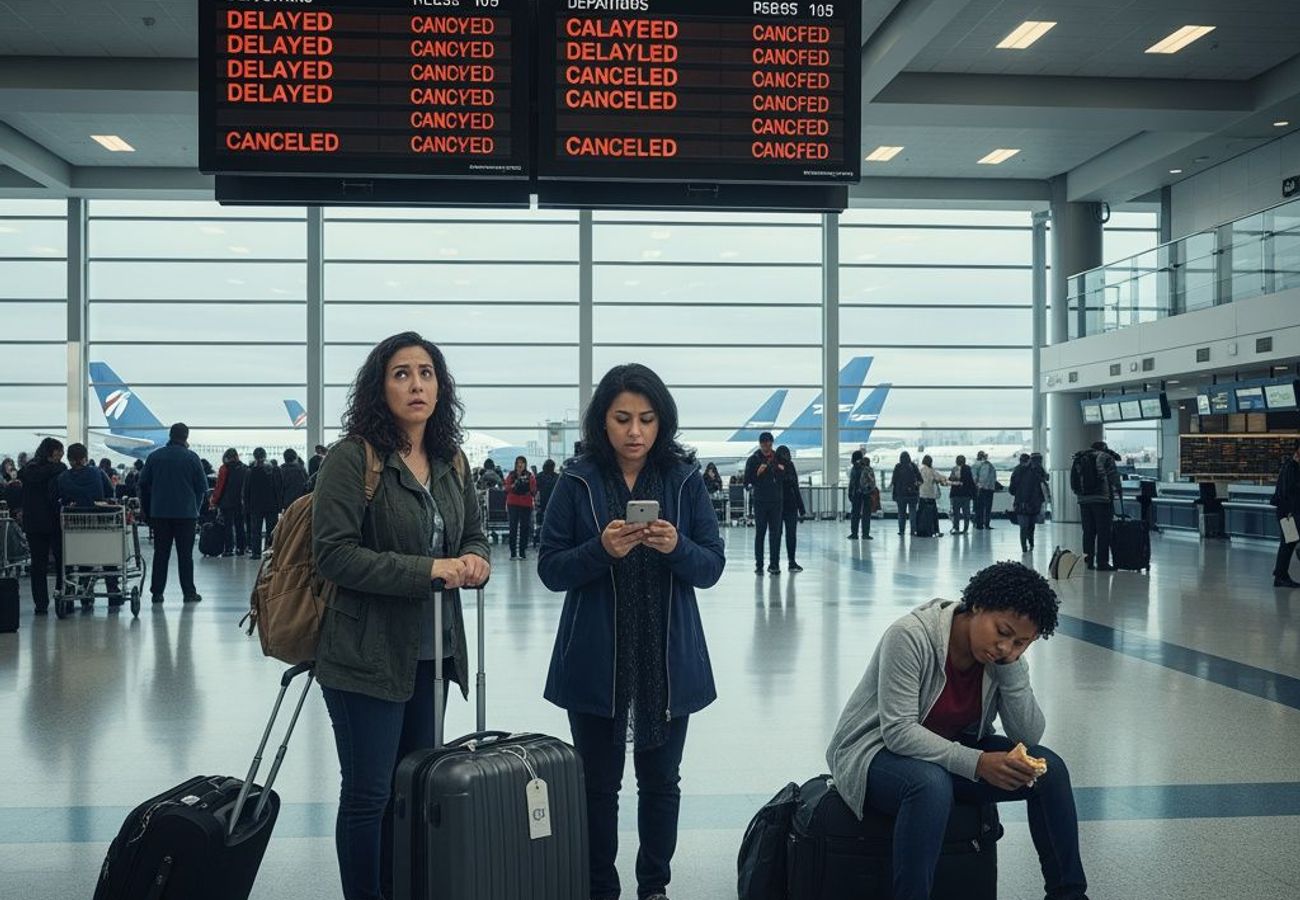
Image generated by AI
A Day of Massive Disruption at America's Busiest Gateway
New York's John F. Kennedy International Airport descended into operational chaos on June 19, 2026, recording a staggering 375 delayed flights and 13 cancellations across its terminals. What started as a routine day of summer travel became a cascade of schedule disruptions rippling across two continents, stranding thousands of passengers and testing the resilience of global aviation networks.
The sheer scale of the disruption was breathtaking. This wasn't a localized incident—it was a systemic breakdown affecting multiple carriers simultaneously, with consequences felt from Tokyo to London to Toronto.
Which Airlines Took the Hardest Hit
JetBlue Airways emerged as the most disrupted carrier at JFK, recording both the highest number of cancellations and the largest volume of delayed services across domestic and international routes. The airline's extensive network radiating from its New York hub meant that operational challenges cascaded quickly across its entire system.
Delta Air Lines and its regional partner Endeavor Air faced extensive delays throughout the day. Endeavor Air, which operates regional services under the Delta banner, recorded a substantial number of delayed flights, though cancellations remained comparatively limited.
American Airlines and Republic Airlines also grappled with widespread delays on numerous services. Alaska Airlines reported multiple service interruptions, though on a comparatively smaller operational scale.
The disruption wasn't confined to domestic carriers. International heavyweights including British Airways, Lufthansa, Air France, Emirates, Qatar Airways, and Air India all reported operational interruptions stemming from the JFK chaos.
Reddit: "Stuck at JFK for 6 hours now. My connection to London is already gone. Airlines aren't offering clear information on rebooking." — r/travel
The Ripple Effect: A Global Network in Disruption
What made June 19's disruption particularly consequential was how rapidly it infected the global aviation network. Airports across the United States including Boston Logan, San Francisco International, Los Angeles International, Orlando International, Chicago O'Hare, Atlanta Hartsfield-Jackson, and Tampa International all experienced connected delays.
But the impact extended far beyond America's borders. Travelers heading to the United Kingdom, Canada, Germany, France, Spain, Israel, Mexico, Japan, Hong Kong, Singapore, and India all experienced cascading schedule changes. International gateways across Europe and Asia felt the tremors of what unfolded in New York.
The reality is stark: JFK functions as one of the world's premier international hubs. When it hiccups, the global aviation system feels it.
Why Did This Happen?
Flight delays and occasional cancellations stem from a complex interplay of factors. Airlines manage intricate operations involving aircraft scheduling, crew positioning, air traffic control requirements, and routine operational adjustments. During peak travel periods, congestion at major hubs can quickly compound into systemic disruption.
As one of the busiest international airports in North America, JFK's operational challenges inevitably cascade across connected networks. A departure delay affects connecting passengers downstream. A crew scheduling issue can trigger multiple cancellations. And when multiple carriers experience disruptions simultaneously, the system becomes overwhelmed.
The June 19 disruption appeared driven by a convergence of these operational pressures rather than a single catastrophic event—but the cumulative effect was devastating for passengers.
What Should Affected Travelers Do Now?
Monitor your flight status relentlessly. Use airline websites, official mobile applications, and FlightAware's real-time tracking to stay informed about schedule changes. Airlines continue modifying departure times as conditions evolve.
Contact your airline directly for rebooking options. If your flight was cancelled or significantly delayed, carriers have obligations to rebook you on alternative services or offer compensation depending on jurisdiction. Don't assume your original routing is your only option.
Allow extra buffer time for airport procedures. Congestion will persist throughout the day and into subsequent operations. If you're connecting through JFK or dependent airports, add extra time to your itinerary.
Understand your passenger rights. Depending on your flight origin and airline, you may be entitled to compensation under DOT regulations or EU Regulation 261/2004. Document everything: confirmation numbers, communication with airline staff, and delays exceeding regulatory thresholds.
Remain flexible with your plans. Expect further schedule changes. International passengers should monitor all segments of their journey carefully, as delays compound across multiple flight legs.
The Bigger Picture: A Fragile System Under Pressure
June 19's disruption at JFK illuminated a fundamental truth about modern aviation: the system operates with razor-thin margins for error. Despite sophisticated technology and decades of operational refinement, major airports remain vulnerable to cascading failures.
The concentration of capacity at hub airports like JFK means that localized disruptions instantly become global problems. When 375 flights delay simultaneously and 13 cancel outright, you're looking at potential impacts on tens of thousands of passengers across multiple countries and time zones.
Most affected passengers experienced delays rather than outright cancellations—a small mercy. But for connecting passengers, business travelers on tight schedules, and families with children, the distinction hardly matters. Missing a connection to London or Tokyo has profound consequences regardless of whether your initial flight technically departed.
The aviation industry learned long ago that perfect reliability is impossible. What matters is how quickly the system recovers and how transparently airlines communicate during crises. By that measure, June 19 tested both principles severely.
Chaos at the world's busiest airports is becoming routine—but passengers deserve better.
Related Travel Guides
Disclaimer
This article is for informational and educational purposes only. It does not constitute legal, financial, or professional advice. While we strive to provide accurate and up-to-date information, travel policies, regulations, and conditions change rapidly. Always verify information with official sources before making travel decisions. Nomad Lawyer makes no representations about the accuracy, reliability, completeness, or suitability of the information provided. Readers should consult qualified professionals for advice specific to their circumstances. The views expressed in this article are those of the author and do not necessarily reflect the views of Nomad Lawyer.
Preeti Gunjan
Contributor & Community Manager
A passionate traveller and community builder. Preeti helps grow the Nomad Lawyer community, fostering engagement and bringing the reader experience to life.
Learn more about our team →