
Global Aviation Boom Drives Massive Investment in Premium Economy Cabin Upgrades as Airlines Challenge Traditional Business Class Fares: New Travel Alert
Discover the growth of the premium economy cabin across global airlines. Learn about seat upgrades, better dining, and ticket savings on long-haul routes.

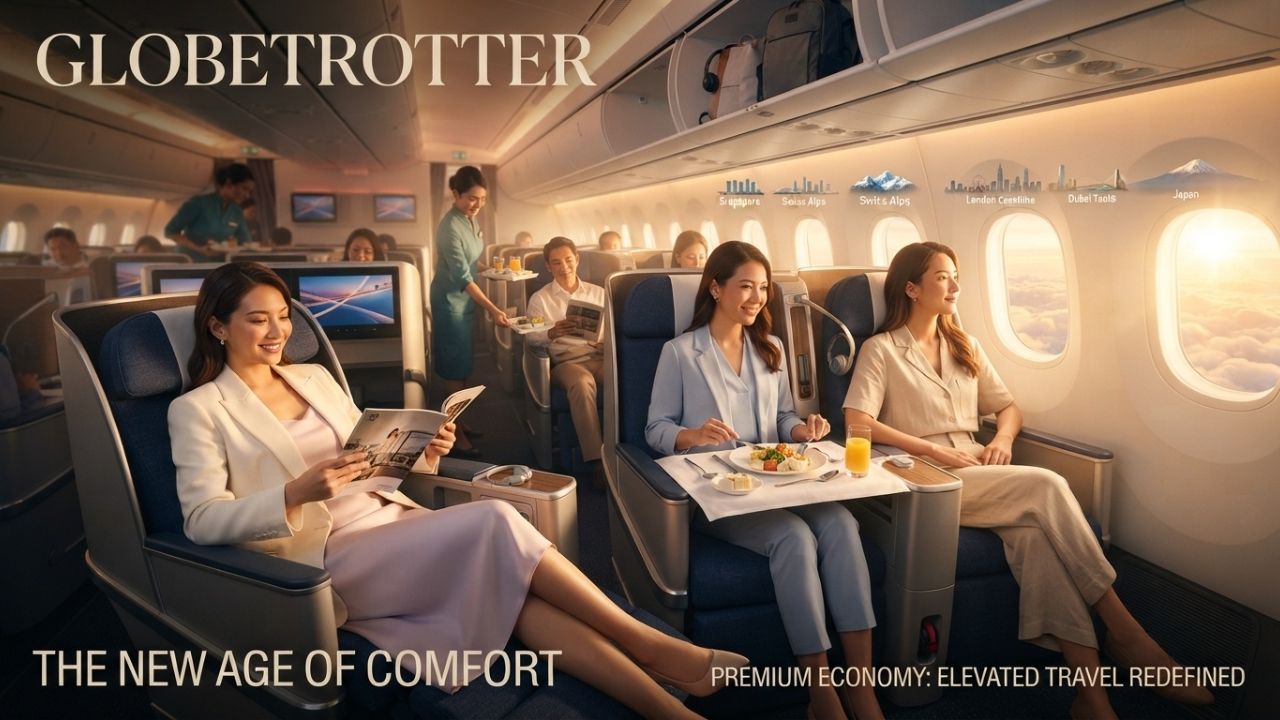
Image generated by AI
Published on July 26, 2026
The global aviation industry is experiencing a massive comfort battle as leading international carriers invest billions in upgrading their intermediate seating options. Designed to bridge the gap between standard economy and premium business class, the premium economy cabin has emerged as one of the fastest-changing areas in modern aviation. By offering wider seats, larger legroom, upgraded dining options, and priority airport services, airlines from the United Kingdom, Singapore, Japan, the United Arab Emirates, and Taiwan are successfully targeting travelers who want luxury without paying high business-class prices.
Quick Summary
- Billion-Dollar Investments: Global carriers are aggressively upgrading the premium economy cabin to attract value-conscious corporate and leisure travelers.
- Bridge Class Growth: The segment serves as a profitable middle class, offering enhanced comfort on long-haul flights lasting 8 to 20 hours.
- Key Comfort Upgrades: Upgraded cabins feature wider seats, generous seat pitch, improved shell-style privacy, and upgraded multi-course dining.
- Leading Carrier Profiles: Brands like Virgin Atlantic, Singapore Airlines, EVA Air, Emirates, and Japan Airlines are setting new benchmarks for this cabin class.
- Smart Booking Strategies: Passengers can optimize value by utilizing airline loyalty upgrades, comparing cabin prices, and checking aircraft types.
Context and Background: Airlines Invest Billions in Premium Economy Cabin Layouts
Over the past decade, standard economy seating has become increasingly congested, while business-class ticket prices have continued to rise. According to global passenger traffic reports published by the International Civil Aviation Organization (ICAO), demand for long-distance connectivity has expanded rapidly, prompting airlines to reconsider their cabin configurations. To capture passengers willing to pay for additional comfort without committing to business class, carriers are investing heavily in a dedicated middle category.
This strategic expansion is supported by airspace density parameters monitored by the Federal Aviation Administration (FAA), which manages over 45,000 flights daily in the United States alone. With millions of passengers traveling longer distances across continents, establishing a premium middle segment allows airlines to increase average passenger yields. For travelers, the upgraded intermediate cabin offers a realistic alternative to business class, ensuring a more restful journey on long-haul routes.
Event and Incident Details: Evaluating the Premium Economy Cabin Features Across Leading Carriers
The competition in the premium economy market is especially intense among major European, Middle Eastern, and Asian airlines, with each brand introducing distinct comfort features.
Global Airlines Premium Economy Product and Service Matrix:
| Airline Company | Country of Origin | Key Aircraft Fleet Types | Signature Cabin Upgrades & Features |
|---|---|---|---|
| Virgin Atlantic | United Kingdom | Long-haul fleet | Wide seats, increased seat pitch, enhanced multi-course dining |
| Singapore Airlines | Singapore | Long-haul fleet | Larger seats, personalized meals via "Book the Cook" program |
| Emirates | United Arab Emirates | Airbus A380 & Boeing 777 | Luxury-focused design, wider seats, upgraded food presentation |
| Japan Airlines | Japan | Long-haul fleet | Shell-style seats, generous seat pitch, added airport benefits |
| EVA Air | Taiwan | Long-haul fleet | Pioneer of seat comfort on North America and Europe routes |
These upgrades show how regional hubs are using upgraded cabins to attract travelers who want luxury but need lower fares. Emirates utilizes its Dubai hub to connect Europe, Asia, Africa, and North America, while Japan Airlines and EVA Air focus on spacious seating configurations for long-haul Pacific crossings.
Risk and Impact: Product Variations, Cabin Overcrowding, and Seat Allocation Limits
While the growth of the upgraded cabin segment offers clear comfort benefits, travelers should prepare for specific operational variations and booking limitations:
- Product Quality Differences Across Fleets: Premium economy features vary significantly depending on the aircraft model, with older planes featuring fewer upgrades.
- Limited Lounge Access Benefits: Unlike business class, booking an intermediate cabin rarely includes complimentary airport lounge access, which varies by airline.
- Reduced Seat Availability on Popular Routes: Because these cabins are relatively small, seats on high-demand routes can sell out well in advance.
- Higher Upgrade Thresholds: Using frequent flyer points to upgrade to premium economy has become more competitive due to high traveler demand.
- Varying Baggage Allowances: Luggage limits for intermediate passengers are subject to strict airline policies and may not match business-class levels.
What Aviation Planners and Travel Advisors Are Saying
Travel consultants recommend that passengers check the specific aircraft type before booking to ensure they experience the newest cabin layouts. Planners suggest that upgrading using airline loyalty points is one of the most cost-effective ways to access the premium economy cabin, bypassing high cash fares. Industry analysts state that as business-class fares continue to rise, the intermediate cabin is set to become the preferred choice for long-distance travelers seeking comfort-focused journeys.
Practical Traveler Advice: Maximizing Your Premium Cabin Value
To secure the best rates and comfort on your next long-haul flight, travel guides recommend the following strategies:
- Focus on Flights Longer Than Seven Hours: The comfort benefits of wider seats and extra legroom are most valuable on long-haul journeys.
- Prioritize Modern Aircraft Models: Book flights operated on Airbus A350, Boeing 787 Dreamliner, or Airbus A380 aircraft to enjoy the latest cabin designs.
- Compare Cabin Tariffs Daily: Monitor fare changes, as promotional premium economy tickets are sometimes only slightly higher than standard economy.
- Use Loyalty Programs for Upgrades: Save cash by using accumulated frequent flyer miles to upgrade your economy seat to premium economy.
- Pre-Order Special Meals Early: Utilize programs like Singapore Airlines' "Book the Cook" to select personalized dining options before departure.
Broader Context: The Shift Toward a Three-Level Passenger Experience
The expansion of the intermediate class reflects a broader transition in global aviation toward a structured, three-level passenger experience. This model divides travel into economy for budget-conscious flyers, premium economy for comfort-focused travelers, and business class for maximum luxury. By separating these segments, airlines can cater to different travel styles, budgets, and vacation schedules, ensuring that long-haul travel remains accessible and comfortable for a wider range of passengers.
Looking Ahead: Staged Fleet Retrofits and Next-Gen Seat Designs
Looking forward, airlines are proceeding with staged fleet retrofits to install upgraded seats across their long-haul aircraft. Manufacturers are developing next-generation shell seats that improve privacy and optimize space without reducing cabin density. As more carriers introduce these updated cabins, competition in the intermediate market will continue to intensify, driving further improvements in dining, entertainment systems, and airport services for years to come.
Conclusion: A More Comfortable Journey Awaits
Ultimately, the growth of the premium economy cabin provides travelers with an excellent opportunity to enjoy comfortable long-haul travel at realistic prices. By selecting modern aircraft, comparing cabin fares, and utilizing loyalty points, passengers can enjoy a premium vacation experience. Planning your booking carefully will guarantee a restful and stress-free journey.
FAQ: Upgrading to Premium Economy Cabins
Is booking a premium economy cabin worth the extra cost?
Yes. For long-haul flights longer than seven hours, the additional legroom, wider seats, upgraded dining options, and priority airport services significantly improve passenger comfort.
Which global airlines offer the highest-rated premium economy cabins?
Leading carriers including Virgin Atlantic, Singapore Airlines, EVA Air, Emirates, and Japan Airlines are widely recognized for offering top-tier premium economy products.
How does premium economy compare to business class?
Premium economy provides wider seats, extra legroom, and upgraded meals at a lower cost compared to business class, though it lacks lie-flat beds and complete lounge access.
Which aircraft models feature the best premium economy cabins?
Modern long-haul aircraft such as the Airbus A350, Boeing 787 Dreamliner, and Airbus A380 are typically equipped with the latest and most comfortable cabin designs.
Related Travel Guides
- Navy Aircraft Carriers Face Critical Readiness Crisis in 2026
- Evermore Orlando Resort Launches Exclusive Luxury Experiences and Conrad Orlando Partnerships in Florida, Enhancing Premium Family Getaways and Private Adventures: New Update
- United States and Lebanon Rebuild US Lebanon Direct Flights After a 40-Year Suspension, Restoring Beirut Flight Connectivity and Reconnecting Millions: New Travel Alert
Disclaimer
This article is for informational and educational purposes only. It does not constitute legal, financial, or professional advice. While we strive to provide accurate and up-to-date information, travel policies, regulations, and conditions change rapidly. Always verify information with official sources before making travel decisions. Nomad Lawyer makes no representations about the accuracy, reliability, completeness, or suitability of the information provided. Readers should consult qualified professionals for advice specific to their circumstances. The views expressed in this article are those of the author and do not necessarily reflect the views of Nomad Lawyer.
Kunal K Choudhary
Co-Founder & Contributor
A passionate traveller and tech enthusiast. Kunal contributes to the vision and growth of Nomad Lawyer, bringing fresh perspectives and driving the community forward.
Learn more about our team →