
New Hampshire Polar Caves 80-Ton Boulder Collapse: Geological Risks and 2027 Tourism Impact
An 80-ton granite boulder collapsed at New Hampshire's Polar Caves Park on October 18, 2026, ending a 104-year geological anomaly and signaling new safety assessment requirements for glacial tourism sites.

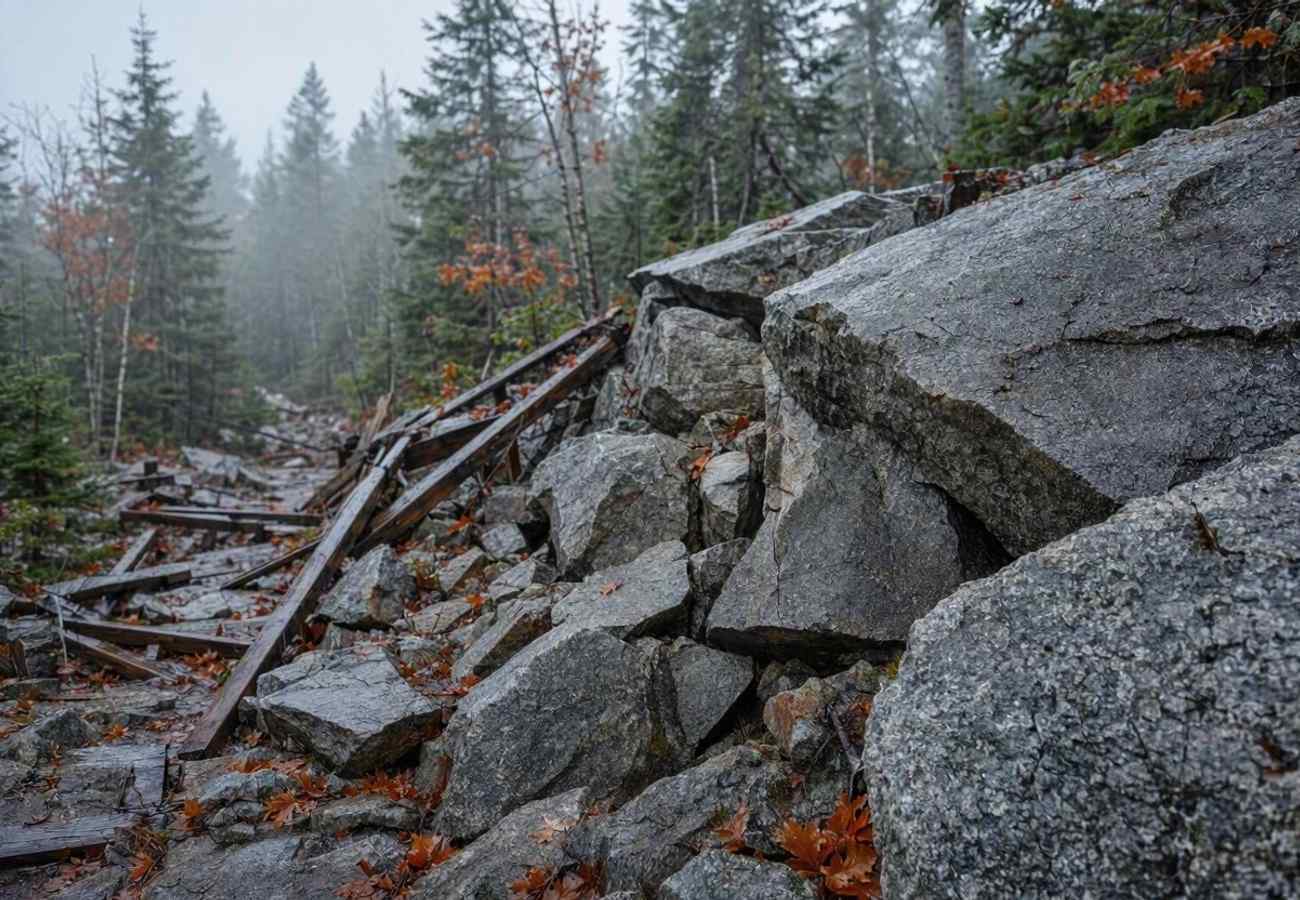
Image generated by AI
The stability of New Hampshire's glacial landmarks has shifted following the collapse of an 80-ton granite boulder on October 18, 2026—an event that ended a 104-year period of precarious equilibrium. This incident at Polar Caves Park in Rumney serves as a data point for the broader risks associated with "frost wedging" and natural weathering in the White Mountains, where ancient glacial deposits are increasingly susceptible to temperature volatility.
The Geological Event in Numbers
The collapse involved the "Mysterious Hanging Boulder," a landmark that had remained suspended since the park's inception in 1922. The scale of the event is defined by several critical metrics:
- Mass: Approximately 80 tons of solid granite.
- Duration of Stability: 104 years of suspension above a public pedestrian walkway.
- Structural Distribution: More than 75% of the boulder's total weight extended over the visitor path.
- Support Points: The formation was held in place by only three specific contact points against the surrounding granite.
- Timing: The collapse occurred on the final day of the 2026 operating season, preventing potential casualties.
While no injuries were reported, the impact resulted in the destruction of safety railings and the complete obstruction of the primary walking route beneath the formation. This event highlights the inherent instability of glacial erratic formations, which are often categorized by the U.S. Geological Survey (USGS) as products of Pleistocene ice sheet movements.
Comparative Context: Glacial Stability vs. Environmental Stress
The collapse is not an isolated curiosity but a result of long-term environmental degradation. Glacial geologists from the University of New Hampshire suggest that the "freeze-thaw" cycle is the primary driver. When water penetrates granite fractures and freezes, it expands, exerting immense pressure that widens cracks—a process known as frost wedging.
When compared to other glacial tourism sites in the Northeast, the Polar Caves incident underscores a trend of increasing geological volatility. As climate patterns shift, the frequency of rapid freeze-thaw cycles can accelerate the degradation of structures that remained stable for over a century.
Impact Analysis: Polar Caves Park Infrastructure
| Metric | Pre-October 18, 2026 | Post-October 18, 2026 |
|---|---|---|
| Primary Landmark | Mysterious Hanging Boulder (Intact) | 80-Ton Debris Field |
| Walkway Status | Fully Accessible | Obstructed / Damaged |
| Safety Railings | Operational | Destroyed in affected zone |
| Operational Window | Seasonal (Spring-Autumn) | Closed for Winter / Assessment |
| Visitor Access | 9 Glacial Caves + Hanging Boulder | 9 Glacial Caves (Pending Safety Review) |
What This Means for Travelers
For those planning visits to the White Mountains or Rumney, New Hampshire, the data suggests a need for modified expectations for the 2027 season.
- Route Alterations: Do not plan itineraries specifically around the "Mysterious Hanging Boulder." The infrastructure beneath the collapse is severely damaged, and there is no confirmation that the original walkway will be restored.
- Booking Caution: While the park intends to reopen in Spring 2027, the exact date is pending safety evaluations. Travelers should verify status via the New Hampshire Division of Travel and Tourism Development before booking non-refundable lodging in Rumney.
- Alternative Attractions: The park still hosts nine other glacial caves, including "Polar Pinch," "Fat Man’s Misery," "King Tut’s," and "The Devil’s Turnpike." These remain the primary draws, though access to specific paths may be restricted during the 2027 recovery phase.
- Regional Planning: The wider White Mountains region remains open. If the Polar Caves assessment delays the 2027 opening, travelers should pivot to the White Mountain National Forest for similar granite formations.
2027 Projection: The Shift Toward Geological Safety Audits
Based on the current trajectory, the Polar Caves incident will likely trigger a wave of safety audits across other "natural curiosity" parks in the New England region. The fact that an 80-ton rock remained stable for 104 years only to fall suddenly suggests that historical stability is no longer a reliable proxy for current safety.
We expect to see an increase in the use of geotechnical sensors and structural monitoring at similar sites. For the individual traveler, this may result in more frequent temporary closures for "safety assessments" and the installation of more robust (and perhaps less aesthetically pleasing) safety barriers in glacial zones.
FAQ: Polar Caves Geological Event 2026
Is Polar Caves Park completely closed for 2027? No. The park is currently closed for its standard winter season. Management expects to reopen in Spring 2027, though the specific area where the boulder fell will undergo safety evaluations before being reopened to the public.
Were there any casualties during the collapse? No. The boulder fell on the final day of the 2026 season, and remarkably, no visitors or employees were injured despite the 80-ton weight of the granite formation.
Can I still see the glacial caves? Yes, the park features nine granite boulder caves. While the Hanging Boulder is gone, formations like "The Devil’s Turnpike" and "Polar Pinch" remain, provided the park's general safety assessment allows for their access in 2027.
What caused the boulder to fall after 100 years? While not officially confirmed, geologists point to natural weathering and "frost wedging," where water enters cracks, freezes, and expands, gradually weakening the rock's support points over decades.
Nature's timeline operates on a scale that renders human "permanence" an illusion.
Related Travel Guides
Disclaimer
This article is for informational and educational purposes only. It does not constitute legal, financial, or professional advice. While we strive to provide accurate and up-to-date information, travel policies, regulations, and conditions change rapidly. Always verify information with official sources before making travel decisions. Nomad Lawyer makes no representations about the accuracy, reliability, completeness, or suitability of the information provided. Readers should consult qualified professionals for advice specific to their circumstances. The views expressed in this article are those of the author and do not necessarily reflect the views of Nomad Lawyer.
Preeti Gunjan
Contributor & Community Manager
A passionate traveller and community builder. Preeti helps grow the Nomad Lawyer community, fostering engagement and bringing the reader experience to life.
Learn more about our team →