
Prague Launches Direct Rail Link to Berlin and Copenhagen with New ComfortJet Services in 2026
Prague establishes itself as a Central European rail gateway with a new direct daytime service to Copenhagen via Berlin and Hamburg starting May 2026.
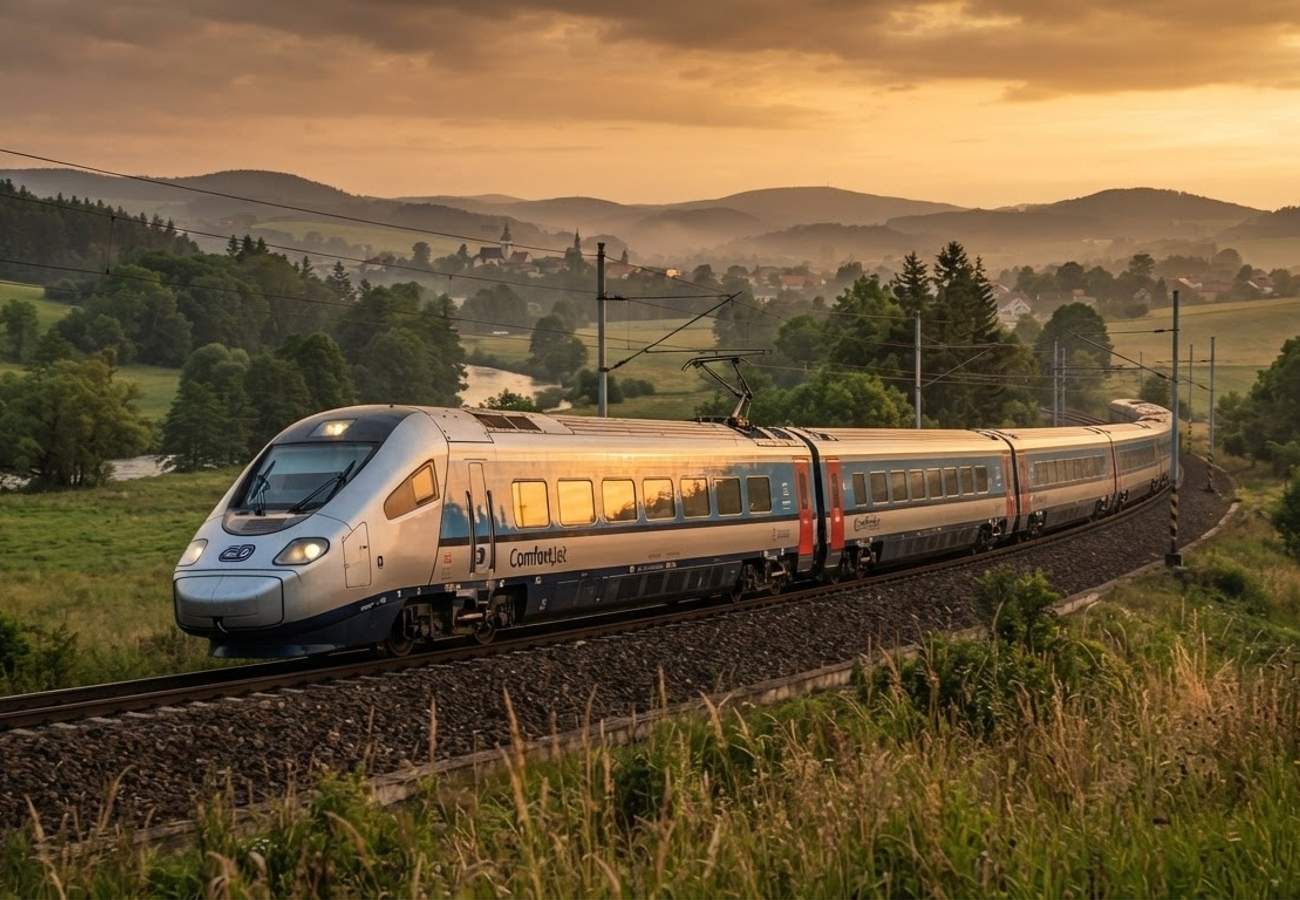
Image generated by AI
New direct daytime services and expanded night train networks are integrating Central Europe and Scandinavia into a single rail corridor, significantly reducing the reliance on short-haul aviation.
The Prague-Copenhagen Corridor Expansion
Starting in May 2026, a new direct daytime rail service will connect Prague, Berlin, Hamburg, and Copenhagen. This route marks the first single-seat journey between these three capitals in over a decade.
The service will utilize modern ComfortJet trainsets, featuring air-conditioned carriages, upgraded interiors, and enhanced onboard services. This corridor has been designated as one of the European Commission’s pilot routes aimed at improving international rail connectivity and making long-distance train travel competitive with short-haul flights.
Flight and Rail Impact Breakdown
The restructuring of this corridor shifts the logistical burden from airports to rail hubs. Our analysis of the current and upcoming schedules indicates the following impacts:
- Direct Route: Prague $\rightarrow$ Dresden $\rightarrow$ Berlin $\rightarrow$ Hamburg $\rightarrow$ Copenhagen.
- Primary Rolling Stock: ComfortJet (replacing older international fleet).
- Key Hub: Berlin serves as the primary interchange, preventing bottlenecks for passengers moving toward Scandinavia.
- Night Rail Integration:
- European Sleeper: Connects Brussels, Berlin, and Prague.
- SJ Euronight: Connects Stockholm, Copenhagen, and Berlin.
- Existing Capacity: Multiple daily EuroCity and Railjet services continue to operate between Prague and Berlin, with compulsory reservations required during peak summer periods.
Passenger Rights & Advisory
For the affected passenger, the transition to high-demand international rail requires a shift in booking strategy. Our analysis of the current operational framework suggests the following:
Booking and Reservations Unlike domestic rail, the Prague-Berlin-Copenhagen corridor frequently implements mandatory seat reservations during peak tourist seasons. Passengers failing to secure a reservation in advance may find themselves unable to board during summer months, regardless of ticket possession.
Compensation and Delay Rights Passengers traveling on these EU-funded pilot routes are protected under the Rail Passengers' Rights and Obligations regulation (EU 2021/782). For the traveler, this means:
- Delays over 60 minutes: Right to reimbursement of the ticket price (25% for 60-119 min delays; 50% for 120+ min delays).
- Cancellations: Right to re-routing to the final destination at the earliest opportunity or a full refund.
- Assistance: Right to meals, refreshments, and hotel accommodation if a delay necessitates an overnight stay.
Interrail and Eurail Integration Pass holders should note that while the ComfortJet services integrate into these passes, the mandatory reservation requirements on the Prague-Berlin leg remain in effect.
The Prague-Copenhagen pilot is a strategic move by the European Commission to shift demand from aviation to rail for distances between 500 and 1,000 kilometers. By coordinating national operators and investing in rolling stock, the EU is attempting to solve the "fragmentation" problem that has historically plagued cross-border rail.
The integration of "hybrid" itineraries—combining the European Sleeper from Brussels to Berlin with a daytime ComfortJet to Copenhagen—suggests a move toward a "mesh" network. This reduces the logistical friction of multi-city European tours, effectively treating the journey from the Benelux region to Scandinavia as a single, coordinated transit event.
While long-term infrastructure upgrades on the Elbe corridor are slated for the 2030s and 2040s, the immediate deployment of ComfortJet trains provides a "software" update to the travel experience before the "hardware" (tracks) are fully modernized.
A new era of seamless Nordic-Central European transit is now operational.
Related Travel Guides
Disclaimer
This article is for informational and educational purposes only. It does not constitute legal, financial, or professional advice. While we strive to provide accurate and up-to-date information, travel policies, regulations, and conditions change rapidly. Always verify information with official sources before making travel decisions. Nomad Lawyer makes no representations about the accuracy, reliability, completeness, or suitability of the information provided. Readers should consult qualified professionals for advice specific to their circumstances. The views expressed in this article are those of the author and do not necessarily reflect the views of Nomad Lawyer.