
Potentially Liable Parties in a Commercial Truck Accident Claim
Learn which parties can be held liable in a commercial truck accident claim, including drivers, motor carriers, cargo loaders, owners, and manufacturers.

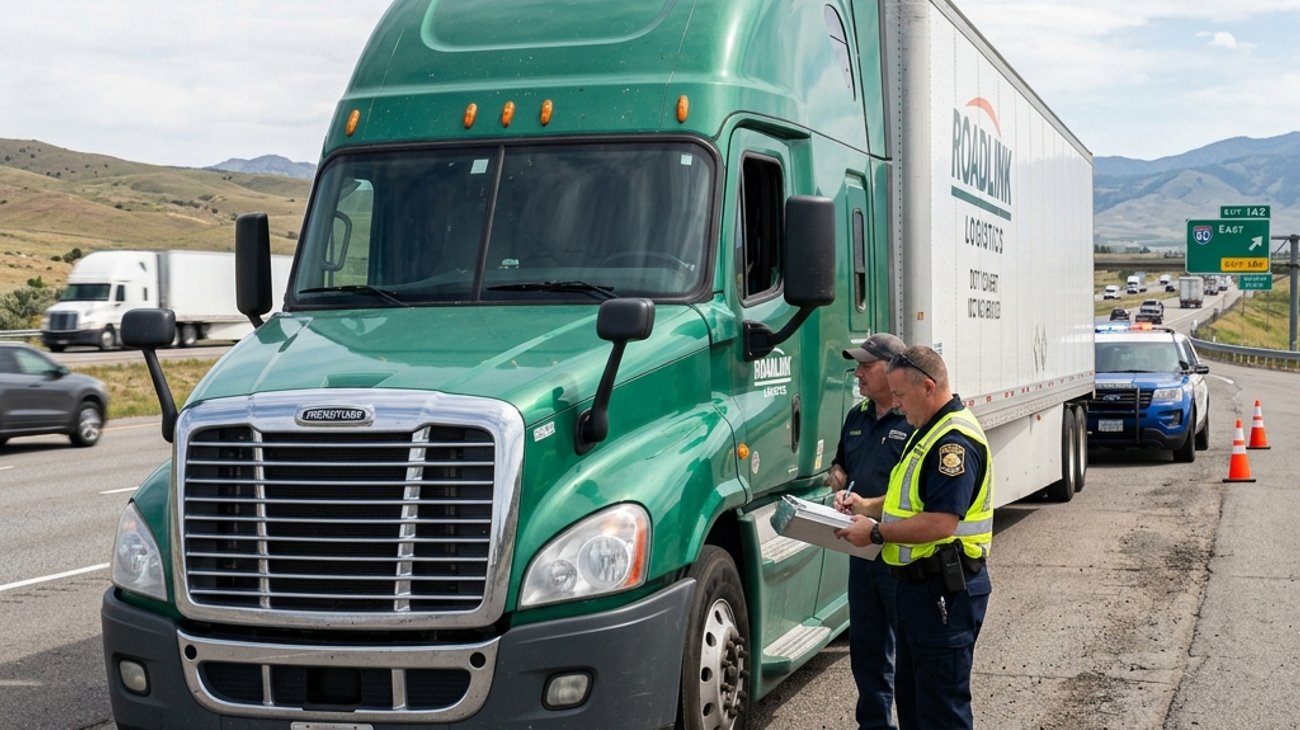
Image generated by AI
A commercial truck crash rarely results from a single mistake. Driver conduct, company policies, vehicle maintenance, cargo placement, and delivery pressure can intersect within seconds. The resulting legal claim may involve several defendants, each tied to a different duty under federal and state law. Identifying those parties requires reviewing employment records, maintenance files, electronic logging data, medical documentation, and physical evidence before fairly assigning responsibility.
Why Multiple Parties May Share Fault in a Truck Crash
Large-truck collisions often reflect a chain of decisions made long before impact. A motor carrier might ignore driver fatigue warnings, a freight loader might secure cargo improperly, or a third-party repair shop might miss a critical brake defect.
People injured in these severe events often consult an experienced Las Vegas truck accident attorney to review potential corporate defendants, multi-layered insurance policies, and critical evidence preservation needs. That comprehensive evaluation clarifies whether one party acted alone or several entities contributed to the catastrophic harm.
The Truck Driver’s Direct Conduct and Legal Responsibility
The truck operator may carry direct personal responsibility for speeding, distracted driving, driver fatigue, impairment, unsafe merging, or maintaining inadequate stopping distance.
Electronic Logging Devices (ELDs) can verify whether the driver strictly observed Federal Motor Carrier Safety Administration (FMCSA) hours-of-service rules. Cell phone records, dashcam footage, event data recorder (EDR) black box downloads, and witness accounts reveal the driver's exact conduct immediately preceding impact. A driver's personal choices remain relevant even when a motor carrier also bears corporate liability.
The Motor Carrier’s Operational Obligations and Negligence
A trucking company may face direct corporate liability for negligent hiring, training, supervision, or retention. Federal safety regulations mandate that motor carriers thoroughly check driver qualifications, driving records, and medical certifications before authorizing operations. Hiring or keeping a driver with a history of safety violations creates foreseeable public risk.
Company operational practices also deserve close scrutiny. Unrealistic delivery schedules, inadequate fatigue monitoring, or dispatch pressure encourage unsafe driving. Messages, dispatch logs, and payroll records help prove a direct connection between carrier pressure and driver negligence.
The Truck Owner or Leasing Entity
The registered owner or lessor of a commercial vehicle may answer for defective equipment, unsafe mechanical alterations, or neglected safety inspections. Commercial fleets frequently operate under arrangements involving leasing, separate vehicle ownership, and daily operational management.
Lease contracts and fleet management agreements determine which specific entity was legally responsible for maintaining tires, brakes, coupling devices, and required inspection intervals. Ownership alone does not establish legal negligence; evidence must connect the assigned maintenance duty to the specific mechanical failure that caused the crash.
Cargo Loaders, Shippers, and Freight Packing Companies
Freight that shifts during transport, spills onto highways, or exceeds legal gross vehicle weight limits can cause a tractor-trailer to jackknife or tip. Legal responsibility may rest with the third-party logistics company that packed, weighed, secured, or certified the shipment.
Bills of lading, scale weight receipts, loading dock photos, tie-down inspection logs, and warehouse manifests help identify all commercial participants. These records prove whether cargo placement violated safety standards or created an dangerously unbalanced center of gravity.
Truck and Component Manufacturers
A vehicle or component manufacturer may face product liability claims involving a defective truck, blowout-prone tire, failing brake assembly, defective trailer hitch, or steering mechanism flaw. Fault can arise from a design flaw, manufacturing defect, or failure to provide adequate safety warnings.
Technical evaluation requires forensic automotive engineers and accident reconstruction specialists. The physical evidence must demonstrate that the product defect existed prior to the crash and directly caused the mechanical failure or aggravated the resulting injuries.
Freight Brokers and Logistics Intermediaries
A freight broker connects shippers with licensed motor carriers. Legal liability may arise if a broker negligently selects a carrier with a known history of severe safety violations, conditional safety ratings, inadequate insurance, or unvetted drivers.
Some logistics firms simply arrange freight transport, while others actively dictate carrier selection, transit routes, delivery timing, or equipment specifications. Communication records, screening protocols, contracts, and payment ledgers distinguish basic brokerage from active operational control.
Employers and Related Corporate Entities
Under vicarious liability principles (respondeat superior), a motor carrier is legally responsible for its employee driver's negligent actions. Parent companies, subsidiaries, or hiring entities may also face exposure if they directly controlled routes, loading instructions, delivery deadlines, or vehicle use.
Job titles and independent contractor labels do not resolve legal disputes. Courts inspect actual payment methods, supervision structures, work orders, and daily operational control when determining legal employer status.
Essential Evidence Needed to Establish Legal Responsibility
Building a successful commercial truck claim requires gathering records before they are destroyed or altered:
- Electronic Logging Device (ELD) & Black Box (EDR) Data: Proves vehicle speed, braking, and driver hours.
- Driver Qualification & Inspection Files: Reveals driving history, drug test results, and medical clearances.
- Dispatch Logs & Qualcomm Messages: Demonstrates company communication and scheduling pressure.
- Maintenance & Repair Invoices: Documents known mechanical faults and skipped service intervals.
- Shipping Manifests & Scale Receipts: Identifies cargo weight and loading responsibilities.
Formal spoliation letters must be served on carriers immediately after a crash to prevent electronic logs and physical truck components from being overwritten or scrapped.
Navigating Insurance Policies and Financial Recovery
Commercial trucking accidents involve complex, multi-layered insurance policies. Primary liability policies, excess umbrella coverage, cargo insurance, and third-party indemnity agreements often apply to a single incident.
Multiple insurance carriers regularly contest fault, policy limits, or coverage order. Injured victims should obtain a comprehensive medical evaluation and consult legal counsel before giving recorded statements or evaluating early settlement proposals.
Pursuing Full Compensation for Truck Accident Damages
A commercial truck accident claim may involve the driver, motor carrier, vehicle owner, maintenance provider, cargo loader, freight broker, employer, or component manufacturer. Establishing liability requires evidence linking legal duty, breach of safety standards, and measurable harm.
Comprehensive medical records, vehicle black box data, employment files, and preserved mechanical components determine whether you can prove that connection. Prompt legal investigation protects critical evidence and supports full compensation for medical expenses, lost wages, property damage, and ongoing care needs.
Frequently Asked Questions
Why are commercial truck accident claims more complex than passenger car claims?
Commercial truck claims involve federal safety regulations (FMCSA), massive physical damage, multi-layered corporate insurance policies, and multiple potentially liable defendants (carriers, loaders, brokers, manufacturers).
What is a spoliation letter in a truck accident lawsuit?
A spoliation letter is a formal legal notice sent to the trucking company demanding that they preserve all crash evidence—including ELD black box data, dashcam video, maintenance logs, and driver records.
Can a trucking company be held liable if the driver is classified as an independent contractor?
Yes. Courts examine actual operational control rather than job titles. Additionally, motor carriers are held responsible under federal regulations for vehicles operating under their DOT authority.
Related Travel Guides
Disclaimer
This article is for informational and educational purposes only. It does not constitute legal, financial, or professional advice. While we strive to provide accurate and up-to-date information, travel policies, regulations, and conditions change rapidly. Always verify information with official sources before making travel decisions. Nomad Lawyer makes no representations about the accuracy, reliability, completeness, or suitability of the information provided. Readers should consult qualified professionals for advice specific to their circumstances. The views expressed in this article are those of the author and do not necessarily reflect the views of Nomad Lawyer.
Kunal K Choudhary
Co-Founder & Contributor
A passionate traveller and tech enthusiast. Kunal contributes to the vision and growth of Nomad Lawyer, bringing fresh perspectives and driving the community forward.
Learn more about our team →