
Delta Air Lines Faces Operational Meltdown at Atlanta Hartsfield-Jackson Hub Following FAA Ground Stops in 2026
Severe weather and FAA ground stops triggered a massive operational failure for Delta Air Lines at its Atlanta hub, resulting in 746 delays and 31 cancellations.

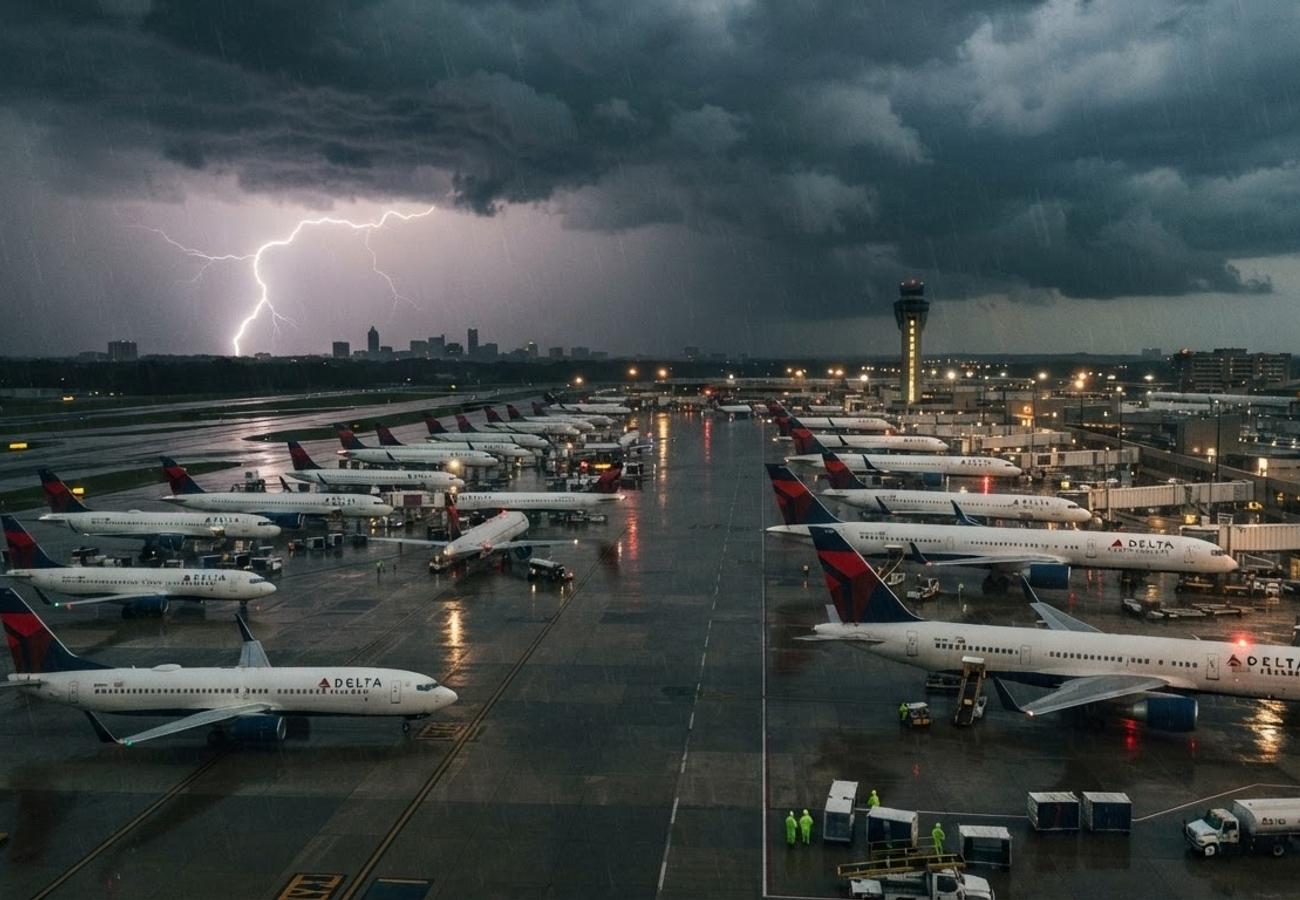
Image generated by AI
746 delays and 31 cancellations for a single carrier signal a systemic fragility at the world's busiest aviation hub. When the Federal Aviation Administration (FAA) issued a ground stop at Hartsfield-Jackson Atlanta International Airport on September 11, 2026, the result was not merely a temporary pause, but a cascading operational failure that left aircraft parked across every available inch of the tarmac.
The Anatomy of a Hub Failure
The crisis began shortly after noon on Friday, September 11, when severe thunderstorms threatened aircraft incursions, forcing the FAA to halt all departures. While the initial ground stop was intended to be a brief 90-minute window, the volatility of the weather system created a backlog that the airport's infrastructure could not absorb.
For Delta Air Lines, the impact was disproportionate. Because the carrier occupies approximately 80% of the gates at Hartsfield-Jackson, any disruption to the airfield effectively freezes the majority of the airport's capacity. As planes waited on the tarmac, the FAA warned that delays could stretch to two hours. The situation was described by aviation observers on social media as an "approaching meltdown," with aircraft filling the taxiways and waiting for available gates that were occupied by delayed inbound flights.
This instability was not isolated to Georgia. The broader Southern United States experienced a synchronized weather assault. On the same day, Dallas faced a ground stop that resulted in the highest volume of delays of any U.S. airport. This followed a 48-hour period of critical disruptions at Miami International Airport, suggesting a regional pattern of severe meteorological instability affecting major U.S. hubs.
Quantifying the Disruption: September 11 Data
The scale of the disruption highlights the extreme vulnerability of the "hub-and-spoke" model. When a primary hub like Atlanta fails, the ripple effects are felt across the entire network. The following data illustrates the disparity in impact between Delta and other carriers operating at the hub during the event.
| Airline | Delays | Cancellations |
|---|---|---|
| Delta Air Lines | 746 | 31 |
| Endeavor Air | 87 | 4 |
| Frontier | 70 | 4 |
| Southwest | 49 | 0 |
| American Airlines | 28 | 0 |
| United Airlines | 27 | 0 |
| Republic | 13 | 0 |
| Sky West | 13 | 0 |
| Jet Blue | 9 | 0 |
| PSA Airlines | 8 | 0 |
Even after the primary ground stops were lifted, the recovery process remained sluggish. By Saturday morning, the FAA's Air Traffic Control System Command Center continued to report gate holds and taxi delays ranging from 16 to 30 minutes, with airborne delays for arriving traffic hovering around 15 minutes.
Expert Analysis: The Hub Dependency Trap
The Atlanta incident provides a textbook example of "concentration risk" in aviation logistics. For travelers booking routes through Hartsfield-Jackson, the direct consequence of Delta's 80% gate dominance is that there is virtually no redundancy when the system fails. In a more diversified airport, a carrier-specific issue might be mitigated; however, when the dominant carrier's operations are paralyzed by FAA mandates, the entire airport ecosystem collapses.
The pricing pressure created by these disruptions is often hidden. When 31 flights are cancelled and nearly 750 are delayed, the cost of recovery—including crew repositioning, hotel vouchers, and passenger re-accommodation—runs into the millions. For the traveler, this manifests as a sudden spike in "last-minute" fare prices on alternative routes as displaced passengers scramble to find new ways to reach their destinations.
Furthermore, the timing of this event coincided with the 25th anniversary of 9/11. While Delta CEO Ed Bastian focused corporate messaging on the solemnity of the anniversary, the lack of real-time operational communication during the height of the storm left thousands of passengers in a data vacuum. This disconnect between corporate sentiment and logistical communication often exacerbates passenger frustration during "meltdown" scenarios.
Looking forward, the National Weather Service has maintained a hazardous weather advisory for northern Georgia, including flash flood warnings for the Atlanta Metro Area. With a forecast certainty of 40%, the risk of a secondary collapse remains high. If the afternoon storms mirror Friday's intensity, the FAA is likely to implement further ground stops, potentially turning a Friday disruption into a full weekend travel crisis.
Key Takeaways
- Concentration Risk: Delta's 80% gate occupancy at Atlanta means the airline bears the brunt of any FAA ground stop, creating a single point of failure for the hub.
- Regional Instability: Simultaneous disruptions in Dallas and Miami indicate a broader regional weather pattern impacting Southern U.S. aviation.
- Recovery Lag: Even after ground stops are lifted, "taxi and gate hold" delays can persist for 24-48 hours as the flight schedule recalibrates.
- Communication Gap: During high-stress operational failures, corporate messaging may prioritize brand image over real-time passenger logistics.
- Ongoing Risk: Flash flood warnings in northern Georgia suggest a high probability of renewed disruptions through the weekend.
FAQ: Atlanta Airport Disruptions 2026
What happens during an FAA ground stop? A ground stop is a temporary measure where the FAA prohibits aircraft from taking off from specific airports. This is usually done to prevent aircraft incursions or to manage congestion when severe weather makes landing or takeoff unsafe.
Why was Delta affected more than other airlines in Atlanta? Delta uses Atlanta as its primary global hub and controls roughly 80% of the gates. Because so many of their flights are concentrated in one location, any airport-wide delay hits Delta's schedule far harder than carriers with fewer flights.
How can I tell if my flight is delayed by weather in Atlanta? Passengers should monitor the official Delta Air Lines app and the FAA's Airport Status Information page. Email notifications are the primary method for cancellation alerts, but app push notifications are typically faster.
Will I be compensated for a weather-related delay? Generally, airlines are not legally required to provide monetary compensation for "acts of God" like severe thunderstorms. However, they may provide meal vouchers or hotel accommodations depending on the length of the delay and the carrier's internal policy.
When the world's busiest airport stops moving, the entire global network feels the shudder.
Related Travel Guides
Disclaimer
This article is for informational and educational purposes only. It does not constitute legal, financial, or professional advice. While we strive to provide accurate and up-to-date information, travel policies, regulations, and conditions change rapidly. Always verify information with official sources before making travel decisions. Nomad Lawyer makes no representations about the accuracy, reliability, completeness, or suitability of the information provided. Readers should consult qualified professionals for advice specific to their circumstances. The views expressed in this article are those of the author and do not necessarily reflect the views of Nomad Lawyer.
Preeti Gunjan
Contributor & Community Manager
A passionate traveller and community builder. Preeti helps grow the Nomad Lawyer community, fostering engagement and bringing the reader experience to life.
Learn more about our team →