
Pisgah National Forest Stands Out as Western North Carolina's Premier Escape, Delivering Smokies-Level Wilderness With Fewer Crowds and Greater Freedom
Western North Carolina's Pisgah National Forest offers a compelling alternative to the Great Smoky Mountains, featuring

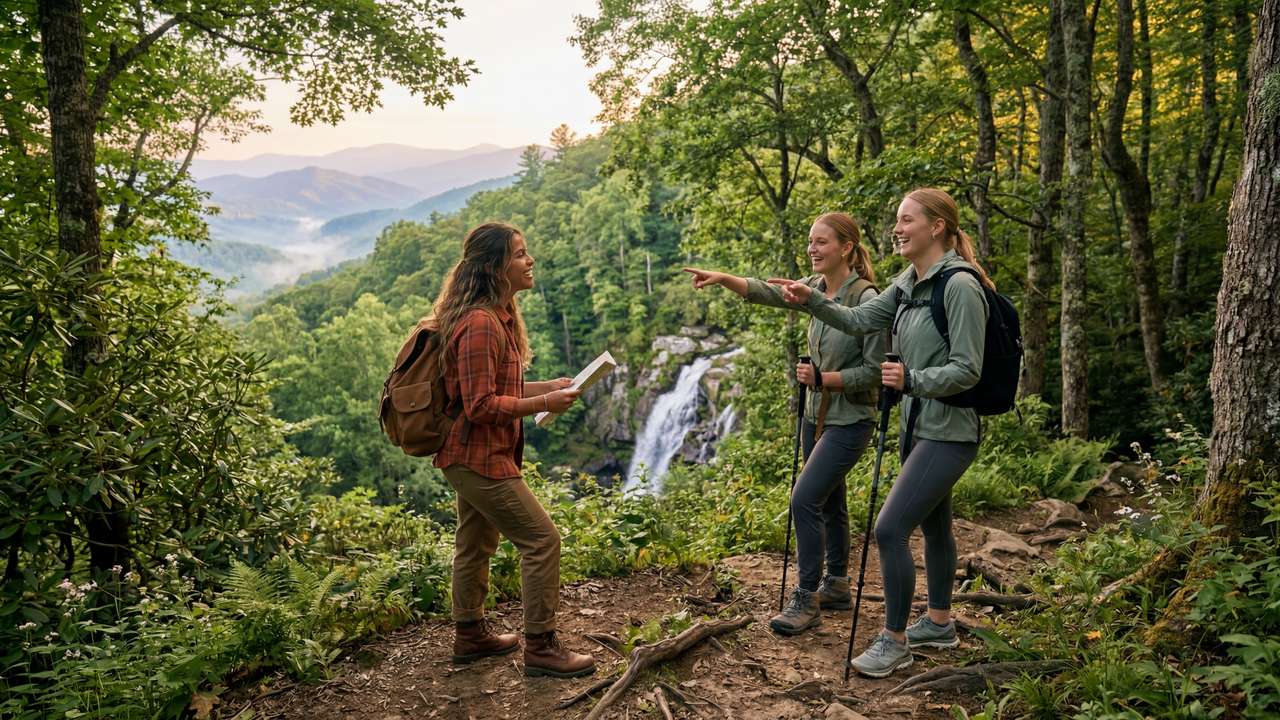
Image generated by AI
Travelers seeking the rugged beauty of the Great Smoky Mountains National Park but wishing to avoid peak-season congestion are increasingly turning to the adjacent Pisgah National Forest. Covering more than 500,000 acres in western North Carolina, Pisgah provides a landscape rich in waterfalls, high-elevation trails, and scenic vistas, mirroring the appeal of its famous neighbor while maintaining a significantly lower visitor density.
Conservation Legacy and Multi-Use Access
The forest holds a pivotal place in American conservation history as the location of the first land parcel acquired under the Weeks Act of 1911, a federal law that established the framework for national forests in the eastern United States. More than a century later, this legislative legacy continues to shape a landscape defined by multi-use access.
Liam Sullivan, field marketing senior coordinator at the National Forest Foundation, advocates for the distinct advantages of national forests over parks. "I will almost always recommend visiting a National Forest over a National Park," Sullivan notes. "National Forests are known as the 'land of many uses,' and that distinction is real when you are visiting."
This classification allows for activities often restricted in national parks, including specific off-leash dog areas, mountain biking on designated trails, and free dispersed camping without the need for advance reservations. The flexibility of land management in Pisgah provides visitors with a broader range of recreational options compared to the stricter protocols found in national park boundaries.
High-Elevation Ecology and Trail Networks
The forest offers hundreds of miles of trails catering to all skill levels. Sullivan highlights the ecological uniqueness of the higher elevations as a primary draw for serious hikers. "I'd direct people to head to higher elevations and check out the spruce-fir forests that only appear above 5,000 feet in the Southern Appalachians," he explains. "They're sometimes referred to as sky islands because of how they came into existence when the spruce-fir forests retreated to higher elevations following the last ice age."
Walking through these dark, loamy stands of trees along the ridgeline offers a distinct experience unavailable at lower elevations, preserving a glacial remnant ecosystem that captivates botanists and nature enthusiasts alike.
Infrastructure Upgrades and Waterfall Access
Popular itineraries include the 3.6-mile Catawba Falls River and Ridge Loop, which has recently benefited from infrastructure upgrades, including a new parking lot and viewing platforms positioned near twin waterfalls. These improvements address growing demand while helping to manage visitor flow.
For visitors seeking aquatic recreation, the Skinny Dip Falls Trail offers a manageable one-mile out-and-back route leading to a swimming hole ideal for cooling off after a day of exploration. The trail provides access to scenic mountain water, making it a favored destination during warmer months.
Specialized Recreation: Angling, Biking, and Climbing
Beyond hiking, Pisgah supports a robust recreation economy. Sullivan points out that anglers can fish for native brook trout in numerous drainages, noting that "almost every creek and river holding fish." The forest's waterways provide consistent opportunities for fly fishing and traditional angling.
The region also serves as a hub for mountain bikers seeking varied terrain and rock climbers drawn to Looking Glass Rock. This 600-foot granite monolith is recognized as one of the most iconic climbing destinations east of the Mississippi River, attracting technical climbers from across the country.
Seasonal Variations and Visitor Windows
Visitor experience varies significantly by season, with spring and fall offering distinct advantages. Sullivan identifies these periods as exceptional windows for exploration. "In May through early June," he says, "one of the more underappreciated things you can do in the Southern Appalachians is track the season as you climb in elevation… With the azaleas and rhododendrons blooming, providing a pink contrast, the whole forest feels like it's waking up after a cold, dark winter."
Fall draws visitors for "some of the best foliage and color you'll find most anywhere in the country," with vibrant displays of red, orange, and yellow canopy cover. Summer offers lush vegetation, flowing waterfalls, and opportunities to observe fireflies on warm evenings, though travelers should expect higher humidity and heat.
Transportation Logistics and Accommodation
Accessibility centers on Asheville Regional Airport (AVL), located approximately one hour from key trailheads. Secondary gateways include Greenville-Spartanburg International Airport (GSP) roughly two hours away and Charlotte Douglas International Airport (CLT) about three hours distant.
Due to the forest's expansive geography, a personal vehicle is essential for navigation. Accommodation options span campgrounds, dispersed sites, vacation rentals, and hotels in nearby Asheville and surrounding mountain towns. Booking well ahead is advisable for summer and fall visits, which represent the region's highest demand periods and often see rapid inventory depletion.
Key Takeaways
- Pisgah National Forest spans 500,000+ acres and serves as a less crowded alternative to Great Smoky Mountains National Park.
- The forest contains the first land parcel acquired under the Weeks Act of 1911, marking a cornerstone of eastern U.S. conservation.
- Key activities include hiking spruce-fir forests above 5,000 feet, climbing Looking Glass Rock, and fishing for native brook trout.
- Asheville Regional Airport is the closest major hub, located roughly one hour from primary recreation areas.
- Dispersed camping and multi-use activities are permitted, offering more flexibility than adjacent national parks.
- Seasonal highlights include spring blooms and "sky island" ecology, fall foliage, and summer firefly displays.
FAQ
How does Pisgah National Forest compare to Great Smoky Mountains National Park regarding crowds?
Pisgah offers similar natural attractions but with significantly fewer visitors, allowing for a more remote experience without the traffic and parking congestion common in the Smokies during peak seasons.
What makes Pisgah National Forest historically significant?
It holds the first parcel of land purchased under the Weeks Act of 1911, federal legislation that established the national forest system in the eastern United States.
Which airport is best for visiting Pisgah?
Asheville Regional Airport (AVL) is the closest major airport, situated approximately one hour from many of the forest's popular trailheads and recreation areas.
Can visitors camp for free in Pisgah?
Yes, Pisgah allows free dispersed camping in certain areas, providing an option for visitors to stay without a reservation, unlike many national parks.
What are the best times to visit for foliage and wildlife?
Fall offers some of the region's best foliage, while spring (May to early June) features blooming azaleas and rhododendrons; summer provides opportunities to see fireflies and lush waterfalls.
Related Travel Guides
Disclaimer
This article is for informational and educational purposes only. It does not constitute legal, financial, or professional advice. While we strive to provide accurate and up-to-date information, travel policies, regulations, and conditions change rapidly. Always verify information with official sources before making travel decisions. Nomad Lawyer makes no representations about the accuracy, reliability, completeness, or suitability of the information provided. Readers should consult qualified professionals for advice specific to their circumstances. The views expressed in this article are those of the author and do not necessarily reflect the views of Nomad Lawyer.
Kunal K Choudhary
Co-Founder & Contributor
A passionate traveller and tech enthusiast. Kunal contributes to the vision and growth of Nomad Lawyer, bringing fresh perspectives and driving the community forward.
Learn more about our team →