
Pilots Training Airbus vs Boeing: Key Differences Revealed
Professional aviators reveal striking operational and cultural differences between pilots training Airbus and Boeing aircraft in 2026. Career trajectories and flying philosophies diverge sharply across these platforms.

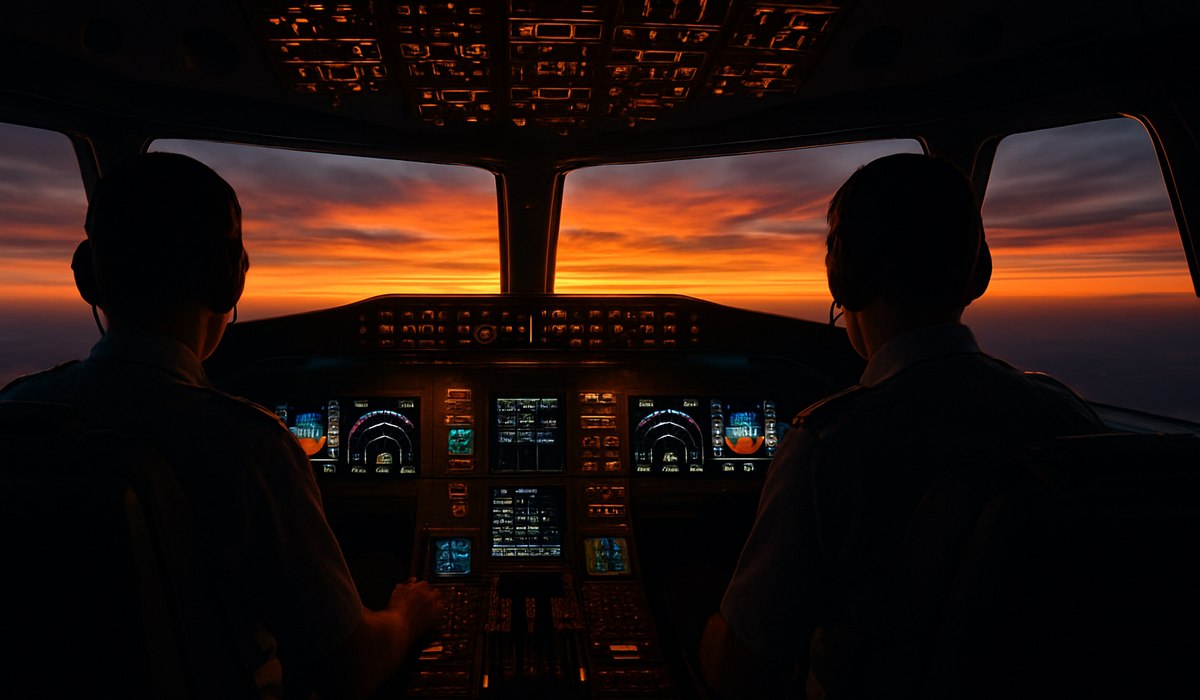
Image generated by AI
Aviation's Great Divide: What Pilots Really Think About Airbus vs. Boeing
The global commercial aviation community remains split on a fundamental question: which aircraft platform delivers superior flying experience? Pilots training on Airbus systems increasingly diverge from those mastering Boeing aircraft, creating distinct professional philosophies that shape entire careers. This 2026 divide reflects decades of engineering choices, automation strategies, and cockpit cultures that separate the world's two dominant aircraft manufacturers. Understanding these differences matters for frequent travelers, aviation enthusiasts, and anyone curious about how modern commercial aviation actually operates at 35,000 feet.
The operational philosophies embedded in Airbus and Boeing designs have produced two separate camps of professional pilots. Neither preference is objectively superior—rather, each reflects different approaches to safety, workload management, and the fundamental question of how much control pilots should delegate to automated systems.
Cockpit Philosophy: Automation vs. Manual Control
Airbus aircraft represent the manufacturer's commitment to computer-assisted flying. Modern Airbus platforms, from the A220 through the flagship A380, feature sophisticated fly-by-wire systems that prioritize automation and reduce manual pilot input. When pilots training on Airbus aircraft take the controls, they're working within a sophisticated digital envelope where computers actively manage countless flight parameters.
This automation-first design philosophy means Airbus cockpits feel remarkably "effortless" to many veteran pilots. Autopilot systems handle lateral and vertical navigation with precision that human hands struggle to match. Thrust management becomes more about monitoring than active control. Pilots describe this experience as enjoying the "luxury" of a modern Airbus cockpit, where redundant systems and automated protections create a collaborative flying environment.
Boeing's traditional philosophy emphasizes hands-on piloting and manual flight control. While modern Boeing aircraft certainly contain advanced automation, the design philosophy leaves more direct control in pilot hands. A Boeing 787 or 737 cockpit still expects active pilot engagement with aircraft systems. This approach appeals to aviators who view flying as an inherently hands-on discipline requiring constant vigilance and direct control inputs.
The Boeing philosophy traces to an earlier era of aviation when pilots manually managed nearly every aspect of flight. Modern Boeing aircraft maintain this culture while incorporating contemporary safety systems. Pilots describe Boeing flying as delivering "real flying" experience—a direct connection between pilot input and aircraft response that some consider essential to true airmanship. Visit FAA resources for detailed guidance on modern pilot certification standards across aircraft types.
Why Pilots Rarely Switch Between Airbus and Boeing
Career progression in commercial aviation typically follows predictable paths. A pilot who completes initial type rating training on Airbus aircraft—whether the A220, A320, or A350—tends to build their entire career on the Airbus platform. Similarly, pilots who begin their jet careers on Boeing 737 or 777 aircraft rarely transition to competing manufacturers.
This phenomenon exists for practical and psychological reasons. Pilots training on Airbus systems internalize automation protocols, automation reliability, and system architecture specific to fly-by-wire aircraft. Making the mental shift to Boeing's manual-first approach requires unlearning deeply embedded habits. A 12,000-hour Airbus captain essentially thinks differently about aircraft control than an equivalent Boeing professional.
Airlines recognize these specialization patterns and hire accordingly. A regional carrier operating Bombardier CRJ aircraft understands that its Bombardier-trained pilots might struggle transitioning to a Airbus A220 operation, even though both represent "automation-forward" designs. The specific implementation details matter enormously.
Financial considerations reinforce these divisions. Pilot type-rating training costs $20,000–$50,000 depending on aircraft complexity. Airlines avoid retraining experienced pilots unless essential. A regional operator converting from Boeing 737 service to 737 MAX aircraft keeps its existing pilot workforce. But transitioning from Boeing to Airbus requires expensive recertification and weeks of training that disrupts scheduling and increases operational costs.
The A220 Hybrid Approach: Best of Both Worlds
Bombardier originally designed the CSeries (later renamed Airbus A220 after the 2018 acquisition) as an intelligent compromise between competing philosophies. The aircraft incorporates Airbus's fly-by-wire architecture while maintaining more manual control authority than traditional Airbus platforms. Pilots describe the A220 as occupying a "middle ground" between full automation and traditional control.
This hybrid approach means the A220 appeals to experienced pilots from both backgrounds. Airbus-trained aviators appreciate familiar automation systems and cockpit logic. Boeing-trained professionals find sufficient manual control authority and hands-on flying opportunities to feel engaged. The A220 represents Bombardier's thoughtful engineering response to aviation's great philosophical debate.
Airlines operating the A220 report pilot satisfaction metrics exceeding both traditional Airbus and Boeing competitors. The aircraft demonstrates that middle-ground solutions work in practical operations. For travelers selecting airlines and routes, A220 service on regional and narrowbody routes increasingly represents a compromise platform that both pilot communities value.
Training Requirements and Career Implications
Pilots training on Airbus aircraft undergo certification focused on automation management, system monitoring, and digital interfaces. Initial Airbus type-rating courses emphasize understanding fly-by-wire law protections, autopilot engagement procedures, and automation failure scenarios. Training curricula stress monitoring skills more than active control.
Boeing-trained pilots complete fundamentally different certification programs. Training emphasizes manual flight control, direct system management, and hands-on response to system failures. Boeing type-rating courses allocate more simulator time to manual flight operations. The training reflects Boeing's philosophy that pilots must remain prepared for any automation failure requiring immediate manual takeover.
These divergent training paths create pilots with genuinely different skill sets. An Airbus pilot might maintain exceptional automation system knowledge but limited experience hand-flying aircraft in challenging weather. A Boeing pilot might excel at raw stick-and-rudder skills while having less familiarity with complex automated systems.
Career implications extend beyond technical knowledge. Airlines recognize that experienced Airbus pilots bring proven automation expertise to fleet operations. Hiring a Boeing-trained captain for an Airbus operation still requires type-rating training that costs significant resources. Regional carriers building Airbus fleets prefer recruiting Airbus-experienced pilots from competing carriers rather than retraining Boeing professionals.
Key Data and Industry Facts
| Metric | Airbus | Boeing | A220 |
|---|---|---|---|
| Primary Control Philosophy | Fly-by-wire automation | Manual control emphasis | Hybrid fly-by-wire |
| Typical Pilot Transition Rate | <5% between manufacturers | <5% between manufacturers | N/A |
| Type-Rating Training Duration | 240–280 flight simulator hours | 250–300 flight simulator hours | 220–260 hours |
| Cockpit Automation Level | 85–95% autonomous capability | 60–75% autonomous capability | 75–85% autonomous capability |
| Career Specialization Rate | 90%+ stay on Airbus variants | 88%+ stay on Boeing variants | Growing dual acceptance |
| Global Market Share (Narrowbody) | 58% | 42% | <2% but rapidly growing |
What This Means for Travelers
Understanding the Airbus vs. Boeing distinction helps travelers appreciate the sophistication involved in modern commercial aviation. While both aircraft manufacturers deliver exceptional safety records, the operational philosophies create different flying experiences.
Traveler Action Checklist:
- Research your aircraft type before booking by checking the airline's fleet listing on booking confirmation or airline websites.
- Understand that both platforms are exceptionally safe—safety records show minimal difference between Airbus and Boeing commercial operations.
- Monitor FlightAware for real-time aircraft tracking and verification of scheduled equipment assignments.
- Review airline maintenance records through US DOT safety databases if specific aircraft concerns
Disclaimer
This article is for informational and educational purposes only. It does not constitute legal, financial, or professional advice. While we strive to provide accurate and up-to-date information, travel policies, regulations, and conditions change rapidly. Always verify information with official sources before making travel decisions. Nomad Lawyer makes no representations about the accuracy, reliability, completeness, or suitability of the information provided. Readers should consult qualified professionals for advice specific to their circumstances. The views expressed in this article are those of the author and do not necessarily reflect the views of Nomad Lawyer.
Raushan Kumar
Founder & Lead Developer
Full-stack developer with 11+ years of experience and a passionate traveller. Raushan built Nomad Lawyer from the ground up with a vision to create the best travel and law experience on the web.
Learn more about our team →